Yeah,
So this talk,
Negative Thought Loops,
Is that the main purpose of it is even if we practice stoicism,
Even if we have a meditation practice,
Even if we have a journaling practice,
Even if we're doing all of the right things,
Sometimes,
For whatever reason,
We just get overwhelmed with negative thoughts,
Right?
That's just one of the things that can happen.
And it can be quite demoralizing as well.
You know,
It's one thing to feel bad or have this negative downward spiral when you're just like an ordinary person.
Working on yourself,
And then you have it,
You feel almost like a failure.
Like,
I'm doing all of these things,
You might have had this,
I'm trying to be a better person,
Trying to develop my wisdom,
And I'm still struggling,
I'm still suffering,
I'm still having a bad day.
And we can be hard on ourselves and beat ourselves up.
You know,
Like,
Why am I stressed today?
Why can't I just change it?
Why can't I do this technique and feel better?
And this is a workshop specifically focused on this.
When things are just not going well,
When you're in the middle of a negative downward spiral,
We've all been there,
And you can't pull yourself out of it with more thought.
You can't pull yourself out of it by just thinking positively or trying to reframe the situation.
What can we do then?
And I found that the wisdom of the Stoics has been very helpful,
But more specifically,
Specifically certain maxims and ideas that the Stoics have provided.
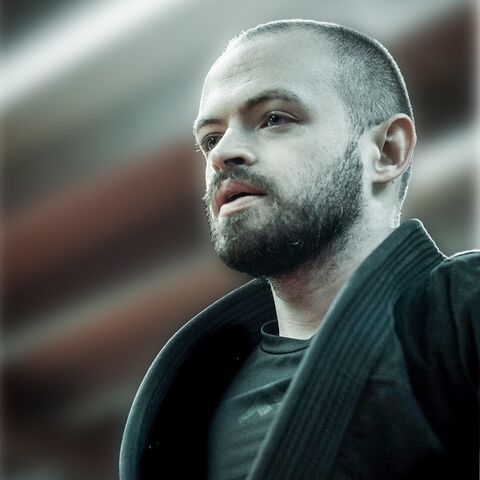
So I'm a big fan of martial arts.
I practice Brazilian Jiu-Jitsu.
And sometimes in a difficult match,
Your adrenaline kicks in,
You're exhausted,
You can't think straight.
And in times like this,
Your rational mind switches off and you're essentially in survival mode.
And what you need to do is have to grab onto,
Something that you can just cling to.
And it could be like a statement,
A maxim,
An idea.
And then it could be something like,
In this position,
I've just got to stay on their hips.
Just something as simple as that,
Just to kind of help you ground and focus.
And the Stoics are very good at providing these short maxims,
These one-line statements or these ideas that when things get tough and overwhelming,
You can just grab onto that.
You grab onto that branch,
The Stoic idea branch.
So in this discussion,
I'm gonna provide you with six Stoic perspectives or maxims to help you the next time that you are experiencing such a thing.
And try to make this as much as you can about you.
So when I'm sharing stuff with you,
Try to relate it to your own life,
That will help.
So the first maxim and idea that I want you to think about is,
The only thing that can ever be good or bad are my intentions.
The rest is none of my concern.
So the Stoics.
.
.
For the most part,
Had this idea of the dichotomy of control.
And this is a way of perceiving reality.
And it's actually very rational as well.
And it's this idea that there are some things that are up to us and some things that are not up to us.
Some things that are within my control and some things that are not within my control.
And if you look at other people,
I can't control other people.
Nobody can control other people.
You can try,
But it could easily backfire.
So you could make a guess as to how to control other people,
But it's not with certainty.
It's still some sort of gamble and you don't know how that would backfire and how that could get very complex later down the line.
You could try to get someone to do one thing today and then tomorrow they get resentful and they do the opposite of what you want to do.
To do so you can't control other people.
Can't control the weather,
In general you can't really control the external world.
And there are parts of yourself you can't control either.
You don't really control the way that your kidneys work and the chemicals in your brain.
So really,
The The truth is we don't control that much,
But we do have some control over our intentions and our drives,
Our focus.
The Stoics would encourage us to focus on this,
And they would say that you can't judge a person,
Or you can't judge yourself,
By the externals.
So you can't say that anything in the external world is truly intrinsically good or bad.
In fact,
It's kind of indifferent.
So let's just say that someone gives you a lot of money.
It's like,
Is that good?
From a Stoic perspective,
It would be like,
Well,
Not necessarily.
You could use that money to cause even more pain to other people than you could if you didn't have money.
In that case,
Money is actually bad for you.
Now,
You could say that if you're already practicing on your character and trying to improve it,
Then money could be used for good,
And so you could say it's a preferred indifferent.
So,
Same with health.
Like,
If you have really good health,
If you give a psychopath really good health,
They could use that good health to do more damage.
But also if you're on a spiritual path or you're trying to become a better person,
You have health,
Great.
You have more health to help more people.
So it's a preferred indifferent.
But the only thing they could say is truly good or bad is how you act and your intentions.
And so if you are trying your best and trying to be a better person each day,
Put all of your focus on that,
Like that is good or that is bad and nothing else counts.
And so if you're in the middle of a negative thought loop,
You might have all of these thoughts coming in like,
I should be doing this,
I should be more confident,
People should be responding to me this other way,
All these different thoughts.
And from a stoic perspective,
They would be like,
Right,
Okay,
We're in this negative thought loop right now.
This is reality.
This is what's happening.
Okay,
Let's not fight it.
This is how things are.
What is my intention?
Can I come up with a good intention right now?
It's kind of like aiming low,
Like,
Okay,
What could be my intention?
My intention could be.
.
.
I'm gonna try and accept it.
I'm going to try and accept it.
That's my intention.
Or I'm going to try and be kind to myself when this is happening.
That intention is within your control.
What actually happens after that,
It's not really up to you.
Maybe you find it difficult and maybe it doesn't happen,
But you set that intention and you focus on that.
This is a way to slowly bring the control back to yourself by focusing on what you can control.
So we're in the middle of a negative thought loop.
That's what's happening.
But we can choose our attitude on some small level towards that.
Even if it's as simple as I'm going to try and be kind to myself right now.
What I would sometimes do in a negative thought loop is use it as practice to accept it.
At the very least,
I'm able to practice that muscle of acceptance.
Not even try to necessarily change it,
But I'm going to really try to accept the fact that I'm here and be okay with it.
The second maxim is adversity is the raw material that will fortify my soul with wisdom.
The Stoics thought that adversity are the building blocks of wisdom,
Of virtue.
And it goes back to this idea that how can you possibly know what kind of character you have if you don't have any challenges in life?
You could call yourself a good person.
But until you've been in a situation where you had to exhibit that under pressure,
Are you a good person?
You could call yourself an honest person,
But are you truly an honest person if you've never been really tempted to lie?
You know,
And so you need that pressure to show what you're made of,
But also you need that pressure to practice.
So whenever we get.
Something that happens to us in life that triggers a strong emotion,
The Stoics would say we have two paths,
Path A and path B.
If we get a lot of pain,
Like physical pain,
Say we have an accident,
Hurt our leg,
We have two paths.
We can either call ourselves a victim.
And say that everything is wrong,
Poor me.
That's the path of victimhood.
Or we have the path of endurance.
I'm gonna use this to practice endurance right now and to focus on other things.
If you are overtaken by attraction towards someone,
You could follow the path of lust or you could follow the path of discipline.
Let's just say you're in a relationship and you start to get attracted to someone else.
You have two paths.
Do you want to use this opportunity?
This opportunity is a great opportunity for you to practice discipline and commitment,
Or this is an opportunity for you to.
.
.
Practice being unfaithful.
You always have these two paths,
A and B.
And so when you're in,
To bring us back to a negative thought loop,
You now have an opportunity.
What are you going to use the opportunity for?
Are you going to use the opportunity to say to yourself,
Who am I?
Why does this happen to me?
Why am I having these negative thoughts?
Or are you going to use this opportunity to practice acceptance,
To practice being kind to yourself,
Even when things are difficult,
Right?
And so thinking when anything difficult happens,
Thinking that this is an opportunity and you have two different paths in front of you.
That's a really potent one for life in general as well.
And also for insults as well.
If you've ever been insulted,
That's a great opportunity for you to be angry at someone,
You know,
And you'd be justified,
I guess you could say.
But it's also a really good opportunity for you to practice patience and compassion.
The third maxim to help you with negative thought loops is,
I cannot expect to have that which I don't pay the price for.
I'll say it again,
I cannot expect to have that which I don't pay the price for.
So a lot of the times we look at other people who have certain things that we want,
Right?
And they could have a lifestyle that we want,
Relationships that we want.
Maybe it's the way that they communicate something.
And we look at them and we go,
Wow,
I wish I had that.
Why do they have that?
And I don't.
The Stoics would say,
Well,
Did you pay the same price as them to get that?
You know,
You don't,
You don't go to an exclusive nightclub and say,
Like,
I,
I demand to go in for free.
You know,
You look at the people in the line and you go,
Well,
This is like $200 to get into this light club.
Do you want to pay the price or not?
If you don't want to pay the price,
Great.
You've just capped $200.
Perfect.
And they lost it.
But if you do want to upgrade the price,
Great,
You've just gone into the club.
But don't sit there complaining about people that are getting in and they're actually paying for it to get in and then you're not willing to pay.
That's quite a foolish perspective.
And the same applies to personal development as well.
And this is why I place such a heavy emphasis on practice.
So yeah,
As a journaling exercise,
As I said,
Think about the things that you want from life internally and externally,
And ask yourself,
Are you willing to pay the price for those?
Another really useful practice is the view from above.
And so when you're in the middle of a difficult psychological situation,
You can zoom out from it.
We would call this cognitive distancing in modern psychology.
Very often when we are feeling bad,
We repersonalize things.
Like,
This is all about me,
You know?
We become quite egocentric.
Like,
Why does everything always happen to me?
I'm suffering.
My pain is more important than anyone else's.
And when we can just stop for a second and try to see ourselves from up above,
You know,
Either like up in the clouds or from space even,
And see that we're actually just you know,
Small creatures interacting with other creatures,
And time is going,
And,
You know,
On some level,
Things are not as significant in the moment as we might think they are.
And it can actually be kind of relieving to think that actually,
You know,
Let's zoom out,
Let's see ourselves as just another component,
Another cog in this amazing,
Complex,
Beautiful existence that has to come with ups and downs.
It's part of the human experience.
Another kind of sideways way of doing this is to imagine the same thing happening to someone you know.
So like someone comes to you and they're like,
Oh,
I failed my exam.
Do you break down crying,
Or do you typically go,
Oh,
OK,
Yeah,
That's not so good.
But I'm sure you can bounce back from that.
I'm sure we can come up with a plan and you can recover from that.
You know,
That's the view most of us have.
Or someone crashes their car.
It's like,
Oh,
You know,
That's not really good.
I wonder what you're going to do about it.
But when it happens to us,
It's a catastrophe.
It's the end of the world.
And so imagining the same negative thought loop happening to someone we know could be really useful.
Marx Aurelius quote,
The fifth maxim is don't add to the primary data.
Marcus Aurelius would say don't add to first impressions.
And for me,
I've had,
Having a four-year-old son,
I've had certain phone calls where,
You know,
Maybe the school has rang me.
And maybe you've said,
Oh,
He's tripped,
Or something like that,
Right?
You get this piece of information.
That's all I've heard.
He's tripped,
Right?
I haven't heard that he has been concussed and is,
You know,
Like he's in hospital and he's,
You know,
All of that.
I haven't heard any of that,
But very often we add all of that to the first impressions and we do that so often in life.
And so what I try to do now is just try to stick with what I know,
You know?
So you're in a negative thought loop.
You're not feeling so good.
Look around,
Whatever is happening is happening,
But you don't need to add more to the story.
If someone in the environment has a neutral face,
They may look at you.
That's all that's happening.
Someone is looking at you with a neutral face.
It's not that that person hates you and thinks you're disgusting.
And you know,
Like all of that is adding to the primary data.
And in cognitive behavioral therapy,
You would say that this is mind reading,
Jumping to conclusions,
Fortune telling,
Emotional reasoning,
Or you're adding all of this stuff to the primary data.
So whenever you hear any kind of news or you have any kind of negative situation arise,
Try to stick with what you know.
And this comes directly from Mark Cereleus,
Who says,
Told,
You have not been told that you are injured.
I see that the little child is ill,
This is what I see,
But that he is in danger I do not see.
In this way,
Then,
Abide always by the first impressions and add nothing of your own from within,
And that's the end of it.
" This is Marcus Aurelius doing cognitive behavioral therapy thousands of years ago.
He's reigning in that temptation to spiral.
And then the last one,
And this is probably like the most important one of them all,
Is realize that in this very moment,
No matter what is happening,
You have the power to fall in love with reality.
And that might sound crazy or shocking,
But it is actually true.
Whatever is happening,
You have the ability within you to actually love things exactly as they are.
And if you had told me that,
I might have gone like,
Oh,
Well,
It's easy for you to say that.
But when I'm in the middle of a negative thought loop,
I can't do that.
And I had this realization in the middle of my most difficult negative thought loop of my entire life.
So I was in a really difficult place and I was fighting the moment and it was just like a horrible kind of prison of my own mind.
And I just had this thought.
Imagine if I was some kind of alien being and all I could experience for eternity was nothingness.
Just like darkness,
Space.
Fortunity.
What would I give to experience even a second of this negative thought loop right now?
Like how incredible would this negative thought look be?
The fact that there is something happening instead of nothing,
The fact that my life is significant enough to even have things to care about,
Emotions and problems,
You know?
And that realization snapped me out of it immediately.
And it was this idea of love your fate from Friedrich Nietzsche.
You know,
The success for greatness,
According to Nietzsche,
Was to train yourself to love the way things are,
Because that's exactly how they are,
And to fight against it.
It's just a waste of this miracle that you're all living in.
And do you want to spend the rest of your life complaining about your life?
Do you want to spend the rest of your life saying that I wanted things to be different every moment?
Or when all is said and done,
You can look back and you can go,
I loved all of that.
You know,
All of the tears,
All of the pain,
All of the suffering.
I definitely felt some difficult emotions,
But it was part of my life and I fully embrace it because that's what it was.
And so that's something that you can turn to whenever you're experiencing a negative thought loop.
The idea is that we try to see the world more accurately from doing it.
You know,
We don't.
.
.
If you think like there's like a thousand potential ways of thinking about reality,
When we're in a negative thought loop,
We're latching onto two.
And by opening our awareness and thinking of different perspectives from different angles,
From above,
From sideways,
From below,
We're actually saying,
This is also true from over here.
And I prefer to think of it in that way.
And so,
You know,
Some people will say something like,
In a million years,
Nothing you do matters.
And it's like,
That's actually potentially true from a certain perspective.
But then the question is,
Do you want to think from that perspective?
Or do you want to think from the perspective of right now,
Everything you do matters?
Both are true.
There's not one beats the other.
It just depends what frame you want to live by.