Welcome everybody and Merry Christmas.
I know a lot of us are not from India.
Some are from India and they celebrate and some of us,
A lot of us are not from India and we celebrate.
So I just wanted to acknowledge that today because it's Christmas Day and there's a lot of places around the world where it's a very big holiday today.
So today I'm not going to read from the book.
I'm going to read a story that I wrote about Christmas.
Instead,
It's a special story I wrote about Christmas,
And I also wrote it for the kids at the hospital.
So I've told you guys some stories right at the psychiatric hospital I worked at.
And later on in the book,
I think it's page 143,
But later on in the book I start talking about working with those kids at the hospital.
There's two chapters on that.
And in the book I said something,
I just wrote like one line about how Babaji got malaria in one of my stories when he wasn't responding.
I'm like,
What is wrong?
And he had gotten malaria.
And I told the kids that.
And I wrote a chapter about that,
Like how the kids responded to me saying that Babaji has malaria.
And the story I wrote was called On Empathy in the Beard of Babaji,
But I didn't put it in the book.
It's about Christmas and today's Christmas.
I thought I'd read that.
And then I can tell you more stories about working with the kids and everything,
Too.
Then when we get to that point in the story,
You'll remember,
You'll be like,
Oh yeah,
It was that story she read.
It's probably going to be quite a few weeks from now that we get to that in the book,
But still,
I couldn't resist since it's Christmas.
Okay,
So let's start and the way I wrote it is.
.
.
Interactive so I wrote it for the kids and so what I would do is I'd write a part of a story and then I'd ask questions Like what do you think?
So I'm going to do it with you guys too because the story is about love Love and Christmas,
Okay?
So this story is called,
An Empathy in the Bearded Babaji.
You can see.
On empathy in the bearded Babaji and that's Santa Claus.
Because the kids have no idea who Babaji is,
So I tried to relate it to Santa Claus.
So once upon a time,
There was a very kind man with a beard named Babaji.
Now remember,
These kids were,
You know,
The oldest was,
The age was 17.
But most of the kids I worked with are younger than that,
And they never,
Ever once had a good Christmas,
Not even anything close.
To a good Christmas.
They had no idea what love was,
They definitely had no idea what empathy was or what Christmas was.
But they were growing up,
I mean they lived in the United States,
They certainly should have had a good Christmas,
You know,
But they didn't.
So this was me kind of also teaching them about love,
Empathy,
Christmas,
Babaji,
I kind of tied it all together.
And the backdrop of the story was that I was already working with Babaji with the kids a little bit,
You know,
We were writing those Hita Padesh stories,
So they had heard about Babaji.
Because what I would do is,
You know,
The original Hita Padesh book that he published,
That book,
Those kids' stories,
I mean,
They're stories about animals,
Right,
But they're actually,
Us as adults read those stories,
And we understand kind of life lessons through that,
Right,
About relationships and people and who to trust and how to make good decisions.
But that's not for like a kid.
So I rewrote his stories.
For kids.
And that's what it talks about in the book,
Right?
So those six stories,
I made them very simple,
Like kid-friendly,
Almost like worksheets,
You know?
And I dumbed it down,
Like very simple words.
But in every story,
I would put one picture of Babaji and a quote.
Like Babaji said,
You know,
And then once I wrote the worksheet,
I would email it to him and he would say,
Yes,
Okay,
Now you can use it with the kids.
So I didn't do anything without his review,
His editing,
And his approval.
But then one time I sent the story and he didn't respond.
And he knew the pace that I was doing it because I was teaching a couple times a week,
The kids.
So he knew like the days and he was always sending it right back on time.
And then it was like one day,
Tuesday,
Two days,
Three,
Many days not responding.
That was not his style at all.
So I was like,
What is wrong with him?
You know,
What happened?
And it turns out much later on that we found out he had malaria.
He was really sick,
You know?
So he wasn't on email at all.
But in the meantime,
Since he hadn't approved the next story for me to read to the kids,
I didn't want to read it.
Because I was really taking a lot of liberties to cut a lot out of the story,
To make it very funny,
To add in things that I didn't know if he'd be like,
That's not appropriate,
Cut it out.
So I didn't want to read it to them yet if I got something wrong.
But I didn't know what to do because we were doing the whole series of all these stories.
So that's actually the reason why I wrote this story.
Because I found out he had malaria,
But I couldn't be like,
Oh,
I'm sorry,
You have malaria.
Can you read my next story and approve that?
So since he was sick,
I'm like,
But I need a story and I need the same format and the same format was it has to be Something like you have to like a lot of points in the story where you pause and you have to be like,
What would you do?
What do you think?
Let's introspect.
Let's reflect.
That's how all the hit to put us worksheets I made were for the kids So that's the backdrop of why I wrote this and how I wrote it like the format Okay,
Ready?
Any questions?
Okay,
On Empathy and the Beard of Babaji.
Here we go.
So once upon a time there was a very kind man with a beard named Babaji.
He was kind of like Santa Claus because he always had a twinkle in his eye.
Letting you know that you are someone special.
Oh yeah,
And he had a beard like Santa too.
But not as big and bushy and white as Santa's beard.
He also did not have a big belly that shook like a bowl full of jelly when he laughed,
Like Santa.
Nor did he wear a red fur suit like Santa.
Babaji usually wore all white,
Like an angel or a saint.
But Babaji did give gifts like Santa does.
Babaji's gifts were something truly special because unlike Santa,
Who gives his gifts just one night per year on Christmas,
Babaji gives His gifts every single day.
But Babaji's gifts were of a different sort.
I'll give you a hint.
Babaji's gifts are so light that they don't weigh anything at all.
He does not even need a bag to put the gifts in.
Like Santa does.
Babaji can give 100 gifts per day or even more,
And he does not feel one bit tired.
In fact,
For each gift Babaji gives,
He feels more energy.
Babaji gives his gifts to anybody he meets.
Even the bad and the mean kids.
Babaji's gifts don't cost any money.
Babaji's gifts come from his heart.
And Babaji gives the same gift to everybody.
Can you guess what Babaji's gift is?
It's so interesting because these kids were really like that.
What the,
Who could have,
You know,
They were right.
And I wish I could have recorded it at the hospital,
How they were all answering.
I can't remember,
It was like 10 years ago when I wrote these stories,
But they were guessing things.
I think maybe one person was like,
Love?
It couldn't be that.
And a lot of them were like,
I have no idea.
What could this thing be?
So it was very sweet,
You know?
Engaging them,
But the cool thing was was they were Open to the story.
They were open to the story because they all probably were familiar already with Santa Claus,
Already with gifts and all that.
So they were like,
Okay,
Who is this Babaji?
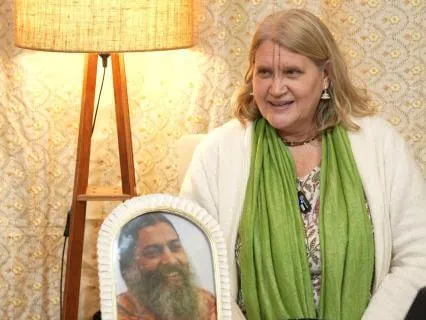
So you guys know this picture,
Right?
So this is a picture that they all,
Because I printed them all a handout.
So they all got this handout with,
You know,
Page two.
Then we go to page two.
Oh,
The other part of the story is that the way I do it to engage them,
Because a lot of them had severe mental disorders.
Sometimes they're,
You know,
Hearing voices.
They were seeing things.
They were having really,
Really intense,
Like,
Volatile mood swings.
They were,
You know,
Severely depressed.
So it was very hard to keep their attention.
Some of them had severe,
Like,
ADHD.
And they were there for many months.
We were trying to figure out the right treatment for them,
You know.
So it was super hard to,
Like,
Engage them.
To have them sit and listen,
Right?
And so one thing I did was I said,
Okay,
Who wants to read?
And they love taking turns reading.
Then that could engage them.
So,
Me,
Me,
Me,
Can I?
Okay,
Okay,
You can read.
So that's what they would also do.
And some of them would read,
Want to read one sentence.
And literally that's the most they could concentrate.
And then they're hearing a voice and you could see how they're reacting.
And then some of them wanted to read more.
And some of them would have a problem with stuttering or something where it was so hard for them.
One of the girls,
She was 16,
But I think we had uncovered eight different voices in her head.
So she was hearing eight different people.
Screaming at her telling her you you should die.
You're so fat.
You're so ugly,
You know in different voices,
You know And when she came to me,
She was like catatonic.
She wasn't speaking at all And she was 16 and she was wearing a little.
.
.
Watch that would buzz every hour to remind her to go pee,
To go to the bathroom,
Because otherwise she was in diapers,
And she was 16,
Because she was so distraught.
You could tell when the voices were going,
Because she'd be like,
Like that,
You know,
And so she's sitting there,
I mean,
How's she gonna?
Focus on this story.
So someone like her,
We would try to do something to engage her.
Maybe she couldn't hear that much of the story,
But we would give her something to hold,
Something that she could squeeze or something.
And most of them had something what we call dual diagnosis.
It's not that they just had one simple thing.
They had multiple diagnoses.
So I had this one boy in the group.
He had bipolar disorder.
He had been severely abused.
And he had ADHD.
So for him,
He was all over the road.
He couldn't even sit.
Even just sitting,
He felt like someone was going to beat him up.
And then he would get really mad and start cursing.
But when I said,
Who wants to read,
The first time,
Because I was always trying to think of very creative ways to engage them.
And I'm like,
All right,
Who wants to read?
I would just throw anything at the wall and see what worked.
And who wants to read?
And he's like,
Me.
I'm like,
You do?
Oh,
He's actually going to focus on something.
OK.
So he took and he started reading.
And that was his favorite thing.
He loved to read.
And then if he got a little too distracted,
I'd be like,
Oh,
Somebody needs to hang out.
Hand out pencils,
And he's like,
Me,
Me,
Because he had the ADHD,
So he always had to move.
So I'm just trying to give you the scene of what was going on when I was trying to read the story to them.
And there was two bodyguards in the room at all times because of the They would sometimes bust out in fights,
Punching each other and yelling and screaming,
And so I was trying to think of some way to.
.
.
Engage them and teach them about love and about Christmas and about empathy and all that,
But it was a little like.
.
.
Not like this kind of like cozy living room,
You know,
Everybody's all shanty.
Okay,
But this is the miracle of Babaji and of these stories,
Really,
Because it was such a huge turnaround with these kids.
They were like,
What are you,
Are you giving them some special,
What are you,
Some magic,
Some medicine,
Something?
I said,
No,
I'm telling about Babaji.
So you'll hear more of those in the next few stories.
So I showed the picture.
So they saw the picture,
And they're like,
Oh,
That's Babajita.
And then I said,
You guessed it.
Okay,
So the question I had asked,
Right?
Can you guess what Babaji's gift is,
Right?
And so I think one of them was like,
Love.
So I said,
You guessed it.
The bearded Babaji's gift is the most precious gift of all.
It is the gift of true love.
It is not the kind of love that most of us know.
Where we fall in love with a boy or a girl.
Romantic love feels so strong,
But it comes and it goes.
Even if they love us today,
They could be gone tomorrow,
As so many of us have felt that pain of a broken heart.
And most of these kids were like.
.
.
Having love affairs at the hospital,
Which is like a total.
No,
No.
All the teenage boys are on one unit.
It was called the Stingray Unit,
The furthest place you could imagine from where all the girls were.
They weren't allowed to be near each other because if they did,
They were trying to sneak away together and stuff.
For a teenager to hear about love and talk about love was very exciting because we were trying not to have them.
Really,
We weren't trying to excite them about love,
You know,
So for them to be able to talk about it here,
Like,
What is love?
Yes,
You know.
And no,
Babaji's love is also not the kind of love we have for our parents or family members,
Where they love us when we are being good.
But when we are being bad or going against their wishes,
They hurt us,
Or they say mean things that make us wonder.
Is this really love?
So,
Like I think I've said many times,
But most of these kids didn't have parents.
They were custody of the state.
They had been taken out of the home because of severe child abuse.
So that's why I'm putting it mildly,
You know,
Because the parents hurt us.
But they were severely abused and severely neglected,
You know.
And so they had no idea,
No clue what love was.
They'd never experienced it at all.
I mean,
Even the most basic what a parent should do,
They hadn't experienced that.
True love is hard to write about because it is one of those things that you really have to experience firsthand.
It is like if you had never tasted pizza.
That was their favorite.
I was trying to think of something they could relate to.
It's like if you had never tasted pizza and someone just showed you a picture of the pizza and said,
Look at this picture.
Can you understand how the pizza tastes now?
So like your first bite of pizza,
True love has to be experienced.
So discussion question two is,
What do you think true love is?
And so they all were talking and sharing and that's exciting for them because none of them said,
Oh,
My mom or my dad.
But they talked about maybe a boy or a girl or somebody that they liked and they thought it was true love.
But all of their stories ended up that they were basically hurting.
You know,
Like they'd say,
I thought it was love,
But then.
And something would come out about how the boy or girl did it.
Hurt them in some way.
Cheated on them,
Broke up with them,
Was mean to them,
You know?
It was a very interesting conversation.
To get them to feel like they could be in a safe place to actually talk about what love was for the first time.
And what kind of examples of love would they give?
Is it like their friendships or teenage love?
Teenage love.
Because they had been in the hospital,
Most of them six months or less.
So they were coming from the streets.
Some of them were very young and they were like 14 and their boyfriend was like 40 in a gang,
That type of thing.
And their boyfriend would convince them to steal and some of them were prostitutes.
Just think of the worst thing you could do to a person and that was what love was for them.
But they still thought it was love.
I mean,
Because everybody's looking for love,
You know,
So that was what they thought it was.
And when you say that their parents were very neglectful or abusive,
It's like,
Just for me to imagine.
.
.
They were on heroin or something like that and they couldn't manage their own lives and therefore they couldn't look after the children,
Something like that.
One of my boys who was young,
He was so sweet,
But his parents kept him in a dog cage.
And he would get food sometimes,
Dog food.
And he got put in the hospital because he brought razor blades to school and he killed the family pet.
And then he brought,
They didn't.
You know,
Bring him yet to the hospital,
But then after that he brought razor blades to school and he was trying to cut the other kids.
He was trying to kill them.
And he had already jumped very high from a tree and broken his arm.
These kids were so severely abused.
I mean,
Not that being on drugs is the only thing,
But once the parents are on drugs,
Usually what happens is they're abusive to the kids,
They're molesting the kids,
They're having sex with the kids.
It's not like they're just on drugs and they're ignoring.
Because when you're on drugs,
Your booty's not working at all.
So whatever desire you have is not getting censored.
And the saddest part is a lot of times the kids,
They'll say something nice about the parent.
And then the worst part is they get put into custody of the state.
But the state doesn't want to care for them either.
I mean,
It's an expense and it's a liability.
So then they try to put them in these foster homes.
And then the foster parents I can't remember how much they get,
But if they get approved to be a foster parent,
They get a certain amount of money every year.
So then the foster parents will try to get more and more and more kids,
And they'll have like 13 kids.
And then they do the same stuff in the foster home.
To them,
You know?
They're very heavy.
This was a magical time for them to hear these stories about Babaji,
Really,
Completely out of this world for them.
To hear that there could be a person like this,
You know.
And very special.
Anything else?
No.
Okay.
So we talked about love and then I said,
When Babaji realized that most people have never experienced true love,
He decided to dedicate his whole life to giving people the experience of true love.
He moved to a very old town in India,
Which is famous for love.
Not the romantic boyfriend-girlfriend type of love,
But the type of love that is everlasting,
That will remain in your heart forever.
And so he started a center in this love town called Jiva Ashram.
He brought a nice big building and he invited whoever wanted to come,
To come.
Even the poorest people who had no shoes and had to walk in the winter with bare feet on the cold,
Dirty roads.
He welcomed them and gave them money and free food and warm drinks.
Now,
I really hadn't known Babaji for very long.
I had been here one time,
You know,
And that was when I took deeksha.
And that was January,
And it was cold.
And I saw these Indian sadhus walking here barefoot because it was his Mahante.
So hundreds of these sadhus were coming.
And I'm like,
What is going on?
And I didn't know anybody really,
Or anything,
I just was watching.
And I saw that he was giving all these people money.
And I'm like,
Oh,
He's giving all these people money and he's giving them food.
So that's,
I only could put in the story what I'd seen so far and I didn't know the whole context.
This is like 10 years ago when I was very fresh and new.
So that's my version of it too.
And they're like,
Wow,
Babaji gives money to people and food.
I'm like,
Yeah,
That's what I saw.
And they were walking barefoot here in the cold.
So that's how that got in the story.
He welcomed them and gave them money and free food and warm drinks.
Some people came to see Babaji because they just had broken up with their boyfriend or girlfriend and they felt so sad.
He listened to their stories and gave them plenty of time to cry their tears.
He created a safe place for people with broken hearts.
He reminded them of how strong and beautiful they were on the inside.
Some people came and said mean things to him,
Criticizing him about his idea of true love.
But he did not fight back.
He also loved them too.
He taught people values of being kind to others,
Even animals,
And in telling the truth.
Being trustworthy,
And in helping people who are less fortunate than you.
People began living at his center and even monkeys started hanging around there because everyone was so happy and nice to each other.
That's why we have the monkeys here,
Right?
And then I asked the kids,
I said,
What do you think of Babaji's true love?
And how do you think you would feel if you went to Babaji Center?
And if you met Babaji,
What would you ask him about true love?
So this really set them off.
I brought it to show you guys.
I took pictures of it.
So this was 10 years ago when we did it.
They each wrote a question.
About what they thought about love.
And I made it into this poster.
It's here.
I'll bring the actual one when I give the lecture on it.
I still have the original one,
But for now I just have pictures you can see.
So each of those is a picture of him from the page and then their question for Babaji.
About what is love.
Yeah,
You can just look at it and circulate.
You could just look at us,
But so one from 10 years ago who had the,
You know,
Was hearing all those voices.
And I couldn't believe she was,
I mean,
Like I already described to you,
She was very difficult for her to concentrate.
Because imagine you hearing me talk and seven other people talking to you at the same time,
And they're all saying something abusive to you.
You should kill yourself,
Throw yourself down the stairs,
All that.
I don't know how she was able to concentrate on this story,
But she actually wrote,
My question for Babaji about love is why does love hurt?
And Babaji answered,
True love does not hurt.
The nature of love is happiness.
If it is hurting,
Then there's something wrong with it.
Yeah,
Yeah,
Yeah,
Those are the yeah,
And you can see a zoom it past that one around That's when I just read but so this is a zoom in on each heart,
But that's how the overall thing looked It's too blurry to read,
But I've just given you a context of that.
But anyway,
So then another of the kids asked Why do you do all this about love?
Babaji,
Why do you do all this about love?
" And he said,
I started this on the order of my teacher.
Who died two years ago.
I learned everything about love from him.
And my center is a way to honor how he touched my heart.
So how this happened was they asked the questions,
And I wrote them down and I emailed them to Babaji.
I said,
In your absence while you were sick,
I had to make up a story to tell,
So I wrote this story about you.
And the kids asked questions,
Really good questions,
Here they are.
And I wrote the ten questions or so,
And he answered each one back.
And then what we did was for like,
You know,
Arts and crafts are good to get them involved.
So then we,
You know,
I made the,
We made this poster together.
I brought the thing,
We cut it out,
We put the stickers,
We wrote the,
I mean,
To engage them and really meditating on his words,
You know?
So you can see that one too.
Isn't that pretty?
Then the next kid asks,
I think what is true love?
It's a little cut off,
But Babaji said true love is a feeling that you.
Oh,
It's kind of cut off,
That you,
Something towards the person,
You want to be with that person,
You want to see them happy,
And by seeing them happy,
You feel happy in your heart.
You naturally something for him or her,
You open your heart to that person and you want to serve the person you love.
The yellow is actually each person's response.
Each kid wrote their response back to his answer.
You can see that.
Yeah,
That's the yellow.
So it was a back and forth two times,
You know?
First it was me saying,
Here's their question,
Then he typed the response back,
And then they put a sticky note of their answer back.
I just try to keep it going as long as I can.
Good to keep them engaged,
You know?
Then another child asked,
Why does love fire back so much?
This was the child who had the ADHD,
The bipolar,
The anger outburst.
He would just get enraged out of nowhere and you're like,
Whoa,
You know,
And he was big.
It was a little scary.
But he was focused on love.
He said,
Why does it fire back so much?
And Babaji said,
Love fires back because of our expectations.
Unconditional love is without any expectations and thus it does not fire back.
And the boy wrote back,
Thank you for responding to my question.
That helped me a lot because I learned something new.
What I learned is that love does not hurt.
Then another child wrote.
Why does love hurt so much?
See,
A lot of them had the same question.
A lot of them had the same one.
This particular one had very severe.
.
.
Disorder where she was basically chronically feeling rejected and hurt.
And so she was trying to kill herself multiple times in the hospital.
She had cuts all up and down her arms,
You know.
And she was just very.
Chronically feeling,
You know,
Unloved and that if you just don't look at her the right way,
Then she feels that you hate her.
And she had had a really bad breakup with a boyfriend.
This was a perfect question for her to ask this.
She said,
Why does love hurt so much?
And Babaji said,
True love never hurts.
It always gives happiness inside the heart.
We feel hurt because of our expectations.
And she wrote,
Thank you so much for your answer.
You're the best.
And I learned that love shouldn't hurt.
She had been in many foster homes,
Many.
So she didn't trust anyone.
And these kids would also have these crazy stories,
I mean,
That you're like,
It's so out of touch,
But they had to believe them,
I think,
In order to feel something,
To feel like they belonged or to feel like they're connected to someone.
One of the girls,
I'm not sure if hers is in this list of questions,
But her story was that She believed she was pregnant.
But she was like 13.
And she said her father got her pregnant,
But he had been dead for like six years.
The story did not add up,
But she was so sure about her story.
She's like,
No,
No,
My father got me pregnant,
And the baby's coming any time,
But she was definitely not pregnant.
And we were like,
Your dad's been dead for a long time.
But I think she had to believe that because she wanted to have something to love.
You know?
So this person's question was,
How do you know if you're in love?
Oh,
Yeah.
This is a good one.
I remember her.
Babaji said,
You will feel it in your heart and you will feel very happy and satisfied.
Just by being with the person that you love,
You will feel happy by making the person you love happy.
And she wrote back,
Thank you,
Babaji.
That really helped me.
Because I didn't know what I was feeling.
Was real.
Now I do.
Thank you.
And then she said,
But how do you know if the other person feels the same as you?
She was 16,
So she's probably in love with someone at the hospital.
And she said,
Um,
They.
They tell you they do.
But you're just really not sure.
So some boy at the hospital probably said that he loved her.
Teenage love.
And the last one I have here is I think,
Yeah,
Another one.
What is true love?
Actually,
As we get on later on when I get to the kids' chapters,
I'll read some of the stories I wrote of their stories.
Three of them I wrote their story as an animal.
And this boy,
It was one of his.
I wrote his story.
He was a runaway.
Wherever he would get placed he would run away and they couldn't figure out why he kept running away like the mother and father were there and they're like why does he keep running away from home and he's doing all these dangerous things they couldn't figure out what was wrong you know but after I was meeting with him regularly it turned out he was also hearing voices that were telling him to do that and if he didn't run that they were going to kill him so he kept running away and he was getting a lot of trouble with that you know but eventually when he got on the medicine he he calmed down,
You know?
But sometimes you can't tell if they're hearing voices.
They're like these command things,
Command They're hearing something say,
You have to do this or you're going to die,
Or I'm going to kill your mother,
I'm going to kill your father.
So he was just totally on the run.
It was really sad.
So we wrote a story for him as part of his healing,
Because it takes a while to admit it to your therapist,
Right,
That you're hearing voices.
A lot of people don't want to admit that.
So he didn't want to admit that.
Because he was scared of what would happen if he admitted that.
But once he did,
We wrote a story together,
And we started with an animal.
I said,
Well,
What animal do you want to be?
Because you're sure running a lot,
He's like,
I want to be a cheetah.
I said,
OK,
You're a cheetah.
So we're going to write a whole story about the cheetah,
You know?
And I said,
What should we call you?
And he said,
Freedom.
So we called his story,
Freedom the Runaway Cheetah.
And we wrote it just like this with questions,
So then the whole group would know.
Got to hear his story,
You know?
And I'm going to read these stories to you.
I did it for three of the kids.
You know,
Because there's a lot of teenage runaways,
You know,
And sometimes you don't realize they're running because they're actually hearing something in their head that's telling them to do that.
So his question was,
What is true love?
And Babaji said,
True love is a feeling something towards the person you love.
When I bring the whole big thing,
I'll read it more clearly.
I have the original feeling something towards the person you love.
You want to be with that person.
And you want to see them happy and by seeing them happy you feel happy in your heart.
You think of him and her and you open your heart to that person.
And this boy wrote back,
Thank you for helping me understand what true love is.
How do I know if I've found true love?
He wrote this March 25,
2015,
So just under 10 years ago.
So that's the last one And then.
.
.
So that was me at this discussion prompt three around like,
Well,
What do you think of Babaji's true love?
And how do you think you'd feel if you went to the center?
And if you met with him,
What would you ask?
So that third question is all these questions.
But it was a wonderful discussion.
We didn't do this in one sitting.
You know sometimes like one page we would do like in the whole hour.
We went very slow and did activities around each page of it.
Okay,
So after we talked about love,
We wrote all the questions,
Then we got to the next part.
People in the town and even far away realized Babaji was a saint because he loved everybody and he gave everyone a gift the gift of true love.
Unfortunately,
Guess what?
Guess who also loved Babaji?
I love you.
The mosquito.
Yeah.
The mosquitoes.
So one night.
.
.
When it was time for Babaji to leave the center and go home to his house to sleep.
He was running late.
See,
In India,
This could be a big problem because the mosquitoes come out at night.
And the sweeter you are,
The more they love you and want to taste your blood.
So Babaji thought to himself,
Should I leave now?
Because it's getting dark.
So I can avoid those pesky mosquitoes?
Or should I stay here at the center a little bit longer and help a few more people?
There were people who were depressed,
Addicted to drugs,
And who were hearing voices in their head.
They all had a painful story to tell.
He thought to himself,
How could I leave these people and make them suffer another day?
He weighed out the pros and the cons.
He thought,
OK,
On the one hand,
If I leave the center now and go home,
I would be avoiding a mosquito bite.
And if I get a mosquito bite,
There is a chance I can get a disease called malaria,
Which mosquitoes carry,
And which can make me very sick.
Then he thought,
But on the other hand,
If I leave now,
I won't be able to give love to everybody who needs it today.
So I think I should stay at the center a little bit longer.
And then I asked the kids,
If you were Babaji,
What would you do?
Would you stay at the center a little bit longer to help the people?
Or would you go home to avoid the mosquitoes?
And what do you think Babaji does?
Now imagine,
Just take a guess,
What do you think the kid said?
What do you think they chose?
Stay hoosed.
What do you think they should say?
Stay longer.
Why do you think they would say that?
You think they would say that?
Go.
OK,
And does anybody else think they said go?
That he should leave?
Okay,
Two of you?
No.
Yeah,
You should should he stay and help everybody else or should he leave and not get the mosquito bite and you know Huh?
Go.
I also think they would say that he should go because they made so many experiences of You know.
Being very hurt and I don't think they are very much in the mood of I don't think that they can think of giving something to someone.
I think they are very much in survival mode.
Anyone else?
You want to support more what Vilas is saying or say what you think?
I think that they said that they would stay because they might have become very much inspired by Papaji and by how he is.
So they would just put themselves into his shoes and say,
Yeah,
We would also stay like he did.
He probably became a kind of a role model for them or someone kind like a Santa Claus.
And they thought,
Yeah,
If he stays,
We'll stay.
They started catching his mood,
How sweet he was.
And they're like,
Yeah,
He should stay.
This is exactly what I thought.
Yeah,
They were touched and inspired by hearing his story,
Right?
You were saying that,
Malika?
You want the mic?
I want to make sure everybody online can hear it too.
Huh?
Where's one,
Two?
I think they would say that he would stay because I think that's what they would wish that he continues to live and they have some hope that they also can get something.
So you think that he would say that they would stay because they were thinking if they were there they'd want him to stay for him?
Them?
Why do you think that they would say that he would stay?
If he does not stay,
Then.
.
.
What you just said is not true I mean it does not match with what you just said so if I then now say he would go that means I don't have this hope that this is what you just said and the hope you gave me that is not true So if he goes,
Then it means that he's not filling the description,
Right?
So I ask them,
What do you think he does?
And then I asked,
What would you do?
Right?
What would you do?
So if you were Babaji,
What would you do first?
So first,
If you were him,
What would you do?
And then what do you think he did do?
If you were him,
What would you do?
And so probably they would say,
Oh,
That I would stay because Babaji would stay because he's so loving and he wants to give love to everybody.
And then I asked,
What do you think he does do?
What would he do?
What does he do?
And if you think about it from their point of view,
If they were at the center,
What would they want him to do?
Just say they're waiting and they've been waiting to talk to him and then he's like,
Oh,
Sorry,
I don't want to get bit by a mosquito.
Maybe I'll see you tomorrow.
So they're probably not going to like that by how he described the mood.
Can you think of any reason why they would want him to leave?
Because they don't want him to be sick and to have the mosquito bite and to have malaria.
So maybe they would say,
Okay,
Go in a safe place so that you are out of danger and maybe the mosquito can be fixed,
You know,
With a product,
And then you come back and then you won't be sick and then you can continue your job even though you are away for one or two days to fix it,
Then you can continue.
And you won't suffer.
That's right.
So what do you think,
Go ahead,
Nehanjee.
I think they will want,
Why they will want that Babaji go so that he can be safe.
And then the process which was going on,
Like they were asking questions,
Papaji was replying,
That can also continue.
So you're saying,
You're both saying he would leave but kind of for different reasons.
You is just in general so he can be safe.
And you're saying so he can be safe so that he can continue answering their questions.
Okay.
Thank you.
I also think that they want him to go,
So that he doesn't become sick,
Because they are attracted by him and they want him to be saved.
Yep,
So it's matching with what Lotta Lee's saying.
So what would it take for a person to actually pick that as the choice,
Mentally?
What would it take?
What would their thinking have to be like?
Or how would you describe a person who would choose that as the option?
That he should go so he doesn't get bit by a mosquito.
What would the mental state have to be like?
Empathic.
Yes,
That's the word.
So how is it possible that these kids could have empathy?
I mean,
How are you able to put yourself in someone else's shoes when you have all these some scars of abuse and trauma?
How is it possible?
Because they suffer so much,
So they don't want another person to feel that way.
So they want to protect it and say I suffer and I don't want you,
I like you,
I don't want you to suffer.
Yeah,
They want to protect him Good,
Genoa.
Be blessed.
I doubt that this is possible because In your earlier lectures,
I understood that the empathy comes from the mother attunement.
I mean,
That's the main cause.
And it sounds as if these children and teenagers,
They didn't have that.
So therefore,
I would think that these types of programs and these types of connections in their neurons are just not present and therefore they cannot think in this way.
So you and Jono are saying different things.
It's very different.
Straight back,
Genova.
You want to say something to that?
Okay,
Anyone else want to say something back to Vilas?
Either support his side?
No,
There's nothing wrong with what you're saying.
That's a very valid argument.
But I want to hear a little bit more for either side.
Either you say a little more for yours,
Or you say a little more,
Or have anyone else in the group who's supporting you.
I want to hear more.
To strengthen my case,
We cannot think what we don't know,
And if they don't know,
If they don't have the experience of empathy and attunement,
Then they cannot think in this way.
I also agree with Vilas Dada because we have also,
Just like he mentioned that we have heard that in the classes that if you don't get the the like we don't get the empathy from our parents,
Then we cannot also think in an empathetic way.
That's why I agree with him.
Kamala.
Okay.
I want to support the other party and say that Babaji touched their heart with His true love,
So they experienced that,
Although maybe they didn't have any experience of that before,
But this was so touching and so strong and so unique that they never experienced that they wanted to protect Him.
Interesting.
Anyone else?
Malati?
Oh,
Naruto?
Just like with love even though they have not experienced love but they still have an idea about it is so in the same way I think they have a very realistic like a hero he has to have some kind of qualities and characteristics which they don't have but they have some dream about how it could be and therefore they are projecting that into him because he already has something which they don't have so that is something similar which the concept they heard of even though they haven't experienced it but that is what they wish for themselves so they project it onto him.
And also,
Even if you experience the wrong thing as a child,
You know that this is not right.
It's just the intuitive knowledge.
It's also about empathy and love.
You know actually what it looks like.
Even a child who hasn't been,
Quote-unquote,
Educated on it,
They know it doesn't feel like love,
Is what you're saying.
Yeah,
So then you could say that they know what also is love.
So when they hear about Babaji,
It's like,
Oh,
That sounds good.
That feels right compared to even if they were abused as a child or something.
Okay,
Good.
Anything else?
So maybe BD,
Eola?
OK.
Please speak.
Hare Krishna.
Um.
.
.
My impression is that My English is not my first language.
That's okay.
Ha ha ha But this is not our first life and we had impressions from a previous life because of entangled man.
We were born in this toxic situation as children.
But then,
Even by meditating on the Holy Person,
In a kind and open-hearted way,
We suddenly,
Especially when there is appreciation,
We get in contact with good qualities.
And because we are all Jivas,
And we are all eternally connected with God,
Then those qualities start to awaken in ourselves also.
So that's a kind of Babaji level of love,
Spiritual,
Which can reach even a sleeping Jiva.
Very nice.
Thank you so much.
Aditya and Kavita.
Okay,
Aditya and Kavita.
Bye guys.
Bye.
I was thinking,
Just because,
You know,
A child doesn't have,
Or the mother,
Maybe they don't know their mother,
Or they weren't raised by their mother,
Right?
They can have mother-like figures.
For example,
Their therapist can become,
If you know,
If they feel comfortable with that therapist,
That person can become like a mother-like figure to them.
Or they hear stories about good people and love.
Person can take them.
In their mind,
The role of the parent.
So,
Are you saying,
Kavita,
That it's like they already have some sort of samskara for love,
Even if they were abused by their mother or they didn't have a mother,
But if their therapist or some other loving motherly type figure So then they did get some sort of like quote unquote mother attunement.
So then they're able to actually have empathy.
For the Babaji story,
So they'd be able to be empathetic because of that.
Yeah,
I think.
Okay.
I think the child's choice to seek love.
Even when they don't receive it from one person,
They try to seek it out because they want to feel safe and comforted.
Yes.
And if they get it,
If they get some version of a nice kind of motherly figure,
Then that does make a samskara.
And so they would be able to have some sort of empathy potentially.
You know,
If they had a deep samskara of having some.
.
.
You know,
That's the whole idea,
Actually,
Of therapy.
You know,
Is that you try to give them,
You're trying to put in those nice thumbscars for them.
So you're right.
Good.
Anything else?
No?
Okay.
So,
Believe it or not,
These kids actually said,
Babaji should go.
They shocked me.
They really shocked me.
Yeah,
It brought a tear to my eye.
I'm like,
Oh my God.
I mean,
I know all of their stories,
They've been so abused,
You know,
And when they actually could say,
Oh no,
Protect Babaji,
He should go,
I was like,
Oh my God.
So it also shows the power of,
I guess I'd say,
A child's open heart.
You know,
As you get older and if you haven't had any love and nurturing,
It gets harder to crack that.
But they were still young and it was still malleable,
It was still soft.
Their hearts were still soft enough.
To feel and so a lot of you gave a lot of good reasons,
Right,
That they could actually feel and definitely Babaji's love is so potent and so powerful and it's a spiritual thing and it's stronger than any samskara.
So they could connect to that.
Being a therapist is actually very humbling.
Always,
You know,
Clients always surprise you.
So after weighing out the pros and the cons,
Babaji finally decided that yes,
My life is dedicated to giving love.
So I will stay at the center and I will give love to everyone who needs it.
He ended up staying an extra hour,
Listening to the stories of the people,
Helping each one to feel peaceful and happy.
When Babaji finally left the center,
He walked home in the dark and he fell fast asleep.
It was not that night,
Or even the next day,
Or even the next week.
That he noticed,
In fact,
A pesky mosquito had bit him that night that he stayed late at the center.
It was only a few weeks later when he came down with a very high fever and the chills.
It was not cold out,
But he wrapped himself in a blanket,
And even though he was sweating from his fever,
He was also shivering and his teeth were chattering.
He even got diarrhea and felt like he was going to throw up.
The doctors confirmed that yes indeed,
Our dear sweet Babaji has malaria.
He ended up feeling so weak that he had to stay in bed for 10 days and 10 nights.
The people who lived in his center of love cried because they felt so sad that he was sick.
Even the monkeys became depressed.
How could this man,
Who dedicated his life to loving us,
Have to suffer with such a horrible sickness?
The people missed him a lot.
His friends would ask him every day,
Babaji,
Babaji,
Are you feeling better yet?
But still,
He would only reply,
I'm feeling weak,
Maybe a little better.
Let me rest some more,
Because please tell everybody that I love them.
My only request is for people to keep spreading the love by doing kind deeds for each other.
And then I asked the kids,
If you could say something kind to Babaji to help him feel better,
What would you say?
And we made a get well soon card for Babaji.
We spent a whole hour.
Every kid wrote one nice message,
You know,
And when I bring that big poster,
I'll show you.
I'm having it framed so one side shows the questions,
What is love,
And then the other side,
It's like plastic,
So you can see the other side,
Which is their,
Like,
Get well soon message,
You know,
It's so sweet.
So I'll read that in a few weeks when we get to this story.
So they all wrote something very sweet,
Get well soon message.
And then I asked them,
How can you apply one thing you learned from Babaji about love to your life?
And then I said,
If you took Babaji's advice,
What is one kind deed that you can do for somebody today?
And that's how the story ended.
And we spent many sessions talking just about these last things.
We made the Get Well Soon card,
You know,
And I took a picture and I sent it to Babaji and I said,
Here,
This is a Get Well Soon card for you,
You know.
And the kids learn so much from this story,
You know?
They all were so inspired to do something kind,
To even just think about what something kind you could do,
You know?
And so I just wanted to share this story on Christmas because I thought it would be uplifting,
You know,
To think about,
Because the whole idea of Christmas,
Right,
Is not really about all the gifts,
You know.
It's about being kind and being connected and being loving and supportive and having empathy,
You know.
And I think Babaji is a real master at that.
He's just constantly giving.
In the stories,
I don't really tell it like this,
Not like a kid's version,
So I wanted to also share this side of it.
And my experience with him.
Do you guys have any questions or any feelings or thoughts?
It's amazing how these children,
They have to suffer so much,
They have to go through so much,
But still they could have an innocent heart,
Which is like a qualification that exactly has given to them this magic touch that they let them enter,
You know?
So this is really very,
Very nice story.
Very sweet.
I think this story,
I should have called it the Christmas miracle,
You know?
Yeah,
It's very nice.
They have a very innocent heart,
You know,
And sometimes when they would tell me the stories of the abuse they endured and the neglect they endured,
They would just tell it without the judgment in a way.
You know,
They would tell it like saying,
You know,
This table is brown and the rug is yellow or whatever,
Like they wouldn't be judging the abuser.
They kind of accepted it in a way.
I guess they had to,
But it shows the love of their innocence.
So that's bad in a way because they accepted all the abuse,
But it's good in a way because their heart was open to hear about Babaji.
And my boss,
There's 13 therapists in our department for this whole hospital.
And my boss was really like,
What is happening?
To your kids,
Because we each were assigned about 10.
Our caseload was usually 10,
But there's 130 kids then.
And it was very intense trying to manage all the behavior problems.
But these kids were getting better because we did it for like a year.
I mean,
This story took many weeks,
And I wrote those six Hitopadesha stories,
And each story could take two or three months to do,
Just one story,
You know.
I'll bring some of those and read those,
You'll see,
Because I read those six stories with them.
Then I wrote three of their own stories,
And we read those to the group,
So it was almost a full year of these stories,
And basically of Babaji,
You know,
Them meditating on Babaji and His words,
You know.
And so it ended up,
Those kids really,
Their hearts changed,
And they're at that age and still innocent enough to get those really good samskaras.
Gareth.
One of them many years later,
I don't know how she,
Because as a therapist,
Once they're discharged,
I'm not allowed to be in touch with them.
Even if they said,
Can you be my private therapist,
I have to say no.
There's a minimum two-year waiting period when the therapy finishes between having any relationship with that patient.
And then after that,
It's probably also not a good idea.
You know,
To become friends with them or something,
But one of them,
One of these,
Who was in the group for like the year,
She wrote to me and she said,
I graduated,
I graduated from the hospital,
Like she aged out basically,
And I've been doing well in my life and I'm a youth advocate for blah,
Blah,
Blah,
Blah,
And can I come visit you in India?
And I was like,
She wanted to meet Babaji.
Isn't that sweet?
She remembered him.
She never met him.
She just remembered the stories.
And she said,
Can I come see you?
She didn't end up coming.
But the fact that she even had the idea in her head.
To do that after all she had endured.
It was very sweet.
So he made a very deep impression on them.
He never,
There never been someone.
Video won class nothing.
I was just literally telling stories about him.
And in every Hitto Padesh story,
I would just put his picture and be like,
And Babaji said.
.
.
Some quote,
So they could look at his face and try to feel his energy,
His love.
It was so sweet.
I think,
I can't,
Let me see your name.
I see you,
But I can't see your name.
How do you pronounce your name?
Bed?
Bed?
Actually,
My name is Ram Krishna Das,
But I also use Zoom for other meetings.
Did you say Ram Krishna?
Ram Krishna?
Or from Krishna.
Sorry,
It keeps blanking out when you say your names.
I heard like Krishnadas and the first one,
The first.
Okay,
Nice.
Okay,
So let's hear.
So,
First of all,
I feel very touched by the reply of Achille.
Of anger.
This also.
.
.
Bye-bye.
Kind of connects me with this.
It's impossible to understand the magic of what we all carry in our lives.
And even though sometimes we might get in trouble and then have to suffer really bad circumstances,
Still it gives me like a.
.
.
Big amount of hope.
This calling from the heart is so strong.
So strong.
Yeah.
That even amongst so big struggles,
Still trying to give up.
Yes,
And to get it,
To give it,
Actually,
You know what,
Because you're saying it,
I just want to read one passage about how touched they were by Babaji.
It comes in a few more chapters,
But I'll just read one little bit because it was so So this chapter is called Love Knows No Bounds,
Chapter 7.
And when we get there,
You'll see.
But in that chapter,
I wrote a little bit about how I had to tell them that Babaji is not responding.
And Um.
.
.
I said,
Okay,
So when I arrived that Monday for group therapy,
I told the kids,
This is page 144,
I told the kids that I hadn't heard back from Babaji.
With feedback for our story number four so that we couldn't read it.
They became visibly upset.
So they're already like attached to him after only reading three Hithabadesh stories and just a little picture and a quote every time.
And I would tell about his character and about him,
But they were,
They said,
What?
Why?
Why didn't Babaji respond?
No!
We want to hear the next story!
This is so fair!
Come on,
Miss Jessica!
" They were,
Like,
Addicted to the stories,
You know?
I mean,
They were really,
Really,
Like,
Having a meltdown.
And I said I tried to comfort them by explaining that I had another story that we were going to read,
And that in this story they could learn about why Babaji hasn't responded yet to the feedback.
Now that got their attention.
As I passed out the worksheets in our small group circle,
The mood in the room immediately changed.
The kids were mesmerized by the picture of Babaji.
Their complaining ceased and they became quiet and serious,
Ready to dig into the story.
One socially awkward boy who usually hung back asserted himself by pleading,
Please can I read the first page out loud to the group?
Let's get started.
What happened to Babaji?
I want to know.
The rest of the group listened attentively as he read the first page of the story.
I mean,
It was like that.
So the thing is,
Is that.
You know,
My boss couldn't believe it.
She could not believe me.
I was like.
.
.
Well,
There's this person named Babaji,
And I'm writing about him in the stories,
And he wrote these kind of six stories about animals,
And she was like,
What?
I have to see this.
She couldn't believe it.
I wish there was like a movie on this,
You know?
So she came.
Can I sit in your therapy group?
And I said,
Yeah,
You can come.
So,
I mean,
No boss would ever want to come to these groups,
Because they're basically like hell,
Because the kids are fighting.
You do not want to come and sit in there.
But she was like,
Did you give them something?
Because they were completely engaged and calm.
And I'm like,
Oh no,
We've been doing this for months.
And the kids who normally you would not even want to hang around,
They're all like.
.
.
Oh,
Hi,
Miss Laura,
How are you?
And I'm like,
They had good behavior.
They were including the boss in the story.
And it was like,
Really.
And I said,
This is all by Babaji's grace.
This is His love.
It really melted all of their hearts.
And you'll see when I read the rest of this story.
But I think we're out of time for today.
So Merry Christmas you guys,
Happy holidays and thank you for being here.
See you next time.
Haribol.