Part 2 Chapter 22 Earshall The next morning,
After breakfast,
Joe put Merrylegs into the Mistress's low chase to take him to the vicarage.
He came first and said good-bye to us,
And Merrylegs neighed to us from the yard.
Then John put the saddle on Ginger and the leading rein on me,
And rode us across the country about fifteen miles to Earshall Park,
Where the Earl of W.
Lived.
There was a very fine house and a great deal of stabling.
We went into the yard through the stone gateway,
And John asked for Mr.
York.
It was some time before he came.
He was a fine-looking,
Middle-aged man,
And his voice said at once that he expected to be obeyed.
He was very friendly and polite to John,
And after giving us a slight look,
He called a groom to take us to our boxes,
And invited John to take some refreshment.
We were taken to a light,
Airy stable,
And placed in boxes adjoining each other,
Where we were rubbed down and fed.
In about half an hour,
John and Mr.
York,
Who was to be our new coachman,
Came in to see us.
Now,
Mr.
Manly,
He said after carefully looking at both of us,
I can see no fault in these horses,
But we all know that horses have their peculiarities as well as men,
And that sometimes they need different treatment.
I should like to know if there is anything particular in either of these that you would like to mention.
" Well,
Said John,
I don't believe there is a better pair of horses in the country,
And right grieved I am to part with them,
But they are not alike.
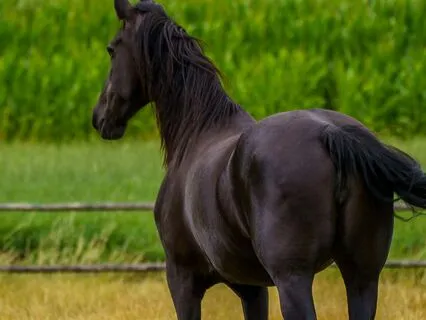
The black one is the most perfect temper I ever knew.
I suppose he's never knowed a hard word or a blow since he was fouled,
And all his pleasure seems to be what you wish,
But the chestnut,
I fancy,
Must have had some bad treatment.
We heard as much from the dealer.
She came to us snappish and suspicious,
But when she found what sort of place ours was,
It all went off by degrees.
For three years I have never seen the smallest sign of temper,
And if she is well treated,
There is not a better,
More willing animal than she is,
But she is naturally a more irritable constitution than the black horse.
Flies tease her more,
Anything wrong in the harness frets her more,
And if she were ill-used or unfairly treated,
She would not be unlikely to give tit for tat.
You know that many high-medaled horses will do so.
Of course,
Said York,
I quite understand,
But you know it is not easy in stables like these to have all the grooms just do what they should be.
I do my best,
And there I must leave it.
I'll remember what you have said about the mare.
They were going out of the stable when John stopped and said,
I had better mention that we have never used the check rein with either of them.
The black horse never had one,
And the dealer said it was the gag bit that spoiled the other's temper.
Well,
Said York,
If they come here they must wear the check rein.
I prefer a loose rein myself,
And his lordship is always very reasonable about horses.
But my lady,
That's another thing.
She will have the style,
And if her carriage horses are not reined up tight,
She wouldn't look at them.
I always stand out against the gag bit,
And shall do so,
But it must be tied up when the lady rides.
I am very,
Very sorry for it,
Said John,
But I must go now,
Or I shall lose the train.
He came round to each of us to pat and speak to us for the last time.
His voice sounded very sad.
I held my face close to him,
That was all I could do to say goodbye.
And then he was gone,
And I have never seen him since.
The next day Lord W.
Came to look at us.
He seemed pleased with our appearance.
I have great confidence in these horses,
He said,
From the character my friend Mr.
Gordon has given me of them.
Of course they are not a match in colour,
But my idea is that they will do very well for the carriage while we are in the country.
Before we go to London I must try to match Baron,
The black horse.
I believe it is perfect for riding.
York then told him what John had said about us.
Well said he,
You must keep an eye on the mare,
And put the check rein easy.
I dare say they will do very well with a little humouring at first.
I'll mention it to your lady.
In the afternoon we were harnessed and put in the carriage,
And as the stable clock struck three we were led round to the front of the house.
It was all very grand,
And three or four times as large as the old house at Birkwick,
But not half as pleasant,
If a horse may have an opinion.
Two footmen were standing ready,
Dressed in drab livery,
With scarlet breeches and white stockings.
Presently we heard the rustling sound of silk as my lady came down the flight of stone steps.
She stepped round to look at us.
She was a tall,
Proud-looking woman,
And did not seem pleased about something.
But she said nothing,
And got into the carriage.
This was the first time of wearing a check rein,
And I must say,
Though it certainly was a nuisance not to be able to get my head down now and then,
It did not pull my head higher than I was accustomed to carry it.
I felt anxious about Ginger,
But she seemed to be quiet and content.
The next day,
At three o'clock,
We were again at the door,
And the footmen as before.
We heard the silk dress rustle and the lady come down,
And in an imperious voice she said,
York,
You must put those horses' heads higher,
They are not fit to be seen.
York got down and said very respectfully,
I beg your pardon,
My lady,
But these horses have not been reined up for three years,
And my lord said it would be safer to bring them up in degrees.
But if your ladyship pleases,
I can take them up a little more.
Do so,
She said.
York came round to our heads and shortened the rein himself,
One hole,
I think.
Every little makes a little difference,
Be it for better or worse,
And that day we had a steep hill to go up.
Then I began to understand what I'd heard of.
Of course I wanted to put my head forward and take the carriage up with a will,
As we'd been used to do,
But no,
I had to pull with my head up now,
And that took all the spirit out of me,
And the strain came on my back and legs.
When we came in,
Ginger said,
Now you see what it's like,
But this is not bad,
And if it does not get much worse than this I shall say nothing about it,
For we are well treated here,
But if they strain me up tight,
Why,
Let them look out,
I can't bear it and I won't.
Day by day,
Hole by hole,
Our bearing reins were shortened,
And instead of looking forward with pleasure to having my harness put on as I used to do,
I began to dread it.
Ginger too seemed restless,
Though she said very little.
At last I thought the worst was over,
For several days there was no more shortening,
And I determined to make the best of it and do my duty,
Though it was now a constant harass instead of pleasure.
But the worst was not come yet.
Chapter 23.
A Strike for Liberty One day my lady came down later than usual,
And the silk rustled more than ever.
Drive to the Duchess of Bees,
She said,
And then after a pause,
Are you ever going to put those horses' heads up,
York?
Raise them at once and let us have no more of this humoring and nonsense.
York came to me first,
While the groom stood at Ginger's head.
He drew my head back,
And fixed the reins so tight that it was almost intolerable.
Then he went to Ginger,
Who was impatiently jerking her head up and down against the bit,
As was her way now.
She had a good idea of what was coming,
And the moment York took the rein off the order to shorten it,
She took her opportunity and reared up so suddenly that York had his nose roughly hit and his hat knocked off.
The groom was nearly thrown off his legs.
At once they both flew to her head,
But she was a match for them,
And went on plunging,
Rearing,
And kicking in a most desperate manner.
At last she kicked right over the carriage pole and fell down,
After giving me a severe blow on my near quarter.
There is no knowing what further mischief she might have done had not York promptly set himself down flat on her head to prevent her struggle.
At the same time calling out,
Unbuckle the black horse.
Run for the winch and unscrew the carriage pole.
Cut the tray's tier,
Somebody,
If you can't unhitch it.
One of the footmen ran for the winch,
And the other brought a knife from the house.
The groom set me free from Ginger and the carriage,
And led me to my box.
He just turned me in as I was,
And ran back to York.
I was much excited by what had happened,
And if I had ever been used to kick,
Or rear,
I am sure I would have done it then.
But I never had,
And there I stood,
Angry,
Sore in my leg,
My head still strained up to the tarret on the saddle,
And no power to get it down.
I was very miserable and felt much inclined to kick the first person who came near me.
Before long,
However,
Ginger was led in by two grooms,
A good deal knocked and bruised.
York came with her and gave his orders,
And then came to look at me.
In a moment he let down my head.
Confound these check rings,
He said to himself.
I thought we should have some mischief soon.
Master will be sorely vexed.
But there,
If a woman's husband can't rule her,
Of course a servant can't.
So I washed my hands of it,
And if she can't get to the Duchess's grand party,
I can't help it.
York did not say this before the men.
He always spoke respectfully when they were nearby.
Now he felt me all over,
And soon found the place above the hawk where I'd been kicked.
It was swelled and painful.
He ordered it to be sponged with hot water,
And then some lotion was put on.
Lord W.
Was much put out when he learned what had happened.
He blamed York for giving way to his mistress,
To which he replied that in the future,
He would much prefer to receive his orders only from his lordship.
But I think nothing came of it,
For things went on the same as before.
I thought York might have stood up better for the horses,
But perhaps I am no judge.
Ginger was never put into the carriage again.
But when she was well a bruises,
One of the Lord W.
,
Younger son,
Said he should like to have her.
He was sure she would make a good hunter.
As for me,
I was obliged still to go in the carriage,
And had a fresh partner called Max.
He had always been used to the tight rein.
I asked him how he bore it.
Well,
He said,
I bear it because I must.
But it is shortening my life,
And it will shorten yours too,
If you have to stick to it.
Do you think,
I said,
That our masters know how bad it is for us?
I can't say,
He replied,
But the dealers and the horse doctors know it very well.
I was at a dealer's once,
Who was training me and another horse to go as a pair.
He was getting our heads up,
As he said,
A little higher and a little higher every day.
A gentleman who was there asked him why he did it so.
Because,
Said he,
People won't buy them unless we do.
The London people always want their horses to carry their heads high,
And to step high.
Of course,
It's very bad for the horses,
But then it's good for trade.
The horses soon wear up,
Or get diseased,
And they come for another pair.
That,
Said Max,
Is what he said in my hearing,
And you can judge for yourself.
What I suffered with that rein,
For four long months in my lady's carriage,
Would be hard to describe.
But I'm quite sure that,
Had it lasted much longer,
Either my health or my temper would have given away.
Before that,
I never knew what it was to foam at the mouth.
But now the action of the sharp bit on my tongue and jaw,
And the constrained position of my head and throat,
Always cause me to froth at the mouth more or less.
Some people think it very fine to see this and say,
What fine spirited creatures.
But it was just as unnatural for horses as for men to foam at the mouth.
It is a sign of discomfort,
And should be attended to.
Besides this,
There was the pressure on my windpipe,
Which often made my breathing very uncomfortable.
When I returned from my work,
My neck and chest were strained and painful,
My mouth and tongue tender,
And I felt worn and depressed.
In my old home,
I always knew that John and my master were my friends,
But here,
Although in many ways I was well treated,
I had no friend.
York might have known,
And very likely did know,
How the rein harassed me,
But I suppose he took it as a matter of course that it could not be helped.
At any rate,
Nothing was done to relieve me.
CHAPTER 24 THE LADY ANNE OR A RUNAWAY HORSE Early in the spring,
Lord W.
And part of his family went to London and took York with them.
I and Ginger and some other horses were left at home for use,
And the head groom was left in charge.
The Lady Harriet,
Who remained at the hall,
Was a great invalid and never went out in the carriage,
And the Lady Anne preferred riding on horseback with her brother or cousins.
She was a perfect horsewoman,
And as gay and gentle as she was beautiful.
She chose me for her horse,
And named me Black Ouster.
I enjoyed these rides very much in the clear,
Cold air,
Sometimes with Ginger,
Sometimes with Lizzy.
This Lizzy was a bright bay mare,
Almost thoroughbred,
And a great favorite with the gentlemen,
On account of her fine action and lively spirit,
But Ginger,
Who knew more of her than I did,
Told me she was rather nervous.
There was a gentleman of the name of Blantier staying at the hall.
He always rode Lizzy,
And praised her so much that one day Lady Anne ordered the side saddle to be put on her,
And the other saddle on me.
When we came to the door,
The gentleman seemed very uneasy.
How is this?
He said.
Are you tired of your good Black Ouster?
Oh no,
Not at all,
She replied,
But I am amiable enough to let you ride him for once,
And I will try your charming Lizzy.
You must confess that in size and appearance she is far more like a lady's horse than my own favorite.
Do let me advise you not to mount her,
He said.
She is a charming creature,
But she is too nervous for a lady.
I assure you she is not perfectly safe.
Let me beg you to have the saddles changed.
My dear cousin,
Said Lady Anne laughing,
Pray do not trouble your good,
Careful head about me.
I have been a horsewoman ever since I was a baby,
And I have followed the hounds a great many times,
Though I know you do not approve of ladies' hunting,
But still that is the fact,
And I intend to try this Lizzy that you gentlemen are all so fond of,
So please help me mount,
Like a good friend as you are.
There was no more to be said.
He placed her carefully on the saddle,
Looked to the bit and curb,
Gave the reins gently into her hand,
And then mounted me.
Just as we were moving off,
A footman came out with a slip of paper and message from Lady Harriet.
Would they ask this question to her at Dr.
Ashley's and bring the answer?
The village was about a mile off,
And the doctor's house was the last in it.
We went along gaily enough till we came to the gate.
There was a short drive up to the house before tall evergreens.
Blantera lighted at the gate,
And was going to open it for Lady Anne,
But she said,
I'll wait for you here,
And you can hang Austere's rein on the gate.
He looked at her doubtfully.
I will not be five minutes,
He said.
Oh,
Do not hurry yourself.
Lizzy and I shall not run away from you.
He hung my rein on one of the iron spikes,
And was soon hidden from the trees.
Lizzy was standing quietly by the side of the road a few paces off,
With her back to me.
My young mistress was sitting easily with the loose rein,
Humming a little song.
I listened to my rider's footsteps until they reached the house,
And heard him knock at the door.
There was a meadow on the opposite side of the road,
The gate of which stood open.
Just then some cart horses and several young colts came trotting out in a very disorderly manner,
While a boy behind was cracking a great whip.
The colts were wild and frolicsome,
And one of them bolted across the road,
And blundered up against Lizzy's hind legs.
And whether it was the stupid colt,
Or the loud cracking of the whip,
Or both together,
I cannot say,
But she gave a violent kick,
And dashed off into the headlong gallop.
It was so sudden that Lady Anne was nearly unseated,
And she soon recovered herself.
I gave a loud,
Shrill neigh for help.
Again and again I neighed,
Pawing the ground impatiently,
And tossing my head to get the rein loose.
I had not long to wait.
Blantyre came running to the gate.
He looked anxiously about,
And just caught sight of the flying figure,
Now far away on the road.
In an instant he sprang to the saddle.
I needed no whip,
No spur,
For I was eager as my rider.
He saw it,
And giving me free rein,
And leaning a little forward we dashed after them.
For about a mile and a half the road was straight,
And then bent to the right,
Which it divided into two roads.
Long before we came to the bend she was out of sight.
Which way had she turned?
A woman was standing at the garden gate,
Shading her eyes with her hand,
And looking eagerly up the road.
Scarcely drawing the rein,
Blantyre shouted,
Which way?
To the right,
Cried the woman,
Pointing with her hand,
And away we went up the right-hand road,
And for a moment we caught sight of her.
Another bend,
And then she was hidden again.
Several times we caught glimpses,
And then lost them.
We scarcely seemed to gain ground upon them at all.
An old road-mender was standing near a heap of stones,
His shovel dropped and his hands raised.
As we came near he made a sign to speak.
Blantyre drew the rein a little.
To the common,
To the common,
Sir,
She has turned off there.
I knew this common very well.
It was for the most part very uneven ground,
Covered with heather and dark green firs bushes,
With here and there a scrubby old thorn tree.
There were also open spaces of fine short grass,
With anthills and moulterns everywhere,
The worst place I ever knew for a headlong gallop.
We had hardly turned on the commons when we caught sight again of the green habit flying on before us.
My lady's hat was gone,
And her long brown hair was streaming behind her.
Her head and body were thrown back,
As if she were pulling with all her remaining strength,
And as if that strength were nearly exhausted.
It was clear that the roughness of the ground had very much lessened Lizzy's speed,
And there seemed a chance that we might overtake her.
While we were on the high road Blantyre had given me my head,
But now with a light hand and a practice eye he guided me over the ground in much a masterly manner,
That my pace was scarcely slackened,
And we were decidedly gaining on them.
About halfway across the heath there had been a wide dyke recently cut,
And the earth from the cutting was cast up roughly on the other side.
Surely this would stop him,
But no,
With scarcely a pause Lizzy took the leap,
Stumbled among the rough clods,
And fell.
Blantyre groaned,
Now Oster,
Do your best.
He gave me a steady rein.
I gathered myself well together,
And with one determined leap cleared both dyke and bank.
Motionless among the heather,
With her face to the earth,
Lay my poor young mistress.
Blantyre kneeled down and called her name.
There was no sound.
Gently he turned her face upward.
It was ghastly white and her eyes were closed.
Annie,
Dear Annie,
Do speak.
But there was no answer.
He unbuttoned her habit,
Loosened her collar,
Felt her hands and wrists,
Then started up and looked wildly around for help.
At no great distance there were two men cutting turf,
Who seeing Lizzy running wild without a rider,
Had left their work to catch her.
Blantyre's hello soon brought them to the spot.
The foremost man seemed much troubled at the sight,
And asked what he could do.
Can you ride?
Well,
Sir,
I've been much of a horseman,
But I'd risk my neck for the Lady Anne.
She was uncommon good to my wife in the winter.
Then mount this horse,
My friend.
Your neck will be quite safe,
And ride to the doctor's and ask him to come here instantly.
Then on to the hall.
Tell them all that you know,
And bid them send me a carriage with Lady Anne's maid and help.
I shall stay here.
All right,
Sir,
I'll do my best,
And I pray God the dear young lady may open her eyes soon.
Then seeing the other man,
He called out,
Here,
Joe,
Run for some water,
And tell my missus to come as quick as she can to the Lady Anne.
He then somehow scrambled into the saddle,
And with a gee-up and a clap on my sides with both his legs,
We started on our journey,
Making a little circuit to avoid the dyke.
He had no whip which seemed to trouble him,
But my pace soon cured that difficulty,
And he found the best thing he could do was stick to the saddle and hold me in,
Which he did manfully.
I shook him as little as I could,
But once or twice on the rough ground he called out,
Steady,
Whoa,
Steady.
On the high road we were all right,
And at the doctor's and the hall he did his errand like a good man and true.
They asked him in to take a drop of something.
No,
No,
He said,
I'll be back to him again by a short cut through the fields,
And there'll be a four carriage.
There was a great deal of hurry and excitement after the news became known.
I was just turned into the box,
The saddle and bridle were taken off,
And a cloth thrown over me.
Ginger was saddled and sent off in great haste for Lord George,
And I soon heard the carriage roll out of the yard.
It seemed a long time before Ginger came back,
And before we were all left alone,
And then she told me what she had seen.
I can't tell much,
She said.
We went a gallop nearly all the way,
And got there just as the doctor rode up.
There was a woman sitting on the ground with Lady's head in her lap.
The doctor poured something into her mouth,
But all I heard was,
She is not dead.
Then I was let off by a man to a little distance.
After a while she was taken in the carriage and we came home together.
I heard my master say to the gentleman who stopped him to inquire,
That he hoped no bones were broken,
But that she had not spoken yet.
When Lord George took Ginger for hunting,
York shook his head.
He said it ought to be a steady hand to train a horse for the first season,
And not a random rider like Lord George.
Ginger used to like it very much,
But sometimes when she came back,
I could see that she had been very much strained,
And now and then she gave a short cough.
She had too much spirit to complain,
But I could not help feel anxious about her.
Two days after the accident,
Blanter paid me a visit.
He patted me and praised me very much.
He told Lord George that he was sure the horse knew of Annie's danger as well as he did.
I could not have held him if I would,
Said he.
She ought never to ride any other horse.
I found by their conversation that my young mistress was now out of danger,
And would soon be able to ride again.
That was very good news to me,
And I looked forward to a happy life.
And that is the end of our story this evening.
Until next time,
Sweet dreams.