Hi,
Everyone.
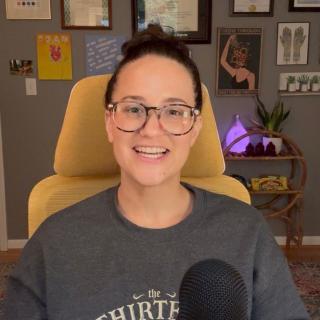
My name is Hannah,
And I just completed a 14-day video course on the 12 steps for codependency.
If you struggle with people-pleasing,
Setting boundaries,
Feeling like you're a fixer or a rescuer,
And over-functioning.
I've been making this course for the last five hours,
And I wanted to make a quick video recapping the 12 steps in case you were curious about them.
I will be paraphrasing a bit using language from Alcoholics Anonymous.
Al-Anon,
Codependents Anonymous,
And Narcotics Anonymous.
There are a whole lot of 12-step programs.
The origination of the 12 steps were first published in 1939 by the founders of Alcoholics Anonymous,
Bill Wilson and Dr.
Bob.
Since then,
There have been so many more 12-step programs that have been started based off the original 12 steps from Alcoholics Anonymous.
And they are as follows.
One,
We admitted that we were powerless and that our lives had become unmanageable.
In step one,
We are looking at what we are powerless over.
Are we powerless over alcohol,
Drugs,
Other people?
Are we powerless over our emotions,
Gambling,
Food?
Maybe scrolling on our phones.
Powerlessness does not mean that we have done something wrong.
It's solely an opportunity to look at where we continue to try to exert control,
Where we in fact have none,
And that as a result,
Our lives feel unmanageable.
If you continue trying to think your way out of the same pain point,
That can feel really unmanageable.
So step one is about identifying that pain point.
So we admitted we were powerless over blank and that our lives had become unmanageable.
Step two is came to believe that a power greater than ourselves could restore us to sanity.
Now,
The amazing thing about the 12 steps is that you don't have to believe in a particular idea of God or a deity or religion or even spirituality.
It really is a choose your own adventure.
So came to believe that a power greater than myself.
Can restore me to sanity.
If I'm admitting that I am powerless over something,
That means I need a power greater than myself to overcome it.
Now we're taught that reliance on things human fail us.
And so a power greater than ourselves could be your conception of God.
It could be the universe.
For me,
It's very much the universe.
It's the Tao.
So originating from the Tao Te Ching,
This concept of there being an underlying infinity that connects everything.
Something to me that feels like an unnameable truth.
That's my conception of a higher power.
The important part is that you don't have to believe in God.
You just have to concede to your innermost self that you are not God.
And what that means is that you cannot manage people,
Places,
Things,
And outcomes that have always been out of your control.
So step one,
We admitted we were powerless and that our lives had become unmanageable.
Step two.
Came to believe that a power greater than ourselves could restore us to sanity.
Step 3.
Made a decision to turn our will and our lives over to the care of God as we understood God.
You can change that language.
I personally do.
Made a decision to turn my will and my life over to the universe.
I can't fix my pain points myself.
If I can,
I would have already.
And so in the third step,
I'm taught how to turn it over to release control.
Step four is the first time we're really putting pen to paper.
Step four is made a searching and fearless moral inventory of ourselves.
Now,
In Alcoholics Anonymous,
That includes a resentments inventory,
A fear inventory,
And a personal relations inventory,
Typically about sex conduct and intimate partner relationships.
In the 14-day course that I made today,
The fourth step is 17 minutes long.
And that was me trying to keep it short.
The fourth step is a way for us to take inventory of patterns of behavior that no longer serve us.
And we really start looking at our part.
What's my part?
What do I have control over?
The fourth step inventory is awesome,
In my opinion.
The fifth step is.
We admitted to God,
To ourselves,
And to another human being the exact nature of our shortcomings.
Shortcomings,
Defects.
Wounds.
You can call them whatever you'd like.
Step five is about vulnerability.
It's about shedding light on our shame.
And so really,
Step five means taking step four and sharing it with another human.
In the 12 steps,
Typically you do this with a sponsor,
Which is someone who has been through the 12 steps that is taking you through the 12 steps.
A sponsor's only job is to take you through the 12 steps and share their experience with you.
They become like a confidant.
They are not a therapist or a life coach or anything like that.
If you're not in a 12-step program,
You can absolutely bring your step work to a therapist or a coach and go through it with them.
If you are in a 12-step program,
It is suggested to go through these steps with your sponsor.
These steps are not meant to be worked alone.
Step six is we're entirely ready to have God remove our defects of character.
I'm paraphrasing and I'm also.
.
.
Again,
Five hours into making a video course.
And so if you're in the 12 steps and you're like,
No,
That's not right.
I'm going for the gist of them rather than the finite words because I'm doing all of this off the top of my head in the moment.
I hope you'll grant me some grace there.
So step six is about becoming entirely ready to continue practicing step three.
Can I be entirely ready to let go of the things that are holding me back and trust this power greater than myself,
Whatever it may be,
To do that for me?
Because I cannot do it myself.
Step seven is humbly ask God to remove these defects of character.
I call them wounds because I don't believe we're defective.
I believe we have wounds.
So humbly asking the universe,
Can you please remove this?
And not picking or choosing what should be removed,
But rather offering all of myself.
I don't know what's going to be an asset or a defect.
I am not an expert on me or anyone else.
In the beginner's mind,
There are many possibilities,
But in the expert's mind,
There are few.
Step eight is made a list of people we have harmed and became willing to make amends to them all.
So step eight is just a list.
Step nine,
Made direct amends to those wherever possible,
Unless one to do so would injure them or others.
So step nine,
We are making amends.
We are taking accountability for our part.
Step 10,
Which is my favorite.
Continued to take personal inventory,
And when we were wrong,
Promptly admitted it.
Step 10 is my favorite for so many reasons.
Step 11,
Sought through prayer and meditation to improve our conscious contact with God as we understood God.
You're on Insight Timer.
You're already practicing step 11.
And stepped well.
Having had a spiritual awakening as the result of these steps,
We try to carry this message to others and to practice these principles in all our affairs.
So that is a nine minute summary of the 12 steps.
That is a lot of information and I'm doing my best to speak as slowly as possible while keeping this video somewhat brief.
But if it feels like that was too much or I was speaking too quickly,
I do genuinely apologize.
I consistently receive feedback that I speak too quickly.
When I'm passionate about something,
I get really excited,
But I am trying to be intentional about slowing it down.
If you'd like,
Feel free to rewatch this video and you can pause after each step.
And once my course is published.
Feel free to go take a look at that too.
It's wonderful for dealing with any pain points and has such great practical applicability to all people.
Thank you for watching this brief summary of the 12 steps.