Hello friends,
In this episode I'm going to share with you some stories about animals in Finnish mythology.
Enjoy!
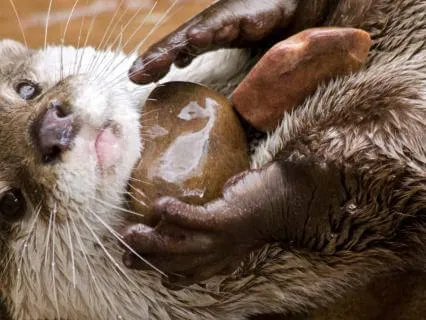
Otter,
Saukko.
River maiden,
Young and fair,
Run the rivers,
Mirror clear,
Tried away with furry crest.
Otters were likely some of Finland's first inhabitants,
Arriving right after the last ice age.
They were also one of the animals hunted for their fur by hunter-gatherers.
Otters are associated with the elements of earth and water.
In some folk songs,
Water spirits play with otters,
Swimming together in swift currents.
Otters have been referred to as both water cats and water dogs,
And are seen as very playful animals.
In shamanic practices,
When a shaman was healing a patient,
The disease was symbolically represented as an otter swimming away in the opposite direction.
Depending on the source,
The creator spirit of the otter is identified as hillervo or lillervoinen,
Also known as jokiatar,
Joki meaning river,
Or juoletar,
A water spirit of flowing waters.
Hillervo oversaw the birth,
Life,
Death and reincarnation of animals living by the river,
Such as beavers,
Otters and minks.
In folk witchcraft,
Otters were admired for their beauty and the ability to swim effortlessly between realms.
Seal,
Hyyliä.
Seals were closely associated with both Vellamo and Ahti in mythology.
Seals were referred to as the oldest of the sea,
As well as the old man seal and old woman seal.
Seals symbolized the abundance of water,
Both physically and metaphorically,
And represented a good life.
They lived contentedly,
Swimming in the sea,
Occasionally eating fish and resting on the rocks.
According to the origin story of seals,
They were born at the same time as the world itself.
An egg fell from the heavens into the cold sea,
And from that egg the fish and the seals emerged.
Dragonfly,
Suden korento.
In Finnish and other closely related languages,
Korento can refer to a water-carrying tank,
Pole or mast.
It seems that korento originally referred to a pole-like or stick-like wooden object,
Which was then metaphorically used to describe an insect with a body resembling wood,
Such as the dragonfly.
Susi means a wolf,
But there is no direct connection between the wolves and the dragonfly,
Except that both are predatory animals with a fierce appearance.
In standard Finnish,
The word suden korento,
Dragonfly,
Was first mentioned in Daniel Juslenius' dictionary in 1745.
The lifespan of a dragonfly is short,
Symbolizing the limits of time.
According to Northern myths,
Dragonflies would fly around wicked individuals to assess whether their souls could achieve redemption.
It was believed that dragonflies could approach the mouths of lying children or the eyes and ears of adults with bad tempers to silence them.
Frog,
Sammakko.
Frogs undergo several stages of metamorphosis during their lives,
Which has led to a significant amount of mysticism surrounding them.
In ancient beliefs,
All frogs were taught to gather toxins,
Making it forbidden to kill or harm them.
It was believed that frogs were connected to humans and possessed protective powers.
For instance,
A frog that lived in a barn was considered a guardian spirit for all farm animals.
Similarly,
A frog residing in a well ensured that the water remained pure,
And the same was true for a frog living in milk.
Additionally,
Frogs were taught to have healing abilities,
And frog eggs were often used as ingredients in spells.
Toad,
Rupikonna.
In Finnish folktales,
Reptiles have unfortunately garnered a negative reputation.
Some scholars speculate that this perception may stem from Christianity's association of snakes with the devil.
However,
It is likely that reptiles hold a better status in pre-Christian times.
In Finland,
The only toad species present is the common toad,
Pufopufo,
Which has poisonous slime on its skin that can cause hallucinations.
Witches and shamans historically kept toads as pets and familiars,
Utilizing toad poison in their magic.
It was also common in Finland to use frogs and toads for healing purposes.
For instance,
Placing a frog on a burn was believed to promote healing.
The Finnish name for the toad,
Rupikonna,
Has interesting meanings.
Rupi refers to warts,
Which are found on the skin of toads,
While konna means a thief,
A trickster,
A sleuth.
Referring to toad as a konna may be linked to their tendency to inhabit dark hiding places,
Such as caves and crevices between rocks.
In folk poetry,
The creator of the toad is known by various names,
Including onnutar,
Kääkky,
Salvatar,
Salvotar,
With salva meaning ointment,
And enärimys.
A specific spell was recited when healing a skin ailment caused by a toad urine.
A poultice was placed over the burnt area,
And the ingredients,
Including various plants and flowers,
Were gathered from locations where toads typically resided.
Skin diseases that were caused by toads and frogs were referred to as sammakonjälki,
Print of a frog,
Or sammakonpurema,
Frog bite,
And konnan vihat,
Toad's anger.
The term bite is more symbolic,
As it was typically the poison in the toad's skin that led to skin rashes.
Salvatar,
To our Thai father's gift,
Salvatar,
To our Thai mother's grace,
Salvatar,
To our Thai self,
And the frog is Thai sister,
To our Thai whining rat,
Like ale,
Thai evils,
They dwell.
Thai toads roam wild in speech,
Like the skin of a poor human soul,
Like the fur of the great narrow beast.
From the body of the mother they come,
From the form of the wife they grow.
This spell was collected from Vokkinemi in 1930.
Närimys and Kääkyy are demons associated with diseases,
Appearing in creation poems related to plagues.
Kääkyy may have origins connected to Saint Gertrude,
Who was known as the saint of healing.
According to the origin story of the toad,
Toads were created in a muddy swamp from which they jumped into land and chose to live near water.
From the mud it came,
The frog.
You thought you'd bitten wood to pieces,
The root of the willow you'd taken.
But no,
You have not bitten wood,
Nor seized the willow's root.
You've bitten the warrior's juices,
The skull of the fur-clad one,
The children of the mitten-bearers.
Freshwater pearl mussel,
Raakku.
The freshwater pearl mussel,
Known by its Finnish name Raakku,
Is sadly an extinct species in Finland at the moment.
When I was a child in the 1990s,
My grandmother's house was located by the river,
And I would often find empty shells of Raakku on the shores.
People have harvested these treasures from rivers for centuries.
Up until the 19th century,
They could be found in rivers all over Finland,
And the pearls were incorporated into traditional costumes in Karelia,
As well as in outfits of other Finno-Ugric tribes,
Such as the Haanti and Mansi.
In the 17th century,
The king of Sweden encouraged peasants to catch pearls for the crown.
Pearls were harvested in various ways.
In shallow waters,
Mussels were picked by hand.
In deeper waters,
People used boats or a draft with a hole in the bottom.
The hole was surrounded by straws,
And a wooden and glass window was added for visibility.
Skilled pearl hunters were said to recognize which mussels contained pearls,
And they would focus on catching only those.
The pearls were considered possessions of Vellamo and other water spirits,
So the hunters tried to please them in every possible way.
Often they would sing or chant for the spirits and pray to them.
Vellamo,
Mistress of water.
Chest covered with reeds.
Open your treasure chest.
Raakku became a protected species in 1955.
Lizard Sisilisko The name Sisilisko,
Referring to a lizard,
Is believed to be one of the oldest animal names in Finnish language.
Unfortunately,
This harmless little creature had a rather negative reputation in the past.
People often confused lizards with snakes,
Associating both with Alinen,
The dark spirits,
And enchantments.
In Karelia,
The Baltic countries and Finland,
It was customary to celebrate Jyri's Day,
Saint George's Day,
In April.
This day marked the official start of farm work,
And cattle were released into the fields to enjoy spring.
In Icons and Search Morals,
Saint George is depicted slaying a dragon,
Which made him the patron saint who protected cattle from predators.
Their predator,
Represented by the dragon or basilisk,
Didn't have a direct counterpart in the Nord,
But it bore a resemblance to the lizard.
In Finland,
Lizards are small and can fit in the palm of one's hand.
They were also considered liminal creatures because,
While they looked like snakes,
They had four legs,
Which made them somewhat suspicious.
Additionally,
Lizards have the ability to regrow their tails,
Further enhancing the beliefs that they possessed magical powers.
Viper.
Kyy.
The viper is the only poison snake found in Finland,
And it is surrounded by a rich tapestry of folklore.
The term kyy is believed to derive from an ancient Finnish word that dates back 6,
000 years.
In contrast,
The word käärme,
Meaning snake,
Is about 3,
000 years old and is thought to have originated from the Baltic region.
Another term for snakes was mato,
Which in modern Finnish refers to worms,
But was historically used as a general term for anything that slithers.
One animistic belief held that if you spoke the name of an animal,
The animal would appear,
So people often avoided saying the word for viper,
Kyy,
Leading to the use of numerous euphemisms for the viper.
The black serpent of the deep,
The worm with Duoni's fur,
To the mounds it makes its way,
Winding round the roots of trees,
Beneath the stones it twists and turns,
A traveler in the below.
The spells detailing the origin story of the viper describe how the creature is formed from various parts.
This creation occurs in time before time itself,
With the creators being either biblical figures or mythical Finnish deities and spirits.
Depending on the version,
Witches would recite these spells when healing someone who had been bitten by a viper.
Where was this spirit granted?
The spirit from he is his fiery glow.
Where does the deep abyss arise?
From the depths of the giantess,
The Ytres.
Where was the evil placed?
From the seeds of the wicked bean.
Where were the eyes fashioned?
From the devil's linen seed.
Where were the ears of the toad formed?
From the devil's birch grove tangled.
Where was the mouth shaped?
The mouth of salt.
From the Ytres.
Where are the gums of the yoke born?
From the teeth of the dead maiden.
Where was the tongue made?
From the spear of the sorceress.
In the origin tale,
The head of the viper is made from patarani,
Which refers to useless cauldrons.
The brains are composed of the swift current of a river,
While the eyes are either pearls from a river clam or white berries from the bird cherry.
Teeth come from the mouth of a pike,
And the tongue is made from giant spear.
The body consists of the hair of a crying maiden,
The backbones of a pike,
Or the hair of a demon.
Finally,
The spirit of the viper is drawn from the fires of hell.
Snakes.
Käärmeet.
The snake was strongly associated with health,
As it was believed to have healing properties.
The snake skin was a powerful tool and remedy that could cure various diseases.
Folklore recognizes two types of snake skins,
Toes shed by the snake itself,
Old skins that could be found in nature with good luck,
And skins peeled from a dead or killed snake.
However,
The latter were not considered very magical or effective,
As they came from a dead snake and thus no longer had the same potency as those from a living one.
Especially when healing was sought,
The skin had to come from a living animal.
Snake skins were used both externally as poultices,
Wraps and cleansers for various pain and skin conditions,
And internally,
For example,
As a powder or soaked in alcohol to be taken in drops.
The snake also had protective qualities,
And the snake skin was an important magical object for many shamans and witches.
It was common among the people to place the skin in a jar and bury it under the house or doorstep to protect the home from evil.
Finnish folklore also recognizes a magical snake-related talisman,
The snake stone.
The snake stone is a translucent white,
Smooth,
Egg-shaped magical stone,
Which,
When possessed,
Gave the holder the ability to understand animal speech,
Heal diseases,
Live longer and become immune to all poisons.
The snake is also considered one of the assistants of shamans in Finnish folklore.
Witches and old wise men,
Pohuukot,
Were believed to have the power to summon snakes to harm others at will,
And were needed to turn those summoned snakes back again.
White snake White-colored crowned snakes are often found in folktales.
Although albino snakes do exist in nature,
They are rare,
Which makes stories about encounters with white kingsnakes especially magical and otherworldly,
Like this following story.
A trapper had,
During winter,
Likely,
While setting traps,
Fallen into the earth and woke up in snake's cave.
He had lost his knife in the fall,
And he quickly glanced around in panic.
Snakes of all colors and sizes were piled up everywhere,
And even at his feet,
Snakes littered,
Both large and small.
Most of the snakes seemed to be hibernating,
But a few moved lazily around,
And the more curious ones even came closer to inspect the man.
However,
The snakes seemed harmless,
So the man left them be.
To his horror,
The man noticed in the back of the cave an enormous white snake,
So large that its head was as big as a tar barrel.
The snake slithered a little closer and stared at the man,
Seemingly sizing him up,
Just as the man was doing to it.
After determining the man was apparently harmless,
The giant white snake turned and lay down again against the cave wall.
The man began to explore the cave,
Trying to climb the steep walls from different points to escape.
All in vain,
Snow blew into the cave through the hole where the man had fallen in,
But otherwise the cave,
With its snakes,
Felt mild,
Even though it was freezing outside.
Strangely enough,
It was also bright enough inside to see his surroundings.
Eventually,
Hunger began to gnaw at him,
But the man didn't feel hungry enough to start eating the snakes.
Furthermore,
He was somewhat afraid of the giant snake.
In the middle of the cave was a large,
Smooth rock,
Which at first the man assumed to be limestone.
However,
After watching the snakes for a while,
He noticed that each snake,
One by one,
Would slither up to the rock and lick it.
Eventually,
Curiosity got the better of him,
And the man licked the strange stone himself.
He quickly realized that he no longer felt hunger or thirst.
Thus,
By necessity,
He made his home in the cave,
Spent time with the snakes,
And licked the stone whenever hunger struck.
He even forgot,
At times,
That he was trapped in the cave.
At some point,
He found his knife,
Buried among the snakes at the bottom of the cave,
But he didn't begin killing any of them.
What was the point while he was there?
When spring finally arrived,
The sun peaked into the cave,
And as the snow melted,
Water began to drip into the cave.
The snake started to awaken and became more active.
Finally,
The large white snake slithered toward the hole in the ground from which the man had fallen,
Pressed its head against it,
And smaller snakes climbed into its back.
The great snake stretched upwards and helped all the smaller snakes out of the cave,
Sending them away in small groups.
When the cave was finally empty of snakes,
The man began to feel uneasy again.
What would happen to him now?
Would he remain trapped in the cave alone with the monster?
Would it eat him?
However,
The large snake pressed its head,
Waited a moment,
And then gently touched the man's knee with its snout,
Signaling for him to climb onto its back.
Then the great white snake helped the man out into the daylight,
And the man never saw it again.
He was surely grateful for the snake's hospitality.
Good luck,
White bats!
Lyylieläimet.
Lyylieläimet were usually wild or semi-wild animals whose care,
Such as regular feeding or providing a shelter,
Was believed to keep the household prosperous and strong.
Lyylieläin was seen either as an animal-shaped spirit,
The soul of the deceased,
Or its own animal spirit,
Whose favorable relationship with the household members ensured well-being for the family.
Lyylieläimet were generally smaller animals associated with the underworld,
And the most commonly mentioned were the hare,
Cat,
Dog,
Lizard,
Toad and snake,
Especially the grass snake,
Which was also known as the mato.
The needs of Lyylieläin were attended in the best possible ways.
These spirit animals were baited and regularly cared for,
And they had their own dwelling place and food bowl.
Lyylieläin often had its own name,
Either publicly known or a secret magical name known only to the household.
Lyylieläin also received sacrifices throughout the year,
In the same way as the spirit tree.
Lyylieläin's place would be at the base of the spirit tree or in its immediate vicinity,
Such as a small stone pile for snakes and lizards.
On special celebratory days,
The animal would receive treats,
But the primary focus of caring for Lyylieläimet was doing significant life changes,
As they were believed to have a very special connection not only with their caretaker,
But also with the household animals and children.
Such life events requiring sacrifices included animal births,
The birth of a child,
Weddings,
Death,
Or the grazing of livestock.
Lyylieläin was provided with offerings to ensure that nothing would go wrong,
Since it was specifically mentioned that snakes were particularly fond of dairy products.
The first drops of milk from cows,
For example,
Would always be offered to the Lyyli snake.
Lyylieläimet were never disturbed,
But were allowed to live in their own time.
Cats and dogs,
As well as lizards,
Snakes,
Frogs and toads,
Were preferred because they were loyal to the household or easy to keep within the house confines.
For example,
A Lyyli frog might live in the house as well as the spirit of the well.
Frogs were believed to keep the water cold,
Drinkable and fresh.
If a person fetching water accidentally harmed a valuable frog with their bucket,
Something bad would happen to them afterwards.
Lizards,
On the other hand,
Were a under porches or steps.
However,
The most popular and well-known wild pets were snakes.
An old folk tale tells of entire groups of Lyyli snakes living peacefully in the house,
The sauna or farm sheds.
The Lyyli snakes living in the house were sometimes said to even lie in the family's bed,
Which was considered a special gesture of favor from the animal spirit to the household.
Living with snakes was,
In practical terms,
A mutually beneficial arrangement.
Alt buildings were a perfect environment for mice and rats,
Which would eat the humans' food and spoil the grain with their droppings.
Snakes kept their rodent population in check,
And especially near animal shelters.
They are well suited as manure.
Heaps provided both an ideal nesting site and a hatching ground for snake eggs.
The oldest records of Lyyli elanet date back to the 1500s,
During the medieval period,
And they largely consist of stories written down by church fathers,
Schoolers and learned individuals about,
Quote,
Rural superstitions.