Hi,
Welcome to Fostering Resilience.
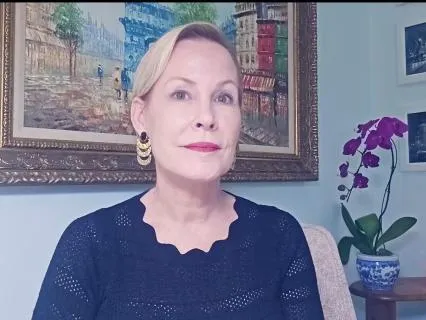
I'm KJ Foster.
Have you ever noticed?
That the harder you try to stop feeling anxious,
The stronger the anxiety seems to become.
You try to figure it out.
You try to calm yourself down.
You try to think your way to certainty.
And for a moment you might feel relief.
But then.
The anxiety comes back again.
Sometimes even stronger.
If that sounds familiar,
You are not broken.
And you are definitely not alone.
Today,
I want to talk to you about one of the biggest reasons anxiety keeps repeating itself.
And why so many intelligent,
Self-aware people accidentally get trapped in the anxiety cycle without even realizing it.
Realizing it.
Why Anxiety Keeps Returning.
One of the most important things to understand about anxiety.
Is that anxiety is not always a problem.
Often,
The struggle with anxiety becomes the problem.
Most people think recovery means,
How do I stop feeling anxious?
But what actually keeps anxiety going.
Is usually the constant attempt to escape it.
Control it.
Solve it!
Or eliminate it.
And this is where the cycle begins.
The Anxiety Cycle Something triggers anxiety.
Maybe it's.
A thought.
A sensation,
Uncertainty.
A memory.
Of fear and intrusive thoughts.
A physical symptom,
Or even just a feeling you don't like.
Your brain interprets that experience as dangerous.
And then your nervous system responds.
Your body tightens.
Your mind speeds up.
Your attention narrows.
And immediately your brain wants relief.
So what do most people do?
They start trying to make the anxiety go away.
Common anxiety behaviors.
Maybe you.
Overthink.
Google your symptoms.
Seek reassurance.
Avoid situations.
Mentally review conversations.
Try to predict the future.
Repeatedly check how you feel.
Distract yourself constantly.
Ask people if everything is okay.
Replay memories to try to solve uncertainty.
Now here's the important part.
These behaviors often do reduce anxiety temporarily.
That's why they become so addictive.
Your brain learns,
Oh good,
That worked.
Do that again next time.
But the problem is.
.
.
Your brain also learns something else.
It learns anxiety must actually be dangerous if we keep needing to escape it.
And without realizing it,
The brain becomes more sensitive to anxiety over time.
This is one of the hidden traps of anxiety.
The relief becomes reinforcing.
Not because you're weak.
Not because you're doing anything wrong.
But because your brain is designed to move away from discomfort.
That's what brains do.
But long-term recovery often requires something very different.
Instead of constantly asking.
How do I make this anxiety disappear?
We slowly begin learning.
How do I stop treating anxiety like an emergency?
And that shift changes the world.
Everything.
Learning you can handle uncertainty.
This is one of the core principles behind ERP,
Exposure and response prevention.
ERP is not about forcing yourself to suffer.
And it's not about pretending anxiety feels good.
It's about learning that you are capable of experiencing discomfort without immediately needing to escape it.
That is such an important distinction.
Because many people spend years trying to control every anxious feeling.
But recovery often begins when we stop organizing our entire life around avoiding discomfort.
You don't need certainty to move forward.
One of the hardest things for anxious minds?
Is uncertainty.
The anxious brain constantly asks.
What if.
.
.
What if something goes wrong?
What if I can't handle it?
What if this means something bad?
What if this feeling never stops?
And then the brain starts searching for certainty.
But certainty is addictive because the moment certainty fades,
The anxiety returns again.
This is why reassurance usually doesn't last very long.
You may feel better temporarily.
But then the brain comes back asking,
Are you sure?
And then.
What about this possibility?
And the cycle continues.
One of the most healing things you can begin practicing.
Is allowing uncertainty to exist.
Without immediately trying to eliminate it.
Not because uncertainty feels comfortable.
But because freedom comes from learning.
I can handle uncertainty better than my anxiety predicted.
That is resilience.
Not the absence of fear.
But the willingness to move forward even when fear is present.
Recovery looks different than people expect.
I think one of the biggest misconceptions about anxiety recovery.
Is that people imagine recovery means.
Never feeling anxious again.
But healing usually looks much quieter than that.
Sometimes recovery looks like this.
Not Googling.
Not asking for reassurance.
Not checking,
Not avoiding,
Not arguing with your thoughts.
Not trying to force certainty.
Sometimes recovery looks like feeling anxious and continuing your life anyway.
And over time,
The brain slowly learns maybe this feeling is not actually dangerous.
That's how the nervous system begins changing.
Not through force.
Not through perfection.
But through repeated experiences of staying present without escaping.
You are not failing at healing.
And if you've been struggling with anxiety for a long time,
I really want you to hear this part.
The fact that anxiety keeps showing up does not mean you are failing.
The anxious brain is often trying to protect you.
It's overprotective.
Hypervigilant,
Exhausted,
Sensitive to uncertainty,
But none of that means you are broken.
And recovery is not about becoming fearless.
It's about becoming more willing.
More compassionate toward yourself.
More able to sit with discomfort without abandoning yourself in the process.
So if anxiety has been heavy lately.
Maybe the goal today is not,
How do I make this disappear immediately?
Maybe the goal is simply How do I stop fighting myself while this feeling is here?
That small shift can become the beginning of real healing.
And remember.
You do not have to do recovery perfectly to begin healing.
Be gentle with yourself today.