
The world’s largest free audio library for everyday wellbeing
Real people. Real life. Real time.
Retreat categories
All RetreatsYoga RetreatsWellness RetreatsMeditation RetreatsYoga Teacher TrainingWomen's RetreatsYoga Retreats in BaliYoga Retreats in United KingdomYoga Retreats in AustraliaYoga Retreats in ItalyFind Your Perfect Retreat
Discover transformative Retreats led by Insight Timer's best teachers.Reconnect, recharge, and return renewed.
The world’s largest free audio library for everyday wellbeing
Blog categories
Mental Health and WellbeingTips and GuidesScience and ResearchTraditionSpiritualityAt WorkTop Articles
How to Meditate
Meditation is something everyone can do. Practicing can help improve your health and wellbeing.
Explore MeditationMeditation Timer
Free meditation timer with customizable intervals, bells, and ambient sounds.
Meditation Timer Online
COURSE
Zen And The Art Of Dealing With Difficult People
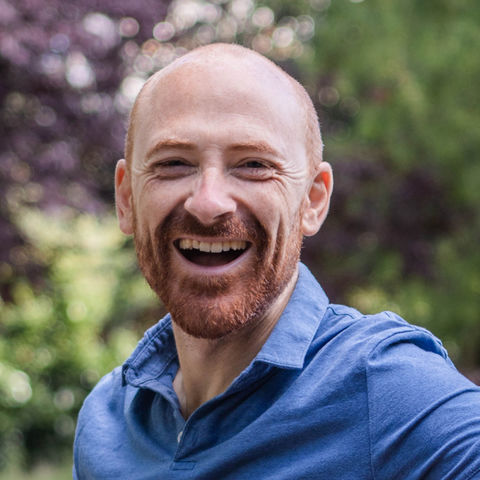
With Mark Westmoquette
This is a course that will help you deal with difficult people, and help you see those difficult people as your best teachers - what we call in Zen 'troublesome buddhas'. When we change our attitude from one of trying to avoid difficult people to one of seeing them as teachers, then can show you where you can grow and act with greater wisdom, compassion and kindness. This course is for anyone wanting to learn how to respond to difficult people and situations with more clarity and wisdom. You might be someone who has a number of troublesome people in various quarters of your life, or perhaps you have one particularly enraging one, or you have brushed up against an array of them at different points in your life. You can see that there’s often a pattern to your behaviour in relation to them and it usually causes pain – perhaps a great deal of pain. The only way we can grow is by facing this pain, acknowledging how we feel and how we’ve reacted, and making a commitment to end this repeating pattern of suffering. I assume no previous experience with mindfulness or Zen (or indeed any kind of Buddhism), and by no means do you need to identify as a Buddhist or adhere to any beliefs. In part 1 we'll explore what a troublesome Buddha is and what it means to start learning from the difficult people in our lives. Then in part 2, we'll explore how our particular tendencies and habitual behaviours contribute to the difficulty of certain relationships - for example, one person might get angry, while another person may react very apologetically. In part 3, I introduce what I'd see as the first key skill to develop - awareness of body sensations and the importance of maintaining emotional regulation, and in part 4 I guide a body scan meditation practice. Part 5 is about the second key skill: considering the possibility that you may not always be in the right. In part 6 I guide a meditation on being with discomfort in the body, since our ability to be ok with discomfort as the emotional heat rises is very important. Part 7 is all about trying out new ways of behaving, and I guide a meditation on a Zen koan about dealing with conflict in part 8. Part 9 is about the subject of opinions, how they can contribute to the difficulty in our relationships and how we can learn to hold them more lightly. And in part 10, we explore shifting from a perspective of seeing ourselves and others as separate to one of connection and integration, where we might see everyone (including our difficult people) as just facets in one giant jewel.
Meet your Teacher
read more
10 Days
967 students
4.7 stars
21 min / day
Compassion
English
4.7 (15)
Recent Reviews
Anne

October 13, 2023
Interesting course. Lots of good advice and exercises
Nada
October 11, 2023
Thank you Mark this was amazing course I took my time between the lessons I learn a lot. We all have those difficult people in our life understand it helps me better. Till next time take care 👏👏🤗🌻✍️Nada 🍀
KatieG
September 7, 2023
A lovely course, weaving together ideas with practical tips and Mark’s personal touch inc a bit of humor to lighten what could be a heavy topic! I’d already discovered in my own life that some of the hardest folks for me to deal with are my best teachers-but yet found the course to be a valuable addition to deepen that understanding AND appreciate again how we are ALL connected.
Diane
September 5, 2023
Thank you so much for putting together this wonderful course Mark ! I’ve had so many take aways from the simplicity of your analogy with some of the very complex issues I have with my daughter . I will refer often as it’s certainly will always be in my tool box to allow myself to maintain my inner peace without reacting/ clinging to the usual hurt but making sure my boundaries are certainly protected . 🙏🫶💞
Anne
August 31, 2023
Thank you. I learned a lot. Relationships are very tricky.

Trusted by 37 million people. It's free.

Get the app


