Hello everyone,
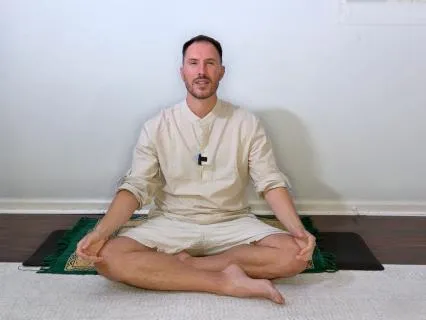
My name is Matthew and welcome to today's Voice and Vagus Nerve Reset.
Today's video was inspired by this concept that We live in a very noisy and busy world.
And it's so easy to look at the world around us and have that desire to change things and to make things more the way that we would prefer.
But one of the great wisdoms I've learned on my life's journey is that the only thing we truly can control is where we place our focus.
And that ability to place our focus on ourselves is what inspired today's video that I'd like to share with you all about how to live a more peaceful life.
And how to use our voice to calm our nervous system.
Recent studies have shown that the vagus nerve,
Which is a very large nerve system that starts at the base of our brain stem and runs all the way down to the through the center of our body and into our gut is actually one of the great nerve systems that helps us control our parasympathetic nervous system.
Which is the rest and reset functions of the body.
So as the title of today's video implies,
We're going to use our voice and our breath primarily to help stimulate that facet of ourselves.
Now the study that I read have shown that by having an elongated breath is the key,
An elongated exhale is the key to slowing and relaxing our parasympathetic nervous system.
And one of the beautiful things about sound making,
Especially with our voice,
Is that we need our breath in order to produce that sound.
So we'll see very quickly just through this practice how we can calm our nervous system.
Just with the natural gift of using our human voice.
So let's go ahead and get into a comfortable position.
I like to sit here in seated style.
And try to have a nice straight spine.
If you would prefer to sit in a chair or lie down or any other manner of standing,
You can do what feels right.
But to me,
I like to sit down on the ground and sit in a comfortable meditative position because this is actually a practice I like to do first thing when I'm waking up in the morning and it actually helps to wake up my body.
So what we're going to do.
We're going to close our eyes.
Place your hands in a comfortable position.
We're going to take a deep breath,
Inhale.
Exhale.
And as we breathe,
We're just gonna tune into our body for a few moments.
Inhale.
Exhale.
And take one more deep inhale.
Filling your stomach up.
With your breath.
And exhale.
Contracting your stomach to release that air.
And that use of our stomach,
If you've never breathed like that before,
That's called a diaphragmatic breath from our diaphragm.
So as we practice today,
Try to breathe in deeply.
Imagine filling your stomach up with air.
And as you exhale,
It's like the bellows.
Of a great air apparatus.
Pushing the air out.
So now what I would like to invite is to take a deep breath.
And at the top of the inhale,
We're just going to hum a tone.
If you'd like to mimic the tone that I'm creating,
You can use my tone.
That you're welcome to use any voice tone that you like.
So inhale.
Exhale.
Inhale again.
I'll try a higher tone.
And one more inhale.
Filling the stomach up,
Exhale,
Lower nose.
Take another breath,
Inhale.
Exhale.
As you notice that.
Depending on what type of tone you make will change how long you're able to extend your breath for.
So now,
Though,
I'd like to invite you to try an open mouth test.
Sound making.
Which is called vocal toning.
And this is essentially the same thing as humming,
But it's said with the mouth closed,
You're going to open your mouth and it will sound like this.
Inhale.
Excel Inhale.
Excel.
Inhale.
Excel Take a deep breath,
Inhale.
Exhale.
And now.
You don't have to worry about what type of pitch sound you make,
What type of vowel sound,
Ah,
Eh,
Ee,
Oh,
Ooh.
Any sound is fine.
And I'm going to take now just one to two minutes to demonstrate how my morning routine goes.
And I invite you to try as well,
Making any sound that feels natural.
But what I'm really going to focus on is allowing my sound to move through me and not focus so much on the technicalities of my breath and of my tone and my voice,
But really on the release that I'm allowing my body to release.
And I actually like to give myself a gentle rocking.
Is when I sit in a meditative position for some time,
I start to feel my.
.
.
This gives me a feeling of a self-soothing movement.
And I like to pair that self-soothing movement with the self-soothing sound.
And this is all connected again to the extension of our breath.
And the vibrations through our voice.
So now I invite you to either mirror what I am doing or find your own intuitive movements.
As you allow your body to become free in this expression.
Free in its release and give yourself permission to make sound.
So I'm gonna take another deep breath.
Inhale.
Exhale.
And if you can't hold the note out as long as I am,
Don't worry about that.
Just take a breath when you need it.
I'm going to do a few more just to demonstrate what's possible when you create this as a routine for yourself in life.
This is kind of how my morning routine looks as I wake up my body.
Inhale.
Inhale.
I'll try a higher node.
And do one more long,
Deep breath,
Inhale.
Excel,
Your most authentic note.
Aum you Take a long,
Deep breath.
Inhale.
Hex,
No.
And now sit for a moment Again,
Bring that awareness,
That focus back to yourself within.
As you sit and breathe.
You know.
Exhale.
Take a few more breaths at your own pace.
Continue to breathe.
As I bring today's practice to a close.
And say thank you for joining me here.
Thank you for being a part of this journey.
If you'd like to learn more,
Please follow me on Insight Timer.
And let me know if you'd like to see more videos like this.
I'm preparing a whole series about the voice and the vagus nerve.
And I love to have you along for the journey.
So please leave a comment if this inspired you in any way and let me know how you felt different from when you started the practice.
So thank you for being here.
I'm going to wrap up today's practice by saying thank you with a namaste.
Blessings to all and hope to see you again soon here on this platform.
Take a long,
Deep breath,
Inhale.
Exhale Inhale.
Namaste.