Welcome to the toolbox.
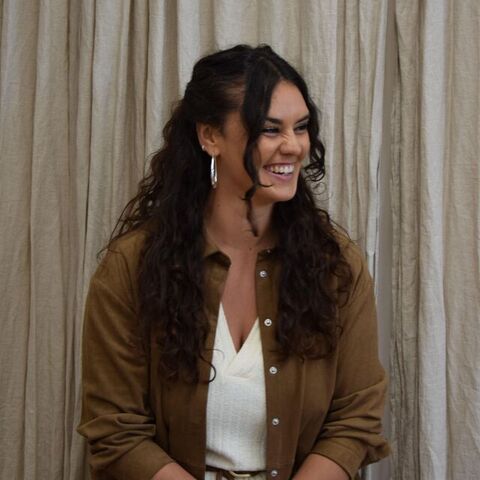
My name is Zinzi and I'm going to guide you through a mindfulness and meditation session today which is all around navigating change.
And so when we are faced with change,
We actually want to be really mindful of this sort of feeling of pushing through or ignoring it.
But really looking at how we can develop this kind of inner steadiness that means change doesn't need to destabilize us.
And I think just sort of briefly looking at the science of change in the mind,
It might be useful to know that when we Experience change,
Whether we've chosen it or not,
Our brain processes it as a potential threat.
Not a metaphorical threat,
An actual threat.
And so our body doesn't know the difference between a looming deadline or a lion.
It responds in the same way.
And often that's where there's a lot of exhaustion that comes through.
What this sort of means practically is that our thinking might become narrower.
Our attention sharpens onto problems rather than possibilities.
Your body holds tension,
Maybe sleep is effective,
Maybe patience is shorter than usual.
None of this is weakness and all of it is biology.
But here's what's also true,
Biology can be worked with.
The nervous system is not fixed.
And the mind,
When we learn to use it differently,
Becomes one of our most powerful resources during times of change.
There are two sort of modes most of us operate in.
The thinking mind,
Analytical,
Problem solving,
Always sort of looking for what's next.
And then there's the noticing mind,
The part that can simply observe what's happening in the body,
In your thoughts,
In the room,
Without needing to fix or resolve it immediately.
And that's the part that we're really going to practice today.
Research consistently shows that people who can access this noticing mode even briefly,
Make better decisions,
Recover from stress faster,
And feel more emotionally stable during periods of uncertainty.
Not because they're more relaxed,
But because they're more aware.
And so we're going to come into a sort of a letting go visualization now.
And so it's really important that we take some time to get comfortable.
So you're welcome to stay seated and you're welcome to lie down.
And just sort of taking any final adjustments,
Making sure that you're as comfortable as can be.
And so we don't need to get this right.
We don't need to feel anything in particular.
Just follow the words.
If it's comfortable to do so,
You might allow the eyes to close.
You might prefer just to simply soften,
Maybe lower the gaze.
Before we go anywhere,
I just want to acknowledge that change is really hard.
Not because you're not resilient enough or skilled enough or experienced enough.
But because change at a very fundamental level.
Asks the nervous system to operate without certainty.
And the nervous system does not love that.
It never has.
So whatever you're navigating right now,
Whether it feels really significant.
Or quietly unsettling.
I want you to know that however you're feeling about it is valid.
You don't need to be further along than you are.
You do not need to have made peace with it yet.
This practice isn't asking you to feel better.
It's simply asking you to be here.
As you are right now.
And so I'd like you to just gently invite your attention inward.
Not to change anything,
Just to start noticing.
Starting at the top of your head.
Simply noticing any sensation.
And that might be tension.
And might be having us.
It might be nothing at all.
We don't need to do anything with it.
And letting your awareness move down to your face.
Your jaw,
Your eyes.
So many of us carry the day in these places without even realizing.
This tension here,
Simply acknowledge it.
Noticing is enough.
Your neck.
Shoulders.
Perhaps the most honest part of the body.
It rarely lies about how we're doing.
Whatever's there,
Just let it be.
The chest.
Notice your belly Is there any holding here?
Any sense of bracing.
And finally your hands.
Maybe uncurling your fingers gently if they've been closed.
Just letting your hands rest,
Open and easy.
And you've just done a little survey of where you are right now.
That awareness,
That honest noticing is where all good practice begins.
Now I'd like to invite you to bring to mind a place.
Real or imagined.
Somewhere that you feel at ease.
Somewhere that carries a sense of safety for you.
It might be somewhere outdoors.
Could be a room that you love.
It could even be a place from your childhood.
It doesn't need to be perfect,
It doesn't need to be meaningful.
Just somewhere that when you think of it,
Your body recognizes it as safe.
And just taking a moment to really settle into this space.
Notice what you can see there.
Notice the quality of the light.
The temperatures,
Is it warm,
Is it cool?
What are the textures?
The sounds?
For you alone.
Or is there a sense of welcome company?
And so just reminding ourself that this place isn't going anywhere.
It's accessible whenever you need it.
You can return here at any time in a moment without anyone knowing.
From this place.
From this feeling of steadiness and safety.
We're now going to move into our visualization.
So really just letting the body settle even more.
Let the body feel really supported,
Really held.
You don't need to hold yourself up right now.
I'd like you to bring to mind something that's been occupying your thoughts recently.
It might be change that's happening in your work.
In your life.
Maybe a situation you can't fully control.
An outcome you're waiting on.
And uncertainty that sits quietly in the background.
Even on the good days.
You don't need to analyze.
We don't need to solve it.
Just acknowledge it's there.
This thing that you have been carrying.
Part of you has been holding it for a reason.
Perhaps it's to stay prepared.
To not be called Afghans.
To feel some sense of control.
In an uncertain situation.
That part of you was trying to help.
Can we take a moment now to thank it?
For that.
Thank it for its intention.
Now I'd like you to imagine.
That this thing.
This worry,
This situation,
This uncertainty has a physical form.
Maybe we visualize it as an object.
A shape.
Color.
Away.
Something you can physically hold in your hands.
Imagine holding it gently.
Notice how heavy it feels.
Notice how long you may have been carrying it for.
Now silently just to yourself.
I'd like you to say,
I see you.
You are real and you are not mine to carry right now.
I see you.
You are real.
And you are not mine to carry right now.
Now visualize setting it down.
You might place it on a shelf.
You might imagine a river gently carrying it away.
And you might hand it to someone.
And there's no right or wrong answer.
Whatever feels natural for you.
Place it down.
Notice how your hands feel.
Notice what that space feels like now.
Letting go is not the same as not caring.
It's not pretending something doesn't matter when it does.
It is simply choosing consciously,
Deliberately where we place our energy right now.
And right now,
You are here.
Notice how the body feels,
How the breath feels.
There's any shifts,
Any changes.
Just when you are ready Keeping the eyes closed or the gaze soft,
But can we just start to bring the attention back into the room you're in?
Can we gently notice the sounds around?
The sensation of your feet on the floor.
The weight of your body.
Whenever you're ready.
Blinking the eyes open.
Maybe taking just a few deep breaths.
And then we'll come back.