Juvenilia.
By Jane Austen.
Before she wrote about love and manners.
Jane Austen wrote with pure unrestrained mischief.
These short stories,
Lively,
Daring and delightfully exaggerated,
Showcase Austen's first experiments with a whipped irony.
And social observation that would later define classics like Pride and Prejudice.
And Emma.
From tales of outrageous heroines to comical love affairs and clever mockeries of literary conventions,
Juvenile is a window into the young mind of a writer destined to change English literature forever.
Happy listening.
Henry and Eliza A novel.
Is humbly dedicated to Miss Cooper by her obedient,
Humble servant.
The author.
As Sir George and Lady Harcourt were superintending the labours of the haymakers,
Rewarding the industry of some by smiles of approbation,
And punishing the idleness of others by a todgel,
They perceived lying closely concealed beneath the thick foliage of a haycock,
A beautiful little girl not more than three months old.
Touched with the enchanting graces of her face,
And delighted with the infantine,
Though sprightly answers she returned to their many questions,
They resolved to take her home,
And having no children of their own,
To educate her with care and cost.
Being good people themselves,
Their first and principal care was to incite in her a love of virtue,
And a hatred of vice,
In which they so well succeeded.
Eliza having a natural turn that way herself.
That when she grew up,
She was the delight of all who knew her.
Beloved by Lady Harcourt,
Adored by Sir George and admired by all the world,
She lived in a continued course of uninterrupted happiness till she attained her 18th year.
When happening one day to be detected in stealing a banknote of £50,
She was turned out of doors by her inhuman benefactors.
Such a transition to one who did not possess so noble and exalted a mind as Eliza would have been death.
But she.
.
.
Happy in the conscious knowledge of her own excellence,
Amused herself as she sat beneath a tree with making and singing the following lines.
Though misfortunes may footsteps may ever attend.
I hope I shall never have need of a friend.
As an innocent heart I will ever preserve.
And will never from virtue's dear boundaries swerve.
Having amused herself some hours with this song,
And her own pleasing reflections,
She arose and took the road to a small market town of which place her most intimate friend kept the red lion.
To this friend she immediately went,
To whom,
Having recounted her late misfortune,
She communicated her wish of getting into some family in the capacity of humble companion.
Mrs.
Wilson,
Who was the most amiable creature on the earth,
Was no sooner acquainted with her desire than she sat down in the bar and wrote the following letter to the Duchess,
The woman of whom all others she most esteemed.
To the Duchess of F.
Receive into your family,
At my request,
A young woman of unexceptionable character who is so good as to choose your society and preference to go into service.
Hasten and take her from the arms of your Sarah Wilson.
The Duchess,
Whose friendship for Mrs Wilson would have carried her any lengths,
Was overjoyed at such an opportunity of obliging her,
And accordingly set out immediately on the receipt of her letter for the Red Lion,
Which she reached the same evening.
The Duchess of F was about 45 and a half.
Her passions were strong,
Her friendships firm,
And her enmities unconquerable.
She was a widow and had only one daughter who was on the point of marriage with a young man of considerable fortune.
The Duchess no sooner beheld our heroine than throwing her arms around her neck.
She declared herself so much pleased with her she was resolved they never more should part.
Eliza was delighted with such a protestation of friendship,
And after taking a most affecting leave of her dear Mrs Wilson,
Accompanied her grace the next morning to her seat in Surrey.
With every expression of regard did the Duchess introduce her to Lady Harriet,
Who was so much pleased with her appearance,
She besought her to consider her as her sister,
Which Eliza,
With the greatest condescension,
Promised to do.
Mr Cecil,
The lover of Lady Harriet,
Being often with the family,
Was often with Eliza.
A mutual love took place,
And Cecil,
Having declared his first,
Prevailed on Eliza to consent to a private union.
Which was easy to be affected as the Duchess's chaplain being very much in love with Eliza himself,
Would they were certain to do anything to oblige her.
The Duchess and Lady Harriet being engaged one evening to an assembly.
They took the opportunity of their absence and were united by the enamoured chaplain.
When the ladies returned.
Their amazement was great at finding instead of Eliza the following notes.
Madam?
We are married and gone.
Henry and Eliza Cecil.
Her grace as soon as she read the letter which sufficiently explained the whole affair.
Flew into the most violent passion.
And after having spent an agreeable half hour in calling them all the shocking names her rage could suggest.
.
.
Sent out after them 300 armed men with orders not to return without their bodies dead or alive.
Intending if they should be brought to her in the latter condition,
To have them put to death in some torture-like manner after a few years confinement.
In the meantime,
Cecil and Eliza continued their flight to the continent,
Which they judged to be a more secure place than their native land,
From the dreadful effects of the Duchess's vengeance,
Which they had so much reason to apprehend.
In France they remained three years,
During which time they became the parents of two boys.
And at the end of it,
Eliza became a widow without anything to support either her or the children.
They had lived since their marriage at the rate of 18,
000 a year.
Of which Mr Cecil's estate,
Being rather less than the twentieth part,
They had been able to save but a trifle.
Having lived to the utmost extent of their income.
Elijah!
Having been perfectly conscious of the derangement in their affairs,
Immediately on her husband's death set sail for England,
In a man-of-war of fifty-five guns,
Which they had built in their more prosperous days.
But no sooner had she stepped on shore at Dover with a child in each hand,
Than she was seized by the officers of the Duchess,
And conducted to them to a snug little new gate of their lady's,
Which she had erected for the reception of her own private prisoners.
Though soon had Eliza entered her dungeon,
Then the first thought which occurred to her was how to get out of it again.
She went to the door,
But it was locked.
She looked at the window but it was barred with iron.
Disappointed in both her expectations,
She despaired of affecting her escape.
When she fortunately perceived in a corner of the cell.
A small saw and ladder of ropes.
With the saw she instantly went to work,
And in a few weeks had displaced every bar,
But one to which she fastened the ladder.
A difficulty then occurred which for some time she knew not how to obviate.
Her children were too small to get down the ladder by themselves.
Nor would it be possible for her to take them in her arms when she did.
At last she determined to fling down all her clothes,
Of which she had a large quantity,
And then,
Having given them strict charge not to hurt themselves,
She threw her children after them.
She herself with ease descended by the ladder,
At the bottom of which she had the pleasure of finding her little boys in perfect health and fast asleep.
Her wardrobe she now saw a fatal necessity of selling.
Both for the preservation of her children and herself.
With tears in her eyes,
She parted with these last relics of her former glory.
And with the money she got for them bought others more useful,
Some playthings for the boys and a gold watch for herself.
But scarcely was she provided with the above-mentioned accessories.
Then she began to find herself rather hungry and had reason to think,
By their biting off two of her fingers,
That her children were much in the same situation.
To remedy these unavoidable misfortunes,
She determined to return to her old friends Sir George and Lady Harcourt,
Whose generosity she had so often experienced and hoped to experience as often again.
She had about 40 miles to travel before she could reach their hospitable mansion.
She had walked 30 without stopping.
And then she found herself at the entrance of a town.
Where often,
In happier times,
She had accompanied Sir George and Lady Harcourt to regale themselves with cold collation at one of the inns.
The reflections that her adventures since the last time she had partaken of these happy junketings afforded her occupied her mind for some time as she sat on the steps.
As soon as these reflections were ended,
She arose and determined to take her station at the very inn.
She remembered with so much delight from the company of which,
As they went in and out,
She hoped to receive some charitable gratuity.
She had but just taken her post at the inn-yard,
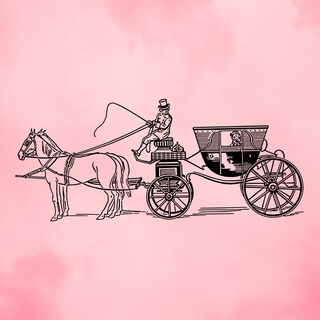
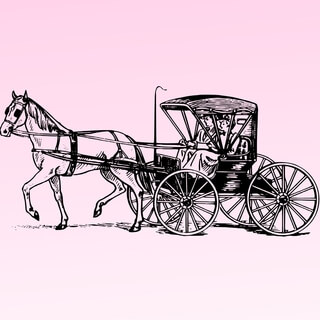
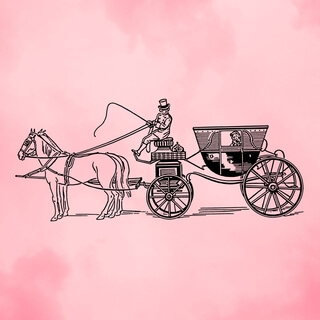
Before a carriage drove out of it,
And on turning the corner at which she was stationed,
Stopped to give the pastillian an opportunity of admiring the beauty of the prospect.
Eliza then advanced to the carriage and was going to request their charity.
And on fixing her eyes on the lady within it she exclaimed Lady Harcourt!
To which the lady replied,
Eliza!
Yes,
Madam.
It's the wretched Eliza herself.
Sir George,
Who was also in the carriage but too much amazed to speak,
Was proceeding to demand an explanation from Eliza of the situation she was then in.
When Lady Harcourt in transports of joy exclaimed,
Sir George,
Sir George,
She is not only Eliza,
Our adopted daughter,
But our real child.
Now,
Real child,
What Lady Harcourt do you mean?
You know,
Never even was with child.
Explain yourself,
I beseech you.
You must remember,
Sir George,
When you sailed for America,
You left me bleeding.
I do,
I do.
Go on,
Dear Polly.
Four months after you were gone,
I was delivered of this girl.
But dreading your just resentment at her not proving the boy you wished,
I took her to a haycock and laid her down.
A few weeks afterwards you returned,
And fortunately for me made no enquiries on the subject.
Satisfied within myself of the welfare of my child I soon forgot I had one,
Insomuch as,
When we shortly after found her in the very haycock,
I had placed her.
I had no more idea of her being my own than you had,
And nothing I will venture to say would have recalled the circumstance to my remembrance.
But thus accidentally hearing her voice,
Which now strikes me as being the very counterpart of my own child.
The rational and convincing account you have given of the whole affair,
" said Sir George.
Leaves no doubt of her being our daughter and as such I freely forgive the robbery she was guilty of.
A mutual reconciliation then took place,
And Eliza,
Ascending the carriage with her two children,
Returned to that home from which she'd been absent nearly four years.
No sooner was she reinstated in her accustomed power at Harcourt Hall than she raised an army with which she entirely demolished the Duchess's new gate.
Snug as it was.
And by that act gain the blessings of thousands and the applause.
Of her own heart.
The end.