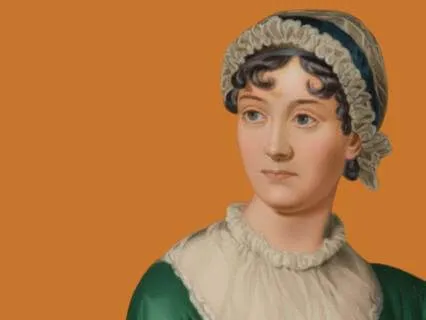
Juvenilia by Jane Austen Before she wrote about love and manners,
Jane Austen wrote with pure unrestrained mischief.
These short stories,
Lively,
Daring and delightfully exaggerated,
Showcase Austen's first experiments with a wit,
Irony and social observation that would later define classics like Pride and Prejudice and Emma.
From tales of outrageous heroines to comical love affairs and clever mockeries of literary conventions,
Juvenilia is a window into the young mind of a writer destined to change English literature forever.
Frederick and Elfride The uncle of Elfride was the father of Frederick.
In other words,
They were first cousins by the father's side.
Being both born in one day and both brought up at one school,
It was not wonderful that they should look on each other with something more than bare politeness.
They loved with mutual sincerity,
But were both determined not to transgress the rules of propriety by owning their attachment either to the object beloved or to anyone else.
They were exceedingly handsome and so much alike that it was not everyone who knew them apart.
Nay,
Even their most intimate friends had nothing to distinguish them by but the shape of the face,
The colour of the eye,
The length of the nose and the difference of the complexion.
Elfride had an intimate friend to whom,
Being on a visit to an aunt,
She wrote the following letter.
To Miss Drummond Dear Charlotte,
I should be obliged to you if you would buy me,
During your stay with Mrs Williamson,
A new and fashionable bonnet to suit the complexion of your E.
Faulkner.
Charlotte,
Whose character was a willingness to oblige everyone when she turned into the country,
Brought her friend the wished-for bonnet and so ended this little adventure,
Much to the satisfaction of all the parties.
On her return to Crankhumb-Dunbury,
Of which sweet village her father was rector,
Charlotte was received with the greatest joy by Frederick and Elfride,
Who,
After pressing her alternately to their bosoms,
Proposed to take her to a walk in the Grove of Poplars,
Which led from the Parsonage to a verdant lawn,
Enamelled with a variety of variegated flowers and watered by a purling stream brought from the Valley of Tempe by a passage underground.
In this grove they had scarcely remained above nine hours,
When they were suddenly agreeably surprised by hearing a most delightful voice warble the following stanza That Damon was in love with me I once thought and believed But now that he is not,
I see,
I fear I was deceived No sooner were the lines finished than they beheld by a turning in the grove two elegant young women leaning on each other's arm,
Who,
Immediately on perceiving them,
Took a different path and disappeared from their sight.
As Elfride and her companions had seen enough of them to know they were neither the two Miss Greens nor Mrs Jackson and her daughter,
They could not help expressing their surprise at their appearance,
Till at length recollecting that a new family had lately taken a house not far from the grove,
They hastened home,
Determined to lose no time in forming an acquaintance with two such amiable and worthy girls,
Of which family they rightly imagined them to be a part.
Agreeable to such a determination they went that very evening to pay their respects to Mrs Fitzroy and her two daughters.
On being shown into an elegant dressing-room,
Ornamented with festoons of artificial flowers,
They were struck with the engaging exterior and beautiful outsides of Gesalinda the eldest.
But ere they had been many minutes seated,
The wit and charms which shone resplendent in the conversation of the amiable Rebecca enchanted them so much,
They all with one accord jumped up and exclaimed,
Lovely and too charming fair one,
Notwithstanding your forbidding squint,
Your greasy tresses and your swelling back,
Which are more frightful than imagination can paint or pen describe,
I cannot refrain from expressing my raptures at the engaging qualities of your mind,
Which so amply atone for the horror with which your first appearance must ever inspire the unwary visitor.
Your sentiments so nobly expressed on the different excellence of Indian and English muslin and the judicious preference you give the former have excited me in an admiration of which I can alone give an adequate idea by assuring you it is nearly equal to what I feel for myself.
Then making a profound curtsy to the amiable and abashed Rebecca,
They left the room and hurried home.
From this period the intimacy between the families of Fitzroy,
Drummond and Faulkner daily increased till at length it grew to such a pitch that they did not scruple to kick one another out of the window on the slightest provocation.
During this happy state of harmony the eldest Miss Fitzroy ran off with a coachman and the amiable Rebecca was asked in marriage by Captain Roger of Buckinghamshire.
Mrs Fitzroy did not approve of the match on account of the tender years of the young couple,
Rebecca being but thirty-six and Captain Roger little more than sixty-three.
To remedy this objection it was agreed they should wait a little while till they were a good deal older.
In the meantime the parents of Frederick proposed to that of Elfride a union between them which being accepted with pleasure,
The wedding clothes were brought and nothing remained to be settled but the naming of the day.
As to the lovely Charlotte being importuned with eagerness to pay another visit to her aunt,
She determined to accept the invitation and in consequence of it walked to Mrs Fitzroy's to take leave of the amiable Rebecca whom she found surrounded by patches,
Powder and paint with which she was vainly endeavouring to remedy the natural plainness of her face.
I am come,
My amiable Rebecca,
To take my leave of you for the fortnight I am destined to spend with my aunt,
She said.
Believe me,
This separation is painful,
But it is as necessary as to the labour which now engages you.
Why to tell you the truth,
My love,
Replied Rebecca,
I have lately taken it into my head to think that my complexion is by no means equal to the rest of my face and I have therefore taken,
As you see,
To white and red paint which I would scorn to use on any other occasion as I hate art.
Charlotte,
Who perfectly understood the meaning of her friend's speech,
Was too good-tempered in obliging to refuse her what she knew she wished,
A compliment,
And they parted the best friends in the world.
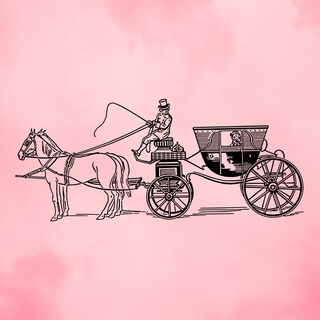
With a heavy heart and streaming eyes did she ascend the lovely vehicle which bore her from her friends and home,
But grieved as she was she thought little in what strange and different manner she should return to it.
On her entrance into the city of London,
Which was the place of Mrs Williamson's abode,
The Postillion,
Whose stupidity was amazing,
Declared and declared even without the least shame that having never been informed he was totally ignorant of what part of the town he was to drive to.
Charlotte,
Whose nature we have before intimated,
Was an earnest desire to oblige everyone.
With the greatest condescension and good humour,
She informed him he was to drive to Portland Place,
Which he accordingly did,
And Charlotte soon found herself in the arms of a fond aunt.
Scarcely were they seated as usual in the most affectionate manner in one chair than the door suddenly opened and an aged gentleman with a sallow face and old pink coat,
Partly by invention and partly through weakness,
Was at the feet of the lovely Charlotte,
Declaring his attachment to her and beseeching her pity in the most moving manner.
Not being able to resolve to make anyone miserable,
Charlotte consented to become his wife,
Whereupon the gentleman left the room and all was quiet.
Their quiet,
However,
Continued but a short time,
For on a second opening of the door a young and handsome gentleman with a new blue coat entered and,
Intreated from the lovely Charlotte,
Permissioned to pay to her his addresses.
There was something in the appearance of the second stranger that influenced Charlotte in his favour to the full as much as the appearance of the first.
She could not account for it,
But so it was.
Having therefore agreeable to that and the natural turn of her mind to make everyone happy,
She promised to become his wife the next morning and took his leave and the two ladies sat down to supper on a young leverette,
A brace of partridges,
A leash of pheasants and a dozen of pigeons.
It was not till the next morning that Charlotte recollected the double engagement she had entered into.
But when she did,
The reflection of her past folly operated so strongly on her mind that she resolved to be guilty of a greater and to that end threw herself into a deep stream which ran through her aunt's pleasure grounds in Portland Place.
She floated to Crankham,
Dunbury,
Where she was picked up and buried.
The following epitaph,
Composed by Frederick,
Elfrida and Rebecca,
Was placed on her tomb.
Here lies our friend who having promised that unto two she would be married threw her sweet body and her lovely face into the stream that runs through Portland Place.
These sweet lines,
As pathetic,
As beautiful,
Were never read by anyone who passed that way without a shower of tears,
Which if they should fail of exciting in you,
Reader,
Your mind must be unworthy to peruse them.
Having performed the sad office to their departed friend,
Frederick and Elfrida together with Captain Roger and Rebecca returned to Mrs Fitzroy's,
At whose feet they threw themselves with one accord and addressed her in the following manner.
Madam,
When the sweet Captain Roger first addressed the amiable Rebecca,
You alone objected to their union on account of the tender years of the parties.
That plea can be no more,
Seven days being now expired,
Together with the lovely shard since the Captain first spoke to you on the subject.
Consent then,
Madam,
To their union,
And as a reward this smelling bottle,
Which I enclose in my right hand,
Shall be yours and yours forever.
I will never claim it again.
But if you refuse to join their hands in three days' time,
This dagger,
Which I enclose in my left,
Shall be steeped in your heart's blood.
Speak then,
Madam,
And decide their fate,
And yours.
Such gentle and sweet persuasion could not fail of having the desired effect.
The answer they received was this,
My dear young friends,
The arguments you have used are just too,
Too eloquent to be withstood.
Rebecca,
In three days' time you shall be united to the Captain.
This speech,
Than which nothing could be more satisfactory,
Was received with joy by all,
And peace being once more restored on all sides,
Captain Roger entreated Rebecca to favour them with a song,
In compliance with which request,
Having first assured them she had a terrible cold,
She sang as follows.
When Corridan went to the fair,
He bought a red ribbon for Bess,
With which she encircled her hair,
And made herself look very fess.
Chapter V At the end of the three days,
Captain Roger and Rebecca were united,
And immediately after the ceremony,
Set off in the stage wagon for the Captain's seat in Buckinghamshire.
The parents of Elfride,
Although they earnestly wished to see her married to Frederick before they died,
Yet knowing the delicate frame of her mind,
Could ill bear the least exertion,
And rightly judging that naming her wedding day would be too great a one,
Forbore to press her on the subject.
Weeks and fortnights flew away,
Without gaining the least ground.
The clothes grew out of fashion,
And at length Captain Roger and his lady arrived to pay a visit to their mother,
And introduce to her their beautiful daughter of eighteen.
Elfride,
Who had found her former acquaintance,
Were growing too old and too ugly to be any longer agreeable,
Was rejoiced to hear of the arrival of so pretty a girl as Eleanor,
With whom she determined to form the strictest friendship.
But the happiness she had expected from an acquaintance with Eleanor,
She soon found was not to be received,
For she had not only the mortification of finding herself treated by her as little less than an old woman,
But had actually the horror of perceiving a growing passion in the bosom of Frederick for the daughter of the amiable Rebecca.
The instant she had the first idea of such an attachment,
She flew to Frederick,
And in a manner truly heroic,
Spluttered out to him her intention of being married the very next day.
To one in his predicament,
Who possessed less personal courage than Frederick was master of,
Such a speech would have been death.
But he not being the least terrified,
Boldly replied,
Dame Elfride,
You may be married tomorrow,
But I won't.
This answer distressed her too much for her delicate constitution.
She accordingly fainted,
And was in such a hurry to have a succession of fainting fits,
That she had scarcely patience enough to recover from one before she fell into another.
Though in any threatening danger to his life or liberty,
Frederick was as bold as brass,
Yet in other respects his heart was as soft as cotton,
And immediately on hearing of the dangerous way Elfride was in,
He flew to her,
And finding her better than he had been taught to expect,
Was united to her,
Forever.
The End