Hello my friend.
Welcome to your sleep story.
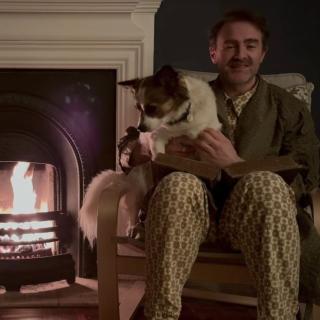
My name is Stephen Dalton.
I'm an Irish storyteller,
And it's my great privilege.
To be the voice that you listen to.
As you go to sleep.
I was talking with a friend recently.
And they told me that their daughter is called Grace.
Immediately.
I was inspired to write this story.
About a girl called Grace.
Grace who grants wishes.
Or should I say.
.
.
Grace who plants wishes.
You'll find out more as the story goes on.
And I'd love to ask you before this story starts.
.
.
If you could wish for one thing.
What would it be?
Let me know in the comments.
And maybe tell me about wishes that have come true for you too.
Okay,
Let's do the relaxation session now.
Which will take a few minutes before tonight's sleep story.
I'm going to count down from ten to one.
And as I do.
Allow yourself to let go.
More and more.
Feel the support.
Of the bed beneath you.
Or the floor.
Or whatever you lie upon tonight.
Beneath all of that.
Feel the support.
Of the Earth.
Our home.
Constant support.
And as you become aware of that grounding.
Calming support.
See if you can.
Let go a little more now.
Just.
.
.
Ease into this moment.
A little more now.
Nein.
You.
Are safe.
Tonight.
Allow my voice.
To be a friend.
To be an anchor of safety.
Knows this.
My voice will never take you to anywhere unsafe.
It will only ever take you to safety.
Places.
Places of coziness and comfort.
Places where stories are told.
With a spirit of kindness.
And human understanding.
And allow that fact.
To enable you.
To just Be here.
And listen.
And move closer and closer to sleep.
Become aware of your body now.
Feel into your body.
Where are you holding tension?
Where do you perhaps feel pain?
Maybe it's in your feet.
Maybe in your lower legs your size.
Oops.
Your belly.
Your chest.
You're back.
Maybe your neck or shoulders.
Your arms.
Runs.
Or maybe you're like me.
The old tension in your face or in the top of your head.
Wherever you're holding tension wherever you're feeling pain,
If you are.
See if becoming aware of it.
And help ease it a little.
Seven.
The day.
Is.
Whatever has been.
Has been.
Whatever will be.
Will be.
Whatever thoughts you might be having.
About the future or the past.
Know this.
Neither of those places exists.
Or that you have.
Is now.
Is this moment.
So choose to be kind to yourself in this moment.
And begin to let go.
If a sword arrives.
Don't fight it.
Welcome it.
It is a part of being human.
See it for what it is.
A thought.
Then don't follow it.
Let it flows away.
Like leaves floating away on a moonlit river.
Or a cloud.
Passing by.
Through a starlit sky.
6.
Peace.
Lives within you.
I promise you it does.
It is always there.
It is always just.
Waiting to be found.
Wasting.
To be felt.
So see if you can find that peace tonight.
Ask yourself.
Where does it live within me?
Sometimes I think I find it in my chest.
Sometimes in my head.
When you find it.
It can have an immediate effect on your whole body.
Sometimes it can be found.
Through a simple,
Deep breaths.
Let's take one now together.
Breathe in through your nose.
And out through your mouth.
Maybe you've found your peace.
Or maybe you're on the way to.
Don't force it.
It will come.
If it hasn't already.
Five.
This is your moment.
This is your time.
I love that fact.
To enable you.
To let go completely.
You have nowhere to be.
Nowhere to go.
Allow yourself to indulge in this moment Perhaps allow a little gratitude now.
Gratitude.
For the simple things.
With the ones who love you.
And do you love?
For the roof over your head tonight.
With the breath in your body.
With the ability to lie here tonight.
And listen to a sleep story.
Begin to engage with your imagination now.
Begin to see.
A rainy city.
And in Little Street.
In the city.
Is an umbrella shop.
And in that umbrella shop.
Is a little girl.
Named Grace.
Be ready to enjoy a day with grace.
As she walks this city.
Planting wishes.
Checking in with your body one more time now.
Your body has worked hard for you today.
It's time to give it rest.
Completely letting go now.
As I tell you.
Tonight.
Sleep story.
The rain arrived.
Before the city woke.
And did arrive.
The way good rain does.
Softly.
All at once.
And everywhere.
It fell on the slate roofs and the chimney-putt.
It fell on the market awnings.
Folded for the night.
And on the cobbles of the old squares.
Where it gathered in the hollows.
That four hundred years of feet.
At Warren Smooth.
It fell on the river.
Which barely notice.
Being made of much the same thing.
And it fell on the crooked little shop at the end of Cobble Lane.
Were a sign,
Shaped like a folded umbrella.
Swung gently on its hinges.
Creaking as small,
Contented.
Above this shop.
In a bedroom tucked under the eaves.
A girl named Grace.
Open to rise and listen.
She could tell a great deal from the sound of the rain.
This was Steady rain.
Patient Wren.
Reign with the whole day ahead of it.
And no intention of hurrying.
Grace lays still for a while.
And downstairs.
Her grandmother was already up.
Grace could hear the cattle.
Under the small tin sounds of breakfast.
Beneath the door.
The deep.
Hush of the shop.
Full of umbrellas.
Hundreds of them.
Standing in their racks like patient errands.
Wasting.
For exactly this sort of day.
Grace's grandmother mended umbrellas.
She had mended them for fifty years.
Broken ribs.
Torn silk.
Andor's worn smooth as beach stones.
And people came from all over the city.
Carrying umbrellas.
Their own grandmothers had carried.
An umbrella is a roof you can take with you.
She liked to say.
And everyone deserves a roof.
But that was only the shop.
The family had another trade.
Old.
And quieter.
Which no sign ever mentioned.
You see.
The women of Grace's family.
New Outer Grounds.
Wishes.
Not the loud kind,
By the way.
Not the ones with.
.
.
Lumps or Lightning.
A gold.
Their source of wishing.
Worked the way gardens work.
Most people.
Grace's grandmother had taught her.
Scatter wishes all day long.
Without ever noticing.
Day.
Sigh them at bus stop.
Breathe them into cups of tea.
Drop them in the street like loose buttons.
A scattered wish blows away.
But a court wish.
A wish somebody hears and holds.
And plants somewhere kind.
A cool twish.
Takes root.
And then it comes true.
The way growing things come true.
Slowly.
Quietly.
And right on time.
Rainy days.
Her grandmother said.
Were the best days of all for planting.
Everything softens in the rain.
Everything is ready.
So Grace ate her toast.
Buttoned her red wool coat.
And took her yellow umbrella.
From this stand.
By the door.
The small one.
One her grandmother had mended twice,
And made better than new.
Mind how you go.
Said her grandmother.
The way she always did.
Said Grace.
The way she always did.
And she stepped out into the rain.
Under her yellow umbrella.
Into the grey and silver morning.
One warm,
Bright spot.
Moving through the waking city with their pockets empty.
And the whole day ahead.
Bell Street.
Was the street of good smells.
Even in the rain.
Especially in the rain.
The warm brown smell of baking bread.
Came rolling out of Bram's bakery.
And filled the street from end to end.
So that people slowed down as they passed it.
Whether they meant to.
Or not.
In the doorway of the empty shop next door.
Under a deep stone arch.
That kept the worst of the weather off.
Sat a man named Albert.
And a small brown dog.
Name.
Biscuit.
Albert had no home just then.
He had a good grey blanket.
And a bag that held everything he owned.
And a spot in the dry arch that he kept swept and tidy.
And he had biscuits.
It was worth more than most houses.
What he did not have.
Was it door?
He watched the rain come down.
And the people go by.
And Biscuit watched Albert.
Which was Biscuit's main occupation.
And one he took seriously.
Grace stopped under the arch to shake out her umbrella.
The way you do.
And said good morning.
The way you should.
Morning.
Said Albert.
Fine weather for dokes.
And for wishes.
Said Grace.
And she sat down on the dry step beside Biscuit who inspected her thoroughly,
And then leaned his whole warm weight against her leg.
Which is the highest compliment a dog can pay.
She had a bread roll in her pocket.
Still warm from her grandmother's kitchen.
And she broke it in three.
One piece for Albert,
One for Biscuit.
One for herself.
And for a while.
The three of them sat together.
And the dry.
Eating warm bread.
And watching the rain make rings in the puddles.
It is a very old kind of company,
That kind.
And it needs no talking.
After a while.
Albert talked anyway.
People generally did around grace.
She had that sort of face.
He told her about the places he had been.
We're too many.
And the boats he had work done.
Long ago.
And her biscuit had found him.
He found me mine.
Not the other way round.
Three winters back.
And had never once reconsidered.
And then he was quiet for a bit.
Watching the lice in the bakery window.
And he said,
Mostly to the rain,
You know what I'd wish for.
If wishes were things a man could have.
Nothing grand.
Tschüss!
Somewhere that's mine to be.
A door I can close.
And mornings that smell.
Like that.
Inaudible at the bakery.
That's all.
Mornings that smell like.
.
.
Grace didn't say anything.
But under her coat.
Quietly.
She cupped one hand.
The way you would cut your falling leaf.
The wish.
Landed in her palm.
Life is anything.
And warm.
Court wishes are always warm.
Like a coin held a long time.
And she folded her fingers around it.
And kept it safe.
Then she stood.
And thanked Albert for the company.
And gave biscuits' ears the attention they deserve.
And as she stepped out of the yard,
She pours.
Just for a moment.
By the bakery's doorstep.
Where there is a gap.
Between two old stones.
That had been waiting a hundred years.
For something to be planted in it.
She pressed the wish down into the cap with her thumb.
The way you would press a seed into soft earth.
And whispered the words her grandmother had taught her.
Which were only Grow kind.
Inside the bakery.
Mr.
Brahm the baker.
Straightened up from his ovens and rubbed his back.
And found himself thinking.
For no reason he could name.
That he was getting no younger.
And Zesha.
Was getting no smaller.
And that's the little room above the ovens.
The warmest room on the whole street.
Had stood empty.
Far too long.
A room like that wanted somebody in it.
And come to think of it.
He could use a steady pair of hands about the place.
Somebody who kept things tidy.
Somebody who understood early mornings.
He looked out through the rain-streaked window at the arch next door.
Where a man sat.
Sharing his bread with a small brown dog.
And Mr.
Bram.
Who had walked past that arch four hundred times.
Sew it properly.
For the first time.
He put two fresh rolls in a paper bag.
And opened his door.
And stepped out into the rain.
Grace didn't stay to watch.
She was already away down Bell Street.
Under her yellow umbrella.
Planted wishes don't need watching.
They need time.
And a bit of rain.
And Bell Street.
That morning.
Had plenty of both.
Market Square.
On a rainy Tuesday.
Was a quiet place.
The stalls were shut.
The Awning Strip.
And the pigeons had gathered under the long stone arcade.
At the square's edge.
Crumbling softly.
The way pigeons do.
As if the rain were a dream.
Personal matter.
Between themselves and the sky.
One person had come to see them anyway.
Mrs.
Alden was small.
And knee.
And 81.
In a good tweed coat and a clear plastic rain hood.
And she stood under the arcade with a paper bag of crumbs.
Dealing them out fairly.
One handful at a time.
The pigeons knew her.
Pigeons are not fools.
They knew her footsteps.
Enter Tuesdays.
And the exact crinkle of her particular paper bag.
And they gathered around her boot.
Like a small grey sea.
Grace came in out of the rain.
Folded her umbrella.
And stood a polite distance away.
Watching.
Presently.
Mrs.
Alden held out the bag.
Would you like to do a few?
" she said.
They're greedy.
Put there gentle.
So grace fed the pigeons too.
And the two of them stood together under the arcade.
With the rain coming down beyond the arches.
Like a beaded curtain.
End.
They got to talking.
The way you do when your hands are busy with something kind.
Mrs.
Alden had lived in the city all her life.
She had been a school teacher.
40 years of it.
Three generations.
Half the city could still recite their time staples in her voice.
Her son lived in Canada now.
In a city with a name like a waterfall.
And he wrote proper letters.
Real ones,
With stamps.
Which she kept in a biscuit tin.
She had her flat on the third floor overlooking the square.
And her routines.
Enter Tuesdays with the pigeons.
It's a good little life.
She said.
Only quiet.
The flat is the worst of it.
A flat gets very good at quiet when you live alone.
Some evenings I put the wireless on.
Just to hear a kettle boil that isn't mine.
She laughed at herself softly.
And dealt out another handful of crumbs.
Listen to me,
What I'd wish.
What I would truly wish.
Is just.
Bit of life about the place.
Somebody to share a pot of tea with of a Thursday.
It doesn't take much,
You know.
To make a home feel lived in.
A voice.
A visitor.
Even a cat on the windowsill would do.
And there it was.
The wish.
Drifting down.
Light as a crumb.
Grace cupped her hand and caught it.
Warm as toast.
She planted this one in the paper bag itself.
Right down among the last of the crumbs.
Pressing it in with one finger.
While Mrs Alden pointed out a pigeon she had known for years.
That one there,
With the white collar.
He's a grandfather now.
You would never think it.
Grow kind.
Whispered grace.
And the wish settled in among the crumbs.
As if it had always been there.
At the far end of the arcade.
In a dry corner behind a drainpipe.
There lived a young ginger cat.
He was a polite cat.
Astray as ghosts.
And a thoughtful one.
And he'd spent several weeks watching the small neat lady.
Who came on Tuesdays.
And fed things that were hungry.
He had been conducting a long and careful study of her.
That morning.
As Mrs.
Alden shook out the empty bag.
And said her goodbyes to Grace.
And to the congregation of pigeons.
The ginger cat concluded his research.
Stretched himself stem to stern.
And made his decision.
He followed her home across the square.
Trotting through the rain at a dignified distance.
He followed her to the blue door.
Besides the tea shop.
The three flights of stairs.
And when she opened her door.
.
.
He walked past her ankles.
And into the flesh.
As if returning from a short errand.
And sat down on the windowsill above the radiator.
And looked at it.
Well.
Said Mrs.
Olden.
The cat said nothing.
In the eloquent way of cats.
I suppose you'll be wanting feeding.
She said.
And her voice was already different You could hear it.
Because a voice changes when it has somebody to talk to.
Even somebody with whiskers.
She would call him Charlie.
After nobody in particular.
The kettle when done.
And sang for two.
And downstairs in the tea shop.
A young woman named Prue.
Who owned the place.
And worried sometimes about the older folks.
She saw eating their scones alone.
Was at that very moment writing out a small card for a window.
Thursdays.
It said.
In her round.
Hopeful handwriting.
The long table.
All welcome.
Bring nothing but yourself.
But that is getting ahead of the story.
Wishes.
Once planted.
Look after themselves.
Grace was already crossing the square.
Small and bright.
Under the yellow umbrella.
Heading for the river.
The old bridge crossed the river in five stone arches.
And on the middle arch.
At half-past eleven that morning.
A man in a very good coat was losing an argument with his umbrella.
The wind that lives under bridges.
And there is always a wind that lives under bridges.
Had got up inside the black umbrella and turned it entirely inside out.
So that it looked less like a roof and more like a startled tulip.
The man wrestled it.
The umbrella.
One.
His phone was in his other hand.
A briefcase was wedged under his arm.
And the rain.
Seeing its chance.
Was making itself at home in his collar.
His name was Mr.
Finch.
And he was late.
He was always late.
In the particular way of people.
Who are never actually late.
But live in permanent fear of becoming so.
He had a meeting across the river at noon.
An important one,
He would have told you.
Though if you had asked him what made it important,
He would have needed a moment.
His phone buzzed.
He read the message twice.
Meeting moved to Monday.
Apologies.
Enjoy your morning.
Mr.
Finch stood in the middle of the old bridge with a broken umbrella.
And rain in his color.
Certainly.
An hour.
A hole.
Unplanned.
Unclaim.
Sitting in his hands like a parcel.
With no address on it.
We checked his phone again.
In case the hour could be filled.
It couldn't.
He put away the phone and looked over the parapet at the river.
White and grey,
And stitched all over with rain.
And he sighed a sigh.
That had been waiting years for its chance.
I used to love rainy days.
He said.
To nobody.
To the river.
What did I do with them?
I wish I could remember what rainy days are for.
Grace was at the end of the bridge.
And a wish like that carries.
She caught it just before the wind could take it.
This one fluttered a little.
Like something long folded.
And she held it warm in her hand.
And walked along the parapet.
To where he stood.
Your umbrella's inside out.
By way of love.
It has betrayed me.
Agreed Mr.
Finch.
Grace looked at it professionally.
Being an umbrella mender's granddaughter.
And showed him the trick of it.
The sharp.
Downward snap that folds the ribs home.
And the umbrella came right with a sound.
Like a small,
Polite cough.
Mr.
Finch was so surprised that he laughed.
The laugh surprised him further.
It had been a while since one had got out during working hours.
And while he was still holding the laugh.
Grace.
Planted the wish.
She slipped it into the breast pocket of his very good coat.
The small pocket.
The one.
Nobody ever uses.
Over the heart.
And pressed it flat with two fingers.
As if she were straightening his lapel.
Grow kind.
Mr.
Finch felt something then.
Later.
You would call it.
Remembering.
Though it felt more like sewing.
He looked down at the river.
And the river looked the same as it had a minute ago.
And entirely different.
Because he remembered now.
Rainy days were for paper boats.
He and his brother.
Of the smaller bridge upstream.
40 years back.
Folding boats out of anything.
Newspaper.
Homework.
Once a hymn sheet.
And racing them through the art.
Howling like wolves.
Soaked to the skin and rich as kings.
Mr.
Finch looked at his briefcase.
Among many important papers.
Were several that were not important at all.
He took one out.
He folded it.
His hands remembered.
Fold by fold.
The way hands do.
And he leaned over the parapet.
And he let his boat go.
It landed,
Neat as a duck.
And sailed in under the eye.
Brave and ridiculous.
Spinning once in the current as if it were waving.
Grace ran with him to the other parapet.
To watch it come out to the far side.
And out it came.
Riding low but proud.
Off down the wide grey river.
Towards the sea.
Carrying a quarterly report.
To a better life.
Mr.
Finch bought two cups of hot chocolate from the kiosk at the bridge's end.
One for each of them.
Because that also was what rainy days were for.
And as grace went on her way.
She saw him take out his phone.
Slowly this time.
With no hurry in it at all.
And she was near enough to hear him say,
Nothing to wrong.
Everything's fine.
Tell Poppy to find her wellies.
I'm coming home at five.
And we are going to jump in every puddle.
Between our house and the park.
Every single one.
It's very important.
Then he stood a while longer in the rain.
In his very good coat.
Watching the river as if it were the best meeting of his years.
Which it was.
Willow Lane ran uphill from the river.
And at the top of it.
Stood a tall brick house with green shutters.
And a wide front porch.
And in the house.
Lived twelve children.
And a woman.
Called Mrs Tam.
Who looked after them.
She did her best,
Mrs.
Dunn.
And her best was good.
The house was warm.
The bells were soft.
There were three sorts of jam at breakfast.
And there was a rule.
That nobody went to sleep sad.
If she could help it.
But twelve is a great many children.
And even the kindest good night.
Shared 12 ways.
Comes out thin.
On the porch steps.
In the dry.
Chain in his hands.
Such a boy named Ben.
Who was he?
Watching the rainwater run down the gutter at the edge of the lane.
It ran fast and busy.
A small brown river.
With rapids at every drain.
And Ben had been watching it long enough.
To have opinions about it.
Grace came up the hill.
So the boy So are the gutter.
And understood the situation at once.
That's a good river.
She said.
Is the best one on the street,
" said Ben.
The one on Elm Terrace floats at the bottom.
This one goes all the way to the corner if you build it right Have you got butts?
Reset.
Benhut Boots Ben had a whole fleet.
Folded from an old comic.
Wasting under the porch bench.
For exactly this question.
And so,
For a while,
The two of them.
.
.
Raced paper boats down the gutter of Willow Lane.
In the rain.
Launching them at the lamppost.
Cheering them through the rapids by the third drain.
Running the length of the lane with the yellow umbrella.
Bobbing over both their heads.
Ben's blue boat.
One three times.
Eight graces,
One twice.
And one was lost with all hands at the corners.
Which Ben said happened sometimes and was part of it.
Then they sat on the steps to get their breath back.
And watched the survivors sail on without them.
And Ben went quiet.
The way children do just before they say the true thing.
When I grew up.
I'm going to have a house.
Not a big one.
And whoever lives in it with me.
Every night.
I'll go along all the rooms and say goodnight to them.
With names in it.
Goodnight,
Ben.
Good night,
Gene.
Like that.
So it's nobody else's.
Is drugged.
Eyes on the boats.
A good night.
With my name in it.
That's my wish,
If you want to know.
He said it lightly.
The lightest wishes are the heaviest ones.
Grey Snoozer.
This wish.
When she caught it.
Was so warm it nearly hung.
Like a bird held in two hands.
She planted it under the porch step,
Second from the bottom.
In the dark,
Soft earth there.
And pressed it down carefully.
And held her hand over it a little longer than usual.
Before she whispered the words.
Grow kind.
Grow soon.
Now,
It happened that bread was delivered to the tall house on Fridays.
And it happened that the bread came from Bram's bakery on Bell Street.
And it happened that Mr.
Bram's wife,
Marta,
Drove the little van.
Marta Brahm knew every child in the tool-house by name.
And hurt for years.
And she always cut the crusty end off a loaf for Ben.
Because she had noticed.
She noticed things.
That the end piece was his favorite.
And that he never once took it.
Without offering it round first.
And it happened.
For this is the way of planted wishes.
They find the paths that were already there.
That in the dresser-drawer of the flat above the bakery But there were some papers.
Marta and Mr.
Bram had sent away for in the spring.
Paper is about.
Fustering.
Papers they took out some evenings.
And red again.
And put away again.
Saying when the shop is quieter.
Saying when we have more time.
Saying all the things people say.
When a door is standing open.
They are still gathering the courage to walk through it.
That evening.
Over supper.
Mr.
Bram told Marta about his new lodger.
About Albert.
Who had swept the whole yard before he had even seen the room.
And about the small brown dog.
Now stationed by the ovens like a sergeant.
And martyr listen.
And looked at her kind,
Tired,
Happy husband.
And something in her settled.
The way bread settles when it comes out of the oven.
Brahm.
She said.
Let's stop saying when.
She went to the dresser.
And took out the papers and put them on the table between the teapot and the butter dish.
Which is where all the truly important documents of this world are signed.
Up on Willow Lane.
Ben was asleep by then.
And new.
Nothing at all about it.
But under the second porch step.
In the dark,
Soft earth.
Something.
And put down.
Its first root.
Bye,
Lace afternoon.
The rain had grown old and easy.
And the light was going soft.
Blue grey over the rooftops.
And the street lamps came on early.
All across the city.
Each one lysing its own slow gold circle.
Of falling rain.
On Lantern Hill.
The hospital glowed like a great ship at dark.
Every porthole lit.
And out through its doors.
Into the blue evening.
Came a nurse.
Named Maya.
At the end of the longest of days.
She'd been on her feet since before the rain began.
Ten days she had worked.
Ten days in a row.
And all day long she had looked after people.
Brought them water.
And warm blankets.
Held their hands.
Told them it would be alright.
And the voice that makes it true.
She was very good at her work.
She was also.
.
.
Very.
Very tired.
In the way where your bones hum.
And she stood at the top of the hospital steps.
And could not for a moment.
Remember how walking went.
She had not even the strength to pull her hood up.
She simply stood there in the soft rain Letting it land on her hair.
Too tired to mind.
Grace was passing the foot of the steps and stopped.
And looked up at her.
The city was full of wishers.
And grace had learned to spot them.
But she had also learned this.
From her grandmother.
The ones who spend all day granting other people's wishes.
The nurses and the teachers.
The mothers and the menders.
Those ones almost never make wishes of their own.
They forget they are allowed.
Sometimes.
The wish has to be asked for.
Out loud.
So Grace climbed the steps and stood beside her.
And lifted the yellow umbrella.
So that it covered them both,
And said,
If you could have anything tonight.
Anything at all.
What would you wish for?
Maya laughed a half-laugh.
The kind that is mostly a sigh.
With better manners.
She did not even open her eyes.
She said.
That's all.
The real kind.
The deep,
Soft,
Heavy kind.
The kind you sink into like a warm bath.
Where the pillow is cool.
And the blankets are heavy.
And the rain is on the window.
And you go down.
And down.
And there is nothing to wake for.
And nobody needs you till morning.
She breathed out.
Long and slow.
That's my wish.
The best sleep in the whole world.
That's a good one.
Said Grace.
That one.
I can do.
And she did something she had never done before.
Though she'd always known it was allowed.
She planted the wish in the umbrella itself.
She pressed it right up into the yellow silk.
In among her grandmother's small perfect stitches.
Where it spread through the fabric.
The way warmth spreads through a blanket.
Then she put the handle into Maya's hand.
And folded the nurse's tired fingers around it.
This is yours now.
Said Grace.
Wishes travel best under an umbrella.
My Gran says.
Everyone deserves a roof.
Maya was too tired to argue.
Which was rather the idea.
Said thank you twice and went down the steps and away into the blue evening.
One small circle of yellow.
Moving through the lamplight.
Into the murmuring rain.
All the way home.
And the wish went wither,
And it kept its word.
It ran her a bath,
More or less.
At least.
She found herself running one.
Hot as summer.
And staying in it.
Until her shoulders let go of the day.
One slow breath at a time.
It put her in the warmest socks she owned.
And the softest,
Oldest shirt.
And it steered her gently past the laundry.
And the unwashed dishes.
All of which agree.
Silently.
To wait until tomorrow.
It turned her pillow to the cool side.
It pulled the heavy winter blanket up over her.
Though it was not quite winter.
On the grounds that some knights deserve it.
And then the wish.
Through the curtains.
All but a hand's wit.
To the lamplight and the rain.
Could come in together.
And lie in a soft stripe across the floor.
Maya lay in the dark.
And heard the rain on the glass.
The All.
Kind,
Patient sound.
The same sound Grace had woken to that morning.
And she went down into sleep.
The way a leaf goes down through still water.
Slowly.
Easily.
Turning a little.
Resting on every layer of the dark as she went.
And then settling.
At last.
On this earth.
Floor of the night.
Where nothing moves at all.
Down.
And down.
Nothing to wake for.
Nobody needed her till morning.
The best sleep in the whole world.
As wished.
Rhys worked home the long way.
Bareheaded.
In the rain.
Because an umbrella-mender's daughter is never far from a roof.
She went back along the river.
Where the water slid by,
Dark and quiet.
Under the bridges.
Carrying somewhere out to sea.
A small paper boat.
She went over the old bridge.
Where the kiosk man was shuttering up for the night.
Whistling.
She went up Willow Lane.
Past the tall house with the green shutters.
Where the windows were going out by one.
Like a house.
Closing its eyes.
And where.
Under the second porch step.
Something small and patient.
Was growing in the dark.
She crossed Market Square.
Empty and shining.
Every cobble holding its own little lump of reflected gold.
Three floors up.
One window still glowed warm behind the rain.
And on the sill of it.
Neat as an ornament.
Set the shape of a ginger cat.
And behind the cap.
Moved the shape of a small,
Neat lady with a teapot.
Talking to somebody.
Below.
In the dark window of the tea shop.
A handwritten code.
Wait it quietly.
Persuade stay.
And she came down Bell Street last of all.
Into the smell of tomorrow's breath.
Already beginning.
And there.
Above the bakery.
In the little room over the ovens.
The warmest room on the whole street A light was on.
A new light.
A first night light.
If you had stood beneath it and listened.
He might have heard a man saying goodnight.
To a small brown dog.
And meaning it with his whole chest.
And the dog thumping his tail once on the floor of their own room.
Behind their own door.
Which was close.
Grace stood a moment in the bread-smelling rain.
And looked up at the light.
And smile.
And went on home.
The bell over the shop door.
Said its small silver hello.
Her grandmother was in her chair among the umbrellas.
With the lamp on.
Stitching a torn green canopy.
And she looked up over her glasses at her granddaughter.
Withered.
Empty handed.
Shining.
No umbrella,
I see.
Said her grandmother.
It went where it was needed.
Said Grace.
Ah,
Said her grandmother.
And that was all that ever needed saying about that.
There's cocoa on the stove.
So there was Coco.
And toast with honey.
And the two of them sat together among the sleeping umbrellas.
While the rain fell outside.
Then Grace climbed the stairs to the room under the eaves.
And washed her face.
And got into bed.
Where the blankets were heavy And the pillow was cool on both sides Her grandmother came up to put the light out.
Paused at the door.
5 today.
She said.
It was not a question.
Grandmothers know.
Five,
" said Grace,
Already half gone.
Planted deep.
And did you keep one for yourself at all?
You're allowed,
You know.
Even Mendis.
Even wishes.
Grace lay listening to the rain.
And she found that there was,
In fact,
One last wish in her.
The way there is one last coin at the very bottom of a pocket.
She was too sleepy to plant it anywhere clever.
So she simply let it go.
Up through the dark.
And out over the rooftops.
Over Bell Street.
And Willow Lane.
And lantern hill.
Over every window with its lamp going out.
A wish.
With a whole rainy city.
And for everyone in it.
For anyone.
Anywhere.
Lying warm in the dark tonight.
And ready to sleep.
The same for you.
It said.
More or less.
The deep kind.
This up.
Down.
And down.
And nothing to wake for.
All of it.
The same for you.
I'm using it now.
Grace mermaid.
And her grandmother's smile.
And put out the light.
And the rain went on falling.
On the slate roofs and the chimney-pots.
On the bakery.
And the tall brick house.
On the square.
And the breath.
And the river.
And on a yellow umbrella.
Drying in a hallway.
On the other side of town.
Keeping what?
Over the best.
Sleep in the whole world.
And the last wish.
As wishes do,
And they are planted kindly.
Quietly.
Everywhere.
Game.
True.