Hi there,
This is Steven.
Just before tonight's story.
I'd like to let you know about my Patreon.
If you'd like to support my work,
Get early access to my videos and hear them without sound design.
And also learn about my life through my monthly life update videos,
You can find the link to Patreon below this video.
And with that.
.
.
Hello my friend.
Welcome to your sleep story.
My name is Stephen Dalton.
I'm an Irish storyteller.
And it's my great privilege to be the voice that you listen to.
As you go to sleep tonight.
Tonight's story is a love story about a very,
Very old couple who live on an island out past the west coast of Ireland.
And in this story.
There with their great-granddaughter.
Going through a very special old box,
And within the box are memories,
And of course,
Stories.
But first,
Let's do the relaxation session,
Which will take a few minutes,
Before tonight's sleep story.
I'm going to count down from 10 to 1,
And as I do,
Allow yourself to let go more and more.
Feel the support.
Of the bed beneath you.
Or the floor.
Or whatever you lie upon tonight.
Beneath all of that.
Feel the support.
Of the Earth.
Our home.
Constant support.
And as you become aware of that grounding.
Calming support.
See if you can.
Let go a little more now.
Just.
.
.
Ease into this moment.
A little more now.
Nein.
You.
Are safe.
Tonight.
Allow my voice.
To be a friend.
To be an anchor of safety.
Knows this.
My voice will never take you to anywhere unsafe.
It will only ever take you to safe places.
Places of coziness and comfort.
Places where stories are told.
With a spirit of kindness.
And human understanding.
And allow that fact.
To enable you.
To just Be here.
And listen.
And move closer and closer to sleep.
Become aware of your body now.
Feel into your body.
Where are you holding tension?
Where do you perhaps feel pain?
Maybe it's in your feet.
Maybe in your lower legs your size.
Yips.
Your belly.
Your chest.
You're back.
Maybe your neck.
Your shoulders.
Your arms your hands.
Or maybe you're like me.
Do you hold tension in your face?
Or in the top of your head.
Wherever you're holding tension.
Wherever you're feeling pain,
If you are.
See if becoming aware of it.
And help ease it a little.
Seven.
The day.
Is.
Whatever has been.
Has been.
Whatever will be.
Will be.
Whatever thoughts you might be having.
About the future or the past.
Know this.
Neither of those places exists.
Or that you have.
Is now.
Is this moment.
So choose to be kind to yourself in this moment.
And begin to let go.
If a sword arrives.
Don't face it.
Welcome it.
It is a part of being human.
See it for what it is.
A thought.
Then don't follow it.
Let it flows away.
Like leaves floating away on a moonlit river.
Or a cloud.
Passing by.
Through a starlit sky.
6.
Peace.
Lives within you.
I promise you it does.
It is always there.
It is always just.
Waiting to be found.
Wasting.
To be felt.
To see if you can find that peace tonight.
Ask yourself.
Where does it live within me?
Sometimes I think I find it in my chest.
Sometimes in my head.
When you find it.
It can have an immediate effect on your whole body.
Sometimes it can be found.
Through a simple,
Deep breath.
Let's take one now together.
Breathe in through your nose.
And out through your mouth.
Maybe you've found your peace.
Or maybe you're on the way to.
Don't force it.
It will come.
If it hasn't already.
Five.
This is your moment.
This is your time.
I love that fact.
To enable you.
To let go completely.
You have nowhere to be.
Nowhere to go.
Allow yourself to indulge in this moment.
Perhaps allow a little gratitude now.
Gratitude.
For the simple things.
Are the ones who love you.
And do ye love.
For the roof over your head tonight.
With the breath in your body.
With the ability to lie here tonight.
And listen to a sleep story.
Begin to engage with your imagination now.
Begin to see.
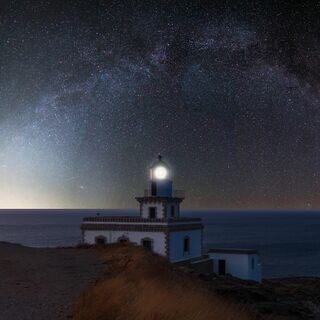
A beautiful island.
On the west of Ireland.
It is night time.
And the ocean is calm.
And in a little cottage.
Crackling fire is burning,
And next to that fire were a man and woman who were over a hundred years of age.
And their great-granddaughter.
Checking in with your body one more time now.
Your body has worked hard for you today.
It's time to give it rest.
Completely letting go now.
As I tell you.
Tonight.
Sleep Story.
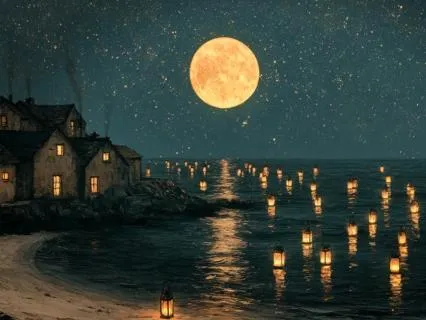
The moon comes up.
Over the island of Inisheen.
The way it has always come up.
Out of the sea.
Unhurry.
Laying down a long silver path across the water.
As if to say.
This way.
This way.
As far as you like.
It is a small island.
Three miles off the western coast.
One pill.
One lane.
One strand of pale sand that the people here have called the Silver Strand.
For as long as there have been people to call it anything.
The ferry takes 40 minutes now.
It used to take half a day in a boat with a brown sail.
But that was a long time ago.
And the island remembers it.
The way it remembers everything.
Quietly.
And in its own good time.
You know,
They say on the mainland that Inisheen is good to those who stay.
That the years go easy there.
Like the tide.
Nobody on the island argues with this.
They're mostly too busy.
Living a long time.
On this particular night.
A warm night at the very end of August,
With the moon coming up full and golden,
And the sea barely breathing.
There was a light in the window of the last cottage above the strand.
Inside.
A turf fire glowed soft and red on the hearth.
An oil lamp burned on the table.
Because that was the way the house had always liked its evenings.
And three people sat around the warmth of both.
Two of them.
With the oldest married couple on Inisheen,
Which is saying something.
Their names were Tom and Nora Flaherty.
And they had been married for longer than anyone on the island could exactly work out.
Including themselves.
Tom was long and thin.
And folded into his chair.
Like a well-kept fishing rod.
With big hands the sea had carved.
And a slow smile.
He had never once managed to keep off his face in time.
Nora was small and straight-backed.
With white hair pinned up,
And eyes that were still,
After everything,
The grey-green of the harbour on a bright day.
The third was their great-granddaughter,
Kate.
Up from the city for the last week of summer.
Twenty years old,
With her boots off,
And her feet tucked under her,
And her phone,
For once,
Forgotten in her jacket pocket by the door.
On the table between them.
In the lamplight.
Such a small tin box.
It was an old,
Sweet tin.
The paint worn away to soft silver at the corners And Case had taken it down from the manto.
Where it had sat her whole life.
Every summer.
Always there.
Never opened.
Like part of the wall.
Tonight was the night of the lanterns.
The island's night.
The August full moon.
When every household on any sheen carries a lantern down to the silver strand at high water.
And sets it out on the appetite.
To thank the sea for the year.
The lanterns for this house stood ready on the dresser,
Three of them.
Their candles waiting.
There was an hour yet before the tide would turn.
Go on,
Sow.
Said Nora.
Nodding at the tin.
You've been eyeing it since Tuesday.
Kate eased the lid of.
Inside.
On a folded square of blue cloth.
Lay a strange little museum.
A silver shilling.
Worn smooth as a pebble.
A small printed card.
With a tussled string.
And faded pencil writing.
A white stone.
Round as an egg.
A photograph.
Brown and cream.
Of two young people standing in front of a boat.
Not quite touching.
Both of them laughing at something outside the frame.
Kate lifted the shilling first.
And turned it in the firelight.
Das?
Said Tom.
From the depths of his chair.
Is the best money I never spent.
Is the only money you never spent.
Said Nora.
It is the same thing.
Sit down.
If you keep it long enough.
And he settled back.
Into the fire crackled.
And the sea hushed on the strand below the window.
And he began.
It was 1934.
And it was raining.
And on this particular day.
In the afternoon.
The mail boat.
Brought the new assistant schoolmistress.
To initiate.
Tom Flaherty,
Who was twenty that summer,
And considered himself a serious man.
Was on the pier mending nets,
Which is what a serious man does.
He heard the boat before he saw it.
And he saw the trunk before he saw her.
A great brown travelling trunk.
Coming up onto the wet stones.
On the shoulders of two ferrymen.
You set it down.
With the particular groan of men who feel a thing has more books in it.
Than any trunk should.
And then she stepped up onto the pier after it.
In a grey coat.
With the rain jeweled all over her dark hair.
Because her hat had blown into the sea somewhere off the point.
And she looked around her at the pier and the lane.
And the whole soft,
Grey,
Dripping island.
As if somebody had wrapped a present especially for her.
She said.
To the island in general.
There you are.
Tom stood up from his nets without meaning to.
The trunk had to go up the lane to the schoolhouse.
And the ferryman at the tide to catch.
And that is how Tom Flaherty came to carry a trunk full of books half a mile through the rain.
For a girl whose name he did not yet know.
While she walked beside him.
Heartless.
Telling him the names of things she had read in a guide-book.
Half of them wrong.
And asking him the real ones.
By the time they reached the schoolhouse gate,
He knew that she was called Nora,
That she was up from the town to help the master with the little ones.
That she could not swim.
That she intended to learn.
That she had never in her life seen the sea at night.
And that his own arms had stopped feeling the weight of the trunk entirely.
Which she privately felt was medically interesting.
At the gate.
She opened her purse and took out a shilling.
For your trouble.
Peace out.
There was no trouble.
Said Tom.
For your time then.
Time,
" said Tom,
Was the best part.
She looked at him then.
The first time she had looked at him properly,
With the rain drifting between them,
And the smoke of the schoolhouse fire,
Coming down over the wet slates.
And whatever it was she saw.
She pressed the shilling into his hand anyway.
And closed his fingers over it.
Was both of hers.
Then keep it.
She said.
And oh me,
The change!
And she went up the path.
And the door closed.
And Tom Flaherty stood in the rain outside the schoolhouse gate.
For a good long while.
Holding a shilling.
As if it were a live call.
Doing sums that had nothing to do with money.
I have never.
Said Nora in the lump light.
Ninety-odd years away.
Gotten my change.
You'll have it,
" said Tom comfortably.
I'm not a man to rush a debt.
Gate love.
And put the shilling down soft on the blue cloth,
And touched the photograph beside it.
The two young people by the boat.
Not quite touching.
Laughing at something outside the frame.
The regatta.
The spring after.
Said Nora.
There is a photographer over from the mainland,
A great fusser of a man.
And he stood us by the boat and told us to be solemn.
Just as the shutter went.
Somebody's goal.
Got into the tease.
She smoothed the photograph's corner with one finger.
That's what we're laughing at.
Sixty seconds after that was taken,
The goat had a sponge cake the width of a cartwheel.
Finest animal I ever knew,
" said Tom.
The turf shifted on the fire,
And sent up its sweet smoke.
And outside the window,
The moon had cleared the headlands now,
And was silvering the whole bay.
Away across the water.
The mainland shore glittered.
Streetlights.
Arbor Lights.
Headlights crawling the coast road.
A dropped necklace of them.
The way it glitters every night now.
Was all that dark then?
Kailash.
Nothing else is.
Back then.
Dark as the inside of a boot,
" said Tom.
On a moonless night,
There was nothing over there at all.
Only the lighthouse a ways south.
The moon was the hall of the streetlights.
And we were glad of her.
He nodded at the tin.
Guan,
The card.
Case lifted the little printed card with its tussled string.
The Islander's Hall,
It said,
In proud faded letters.
Night of the lanterns.
Dancing nine o'clock.
And underneath,
In pencil,
In a round,
Young hand.
A single word.
Promise.
Now is that?
Said Nora.
Sitting up a little straighter.
Is mine to tell.
Because himself will only lie about the dancing.
I will tell the truth about the dancing.
Said Tom.
And it will sound like lies.
Because no lie was ever as bad as my dancing.
The Night of the Lanterns,
1934 fell on the last Friday of August.
The whole island came down to the whore on the pier.
The long wooden hall with its oil lamps in brackets.
All along the walls.
And the stove at the far end.
And the floorboards worn pale and smooth By sixty years of boots.
Were two fiddles,
And a concertina,
And a man with a drum who had opinions.
The lamps swayed a little when the dancing got going.
So the light moved like water round the walls.
And outside the open doors.
The moon stood full over the bay.
Laying her silver path.
From the horizon.
Straight in,
It seemed.
To the foot of the pier.
Nora had been on the island nine weeks by then.
Tom had in those nine weeks.
Found reasons to pass the schoolhouse approximately 400 times.
She had learned from the children.
Every name he had gotten wrong on the walk from the pier.
And she kept them in order for use.
She had a dance card,
Because the whole committee was very grand about the Night of the Lanterns.
And the cart filled up.
The way cards do for a new girl who laughs easily.
But there was one name that had not been put down on it,
Because its owner was standing out at the end of the pier in the moonlight instead.
Having discovered at the door of the hall,
With the music starting,
That his feet,
Which could stand up in a cork,
In a beam sea,
Without a thought,
Had turned to two creels of turf.
At the mere sight of the floor.
That is where she found him.
Between one dance and the next.
He heard her step on the boards.
And did not have to turn to know it.
You're now stancing.
She said.
I am not.
Said Tom with dignity.
I am minding the moon.
Somebody has to.
She came and stood beside him at the rail.
Below them the tide was near the full black and silver.
Breathing against the pilings.
And the moon pass went down and down.
Until it fell off the edge of the world.
But let them keep the last dance.
For a man who was going to ask me.
But he appears to be out here.
Minding the moon.
"'It be no good to you,
' said Tom to the sea.
He dances like a man putting out a fire.
Then he'll learn.
Said Nora.
Out here.
Where there's nobody but the moon to see him.
She won't tell.
She's seen worse.
And she took his two hands.
The second time she had ever taken them.
And the shilling was in his pocket even then.
It was always in his pocket.
And she put one at her waist and kept the other.
And there.
Is the end of the peer.
On the old boards.
With the music coming small and bright out of the hall doors behind them and the moon path laid down on the water.
Like a floor they might walk out on.
If the first floor went well.
Nora taught Tom Flaherty.
To dance.
He was terrible.
It has to be said.
He counted under his breath like a man saying his prayers in an emergency.
And he steered the way he steered a boat,
With great respect for the rocks.
But somewhere.
In the third June.
The counting stops.
And somewhere in the forest The boards stopped being boards And when the music paused between dances,
They did not entirely stop.
But went on swaying a small amount,
The two of them.
Out at the end of the pier in the moonlight.
Holding on.
You'll do,
" said Nora quietly.
I will,
Said Tom.
I'll do for good,
If you love me.
It was not the asking.
Everybody on Inisheen knew the Asking had its own place.
And its own hour.
And this was not it.
And he knew it.
And she knew he knew it.
It was only the truth arriving early.
The way it will when the moon is full.
She put her head against his collarbone,
Where it fitted.
And they minded the moon together for a while.
And inside the whole.
The fiddles started up again.
And out on the black and silver bay.
The first lanterns of the night.
Went down the tie.
Like slow.
Small.
Dies.
They stood and watched them go.
Her head where it fitted.
His hand where it belonged.
And neither of them said anything for the length of three lanterns.
Because there was nothing that needed saying.
And both of them knew the worth of that.
From the hall behind.
Game the stamp and lift of the set-dances.
And the lamps swinging their light across the doorway.
And from the water.
Came the small gold lights.
Going out along the moon path.
Steady his sword.
And Tom Flaherty understood.
With the clarity that comes to a man once or twice in a life.
That he was standing inside.
The best evening he had ever been given.
And that the thing to do with such an evening.
Is stunned very still.
And let it soak in.
Past the board.
And the boots.
And o'er the way down before they went in.
She took the pencil that hung on its string with her dance card.
And against the last dance.
Where a name should go.
She wrote one word instead.
And showed him.
Promise.
The cottage,
The fire had burned down a shade.
And Tom got up.
It's took him a while now.
But the island is patient.
And he said to Satsang,
And the flames took them with a whisper.
Kate had her chin on her knees.
90 years.
She said.
More.
How do you?
She stopped and tried again.
Because she truly wanted to know,
And this seemed like the nice The answer might be got.
How do you?
Love somebody.
For 90 years.
How do you even do that?
Tom lowered himself back into the chair.
And looked at the fire.
And then as his wife.
In the way he had been looking at her since 1934.
Which is to say.
.
.
As though she had just stepped up onto the pier.
Out of the rain.
You don't.
Be set.
Thomas.
Said Nora.
You don't.
Sit down.
Because.
.
.
Nobody can.
And anybody who says they can.
Is selling something.
90 years is too big.
You'd fall off it.
He nodded slowly.
Working it the way he'd work a rope.
What you do.
Is love them for one evening.
That's all we ever did.
One.
Evening.
And then the one after it.
Choosing the same person.
One evening at a time.
And he lets the evenings mount up behind you.
And never once look at the pile.
And then some night a girl with her boots off Asks you how it's done.
And you look around and.
.
.
He lifted his big carved hand and turned it over,
Palm up at the lump light.
The tin.
The whole warm room.
90 years.
The clock on the dresser tick.
The sea hushed and hushed below.
One evening at a time,
Said Kate.
It's the only size love comes in.
Said Nora.
The rest is just keeping calm.
She looked into the fire a moment.
And then added her own half.
Because the answer was a thing they had built between them like everything else.
And you disagree about the hens.
And one of you makes the tea after.
And nobody keeps the score past morning.
And you learn the other one's weather.
He knows my rainy days by the sound of the kettle going on.
I know his.
By the way he takes his cap off.
You get so you can read the sky of a person.
And then you stop needing the forecast at all.
She reached over and touched the tin.
The stone now.
Then we'd best light the lanterns,
Or the tide will go without us.
Kate lifted the white stone,
Round as an egg.
Cool and heavy in her palms.
And even before they spoke.
She knew somehow.
That of everything in the box.
This was the one.
There is a rock at the south end of the silver strand.
That stands clear of the water at low tide.
Flat top.
With three natural steps in the side of it.
And it has been called the Asking Stone.
Longer than the island has been called anything at all.
The custom.
Is as old as the name.
If you have a thing to ask.
The one big asking.
You ask it there.
At the turning of the tide.
At the exact still moment.
When the sea has finished going up.
And not yet begun to come in.
The old people say the sea listens best.
When it is holding its breath.
It was three weeks after the dance.
The moon just passed the full moon.
And the night so calm the stars lay in the wet sand.
Like spilled soap.
Tom had said only.
Come down to the strand when the school sleeps.
And Nora had come.
In the grey coat.
They had walked the length of the silver strand.
At the lowest of low water.
Farther out than the sun ever should by day.
With the moon making one silver country Of the sea and the shore.
So that it was hard to say where the walking ended.
And the sky began.
And the sea did a thing thus nice.
That it does.
Some warm autumn nights in those waters.
As they were.
Every step they took bloomed pale green light.
In the wet sand.
And where the small waves turned over at the edge of the world.
They turned over full of cold green fire.
The sea light.
A thousand,
Thousand little living stars.
Answering.
The big quiet ones overhead.
Nora stopped dead when she saw it.
And then she left.
The love from the pier.
The present being unwrapped love.
And went along the tide-line Kicking soft sprays of light out of the ocean.
Like a girl kicking October leaves.
You ordered this.
She said.
I put a word in.
Said Tom.
At the Asking Stone.
He hunted her up the three steps.
And climbed after.
And they stood on the flat tub.
With the shining sea around them on three sides and waited.
Not talking.
While the tide ran out,
The last of itself.
You can feel as it turns.
If you stand still enough.
The whole bay goes quiet.
The waves forget their order.
For one long minute.
The sea stands holding its breath.
And the moon path lies perfectly still.
Like a road.
That has decided to wait for you.
In that minute.
Tom Flaherty went down on one knee.
On the cold stone.
And held up to her.
Because a ring was beyond a netmender's winter,
And they both knew it.
And neither of them cared.
A white pebble.
Round as an egg.
Chosen from the whole silver strand.
Over three patient weeks.
The whitest stone on the island.
Moonlight made solid.
And asked her the one big asking.
Three weeks it had taken.
The strand had watched a young man walk its lengths at every low tide.
I'm stupid.
Way.
Holding stones up against the moon.
And returning,
Nearly all of them to the sea with an apology.
And it had kept his secret,
Because strands do.
And what Nora answered is hers.
And was said to hold the breath of the sea.
And the sea has never told.
And neither will this story.
It is enough to say that when the tide turns And the first small wave of the new sea came in.
Came in over the feet of two people.
Standing on the asking stone.
Holding on to each other.
As if the other one were at ashore.
And the wave was full of green fire.
And neither of them noticed it at all.
The ring came in the spring.
From the town.
And to his goal.
And was worn thin now as wire.
The pebble had ridden in Nora's coat pocket to the mainland and back a hundred times.
And stood on the dresser of the cottage through every year of the marriage.
And lay now.
This nice.
In the lamp of light.
In the opened tin.
In the hands of their great-granddaughter.
Who closed her fingers over it,
The way.
Long ago,
A young man's fingers had been closed over a shilling.
It's time.
Said Nora.
Looking at the window.
Where the moon stood high and small now.
And the bay below had gone to beaten silver.
The tides at the full.
Light them.
They lit the three lanterns at the hearth.
The way the house had always done it.
Taper from the turf fire.
Because a lantern for the sea should carry a little of the home fire in it.
And went out into the night,
The three of them.
Down the sandy path to the silver strand.
Case with a lantern.
And Tom with a lantern.
And Nora with a lantern.
And her other hand holding Tom's arm.
At the pace the island understands.
The whole of Anishin was on the strand.
Lanterns came down every path and lane.
Swinging south.
Gathering along the tide line in a long,
Loose necklace of warm light.
Children running with theirs.
Dogs important about everything.
The fiddler from above the harbour,
Playing something slow with his case open on a dry rock.
And nobody putting money in.
Because that was never what the open case was for.
The moonpath came in off the sea.
Straight up the middle of the strand.
The mainland glittered far off.
And at the water's edge.
Family.
By family.
The island bent down.
And set its lanterns on the ebb.
And the tide gathered them.
And took them out along the silver road.
1 and 2 and 10.
For you.
Small golden lights.
Riding the dark water.
Out towards the moon.
Case crouched and setter is down.
And gave it a small push.
For mom.
She said.
Who stuck on the mainland and is missing this.
And will be furious.
And she stood and watched it go.
And got her phone up.
And filmed a slow,
Bright minute of it for her mother.
The lanterns.
The moon pass.
The fiddle.
To see Some things you keep in a tin.
Some things you sent home the same night.
It is all the one keeping.
And then the fiddler.
Without being asked.
Because he had been playing this night.
Since before his own hair went grey.
Slid into the old slow tune.
The last dance tune.
One from the hole on the pier.
Which has no name anybody uses.
Because on Inisheen it needs none.
And the island stood back a little.
Quietly.
The way it does every year.
And made a space on the hard wet sand.
And in this space.
On the shore of the silver strand.
In the light of the moon.
And forty floating lanterns.
Don Flaherty Put one hand at his wife's waist,
And took her hand with the other.
And Nora flirted.
Straightened her back.
The way she had at the schoolhouse gate.
And slowly.
At the base of the island.
At the pace of the tide.
At the pace of one evening at a time.
The two of them.
Dance.
It did not dance long.
And they did not dance.
They swayed mostly.
Way they had swayed at the end of the pier between the dunes.
Ninety-odd years of evenings ago.
Holding on.
Tom's lips move.
And only Nora was close enough to hear that he was counting.
Under his breath.
The way man says his prayers.
And only Nora knew that he had never actually needed to.
Not since the 4th June of 1934.
And that he did it now the way the house lit lamps.
For the love of the old way of doing it.
She put her head against his collarbone.
Where it fitted.
Where it had always fitted.
The fiddle turned the tune over gently.
The lanterns rode the swells.
Out and out along the moon path.
And the island watched its oldest lovers Dance on the silver strand.
And understood.
Every soul of it.
Down to the youngest child.
That it was watching the truth about ninety years.
That there is no such thing.
That there was only ever this evening.
Chosen again.
The tune ended the way the tune ends.
By lying down.
Rises in stopping.
There was no applause.
Applause is for performances.
There is just the sea.
And the small warm sound of an island full of people.
Breezing out at the same time.
Well.
.
.
Said Tom to his wife.
On the wet,
Silver sand.
There you are.
There you are yourself.
Said Nora.
Later.
The strand empty.
Lanterns scattered far out on the dark.
Like a constellation that had come down for a swim.
Kate walked her great-grandparents home.
Up the sandy path.
One on each arm.
At the pace the island understands.
And put The Catalan.
While they caught their breath.
And the three of them had one last cup by the fire.
With the door open to the sea air.
The tin was closed again on the mantel.
The shilling.
The card.
The photograph.
The white stone.
All back in their places.
Keeping.
She would sleep that night in the little room under the roof.
The one her mother had slept in.
And her grandmother before that.
With the window open to the bay.
And this is what there was.
At the end of the Night of the Lanterns.
And the island of Enishin.
The turf,
Fire in the cottage.
Keeping the house warm till morning.
The oil lamp.
The moon doing the lamps work now.
May.
One bar of silver.
Across the floor.
Over the foot of the old bed.
We're two people.
Who had been choosing each other.
One evening at a time since 1934.
Were asleep at last.
Close together.
Is done.
And her hen.
Still,
Loosely holding.
The way they tell.
Of the end of the pier.
The way they had held on the asking stone.
With the new tide coming in over their feet.
In the room.
Under the roof.
Purposefully.
One arm out of the covers.
The white moonlight.
On her face.
And the sound of the sea in the window.
Below the carpet.
All down the long ebb.
The last lanterns of the island.
Going out one.
By one.
On the water.
In no hurry at all.
Like a whole small world.
Closing its eyes.
While the tide carried them along the silver path.
And the sea.
Breathed in.
And out of the silver strand.
And the moon kept watch over Inisheen.
Where the years go easy.
And the evenings mount up like blessings.
And everyone.
This night.
Lives.