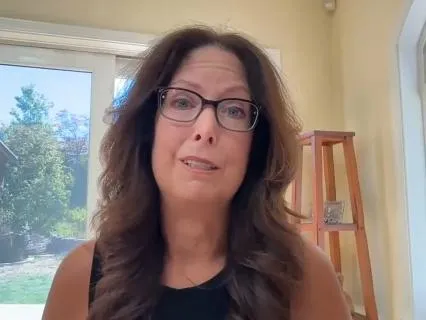
Now if you're new,
My name is Michelle Ferris.
I'm a psychotherapist and I've been helping people heal their relationships for about 20 years and resentment is a really,
Really important topic because I don't know about you,
But I've definitely had my share of resentment and they don't go away on their own.
And that's why I'm talking about it today because.
If you are stuck in resentment,
You're in the right place.
We're going to talk about all things related to resentment,
Three things.
One is why we hold on to our resentment.
Why it really doesn't matter how much time has passed,
But time alone doesn't heal a resentment.
And a lot of times that's what people think.
They think,
Well,
If I just wait long enough.
It'll be okay,
I'll be able to heal this,
Or it'll go away on its own,
And it actually doesn't.
And then I'm gonna talk about what it actually means to shift a resentment.
Because there are things you can do by yourself.
You do not need the other person to do anything.
And that's where it gets really exciting.
So the first reason why we are holding onto resentment is,
And this one's probably going to surprise you because it surprised me where you actually have a delayed reaction when somebody hurts your feelings.
So for instance,
Say you are in a conversation with someone and it's going fine.
No big deal.
And then all of a sudden out of the blue,
They say something hurtful and it kind of takes you by surprise.
It kind of knocks you off balance.
I've had this happen several times where everything's going fine and then they say something and it just like,
Ooh,
That doesn't feel right.
But you don't really register it at the time.
There's a delayed reaction.
You might start thinking,
Well,
Did I hear them correctly?
And doubting yourself.
So what happens is you feel like something's wrong,
But it's so minor that you really don't pay attention to it.
And there's reasons why this happens.
The first one is we sometimes get into that fight or flight or freeze reaction,
That cortisol stress response that actually prevents us from thinking rationally.
So instead of being able to say to ourselves,
Ooh,
Wait a minute,
What just happened?
We don't have the brain cells at that point because that fight or flight has kicked in and we don't even realize it.
Because if we're in conversation with somebody at the same time,
Right,
That's a lot to pay attention to.
So the other reason this happens is that if you grew up in a home where your feelings were not validated.
You did not have your hurt heard by an adult.
What you might likely do instead is question yourself instead.
And you might say to yourself,
Well,
Maybe I'm being too sensitive.
Maybe I heard that wrong.
And you start playing it over and over again in your head.
Because you don't quite trust yourself.
So that delayed reaction leads to the next reason we hold on to resentments,
Which is we end up stuffing it.
And so many people I know stuff their resentment and I totally get it.
I have done this too.
That's my natural go-to is sometimes I will just stuff it because I need time to process it.
So initially,
If you don't feel safe to share your resentment,
As it's happening,
That's totally normal.
I think it's really,
I've been able to do that a couple of times,
But it takes a lot of work.
It's really okay to get off the phone,
Leave the other person and figure out what you need.
Because it's really hard to do that in the heat of the moment when that person is still in conversation with you.
The other thing that happens when we're stuffing our feelings is that those feelings have to go somewhere.
And what they do is they get stored in the body as stress.
They don't go away.
And that's part of what we think.
We think,
Well,
Maybe they'll just go away on their own,
Right?
If only I just think about something else,
It'll be okay.
And that's actually not true,
Because I don't know about you,
But when I have a resentment,
I can feel it.
I can feel it in my stomach,
I can feel it in my shoulders,
And I can definitely feel it when I think of that person.
So one quick way to know that you're still in resentment is that when you think of that person,
You immediately have a gut punch,
Like a ugh.
That's a sign because something's unfinished.
So when we stuff it,
Even though a lot of people do this,
What ends up happening is we end up creating a story around it.
I've met several people who do this.
I've done this where It takes on a life of its own because again,
Those feelings of resentment can't be put to the side.
They're in there.
So what happens is we get more and more hurt over time and if you choose to tell that story because you're wanting validation,
Then that story takes on a life of its own,
And it actually reinforces why you're stuffing it,
Because we don't want to deal with it directly.
So stuffing it is a really common reason why we hold on to it.
And again,
If you're stuffing your feelings,
You're not bad or wrong.
This is typical and very,
Especially if you've been in a dysfunctional family where you didn't learn how to do conflict.
And that's the other reason why we hold on to resentments is We don't know another way to do it.
We didn't get any examples that tell us that we're doing it right.
I know in my mom's family,
All her,
My mom's family had like six siblings and as adults,
When they didn't agree on something,
They just stopped talking to each other.
And that went on for years.
And,
You know,
Imagine if you grow up,
Seeing that,
Then you're not going to really want to deal with resentment yourself because you don't have any roadmap.
You don't know what to do.
Your family maybe stuffed the hurt or gossiped around each other or did something,
But they didn't deal with it directly.
And that's pretty typical because knowing how to manage your resentment is critical.
Pretty important,
Right?
That's something we need to learn how to do,
But a lot of times families don't know how to do that.
They don't have that skill level.
So the other reason why we are holding on to resentment is that we're waiting for an apology that never comes.
I can't tell you how many times I've done this,
My clients have done this,
Where you're waiting for them to notice that you're hurt.
You're waiting for them to go,
Hmm,
Did I say something offensive to them?
But the truth is is that.
A resentment is a hidden hurt,
Which means that the other person has no idea what we're feeling because we haven't said.
And usually what happens is we even contribute to this by pretending everything's okay.
We may still be talking to them.
We may still have a connection.
So they think everything's fine.
They have no idea that we're ruminating about what they've said a couple of weeks,
Couple months,
Even a couple of years ago.
So that's where this gets really,
Really dicey.
So.
Here's my question to you.
Have you ever had somebody come back to you and apologize for something you resent?
Because I would bet very few people are going to say yes.
Because again,
Most of the time,
We're the ones holding onto it.
The other person has no idea because we haven't said anything.
You know,
If we put ourselves in their shoes,
How many of us remember something hurtful that we said,
Maybe without even meaning to hurt somebody's feelings?
And they come back to us and say,
Hey,
You know what,
This really hurt my feelings.
We might be like,
Oh my God,
I didn't even think of that.
I didn't realize,
Right?
So that also may be happening where the other person has no idea that they offended you.
And sometimes we have to remember that that too can happen and it isn't necessarily people don't always have that intent.
And I think that it's really important.
With resentment to realize that because if we're assuming bad intent,
We're already down that negative story of this is what they did to me.
They're bad.
They're wrong.
Look at me.
And we end up in that story creating a very one-sided victim story.
And the longer we tell that story,
The longer it actually takes on a life of its own.
And we get more and more justifiably angry because we think,
Hey,
You know what?
I deserve to be hurt.
And let's face it,
Whenever.
.
.
We're hurt,
There's always a valid reason for that.
It's not something we're making up.
You're not being too sensitive.
But we also have to look at what are we doing to contribute to that?
And we're going to talk about that a little bit later.
Because if you're depending on someone else to change for you to heal,
You're going to be waiting a long time because people don't typically.
Wake up one day and change their behavior.
Unless they're doing this work,
Unless they're really open to feedback,
And a lot of people aren't,
They don't know what they don't know about themselves.
But that's why healing depends on what we do,
Not what the other person does.
Because then we would expect everybody to get into therapy and do this work.
And that's unrealistic.
You know,
I have very few people and well,
That's not true.
I have a lot of my friends are doing this work.
And some of my family actually is,
But for me to expect my family or certain people to get help when they see no need is.
Kind of unrealistic.
The other reason why people have a hard time holding on to resentment or why we hold on to resentment is that we think letting go means excusing their behavior and that everything's okay.
That's just not true.
We can let go and not give them free rent in our head.
But there are some things that people just can't forgive.
And you know what,
That's an individual choice and I don't have any judgment around that.
And you shouldn't either.
If there are things that have been done to you that you can't come back from,
Then that's perfectly fine,
But that doesn't mean you can't do some healing.
That doesn't mean that you can't get to the point where you go,
You know what,
I can accept that this is the reality,
I can't change it,
But I can move forward without constantly regurgitating that resentment story.
Because what people don't realize is that the resentment hurts us much more than the person out there that hurt us.
Because again,
They typically have no idea that they've hurt us.
The other reason is we're getting something out of it.
This is a huge reason why we hold on to resentment because it's called secondary gain.
It's helping you in some way.
And some common examples of this is it gives you a negative story to tell.
And in that story,
You get sympathy.
You get to tell your tale of woe and how somebody hurt you and be heard and get the other person to validate and go,
Oh my gosh,
That was awful.
That shouldn't have happened to you.
Because when we have unprocessed hurt,
We need that hurt to be validated because that's part of the healing process.
It can give us an entertaining story.
Where we don't want to let go of it and we tell it over and over because It's enjoyable to other people.
It,
Again,
Elicits sympathy.
It also prevents us from dealing with it directly.
So the secondary gain might be,
If I hold on to this resentment,
I don't have to confront the other person.
I don't have to deal with them.
I can just live in that hurt.
And sometimes if we're really afraid of conflict,
We're going to choose the latter.
We're going to choose to hold it all in and stuff our feelings versus really being able to deal with it directly.
But you know,
That's part of the healing process.
And I think if you have Any type of codependency,
The fear of conflict gets really intense.
And you may think that storing that resentment is easier and healthier even for you than risking bringing it up.
And I understand that.
That's why resentments and codependency tend to go together a lot.
The other part with resentment is that Sometimes a resentment is a trigger and we don't realize it.
So say somebody hurt your feelings and you have a huge reaction,
Right?
It's just Way bigger than what the actual hurt was that tells me that it probably that hurt whatever happened or whatever was said in the heat of the moment today triggered off some unresolved triggers where Maybe somebody said kind of implied Jokingly that you were stupid but in a very off-handed way and for you that was like,
Oh my god I was called stupid so many times growing up and you go into intense feeling and shame around around it.
When there's a trigger,
We are reacting not only to the present circumstance,
But to every past hurt that relates to it.
And that's why when a resentment is a trigger,
It's really going to be hard to let go of it.
Because we have a lot of evidence supporting our story.
And that's another thing that makes it really difficult for us to really let go of that resentment.
Why doesn't resentment heal on its own?
Oh gosh,
This is,
You know,
I've had that fantasy too of,
Oh,
If I just leave it alone long enough,
I'll let it go.
But it doesn't work that way.
And here's why,
Because if you have been hurt and time passes,
It gets stored in the body as stress.
That fight,
Flight,
Freeze reaction will probably rear its ugly head every time you think of that person,
Every time you see that person,
Because it's unfinished.
And that's where the body remembers,
Right?
It remembers that we've been hurt.
It remembers that maybe we don't feel safe with that other person because they've hurt us.
And that creates a whole host of issues because we don't want to even be in relationship anymore.
So another sign that you're struggling with resentment is that if you don't want to spend time with them or you're making excuses not to be around them,
Often there might be a resentment or a hidden hurt that needs to be dealt with.
So the other thing people sometimes do is they think,
Well,
I'll just busy myself or I'll just focus on the positive and it'll go away.
But it doesn't.
And I really want to tell you that,
You know what,
It's okay that it doesn't go away on its own.
It's normal.
It's really,
Really hard to move past hurt without any processing of it.
Even though a lot of people think if I give it enough time,
It'll go away,
It really doesn't.
Again,
Because it gets stored in the body as stress,
And it's really hard to forget when someone hurt us,
Especially if we have a history of being hurt and never being advocated for.
Or maybe we have never spoken up when we've been hurt.
So as an adult,
We get frozen in fear and we don't know what to do because we've never stood up for ourselves when somebody hurts our feelings.
And that too is a really pivotal moment in recovery where we can say,
You know what,
Maybe it's time,
Maybe I need to do some writing.
Writing is a great first step for dealing with resentment because it gives you a safe place to put it.
Oh,
Sometimes we might also think that,
Oh,
You know what?
It's not that bad.
I'm over it.
And then something small happens.
They say something similar,
And you're right back in it.
That's just a reminder that,
You know what?
There's some work to do,
And that's OK.
You might think that you're over it when you're actually not.
All right,
So what is the secret to letting go of resentment?
Here's the thing.
You've got to change the story.
The more attached we become to the victim story.
And what I mean by victim story,
I don't mean that in a judgmental way.
I mean that where we're thinking,
You know what,
This is what was done to me,
And I don't see my part in what happened.
It's all about what they did and what they said.
And when we regurgitate that over and over again,
It kind of is like the Rolling Stone,
It just gets bigger and bigger and bigger.
And that's what we don't want.
So the secret is instead of focusing on what they did to us,
We have to focus on how are we showing up today.
So years and years ago,
I didn't have a.
.
.
Hardly any of a relationship with a family member.
And I was doing my 12-step work.
I was new in recovery.
Oh,
Gosh,
I was maybe 24.
And I realized one day,
Oh,
My God,
You know what?
I am not behaving well to that other person.
I am not engaging.
I'm not saying hello.
I'm completely ghosting them because I had so much hurt that I didn't know what else to do with it.
But that started to change my resentment story because instead of focusing on what they did to me,
I had to include in that what I was doing to them today in reaction to what happened.
And I had to look at that and not make excuses for it.
And that was such a huge turning point.
And that was honestly the beginning of my resentment work where I realized,
Hmm,
I do have a part here.
And sometimes that's the hardest piece that people need support around because it's really easy to see what other people have done to us.
It's really hard to see how we possibly have contributed to that situation.
People usually need help with that because there's so much resistance to letting go of that story.
And I totally get that.
The other thing that comes up is thinking that we have to forgive.
And I know I touched on this earlier is we don't have to forgive.
You get to choose that.
But it also means that you don't want to give them free rent in your head by regurgitating the story and having that live in your body,
Because that's a sign you are still stuck in resentment.
And I don't want that for you.
I want you to be able to heal and move past it and be able to think of that person in a new way and go,
Yeah,
You know what?
Maybe I don't care for them.
It's not impacting me anymore.
That's what I want for you is to get to a neutral place.
And depending on the severity of the incident,
Right,
That's going to look different for different people.
And that's totally okay.
But what we don't want is we don't want to keep living in that intense negative story because that's hurting us much more than it is the other person.
Because again,
The other person probably has no idea because we haven't said or it's been 20,
30 years and they've moved on and they don't think about it.
The other thing I want to say is,
You know,
There's no shortcut to healing a resentment,
But if you have the process,
If you can acknowledge what happened,
If you can see how it impacted you,
If you can see how you possibly contributed to it,
That's what's gonna help you heal it.
You don't need the other person to apologize.
You don't need them to even know what you're doing,
Because you can do this.
You can absolutely heal your resentment.
You just have to be willing to shift that focus from what they did to what you can do today,
Because that is the power you have.
We can't change what happened,
Unfortunately.
But that doesn't mean you can't get relief from it.
So anyway,
I hope this has helped.
Bye.