Hey,
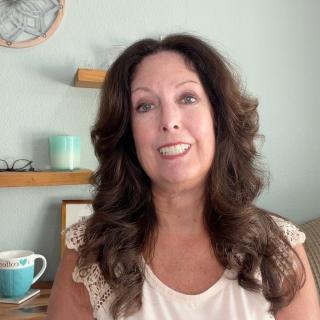
It's Michelle here,
And I'm just gonna share a little bit of my own story with you because I have some powerful life lessons that I think are gonna really help.
So I'm a psychotherapist and I help people heal their relationships with a very specific set of skills.
I've been in my own codependency recovery for about 30 years and I've been a relationships therapist for about 15.
I know what it's like to be in relationships that don't work and to not be able to advocate for yourself or to communicate effectively because I'm codependent.
So I didn't learn those skills growing up.
So part of what happened for me was that when I started my recovery,
I was doing some really good work,
But I was missing some really essential skills that I didn't realize because there wasn't really a good roadmap back then.
I did therapy,
I did 12 step,
I did a bunch of different things,
But there wasn't really a specific guide and I really wished I would have had that.
So part of what I'm going to do is I'm going to share some of my own life lessons with you.
So the first one is when I was newly codependent in recovery,
I did not think I was the problem.
I thought if only I could fix other people,
My relationships would be good and I would be happy.
I didn't really see myself as the problem because honestly,
Most codependents don't because we're the givers.
We're the ones that contribute.
We're really nice people.
It's hard to see our own behavior and how it's a problem.
And for me,
I had to get to the point where I saw that I was trying to control somebody and it was making me nuts.
And that was the turning point for me,
Is to realize that,
Okay,
I am now powerless over people,
Places,
And things,
And I gotta do something different.
And that was a huge turning point because if we recognize that we're the problem,
And I don't mean that in a negative or derogatory way,
I mean that in an accountable way,
Then we can be our own solution because we know what to fix,
Right?
We know that the solution has to come from ourselves,
Not other people.
So that was my first lesson.
My second one was I was in a relationship years ago with somebody who was chronically late and it bugged me.
And the reason it bugged me is because I felt like I wasn't important to him.
Every time he was late,
Even though I would ask him to be on time,
He was chronically late.
And one day I realized that him being late had nothing to do with me.
It had to do with how he rolled.
He just was late to everything.
But I assigned it meaning and took it personally because of my own past,
Which is what I call a relationship trigger.
That's when we tend to overreact to a present situation based on the past.
And for me,
I had a history of abandonment.
So when he was late,
I felt like he was leaving me.
But when I realized that his being late had nothing to do with my own issues,
I was free because I realized,
Oh,
That has nothing to do with me and I could let myself off the hook and I could let him off the hook.
Now the last one is a little more personal.
So this one was a friendship that blew up about 10 years ago.
Several years ago.
And she ended the friendship without much warning.
It came as a huge shock.
And I basically plummeted into intense grief for several months.
It was really hard on me because I didn't expect it and I didn't see it coming.
But,
You know,
Pain is a great motivator and what I realized by doing this work is that I had lost myself again in a relationship.
I had let her become a little too important because as a codependent,
I can get a little addicted to somebody.
And even though I was doing my recovery,
I had good self care.
I had good relationships outside of her.
I had lots of other really good things happening.
I still gave too much of myself away and I was still looking to her too much for approval versus myself because I didn't learn that lesson yet.
And it was hugely painful,
But it was honestly the best thing that ever happened to me because I learned to be my own best friend.
And I learned that I had to rely on myself before I relied on anybody else.
And that pain was so great that it gave me the motivation to do deeper work.
So for me,
It was really about looking at not getting my love from other people and myself.
It was,
I really had to make sure my sense of self was solid and then go into relationship,
Not go into relationship with a little bit of self.
I think I had enough,
But really I didn't.
And it was very evident in how I reacted to the end of that friendship.
So those are my life lessons.
Part of the reason why I do this work is because I want to shorten those life lessons for other people because you don't need to take 20 years to learn this stuff.
So part of what I'm going to do is I'm going to remind you of the lesson.
Don't take things personally.
If you're assigning big meaning to something,
It's probably about your past.
Know that you are your solution because when you realize that you're the one that needs changing,
Then that's golden.
Because then you have the power to really change your life.
When we think other people are our solution,
Then it gets super frustrating because they're not,
Right?
They could walk up and leave at any time.
The last one is don't put all of your emotional eggs in one person's basket like I did.
Even though,
Yes,
That's part of the recovery process,
And some of you might be doing this with your partner or a family member or even your child,
It's super important to recognize that point you're starting to lose yourself in that relationship.
And if you notice that,
That's where the work is.
And I can't tell you how valuable that piece of work was for me because now I know I will never do that to myself again.
She didn't do that to me,
I did that to me.
It was my own codependency recovery that caused that blow up to a large degree.
And because I can take accountability for that,
I could really heal it.
So anyway,
I hope you found this helpful.
Bye.