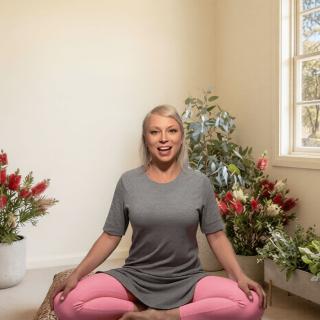
Begin by finding a comfortable posture,
Sitting or lying down.
There's no specific posture you must force yourself into.
Simply allow your body to settle where it is supported.
Bring your attention to the physical sensation of your breathing.
There's no need to push the air,
Force a deep breath or alter your natural rhythm.
Simply observe how your diaphragm and chest move.
All by themselves.
Notice if a natural sigh or release occurs as tension softens in the shoulders,
Jaw and face.
You do not need to force yourself to relax.
You only need to observe what is physically present.
Allow your attention to rest quietly in this moment,
Noticing sensations gently.
Without any need to analyse or evaluate.
Notice the quality of your attention right now.
When preparing to perform.
We often try and force our focus to narrow,
Grip tightly or control every detail.
In this space.
Observe what happens when you simply let your attention soften.
If your mind wanders,
Observe the thought drifting past without needing to pull it back with force or frustration.
If thoughts about time,
Outcome or expectations arise.
Simply categorise them as passing mental events.
Notice that you are the steady observer watching these thoughts calm and hurried and quiet.
Bring your awareness to the refined coordination of your body.
Consider how skilled physical movement actually occurs in the brain and muscles.
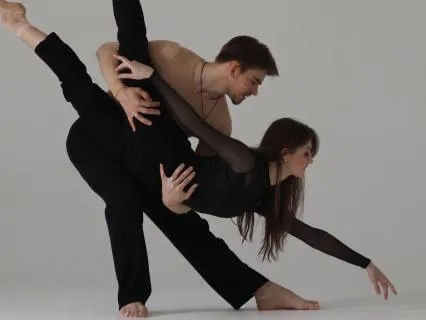
When a dancer points a foot or an athlete throws a ball.
Conscious overthinking in the executive centers of the brain often disrupts the fluid sequence.
True grace and speed happen.
When conscious micro-management steps aside.
Allowing established neural pathways to execute the movement.
Bring your awareness into your physical body and mindfully observe the sequence of movements.
Feel the physical alignment starting from your core,
Hips and centre of gravity.
Feel the subtle anatomical rotation through the legs.
The inner thigh lengthening and the hips stabilising.
Track the distribution of pressure sequentially through the heel,
Arch and through the toe.
Notice how precise movement feels when guided by somatic awareness.
Rather than mental friction.
When we attempt to overanalyze our movements while executing them.
Create physical tension.
What motor control experts call.
Paralysis by analysis.
In this moment,
Practice letting go of the need to micromanage every muscle contraction.
Trust the muscle memory,
Coordination and training.
Your body already possesses.
Bring to mind a past moment where you felt completely in your element,
A time when your performance felt fluid,
Precise,
And natural.
Recall the physical sensations of that moment.
Notice the feeling of lightness.
Balance or steady physical power in your muscles.
Recall the visual details,
The ambient sounds and the clear focus in your mind.
Feel where that sense of ease resides in your body right now.
Perhaps as a ground of weight in the feet or a steady stillness in the torso.
Allow yourself to sit with this physical memory.
Letting this somatic experience of calm capability anchor into your posture.
As you rest in this grounded state,
Bring your awareness to any subtle beliefs or self-talk that usually arise around performance.
Notice thoughts such as.
I have to push harder to succeed.
If I make a small mistake,
Everything falls apart.
Observe these thoughts with an open curiosity.
Notice how they trigger subtle automatic physical tightness in the breath,
In the stomach or in the shoulders.
Recognise that these are merely conditioned thoughts and habituated mental scripts.
Not objective facts.
You do not need to fight these thoughts or argue with them.
Simply observe them as passing mental noise.
Allowing them to dissolve back into the quiet space of your awareness.
Imagine stepping back slightly,
Observing yourself from an objective,
Spacious perspective.
Picture yourself performing your skill.
As if watching a clear video recording of your best moments.
Watch the fluid rhythm and mechanics of your movement.
Notice the calm,
Settled expression on your face.
Observe how effortless performance looks when physical tension and second-guessing are removed.
From this spacious viewpoint,
Recognize that you can acknowledge feelings of hesitation without allowing them to disrupt your physical execution.
Now,
Gently bring to mind an upcoming performance,
Task or event where you wish to embody this flow state.
Visualise yourself stepping into that environment with quiet,
Scented presents.
You are not forcing,
Overstriding or straining.
You are simply present with the task.
Trusting your physical preparation and trained reflexes,
Feel the ease of moving through each stage,
Responding fluidly to whatever demands arise.
Notice how performance changes when guided by present awareness rather than internal pressure.
Bring your awareness back to the physical room around you.
Feel the contact of your body supported by the seat or the floor beneath you.
Take a gentle,
Full breath into the lower ribs and release it easily.
When you feel ready.
Begin to bring small movements back into your fingers and toes.
Taking a soft stretch if you like and opening your eyes.
Carry this sense of quiet trust,
Physical ease and effortless flow into your practice and performance today.