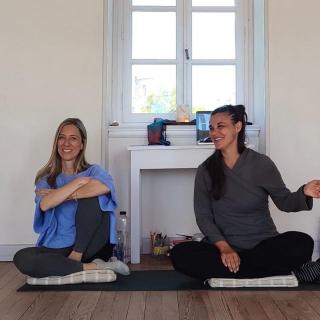
So could you give us an example,
If somebody's feeling unresourced,
Can you give us an example of a resourceful practice from an embodied psychotherapy point of view?
Yes,
I certainly can.
And what I'm noticing at the moment with a lot of the practitioners that I supervise or mentor,
And particularly ones who have been in this profession for a long time,
Are feeling quite depleted and exhausted.
Definitely in need of focusing on themselves more.
Most of the people I work with are women and have been caring for other people for a very long time.
And yeah,
There's a need to actually focus on oneself.
So something that you can do that's really simple,
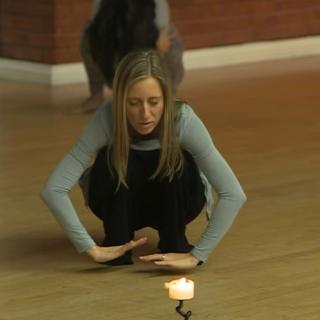
Which is a gentle movement practice that involves self-touch and is a really good one actually for when your energy is really low and you're feeling really depleted and maybe very overwhelmed so maybe you're also noticing perhaps you're actually in a kind of you know in that sort of free shut down state where you've been quite disconnected from yourself and from your body.
This practice is on the floor so you feel the support of the floor.
And is just then starting with very gentle movement but very much following those inner impulses from inside.
So not forcing anything,
But really listening.
And what that does is it really helps to kind of develop that interception,
That awareness of what does my body need from moment to moment.
And then what I also guide in that is using self-touch.
So the movement is really important because movement is very regulating.
Yes.
And there's something about when we move,
We're orientating ourself in space.
If we are feeling disconnected,
It helps us to start to feel more present and centred again in our body.
Then when you include self-touch Self-touch is very regulating for the nervous system.
So just placing hands on chest,
Arms,
Shoulders,
Face,
And slowing that right down,
You know,
Bringing a kind of a tenderness or just finding the type of contact that feels supportive.
And that's really the exploration,
What feels supportive,
What feels good.
And that all,
And we'll talk about that,
I'm sure,
All helps with rewiring your nervous system,
You know,
Away from kind of feeling overwhelmed and fear to feeling ah a sense of goodness and an okayness and actually feeling safe you know safer again in your own body.
And also I find in movement it really brings me back into a present moment because when I'm feeling and to you body against the ground.
And being supported.
Exactly,
You're being held by the ground.
And you also then have much more,
You have this sensory feedback from the ground,
Which also helps to become more present and back into your body if you are disconnected.
The other practice,
Or maybe state of being is a better way of naming it,
Is the importance of rest.
And although that seems like very obvious yes a lot of particularly women that i work with find this very difficult to give to themselves it's like yes okay rest at night but what about taking time in the day sometimes you know five ten minutes if you are noticing that your energy is very low you're feeling really exhausted and taking that time to rest your body and i think women particularly struggle with this one because Well,
One,
We have focused so much on other people and other people's needs,
As well as our society very much gives us the message that to have any worth is to be productive.
So we have to be doing in order to be worthy.
And so many women are driven by this,
And men,
Of course.
And then you add in,
Okay,
Then you've also got to care for others.
The to-do list is endless and how do I then in that say okay yeah there's still loads to do today that I need to get done but actually right now what's going to be most resourcing for me is lying down for 20 minutes and maybe listening to something's relaxing or just having silence and I just feel it's important to name that because I remember hearing someone speak about rest that rest is a radical act for women and it It does feel like that to me.
It's like a kind of a resistance almost to society's pressure and messaging that we receive.
Definitely.
I'm laughing as you're speaking,
Tasha,
Because I just feel so like,
Yeah,
I mean,
I just have another coffee.
That's what I do,
You know,
Instead of listening to my body.
And that brings me that whole thing about,
You know,
Our relationship with our body and how we take it for granted.
And treat our body as some kind of machine.
Or,
You know,
I often use an analogy of kind of driving a car.
So when you wake up in the morning,
You know,
And you need to go somewhere,
You just go into your car and you just drive,
Right?
You don't,
You know,
And you don't check in with the car.
How are you feeling today?
And what are the inner messages that you're communicating?
I mean,
You're like,
Literally just use it,
Right?
And I often feel that in our society,
That's how we are trained to have a relationship with our body as if our psyche and our mind is who we are,
Right?
And I'm our bodies and kind of wear like wear a coat that you get in.
You wake up in the morning or it's there and it just functions and you don't.
And the only time when you kind of check in with your body is when the body signal in pain or when something is wrong,
You're ill.
Right.
The rest of the time we don't check in with ourselves like what is actually going on.
So if we are tired,
We have a coffee or we are kind of pushing through that.
We don't pause.
And so there is something about this type of work.
Right.
Therapy we're learning or re-learning.
Re-learning.
Re-learning how to connect and how to listen.
If my body is,
Even if it's signalling a pain,
What is that about?
What is it actually?
Yeah,
What's the message?
What is the message?
So,
You know,
If,
You know,
Don't kill the messenger for bringing the bad news,
Right?
So it's like the body is signalling something and we often just want to get rid of the pain,
Right?
And not re-,
And then continue driving our car,
Right?
Just fix it,
Take it to a mechanic quickly,
Chip-chop and off we go,
Right?
Yeah,
And I find the question and often recommend to clients to start to just practice asking themselves,
What does my body need right now?
What am I feeling?
What am I sensing?
And what does my body need right now?
And if the message from the body is saying rest,
Can you then give that to your body?
Yeah,
Absolutely.
Quite lacking confidence,
I would say,
And someone gave me this cassette,
Literally one of those old cassettes,
And on that had this resourceful state exercise,
Which is different to how I'm going to guide it,
But was about stepping into confidence and evoking the state of confidence.
And I started to do this and I started to do it basically every day or every few days,
You know,
To just see,
Did it make a difference doing that before I went and ran the group?
And what I noticed is it really did.
I was able to kind of be in my confidence when I was then facilitating.
So I guess I had this sort of lived experience of,
Oh,
This actually really does work.
And what I noticed is then I can step into that quite easily.
You know it's like it's now sort of second nature when I'm running a group whatever I can kind of evoke that and feel more of that so yeah so it's developed from that and I'll guide people through that and I just want to say one thing about it because I know for psychotherapists sometimes these kinds of exercises that or practices or whatever around focusing on a positive state can bring up up like,
Oh,
But you're bypassing or overriding more difficult emotions.
Because in that example I just gave,
I also felt fear.
I was also feeling nervous.
But what it isn't about,
It's not about,
Oh,
I'm just going to ignore that feeling.
Yeah.
And just then just focus on confidence.
It's both and.
So I also acknowledge to myself,
Yes,
You feel nervous because this is a new experience.
You know,
I kind of tended to the fear as well,
I allowed that also to be there.
As well as then choosing,
Oh,
And I also want to feel this.
So it's about us actually having more options for our life so that we have kind of other ways of being when we need to be.
And we can shift from states rather than get just stuck in one state.
Is there anything else you want to say about that?
Well,
I'm just thinking about this,
That we have capacity for it.
For confidence we have capacity for fear so you were in your fear and other than being completely locked away in your fear and that sympathetic arousal and not being able to to shift out of it just evoking actually that state of confidence which you also have available there is sometimes when you were feeling confident yeah right yeah and so as you said but you know both both of those can coexist they can coexist and then actually what happened in that is that then I was regulated enough to be To begin this exercise you will need to be in a standing position and feel the contact of your feet against the floor and bring awareness to your breath.
So starting with identifying a state,
A resourceful state,
That you would like to experience more of in your life.
For example,
Peaceful,
Confident,
Energized,
Or empowered,
Or something else.
Just see what first comes to mind.
Now bring into your mind a time when you have experienced being in this resourceful state.
This may be from a long time ago or recently.
And just trusting whatever memory comes to you first.
And seeing this play out in your mind.
Noticing where you are.
Who you're with.
And any other details.
And I'm now going to invite you to step into this,
Taking a physical step as if you are stepping into this resourceful state right now.
And as if this experience is happening right now.
And noticing what do you feel in your body.
How does your posture?
Your facial expressions.
And your breathing pattern change.
And noticing any sensations you're experiencing in your body,
Perhaps where it feels more open or expansive.
And then amplifying this as if you're turning up the volume to feel it even more.
And as you're experiencing this,
Notice what do you see?
What are the colours,
The shapes?
Or how clear or fuzzy is the picture.
Does it have a panoramic view?
And sounds.
Are there any sounds around you that you're aware of?
And what is your inner dialogue like when you are in this state?
Just noticing that.
So just being in this state and then allowing a gesture or a movement to also be part of this that expresses something of this state for you.
Just finding that for yourself.
And you may want to amplify that even more.
And then I'm going to invite you to step out of this.
Shake it off.
Shake your body.
And then once again stepping back into this resourceful state and finding that body position again.
Finding the gesture,
The movement.
Perhaps bringing the visual experience.
Into this.
The sounds.
Savouring it just for a few more seconds,
Amplifying it if you need to.
And then stepping out again you may want to stretch or shake your body out and slowly opening your eyes orientating yourself again to your environment.
And knowing that you can reconnect to this resourceful state whenever you want or need to.
Thank you for this beautiful practice,
Tasha.
I feel quite resourced now.
I actually did it while you guided it.
And I have a question about it.
Can I ask you a question?
Yes.
So at the beginning of the practice,
You invited us to maybe bring the memory of when you had this stage.
And for me,
The memory came very quickly.
The resourceful stage that I wanted to practice was being joyful,
Bringing joy.
And the memory came very vividly,
And I was able to be there very quickly and follow the steps.
But I was just wondering about people who don't have a memory of a state that they have so you know joyful or let's say maybe your example of being confident like somebody who said well I never felt confident how can I bring the memory so what else is there some other way of evoking these practices if you don't have a memory?
Yes absolutely so you can do it as a as if so as if you felt confident What might that feel like?
And then can you step into that?
A little bit like an actor does when they take on a role.
You may also invite a client or,
You know,
Practitioners can use this,
Of someone who embodies that quality.
So let's say you're wanting to be more compassionate or connect to compassion.
You can bring to mind someone who to you really has this quality of compassion and then as if you're stepping into their shoes.
So I step into the Lai Lama shoes and imagine how it feels like to be in a vogue that I see.
And how it is to see the world from that state.
Beautiful,
Thank you.