Peace,
Peace,
Peace.
How are you all,
Insight,
Timer,
Community?
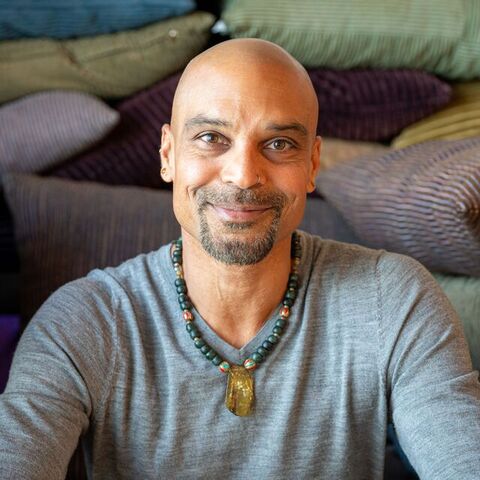
My name is Hawa Kasset.
That's HAWA,
H-A-W-A-H.
It's been so many years that I've been meditating on this app.
And I'm finally here to begin my Dharma talks and provide my reflections for all of you on healing and transforming the world around us.
I will be over the coming months.
Recording and releasing.
Conversations here related to the intersection where I live in between healing,
Mindfulness,
Social justice,
Mysticism.
Connection,
Community.
Science.
And care.
I'm really excited you've joined me.
And this podcast is going to be called Evolutionary because for me,
It is an exploration.
Of our ever-evolving spirit.
But I'm gonna get into all that and more.
Right now,
Right here,
With you.
So I'm going to invite all of you to step into this journey with me for some of you that are looking for a place where listening and love and empathy and kindness is going to guide our conversations and is going to guide our exploration of the world.
Then you've come to the right place.
I am here doing this because I believe there's a code.
That we still have to crack.
In our survival.
And when I think of the word evolutionary,
That word came to me over 20 years ago.
I was actually in college right around my senior year of college when the word like it struck my consciousness like the way a bell might go off on Sunday outside of the church or in your meditation room when the timer app goes off.
It was like boom come out wake up and understand.
What's happening here.
And for me at that time in my life.
I was in college very immersed,
Very deeply embedded in learning.
Of course,
I was in Washington,
D.
C.
,
Living and breathing,
Studying in D.
C.
And a lot of what I was studying were revolutionary movements from around the world,
Studying apartheid and South Africa during the time of apartheid and the movement for liberation,
Studying the civil rights movement in the U.
S.
The movement and the revolution here that happened in the late 50s and the 60s studying the movement for liberation in India,
When the efforts to rid India of colonial rule was fiercely underway,
And studying the impact of the nonviolent movement and struggles in India,
Studying struggles in favelas in Brazil,
In Vietnam,
When I traveled to Vietnam,
During my junior year of college,
I was always intrigued by revolutionary figures,
By the role that revolution had in evolving culture and society.
And while I was walking down the street,
It was kind of like this moment where it hit me that revolution in some ways is a part of our evolution.
Without revolution,
There is no evolution.
And without evolution,
There is no revolution.
And to me,
Evolution in that moment was understanding that we're constantly adapting.
We're constantly changing.
And it's the change and the adaptation of our beings to our environment and to the world around us.
That is constantly driving us to grow and try new things and experience new things.
And so,
Evolution,
And the word evolutionary,
It just kind of hit me and I was like,
Oh yeah,
Of course,
There's this merger between.
These two concepts that I'm so fascinated by in college.
I was fascinated by science and I took astronomy,
I took.
.
.
Biology,
I took all these classes in the sciences and natural sciences,
But then I was also fascinated by sociology and anthropology.
And so it was that young yearning for understanding our place in the universe that has kind of propelled me throughout my whole life.
I've always been a curious person.
I guess you can say,
I would say probably curiosity might be one of my defining characteristics.
I'm also sometimes like very obsessive and Once I start learning about something or if I'm trying to do something and I can't figure it out,
I'll just keep at it until I figure it out.
I guess for starters,
I'll give you a little background.
I was born in New Jersey,
Central New Jersey state on the eastern coast of the United States of America in a suburban town about an hour outside of New York City.
About an hour from Philadelphia,
So kind of smack in between these.
Two major metropolis cities.
And during my childhood,
I did all of my schooling in New Jersey.
My public schooling through high school was in that town.
And I'd spent many,
Many summers in India.
Specifically Mumbai,
Often still feels like my second home.
I would go there to spend long summers with my extended family.
And my childhood was this whiplash of an experience where I would go to India for two,
Three months in the summer.
And while there,
Experience life without consistent running water,
Experience life without consistent electricity,
Live with cousins and extended family.
Where food was scarce and not abundantly available to the point where I remember visiting my grandfather once in India.
And watching him eat dinner in a thali.
And the thali is like those Indian round plates with the one-inch lip around the outer edge.
And it's kind of like a flat bowl,
I guess you could call it.
And my grandfather was eating all the rice and the dal.
The dal is like a lentil soup.
From the plate and as he was eating with his hands,
Because in India it's customary to eat with your hands and not with utensils,
Food actually tastes fantastic when you eat with your hands.
If you haven't tried it,
I highly recommend it.
It changes the whole eating experience.
And as he was eating,
My grandfather would scoop.
Every single grain of rice off of the plate.
Every grain of rice.
Not one grain of rice was left with his finger on that thali,
On that plate.
And then at the end of the meal,
Because water was so scarce,
I remember sitting and watching my grandfather.
He would take the water from this little glass and he would pour it into the thali and he would rub around all of the edges and kind of basically wash the thali,
No soap,
Just his fingers and his hands,
Wash it with sands and then drink the water that he had just been washing the thali down with.
And when I saw that,
I think at that point I was probably nine 10 years old and I'd probably seen it many more times earlier in my life but I was old enough at that moment for it really to hit me to be like wow like literally there is no waste right now there's no food being thrown out there's no water being wasted it's just like a full self-contained system And I remember viscerally flying back to the U.
S.
At the end of that summer vacation in between years of schooling and going back into the lunch cafeteria.
And this was.
Probably a week or two later after getting home.
Completely in culture shock,
Of course,
But.
.
.
Being in the cafeteria in school in fifth grade.
And watching the cafeteria lines and all the chicken nuggets,
All the french fries,
The little hamburgers and at the end of the meal just seeing trays and trays filled with all this food being thrown into the trash by my friends that were sitting next to me just half-eaten plates of french fries and pizza that was like all this crust that was being thrown out and All I could think about at that time was,
Wow,
How is this possible?
How is it possible that in one part of the world we are saving every grain of rice,
And in another part of the world,
Where I am,
We are throwing out food in just massive amounts at a time?
And it was just kind of like.
.
.
It's like a wake up.
Moment in my life and I was nine or ten years old and I really couldn't go back after that realization that the world is not the same and I was fortunate enough,
I was lucky enough at a young age to have seen such differences in culture and in the way people live,
To see it with my own eyes.
And that visceral feeling is what has shaped who I am today.
So that's a little bit about kind of some of my history,
Some of what has gotten me to this moment,
Why I'm so intensely curious about the world and why I've always been really curious about the world.
And part of that curiosity.
.
.
Has been because of this unique experience of not being just stuck in one place my whole life my whole childhood and having this opportunity to see just vastly different ways that people live in the world.
And that's become a big part of my own commitment.
Because I felt really responsible.
From a young age because so many of my cousins would have literally given so much of their own lives.
They wished they could have been me.
They wished that they were born in the U.
S.
The way I was.
And that's a deep privilege to have had and to have known.
How lucky I was.
And then that kind of propelled my life into this life of service,
Which we'll get into in later episodes.
I'm going to be able to talk a lot about why I've made decisions in my life and how those decisions are decisions I hope others that are listening and tuning in can learn from.
All the failures,
All the ways I've messed up,
And all the ways that I've been able to learn and grow.
And in the meantime,
That process is one that keeps unraveling and it's like still reinventing myself and still reinventing.
The narrative,
Which is where we are now.
I guess that's part of,
For me,
The beauty of life.
It's this opportunity to constantly be reborn,
To constantly reinvent ourselves.
And I say that now in two ways that are important.
One is we can constantly reinvent ourselves.
You right now,
Listening,
Watching,
You can reinvent yourself.
Every day,
Every month,
We're making choices.
That are deciding who we are going to be,
Simply by the habits,
By what we do first thing when we wake up in the morning.
We are constantly reinventing ourselves.
And in the other way,
Importantly in this moment,
I mean that for humanity.
I mean that for us as a people.
As over almost 8 billion plus people that are on the planet.
We can still reinvent ourselves.
It's not too late.
And the beauty of this moment is right now we're shedding an old story.
We're shedding an old story about who we are supposed to be and what we're supposed to value.
And that old narrative is a narrative that's filled with war and violence and genocide and sexism and slavery.
Right?
The old narrative is a narrative that is a place that we're coming out of and we're in this amazing moment where we can reinvent ourselves.
Part of that requires us to imagine and to write a new story about who we want to be.
And so in this first episode of Evolutionary,
I want to call in to the space and into our being together.
This idea of belonging.
We belong somewhere,
All of us.
And right now,
We all belong here on Earth.
We all belong here and the violence we see in the world,
The pain and the suffering.
The generations and generations of trauma.
In all the healing that is happening.
And will continue to happen.
It is absolutely.
Imperative and dependent upon us doing the work.
Ourselves internally.
Our internal ecosystem.
Is what mirrors the external ecosystem,
And we are in a feedback loop.
We're in an echo chamber.
And so.
For me,
Right now.
As I'm hanging out.
And thinking about what's next for the future of humanity.
I'm interested in the biggest questions,
The existential questions.
I'm interested also probably just as much in our everyday living.
So there's systemic issues that impact us,
Economic issues,
Issues of climate and natural disasters.
There's politics.
There's all these forces at work.
But then there's our daily lives and there's how do we move through our world day to day?
How do we get from our front door to our car?
And how are none of these issues separate?
And how is everything interdependent?
And how is that interdependency and the realization of our interdependence a crucial part of our evolution into a species that can lift up into a space that is no longer predatory and dependent on extraction and profit at all costs and the default behaviors that we have been engaged with and in.
How do we exit that old story?
How do we reinvent ourselves and tell a new story?
And then how do we embody that in our day-to-day living?
So I'm here because I believe it's possible.
I actually really think,
And I know because these are people in my life,
That there's people in the world that are embodying.
This important ability to hold difference.
People that are willing to listen to each other.
And people who are guiding and are being guided by kindness and compassion,
They're out here in the world.
And we're out here in the world.
And we just need to realize that there's more of us out here than we've been made to believe.
And for me,
The key to our evolution and our evolutionary trajectory is indicative and dependent upon our ability to coagulate,
Coalesce,
And to connect with each other in community to realize we're not alone.
And when we realize we're not alone,
It's in the moment when we realize.
.
.
That we're not alone.
It's in that moment.
When we begin to.
Gather the strength.
And the courage of our ancestors,
And the strength and the courage of all the incredible people around the world who know we're better than this and know we can do better.
So here I am.
I guess you can kind of say,
This is Hello World.
My name's Hawa.
You know,
I hope that we can all have a lot of patience with each other and realize that it's not one moment that defines us.
And it's not one moment that defines a movement.
But it's a series of moments that are connected together that create a historical arc.
That can lead us into writing a new story.
And if we don't get stuck in one version of a story,
Then there are infinite possibilities.
So yeah,
There's a lot of things happening in the world and it can feel very overwhelming.
It can feel sometimes as if we don't know where we fit in.
And if you feel that way and you're listening and you're somewhere in Nigeria,
You're somewhere in Brazil,
You're somewhere in India,
You're somewhere in Japan and you're listening,
Just know that there are options.
And there are ways for us to navigate.
This current situation with ease and grace and love.
And that's what I'm hoping will be called out and will be calling forward.
Through this podcast where we spend time figuring out together how to answer some of the hardest questions of our time.
So this is our philosopher's stone.
This is our puzzle.
This is the human puzzle.
This is our engineering effort.
Of consciousness.
Thanks for listening.
Thanks for tuning into my first episode.
I am just getting started.
So looking forward to many more and many more opportunities to dive deep and dive in.
But for now.
Hello,
World,
And let's go,
Evolutionary.
You