Hey guys,
Tonight we're stepping into a world where warmth was a luxury and survival meant freezing through endless nights.
Forget the castles,
Kings,
And chivalry.
They were far from most people's reality.
Imagine waking up on a frozen pile of straw,
Your breath fogging the cold air inside a hut that barely shields you from frostbite or filth.
No gentle alarms here,
Just the sharp crow of a rooster,
The scrape of wooden shutters in the wind,
Or the clatter of animals sharing your cramped space.
Now get comfortable,
Let the day melt away,
And we'll drift back together.
Into the quiet corners of the past.
Congratulations,
You've just been promoted to Alive in the year 1315.
Barely.
You wake up not to a sunrise,
But to the distinct feeling that your soul is trying to escape your body through your nose,
Which,
By the way,
Has frozen shut.
You're lying in what technically counts as a bed,
Though really,
It's a sagging pile of straw,
Hay,
And livestock hair,
With just enough fleas to declare it an ecosystem.
Above you,
A blanket made of something that was once wool,
And now smells like it's harboring secrets from three winters ago,
Presses against your chest with the weight of damp shame.
It's heavy,
Wet,
And somehow colder than the air around you.
You blink,
Barely.
Each lash cracks like frostbitten twigs.
Your breath rises in ghostly puffs,
Drifting up toward the ceiling beams,
Which are lined with frost and possibly one dead rat,
Though it's hard to say in this light.
The fire.
Outside,
Has been since before you fell asleep.
You'd ask someone to relight it,
But there is no someone.
There's just you,
Your siblings,
A mostly sleeping goat,
And a hut that doesn't so much shelter as trap the cold in an endless loop of suffering.
You try to stretch,
But your joints have other plans.
Your left knee refuses to extend Your right elbow makes a sound that can only be described as medieval.
You manage to sit up halfway,
Teeth chattering,
As your blanket slips off and immediately regrets existing.
You pull it back on,
Even though it does nothing except remind you how very not rich you are.
It smells like mildew and sadness,
And you're pretty sure something in it just moved.
Around you,
The rest of your family is starting to stir.
Your younger brother grunts in his sleep and kicks your foot with what feels like a frozen stump.
Across the room,
Or rather across the same room,
Since there is only one,
Your mother is coughing herself awake.
Your father is already up,
Silently cursing the wind that howled through the thatch roof all night.
There's no privacy.
No doors.
No Rooms.
Just one space shared by six people,
Two chickens,
One goat,
And the kind of draft that makes your soul shiver.
You swing your feet off the bed and immediately regret it.
The dirt floor is half frozen,
Half mystery.
You're not sure if the cold,
Wet feeling between your toes is from last night's leak,
A spill,
Or something the goat did.
Either way,
It's now your problem.
Your breath fogs up again as you stand,
Slowly,
Bracing yourself like a man preparing for war.
But all you're really preparing for is trying not to scream as your spine decompresses with the enthusiasm of a snapping branch.
It's still dark outside.
Of course it is.
The sun doesn't come up early for peasants.
It waits just to be cruel.
The only light in the room comes from a single crack in the wall,
Where the moonlight spills through like it's spying on your misery.
You shuffle over to the hearth where the last ember died sometime around your third dream of being warm.
You poke at the ashes anyway,
As if hope is a kindling stick you just haven't found yet.
You consider restarting the fire.
But that means using the last bit of wood,
Which your father is saving for emergencies.
Apparently,
Being one wet sock away from hypothermia doesn't qualify.
You glance toward the bundle of firewood tied in the corner,
Wrapped like treasure,
Because it is.
Firewood means survival.
It also means risking your life to gather more later in the forest,
Which is not only covered in snow,
But also owned by the local Lord,
Who would love nothing more than to catch you trespassing and find you into a starvation spiral.
You return to your bed,
Or what's left of it,
And curl up,
Trying to recapture some heat from the goat,
Who's now fully awake and chewing on something that might have once been part of your sleeve.
You're 19 years old.
Which in this world means your back hurts,
Your knees sound like woodpeckers,
And you've seen three winters too many already.
You're supposed to be used to this,
But you're not.
You're never used to this.
The cold doesn't care.
It greets you every morning like a punch in the lungs,
And every night like a silent assassin slipping into your bones.
Eventually.
Your mother starts boiling water.
Well,
Lukewarm slush for breakfast.
Your brother starts complaining about something trivial,
Like frostbite.
Your father grumbles about needing to check on the animals.
Who,
Incidentally.
Are warmer than you.
And the goat finally stops chewing your blanket long enough to sneeze directly into your face.
You wipe it off with the sleeve he didn't finish and try not to think about how many more nights of this you'll endure before spring.
Or how long it's been since you felt truly warm or clean or comfortable.
You don't think about any of that.
You just breathe,
Slowly,
Through one half-frozen nostril.
Embrace yourself for another day in the year 1315,
Where you survive not because of strength,
But because winter hasn't won.
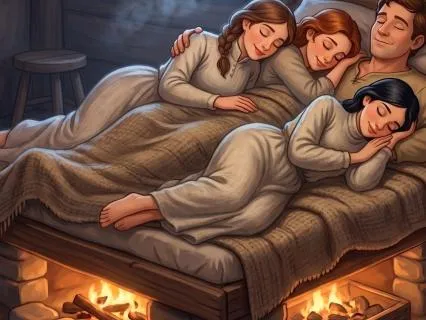
You don't sleep alone.
Not now.
Not ever.
Not in 1315.
The very concept of personal space is about as real as central heating.
Your bed isn't really a bed.
It's more like a slightly flatter section of straw laid across some uneven boards,
If you're lucky.
If you're not,
You're on dirt.
Or frozen dirt.
Or wet frozen dirt.
You lie there,
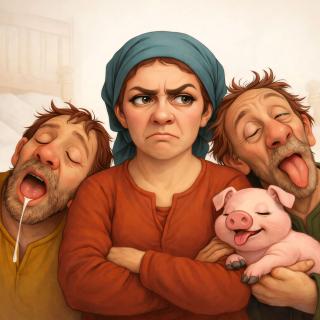
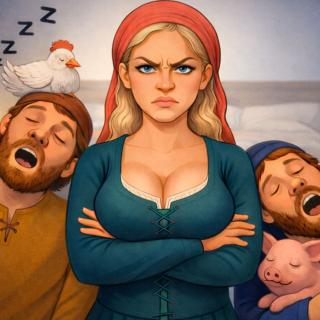
Sandwiched between two siblings who have somehow both mastered the art of kicking in their sleep while maintaining full-body shivers.
One of them smells like turnip farts.
The other snores like a drunk ox being strangled.
The chicken at your feet might be dead.
You're not checking.
If it is,
It'll be breakfast.
If it's not,
It'll lay one.
No blankets to yourself That was a fantasy you gave up sometime around the age of three,
When your little sister was born and immediately took your half of the warmth with her.
You've got one communal wool blanket,
Scratchy,
Stained,
And covered in more mysterious patches than actual warmth.
It's like trying to stay warm under a sack of regrets.
And every night is a war of tug and retreat.
One moment you've got it around your shoulders,
The next it's wrapped around your brother like he's King Edward himself.
There are no pajamas,
Just the clothes you wore all day.
Which conveniently are also the clothes you wore yesterday.
And the day before.
And the week before that.
You sleep in them.
Work in them,
Scratch through them,
And eventually die in them if the winter doesn't let up.
They're stiff from sweat and soot,
And damp in all the wrong places.
The wool itches.
The seams scratch.
And the smell?
Imagine someone rubbed a cheese wheel on a compost heap,
Then let a goat walk across it.
You can't move much,
Not because you're tired,
But because there's physically no room.
The bed,
Or sleep pile,
As it should be called,
Is packed full.
Your parents sleep on the other side of the room,
Which is to say,
Five feet away.
There are no walls,
No doors,
Just shadows separating the corners.
And even then,
Nothing really separates anything.
When your father coughs in the night,
It echoes through your skull.
When your mother turns over,
You hear every sigh,
Every creak of the straw.
You know exactly when your uncle mutters in his sleep.
You hear your cousin's weird breathing pattern.
Everyone's rhythms.
Everyone's needs.
Always present.
Always loud.
You dream of silence the way others dream of summer,
But instead you get whispered prayers,
Gasps of cold,
The wet sound of someone wiping their nose on their sleeve,
And once the unmistakable sound of your brother peeing into a clay pot right beside the bed.
He claimed it was too cold to go outside.
You can't even be mad.
You've done it too.
There's no shame anymore.
That was burned out of you.
After the third time you had to change clothes in front of your entire family because your tunic caught fire trying to stand too close to the hearth.
Privacy is for nobles,
Nobles with curtains,
With beds that don't sag.
With walls and chambers and other luxuries you can barely spell,
Let alone imagine.
You don't have that.
You have siblings,
And fleas,
And the hope that someone will roll over just enough to let you extend a knee.
Your body aches from the way you slept,
Or didn't.
Curled like a shrimp,
Arm wedged under someone's leg,
Back pressed against the rough wooden wall that always feels cold and damp,
Like it's judging you.
You tried to switch positions once during the night and were met with three elbows,
A foot to the ribs,
And your own mother hissing,
Lie still before I tan your hide.
So now you lie still,
Like a corpse politely waiting for rigor mortis.
And it's not just your human bedmates.
There are other guests.
Always.
Fleas hop from one body to the next,
Like they paid for the ride.
Lice burrow into your hair and feast like royalty.
Mice scurry nearby,
Rustling through whatever crumbs were foolishly left uneaten.
You once woke up to a rat licking your foot.
You named him Harold.
He hasn't been back,
But you still check every night,
Just in case.
And the cold.
The cold doesn't sleep.
It slides in through the cracks in the walls,
Through the roof,
Through the gaps in your blanket.
It nestles beside you like an uninvited lover and whispers against your spine all night.
You pull the blanket tighter.
It laughs.
You bury your face in the straw.
It freezes your breath to your lips no matter how many bodies are packed beside you.
The cold always finds the empty space.
But somehow you doze,
Not deeply,
Not restfully,
Just enough to forget how many toes you can't feel anymore.
And in the morning,
When the rooster crows,
Assuming he didn't freeze to death,
You'll peel yourself off the straw,
Joints cracking,
Hair matted,
Blanket half frozen to your back,
And start the whole cycle over again.
Because this is sleep in 1315,
There is no comfort,
No warmth,
No boundaries,
Just the constant shared choreography of surviving the night in a pile of limbs,
Lice,
And cold.
And if you're lucky,
The chicken will still be alive,
Or at least warm.
It starts as a whisper.
A gentle,
Polite reminder from your bowels that they too exist.
You ignore it at first,
Hoping the sensation will pass.
It doesn't.
It never does.
Within minutes,
Nature stops asking nicely.
Now she's pounding at the door.
Figuratively,
Of course,
Because you don't actually have one.
Not a proper one.
Just a warped wooden slab that barely hangs on its hinges and lets every breeze,
Rat,
And judgmental chicken wander through.
You try to pretend you're still asleep,
Still warm,
Still safe in the blanket of shared misery from the night before.
But the pressure builds You sigh,
Knowing exactly what's coming.
Not relief.
Number.
That's reserved for the rich.
What's coming is humiliation wrapped in frostbite.
Something the cat gave up on.
Barefoot it is.
You rise slowly,
Creaking like a haunted cupboard,
And make your way toward the door.
Outside,
The morning is cruel.
The air slaps you in the face with the kind of bitterness only January can muster.
The sky is gray.
The wind whistles through the trees like it's mocking you.
Your feet crunch over frozen mud,
Brittle straw,
And something that might be manure or might be breakfast from the goat.
Either way,
It's cold and squishy and unwelcome.
You step lightly,
Quickly,
Each stride a combination of urgency and damage control.
Behind the house is your target.
The family latrine.
Or more accurately,
A tilted wooden bench with a hole carved into it and a bucket underneath.
Sometimes it's the bucket.
Sometimes it's just the hole.
Sometimes,
In the worst-case scenarios,
It's neither,
And you improvise behind the shed and pray the chickens don't stare.
Today,
Though,
The bench awaits,
Covered in frost,
Radiating the sort of chill that makes you question if your blood is still moving.
You approach it like a man approaching the gallows,
Slowly,
With the full knowledge that this will not end well.
Your breath hangs in the air like smoke,
Except it doesn't warm anything.
You reach for the bench,
Wipe it off with the sleeve of your tunic,
Which is already damp from your own breath.
And lower yourself with the delicate care of someone trying not to cry.
Contact is immediate and violating.
Ice meets skin in a union no man should ever experience.
You hiss,
Grit your teeth,
And try to find a mental place far,
Far away.
A beach,
Maybe.
Or a hell that's marginally warmer than this one.
But there's no escaping the reality.
You're squatting over a frozen hole in the middle of a medieval apocalypse,
Praying to a god who apparently outsourced the heating.
You do your business as fast as humanly possible.
Which isn't easy when your body's trying to shut down all non-essential functions.
The wind howls,
The bench creaks,
And your knees threaten to mutiny.
There's no door,
No walls.
Just you.
The cold,
And the terrifying knowledge that if a neighbor rounds the corner,
You're about to redefine the word vulnerable.
When you're done,
You reach for what passes as toilet paper in this glorious age of progress.
Today,
It's a fistful of straw.
Other days,
It's moss or old rags.
Or if you're especially unlucky,
Your own sleeve.
Toilet paper hasn't been invented and leaves are long gone.
Frozen to the trees or hoarded like treasure by the family across the lane.
Once your brother used a flat rock.
You don't ask him about it.
You don't make eye contact.
Clean up complete,
Or at least close enough to lie about.
You rise from the bench and curse the heavens.
Your thighs are numb.
Your dignity is gone.
Your breath is fogging up in front of your face like a cartoon character on the verge of a breakdown.
You look down into the bucket.
It's full.
Again.
You try not to breathe.
You fail.
The stench punches you in the throat and curls your eyelashes.
You gag,
Cough,
And fumble for the lid,
Which doesn't fit and never has.
Then tradition dictates one final step,
The disposal.
You lift the bucket carefully,
Like it's filled with acid,
Which it might as well be,
And shuffle back to the front of the house.
With every slosh,
You can feel your ancestors judging your life choices.
At the corner of the house,
You give a ceremonial shout.
Gardelieu.
Old French for watch out below.
No one listens.
No one ever does.
You toss the contents into the street,
Where it joins a river of equally foul contributions from every other hut in the village.
It freezes on contact.
A sculpture of misery.
A monument to the era.
You set the bucket down with a sigh.
It's cracked.
It leaks.
You don't care.
Your toes are burning now,
Which is good because it means they haven't fallen off yet.
You shuffle back inside,
Past the pile of straw that calls itself a bed,
And curl back into the one warm spot you left behind,
Only to find your brother has claimed it.
Of course he has.
You wiggle in anyway,
Steal a corner of the blanket,
And stare at the ceiling,
Wondering how a society with cathedrals and calendars still thinks wiping with hay is reasonable.
But this is your life.
This is your morning.
This is how you answer when nature calls.
In the cold,
In the open.
With a bucket,
A prayer,
And a whole new appreciation for modern plumbing you'll never live to see.
Getting dressed in the year 1315 is not an event.
It's a punishment.
It's a chore so miserable,
So unholy,
That even the lice pause in pity while you do it.
You don't stand in front of a closet.
You don't pick a color.
You don't ask yourself,
Wool or linen today?
Number,
You wear what you wore yesterday and the day before that.
And last harvest,
And probably your uncle's funeral,
Because you own one outfit.
Singular.
Eternal.
Unchanging.
Like the suffering it was stitched in.
It starts with the tunic.
A once cream,
Now dirt-colored wool monstrosity that weighs more when it's wet.
Which,
By the way,
Is always.
Damp from last night's cold sweat.
Damp from the hut's endless condensation.
Damp from the goat chewing on the hem while you slept.
You hold it up like it's a wounded animal.
Unsure which part is the front.
Which part is still alive.
Alive,
And whether it will actually go over your head without giving you tetanus.
The smell hits first.
It's a combination of old stew,
Damp straw,
And something deeply,
Profoundly wrong.
Something that lived,
Then died,
Then lived again as a smell.
You slip it over your head and immediately regret every choice that led you here.
It scratches like burlap soaked in regret.
The wool grates across your skin,
Clinging to every rash,
Every flea bite,
Every mystery welt you developed over the past few weeks.
And then the itching starts.
Not normal itching.
Existential itching.
The kind that burrows into your soul There's no underwear.
Of course there isn't.
You can't afford that level of separation.
The tunic goes straight on.
And your body just has to deal.
If you're especially lucky.
You might have an under tunic.
A thin linen layer you found three winters ago in a cousin's dowry chest and never gave back.
But that's a once a month luxury.
Today,
You're going full commando under a garment that hasn't been washed since the plague took old man Willem,
And they repurposed his clothesline as a rope for hanging onions.
Your leggings are wool,
If you can call them that.
More like wool tubes with dreams.
One of them has a hole the size of a fist.
The other sags so much it's basically a leg warmer for your ankle.
They don't stay up.
You tie them with twine,
If you have twine.
If not,
You just keep tugging them back into place and praying they don't slide down mid-hoeing in the field.
No one says anything if they do.
Everyone's pants are betraying them.
It's just part of the culture.
Your shoes,
Or the memory of them,
Wait near the hearth.
They're leather,
Technically.
Cracked and curled at the edges like old parchment.
The left one has a soul.
The right one is more of a concept.
You shove your foot in anyway,
Hoping the mice evacuated during the night.
The leather is cold,
Stiff,
Unforgiving.
You feel every pebble,
Every thorn,
Every cruel intention of the earth beneath you.
But hey,
They're better than going barefoot.
Barefoot means frostbite.
Frostbite means amputation.
Amputation means the local barber surgeon and his one rusty knife.
And you're still recovering from the last time he tried to cure your cough with a bloodletting and a garlic poultice.
Once everything's on,
You do a quick mental checklist.
Tunic.
Leggings.
Mostly.
Shoes.
Debatable.
Dignity.
None.
Warmth.
Zero.
You're now fully dressed for another day of labor,
Lice,
And low expectations.
You scratch your shoulder with the edge of a wooden spoon.
Not because you're lazy,
But because your hands are occupied with tying a belt made from braided sheep hair.
It used to be white.
Now it's history.
There's no mirror.
You haven't seen your full reflection in years,
Just glimpses in puddles.
Once,
You saw yourself in a bucket of rainwater and screamed.
You thought it was a witch.
Then you realized the witch was you.
Puffy eyes,
Red skin,
Hair matted like swamp moss.
This is what happens when you sleep next to livestock and bathe with melted snow twice a year.
You step outside and the cold immediately punches through every layer you just put on.
The wool offers no defense.
It's wet wool,
Which is to say it's a mobile refrigeration unit.
The wind whistles straight through it,
Wraps around your ribs,
And whispers sweet nothings like,
You're going to die cold and itchy.
You pull the tunic tighter and curse it.
Curse the sheep it came from.
Curse the person who thought wool was a good idea.
Curse everything except the sun,
Because he clearly quit this village years ago,
As you walk to the field,
Or the barn,
Or the freezing stream where you'll pretend to wash something.
You catch sight of other peasants,
Equally bundled in despair.
They nod at you.
You nod back.
There's no judgment.
Only recognition.
You are all dressed in shared misery.
Bound together by the simple fact that none of you have ever been warm or dry or comfortable at the same time.
Not once.
This is how you face the day.
Not with armor or style.
But with a wool tunic that hates you and a prayer that the sun remembers you exist.
Getting dressed isn't a beginning.
It's a surrender.
A daily ritual where you climb into the same damp,
Scratchy shell of your life and tell the world.
Let's do this again.
The fire is out.
Again.
You knew it before you even opened your eyes.
You knew it from the way your breath hovered above your face like a ghost with bad timing.
You knew it from the pain in your fingers,
The kind that starts as numbness and ends in questioning whether they're still attached.
The hearth is dead.
No glow,
No ember,
Not even the illusion of warmth.
Just cold old ash and the bitter realization that you're starting another day in a room colder than the devil's handshake.
You sit up slowly.
Every joint cracks like firewood you don't have.
The blanket peels off with a damp squelch.
Part sweat,
Part frost,
Part unidentified sadness.
Your knees pop,
Your back aches,
And your toes scream the moment they hit the icy ground.
Your first thought isn't about breakfast,
Or chores,
Or even survival.
It's simple.
You think,
I'd trade anything for five more minutes of fire.
Except you have nothing left to trade.
The last turnip?
Gone.
Cooked it two nights ago in a stew so thin it apologized with every spoonful.
There's no coal.
That's for rich people.
There's no wood.
That's for careful people.
And you?
You used the last dry stick yesterday when your brother got the chills and started muttering about angels.
You burned it all,
Even the broken stool leg your mother swore she'd repair.
The fire aided in seconds,
Gave you 10 minutes of heat,
And then died like everything else in this hut.
You shuffle to the hearth anyway,
Because hope is stubborn.
You poke through the ashes,
Searching for even the faintest spark,
The tiniest glow.
Nothing.
Just gray dust and yesterday's regrets.
You try to blow on it.
It puffs into your face and makes you cough.
You try again because desperation makes fools of everyone.
But it's done.
The fire is gone.
And the cold is already seeping in through every crack in the wall.
Every knot in the wood.
Every memory of warmth your bones used to have.
Your mother eyes the fireless pit and says nothing.
She doesn't need to.
The silence says it all.
We're out.
And going out to get more isn't an option.
Not easily.
Not legally.
Technically,
The forest near the edge of the village belongs to Lord,
Whatever his name is.
And technically,
Taking sticks from it is called poaching.
And poaching,
In the fine print of medieval justice,
Is punishable by a fine.
A whipping.
Or if you're really unlucky,
An ear nailed to a post.
You learned that the hard way last winter when your cousin tried to sneak out with a bundle of branches and came back with a black eye,
A limp,
And a lifelong hatred of noblemen.
So now,
Every time you think about gathering wood,
You have to weigh it like a crime.
Warmth versus punishment.
Survival versus servitude.
Your family watches the forest like it's full of gold.
And in a way it is.
Every stick is worth more than silver.
Every fallen branch could mean another hour of heat,
Another night with less coughing,
Fewer shivers,
And one more child not waking up with blue lips.
You glance toward the small bundle in the corner of the room.
Three sticks.
One damp log.
A chunk of peat that smokes more than it burns.
That's your firewood reserve.
It's been rationed tighter than Holy Communion.
You're not allowed to look at it too long,
In case it evaporates from guilt.
Someone has to go find more.
But no one wants to be the one who does it.
You're the middle child,
Which means you have just enough importance to be volunteered and just little enough power to say no.
So you put on your cloak,
Which is just your tunic turned backward and slightly damp,
And head toward the door.
Outside,
The cold is personal.
It doesn't just wrap around you.
It moves through you,
Hunting for the gaps in your resolve.
Your breath hisses from your mouth like a wounded eagle.
Kettle.
The sky is the color of bruised pewter.
Snow clings to everything like a second layer of judgment.
You walk toward the edge of the woods,
Where the line between legal and frozen to death blurs into something softer.
You keep your head down.
You move fast.
You pretend you're just going for a walk with suspiciously empty hands.
Maybe you trip over a stick.
Maybe it's fate.
Maybe God put it there.
That's not theft.
It's a miracle.
You find a few branches,
Half rotted,
Covered in frost,
But they'll burn if you beg them to.
You hide them under your cloak like stolen love letters and make your way back,
Heart racing,
Mouth dry.
You pray you don't see a steward.
You pray you don't slip.
You pray you don't get caught carrying a twig that could be worth your dignity.
Back inside,
You don't speak.
You just kneel at the hearth and start again.
Stack,
Breath,
Spark.
Your fingers barely work,
But your mind screams at them to move.
Finally,
A flicker,
A single flame,
Small,
Defiant,
Glorious.
You cup it with both hands and feed it everything you found,
Plus a handful of straw from your mattress and the corner of your sister's homework,
Which was just a drawing of a pig anyway.
The fire grows,
Not big.
Not proud.
But enough.
The room warms by one degree,
Maybe two.
The frost retreats by inches.
And for a moment,
Just a moment,
Your breath doesn't fog the air.
You lean in,
Close your eyes,
And feel your cheeks flush for the first time in days.
You don't have a turnip.
You don't have shoes without holes.
But for three minutes,
You have fire.
And in 1315,
That makes you rich.
The first meal of the day is less about nourishment and more about resignation.
You don't wake up excited for it.
You don't drift toward the fire with a smile,
Picturing eggs sizzling or porridge steaming.
Number U.
Crawl,
Creak,
And shuffle your way toward a pot that's been sitting over the hearth since midsummer.
Layered with so much crusted sludge,
It probably qualifies as its own village member by now.
Pottage,
That's what it's called.
But calling it pottage feels generous.
That word suggests variety,
Some hint of intention.
What you're staring at is more like a medieval experiment in how many days you can keep dumping scraps into the same pot before the pot revolts.
It's thick.
It's gray.
It has the consistency of sadness and the smell of wet burlap left in a pig pen.
The top layer has congealed into a rubbery film you have to punch through like you're breaking ice on a winter pond.
And even then,
What lies beneath is no reward.
It's cold,
Of course.
The fire barely flickered to life this morning,
And there's no spare wood for warming luxuries like food.
You take a ladle,
More of a carved scoop from an old spoon handle,
And stir.
Chunks rise like ancient ruins.
A half bean.
A sliver of parsnip.
Something that might once have been cabbage or possibly cloth.
You don't ask.
You don't want to know.
The flavor profile is earth,
Disappointment,
And a faint note of mildew.
You ladle it into a wooden bowl that still smells like last night's candle wax.
It's chipped.
It leaks slightly.
But it's yours.
Which means you guard it like treasure.
You settle onto a stool.
Or an overturned bucket,
Depending on availability,
And begin the morning ritual of not gagging while you eat.
There is bread.
Kind of.
A dense,
Brick-like loaf that could double as a blunt weapon.
It's rye,
Mostly.
Bulked up with barley,
Stretched with ground acorns when the harvest was bad,
And sawdust when the acorns ran out.
The crust is as forgiving as a stone wall.
You don't bite it so much as gnaw at it and hope it gives up before your teeth do.
There's mold,
Of course.
Fuzzy green patches that you scrape off with your thumb and pretend aren't there.
Everyone does it.
Mold is flavor now.
It's seasoning.
It's life.
The bread goes into the pottage,
Not to make it taste better.
Nothing could,
But to soften it enough that you won't crack a molar.
You let it sit.
It floats like a corpse,
Soaking up whatever tepid misery bubbles in the broth.
You take a bite,
It's chewy,
Damp,
Cold.
But it fills your stomach just enough to convince your body to keep moving.
And then,
The drink,
Beer,
But not the kind with foam and fizz and fun.
This is small beer,
Low alcohol,
High survival,
Thin,
Flat,
Barely fermented,
The color of dirty dishwater,
And the flavor of something a monk might have forgotten in a corner barrel ten years ago.
But you drink it anyway.
Because the water?
The water will kill you.
You've seen it.
Clear as glass,
Trickling through the village stream like it's posing for a painting.
Looks clean.
Isn't.
Upstream,
Someone's tipped a chamber pot into it.
Or bathed in it.
Or died in it.
You stopped trusting that water the moment you saw your cousin throw up for three days after drinking from the wrong bucket.
So now you drink beer everyone does.
Even the children.
Especially the children.
It's the one liquid that won't poison you immediately.
You take a sip.
It's warm from the room.
Tastes like wheat and regret.
But it washes the pottage down and that's all that matters.
Your sister slurps beside you,
Smacking her lips like it's a feast.
Your brother burps.
The baby cries.
No one talks.
Talking takes energy.
And energy is for people with calories.
This is breakfast in 1315.
There is no variety,
No second course,
No jam,
No meat,
No eggs,
No sweetness.
Just the same bowl,
The same ladle,
The same taste every day of your life.
Once in a while,
If someone's feeling wild,
A sliver of onion or garlic might make its way in.
It feels like winning the lottery.
You bite it,
Cry,
And thank whatever saint is responsible for flavor.
Feast days are different.
On those,
There might be meat.
Actual meat.
Maybe.
If the Lord is feeling generous or the rat traps are full.
But today is not a feast day.
Today is just Tuesday.
Or Thursday.
Or whatever day the chickens haven't laid and the firewood is low and the frost keeps clinging to the inside of your window like it pays rent.
You scrape the last of the pottage from the bowl.
It clings to the sides like it's begging to stay.
You don't fight it.
You lick the edge.
Wipe it with bread.
Every scrap counts.
Nothing is wasted.
Not in winter.
Not in poverty.
Not when survival depends on how much sludge you can stomach before dawn.
The meal ends not with fullness.
But with surrender.
You exhale,
Wipe your hands on your tunic and glance toward the door.
Outside the wind howls,
The work waits,
And your stomach rumbles again,
Already pretending it didn't just eat.
But you did.
And in this life,
That's a victory.
Moldy bread,
Cold stew,
Warm beer,
And somehow you're still standing.
The itch begins before you're even fully awake.
It waits in the folds of your elbows,
Behind your knees,
In the crevices where fabric and flesh have formed a bitter,
Unholy alliance.
You scratch in your sleep,
Clawing at it like a dying man searching for comfort.
By morning,
You're not so much waking up as resuming the war your body started in the dark Your armpits are swamps,
Living,
Breathing swamps You once heard a priest describe hell as a lake of fire,
But you think he's wrong.
It's actually the inside of your tunic in midwinter,
Where sweat never fully dries and something is always crawling.
You lift an arm to investigate and immediately regret it.
The smell could wake the dead.
The itch intensifies the moment cold air hits the damp skin,
And you begin the slow,
Shameful ritual of trying to relieve it without drawing blood.
Fleas have been your roommates for years.
At this point they should be paying rent.
They move in cycles,
Feasting,
Breeding,
Migrating.
You slap one,
And two more take its place like they're working in shifts.
The bites are everywhere.
Red,
Raised,
Angry little reminders that comfort is for nobles.
You scratch your calf,
Then your ribs,
Then the back of your neck.
Your hair is thick and matted.
And full of possibilities.
Lice Love Possibilities.
You once tried to wash them out.
Back in the summer,
When the stream wasn't frozen solid and your cousin had some soap she'd traded for a duck egg.
You dunked your head,
Scrubbed until your scalp bled,
And came out shivering but hopeful.
Two days later they were back,
Hungrier,
Meaner,
Smarter.
You think one of them winked at you.
The cold doesn't help.
It makes everything worse.
Chapped skin splits open at the slightest movement.
Your knuckles are red and cracked,
Leaking tiny lines of pain with every flex.
Your lips are no better.
Peeling,
Bleeding,
A constant temptation to pick at until they sting so bad you consider stuffing snow in your mouth just for relief.
The worst is behind your knees,
Rubs raw every time you move.
It's a fire you can't see,
Only feel and feel and feel again with every step.
You try not to itch too much,
Not because of vanity.
No one here has the luxury of caring about appearances,
But because once you start,
It's hard to stop.
One scratch leads to 10,
And 10 leads to open wounds,
And open wounds lead to infection.
And infection.
That's when things get interesting.
You've seen what happens.
Your neighbor's boy scratched a bite on his leg until it oozed black.
The priest called it a humor imbalance and bled him with a dull blade.
He died three days later,
Face covered in blotches,
Mumbling about spiders under his skin.
They buried him with a cross and a warning.
So now you scratch in secret.
A quick dig under the armpit when no one's looking.
A discreet rub behind the ear,
Pretending to yawn.
You've developed a system.
A choreography.
A miserable little dance that only the peasants know,
Because you're all in the same hell.
The priest doesn't care.
He itches,
Too.
You've seen him mid-sermon.
One hand buried beneath his robe like he's blessing his own thigh.
Holiness doesn't scare fleas.
You once asked your mother what it was like before the itch.
She said there was no before.
There's only less or more.
And winter is always more.
The cold makes your skin dry,
Brittle,
Angry.
It begs for oil,
Balm,
Mercy,
None of which you own.
You tried pig fat once?
Stolen from the cooking pot?
It helped until it didn't,
And then your shirt smelled like spoiled meat and your sister refused to sit next to you for a week.
Sometimes you fantasize about scratching properly.
You dream of it.
A full,
Uninterrupted session.
No interruptions,
No judgment.
Just you and the freedom to claw at every cursed patch of flesh until you either feel better or pass out.
But you can't.
Not here.
Not with your sibling sleeping two inches away.
Not with your mother yelling about ruining your skin.
Not with your own fingernails worn down to dull nubs from years of this.
Do it now.
The itch is part of you.
You and it,
Together forever.
Like poverty and pottage,
Like winter and wet boots.
Some mornings you don't even fight it.
You just sit there in the corner,
Knees pulled to your chest,
Scratching at your shins while the wind whistles through the cracks in the wall and the dog licks itself with more joy than you've ever known.
You wonder if the Lord itches.
Probably not.
Probably lives in a castle with scented soap and warm baths,
And servants to peel his fleas off with golden tweezers.
You imagine them,
Noble fleas,
With tiny velvet cloaks and little titles.
Baron Itchworth Lady Biddington You almost laugh.
Almost.
But you don't.
Because now your back is burning again.
And the spot between your shoulder blades,
The one you can never reach,
Has come alive.
You shift,
Contort,
Twist against the wall like a sad,
Cold bear rubbing against a tree.
No relief.
Just frustration.
Just fire under the skin.
This is how you begin your day.
Not with prayer.
Not with joy.
But with a thousand invisible enemies crawling over your body,
Nibbling,
Nesting,
Laughing,
You scratch,
You bleed,
You keep going.
Because in 1315,
Comfort is a myth and itching is just part of being alive.
There's no such thing as staying warm in 1315.
There's only motion.
Movement is your furnace.
Labor is your blanket.
If you want to feel anything that resembles heat,
You earn it.
One shovel,
One axe swing,
One back-breaking,
Finger-numbing task at a time.
You don't get warmth by sitting near a fire.
You get it by nearly dying in the field.
The day starts before the sun does.
It always does.
The rooster crows like he owns the place,
Not realizing he'll probably be soup by next week.
You crawl out of the damp pile of straw you call a bed and pull on your boots,
Boots that squish ominously from the night's moisture.
You pray that the mice didn't chew through the soles again.
They did last week.
You found out halfway to the field,
One toe freezing like it owed the season money.
The boots go on,
Eventually.
You don't tie them.
There's nothing to tie.
Just strips of cracked leather and a silent agreement between your feet and the earth that pain is coming.
Your fingers are already stiff,
Raw,
Chapped from yesterday.
No gloves,
Of course.
Gloves are for people who can afford more than one set of clothes.
You grab a shovel or a rake.
Or a yoke.
It doesn't matter what the tool is.
What matters is that it's heavy,
And it bites into your hands like it resents being touched.
Your job this morning?
Haul frozen manure from the barn to the compost pit,
Then break up the frost-cloaked soil before noon.
The ground is so hard it might as well be iron.
You hit it,
And it hits back.
Your shoulders ache.
Your wrists scream.
Your breath fogs the air like you're exhaling your will to live.
But it's warmer out here than in the house.
That's the worst part.
The inside is a cold,
Damp stillness that sticks to your bones.
Outside,
At least,
The work generates some heat.
You swing,
Lift,
Dig,
Pant,
Until your skin is slick with sweat that immediately starts to freeze the moment you stop moving.
You can't pause.
Can't rest.
Because rest means cold.
Cold means numb.
And numb,
Eventually,
Means dead.
You work like this for hours,
Rotating between misery and repetition.
The mud sticks to your boots in thick clumps,
Weighing you down like guilt.
It seeps in through the cracks.
Every step is a squelch.
Every motion a negotiation between your muscles and the frost.
And above you the sky hangs low,
Gray,
And silent.
No sun.
Just clouds,
Heavy and watching.
You look toward the barn.
The cows are inside,
Huddled together in a steaming mass of warmth and filth.
You envy them,
Not just for the heat of their shared breath or the softness of their bodies,
But for the fact that they get to stand still.
You can't remember the last time you stood still without freezing.
You slip inside just for a moment to fetch a pitchfork,
But you linger just a few extra seconds in the musky heat.
It smells like dung and hair.
Hay and cow breath.
But it's almost pleasant compared to the sharp slap of the outside wind.
You press your hands against a cow's side.
It's warm.
Gloriously,
Insultingly warm.
The cow doesn't move,
Just chews.
You want to crawl under it,
Just for a minute.
Just until your fingers stop aching.
But you know better.
Your father would find you.
And the last time someone was caught napping in the barn,
He was beaten with the flat end of a spade and made to sleep outside for a week.
In January.
So you go back to work.
The pitchfork slices through the hay,
Through the dung,
Through your last remaining hope that today will be easier than yesterday.
Your arms burn.
Your back has begun that low familiar throb that will grow into full screaming pain by nightfall.
But you keep going,
Because stopping isn't allowed.
Not here.
Not when the animals need feeding.
The mud needs moving.
And your mother is yelling from the doorway that the water bucket isn't going to refill itself.
You carry the bucket to the well,
One hand numb,
The other barely gripping the handle.
You lower it.
Wind it up,
And spill half of it down your leg on the way back.
Now your trousers are wet.
Now your leg is frozen.
And now you have six more trips to make before your father comes home and demands to know why the goats look thirsty.
By late afternoon,
Your arms are jelly.
Your back is knots.
Your knees threaten mutiny.
But the work isn't done.
It's never done.
You move from field to shed,
From shed to pen,
From pen to hearth,
Each stop another chance to lose body heat.
Another reminder that your only reward for staying alive is more work.
Inside,
Your mother is spinning wool by the hearth,
Trying to get a fire going with the last of the kindling.
Her hands are raw,
Too,
Her knuckles cracked open like bark.
She hums to herself,
Not for joy,
But because silence would make the cold seem louder.
Your sister is trying to cook something that smells like boiled sock.
The hut is no warmer than it was this morning.
You sink to the ground.
Not to rest,
Just to exist.
Every muscle is trembling.
Your face burns from wind.
Your socks,
If you can call them that,
Are soaked.
You huddle near the hearth,
Stretching out your hands to the weak flame,
And the heat feels like betrayal.
Because it doesn't last.
It never lasts.
This is life.
You work to stay warm.
You move to stay alive.
And the moment you stop.
The cold reminds you who's really in charge.
You're five years old,
And you already know better than to cry.
It's morning.
Barely.
The kind of dark that's more gray than black,
Where the world feels hushed and bitter and mean.
Your blanket,
If you can call it that,
Has slipped off during the night,
And your arms are stiff with cold.
Your nose is leaking.
Your lips are cracked.
Your fingers can barely move.
But there's no time for that.
The rooster's already screamed,
The cows are already stirring,
And your mother's voice is slicing through the hut like a blade.
Up.
Work to do.
You're outside within minutes,
Dragging a rake half your size across a yard that's more mud than land.
The frost crunches under your feet,
And every step makes your toes scream.
You're not wearing socks.
You don't have any,
Just boots stuffed with straw and hope.
The leather is cracked.
The straw is damp.
And the hope,
Well,
You lost most of that the first time you dropped a pail of pig slop and got whipped with your own mitten.
School.
You've never even seen a book.
The priest owns one,
You think.
He keeps it locked in a box like it's made of gold.
Maybe it is.
But you don't read.
You work.
You learn by doing,
By copying,
By being yelled at until you figure it out.
Chickens don't care how young you are.
Neither does the pig,
Who's already tried to bite you twice this week.
You haul the slop to his trough,
Slipping on frozen dung,
Arms trembling under the weight of a bucket that's almost as heavy as your whole body.
The wind slices through your tunic.
It whistles through the gaps in your sleeves,
Turns your breath to fog and your skin to paper.
You rake like they taught you.
Short pulls,
Quick strokes.
Don't stop even if your arms start to burn.
The leaves are wet.
The mud is sticky.
Your fingers have gone from numb to pain and back to numb again.
You think about asking to come inside.
But you already know the answer.
Children don't get cold days off.
You cry once,
Just once,
When the bucket slips and spills across your boots,
Soaking your feet in slop and shame.
Your mother doesn't even look at you.
Should have held it tighter,
She says.
That's it.
Lesson over.
You clench your jaw,
Wipe your face on your sleeve,
And keep going.
The tears freeze to your cheeks,
And you don't bother brushing them off.
They'll melt eventually.
Maybe.
You chase the chickens next.
They've escaped again.
They always escape.
You're too slow,
Your feet slipping in the slush,
Your hands too frozen to grip.
But you run anyway.
Flap your arms like your father did.
Shout like your uncle taught you.
One hen slips under the fence and disappears into the trees.
You know you'll get in trouble for it.
But right now,
You can't feel your ears.
You think they might be turning blue.
The baby's crying back in the hut.
Your sister's yelling for help.
Someone spilled the morning broth.
You don't go in.
You're not allowed yet.
Not until the woodpile is stacked and the chickens are all in the coop and the bucket's filled again.
You press your hand against your thigh to warm it just enough to bend your fingers again.
The skin there stings,
Bright red,
Chapped raw,
But still attached.
That's a win.
Your friend Tom fell sick last week,
Couldn't work,
Couldn't even stand.
His mother wrapped him in everything they owned and still he shook like a leaf.
The priest came,
Said it was God's will.
Tom's gone now.
Buried in the back lot under a patch of frozen earth that wouldn't dig right.
You helped rake the dirt over him.
Didn't cry then either.
No one did.
Crying's a waste when the ground is that hard.
Back at the woodpile,
Your father hands you an axe.
It's too heavy.
Your hands barely fit around the handle.
But you swing awkwardly.
Weekly.
Again and again until the wood splits.
Or you do.
You don't stop until someone tells you to.
Or until the axe slips and bites your boot and your toes scream with fresh terror.
Not this time,
Though.
This time,
You're lucky.
By the time the chores are done,
It's almost midday.
The sun's up,
But it doesn't help.
It just sits in the sky,
Cold and smug,
While you drag your aching body back to the house.
Your face is stiff.
Your hands are blistered.
Your feet are soaked.
You're starving.
But there's no warmth waiting.
No fireplace hug.
Just a bowl of lukewarm pottage and a floor to sit on.
This is your life.
Your five.
You don't have toys.
You don't have snow days.
You have responsibilities.
Frozen ones.
Sharp ones.
Ones that bite back when you mess up.
And if you cry,
You better do it quietly.
Or better yet,
Not at all.
Night doesn't bring rest.
It brings survival.
The house is dark except for the faint,
Flickering glow of the hearth.
If the fire's still going.
If someone remembered.
If someone had anything left to burn.
You've taken your turn at it already.
Sat there on the stone floor,
Feeding it scraps of peat and splinters from a broken stool.
Praying it wouldn't die on your watch.
Because when the fire dies,
Things get bad.
Fast.
The cold seeps in like smoke.
It climbs into your chest,
Curls around your spine and bites your toes like it holds a grudge.
You sleep in shifts.
Everyone does.
It's not a rule.
It's a rhythm.
There aren't enough blankets,
And certainly not enough warmth,
For the whole family to sleep at once.
So someone's always up,
Feeding the flame,
Stirring the pottage pot just to keep it from freezing solid,
Or slapping rats away from the bread bin with a broom that lost half its bristles last winter.
Your older brother got bit once,
Right on the toe,
Swelled up like a melon.
He limped for a week and blamed it on the devil.
You curl into the same spot on the floor you've used for the last three winters.
It's near the wall,
Which means colder,
But also further from cousin Walter.
He sleeps like a dying ox,
Loud,
Gassy,
Unpredictable.
No matter where he starts,
He ends up sprawled,
Blanket half off,
Mouth wide open,
Breathing like he's trying to suck the night straight out of the air.
You lie down on your side and pull the blanket over your shoulders.
It's damp,
Of course.
Everything is.
It smells like old stew and older sweat.
But you hold it tight,
Trying to trap whatever heat your body hasn't given up yet.
Your legs curl toward your chest.
Not because it's comfortable.
Nothing is comfortable.
But because it's the only way to keep your feet from freezing.
Sleep comes in pieces.
Tiny,
Shattered pieces.
You drift off for an hour,
Maybe.
Then someone coughs,
Deep,
Wet,
From the chest.
It rattles through the room like thunder in a coffin.
You jolt awake.
You don't even know who it was.
Might have been your sister.
Might have been your mother.
Might have been you.
Everyone's coughing now.
It's the season,
Or maybe the mold,
Or the fire smoke.
Doesn't matter.
You're all sick in some way.
You try to sleep again.
Close your eyes.
Breathe slow.
Focus on the firelight flickering behind your eyelids.
But then the scratching starts.
Lice.
Fleas.
Pick your poison.
Your scalp itches like it's trying to hatch something.
You resist the urge to scratch because you know how that ends.
Bleeding.
Scabs.
Infection.
The kind that doesn't heal until spring if you make it that far.
You hear rustling,
Not from the bed,
From the corner.
Tiny,
Sharp feet skittering across the floorboards.
Rats.
Again.
Always.
They've chewed through the edge of the flour sack and dragged a crust halfway under the bench.
You think about waking someone,
But you don't.
What are they going to do?
We've all seen rats.
We all know they're winning.
Your uncle gets up next.
It's his turn to tend the fire.
He groans,
Stretches,
Shuffles across the room.
The fire's dim now,
Barely breathing.
He throws in a handful of damp twigs and blows.
The flame sputters,
Grows,
Lives,
For now.
You pretend you're still asleep,
Just in case he needs help.
If you're lucky,
He'll think you're dreaming and not ask you to fetch more kindling from the shed.
You don't have it in you.
Not tonight.
Walter lets out a fart so violent the baby starts crying.
It's high-pitched,
Sudden,
Echoing.
Your mother groans from the other side of the room and tries to hush him with a rag soaked in fennel water.
It works for a moment.
Than he coughs.
Then he sneezes.
Then she's up again rocking him by the firelight.
Whispering something that sounds like a lullaby.
But feels like a prayer.
You finally drift off again.
Just as your toes start to warm.
Maybe you get 20 minutes,
Maybe 30,
But then someone shifts and the blanket is gone,
Pulled off your legs,
Now covering someone else's.
You reach out,
Blindly,
Groggy and cold.
But it's gone.
You sit up,
Wrap your arms around your knees,
And wait for your next turn to lie by the fire.
This is what night looks like.
Not peace,
Not silence.
A rotation.
A cycle of warmth and cold,
Sleep and scraping,
Coughing and hoping.
Nobody sleeps through.
Nobody dreams.
You all just take turns being slightly less miserable while the wind howls outside and the rats laugh in the corners.
And somehow,
In all of this,
You survive.
One frozen hour at a time.
It always starts with the cold.
Not the kind that makes you shiver.
Shivering means your body still thinks it can win.
No,
This is deeper.
The kind that moves through your bones like bad news.
That sits in your chest and tells your heart,
Slow down,
Give up,
Go numb.
That kind of cold changes people,
Turns honest villagers into quiet criminals.
And you?
You're about to join their ranks.
Because the fire is dying again.
The woodpile's gone,
The last stick burned to ash hours ago,
And all that's left is a bitter smudge on the hearth,
And a family huddled around it,
Pretending not to notice the frost on the inside of the window.
You asked your father what we'd do.
He didn't answer.
Just stared at the empty corner like he was trying to will timber into existence.
Your mother mumbled something about prayers.
But you know how that ends.
Prayers don't heat houses.
Wood does.
And all the wood around here belongs to the Lord.
Technically,
So does everything.
The land,
The trees,
The animals that wander too close to his fence.
But the trees are the big one.
He's got men who patrol them.
Not guards exactly,
But worse.
Stewards.
Men with clubs and dead eyes and a special hatred for anyone holding a sack near the tree line.
They say it's the law.
They say it's theft.
But to you,
It's a matter of living through the night.
So you wait until just before dusk,
Not full dark.
Then you'd need a torch,
And that's a dead giveaway.
Just enough light to see,
Not enough to be seen.
You wrap your cloak tight.
You take the sack,
Burlap,
Stained,
Stitched in two places from past missions,
And you slip out the side door without a word.
You don't tell anyone.
That way,
If you're caught.
They can say they didn't know.
It won't help.
But it makes the lie feel less heavy.
The woods are quiet.
Too quiet.
Even the birds know not to chirp near stolen property.
Every twig you step on sounds like a scream.
Every gust of wind sounds like a warning.
You move fast,
Hunched,
Eyes darting.
You don't go deep.
Just past the line where the brush thickens and the trees grow old.
You look for branches that have already fallen,
Half buried in snow.
Too small for a nobleman to care about,
But just big enough to feed a fire.
You find one,
Then two,
Then three.
Your fingers are stiff,
But you manage.
Stack them in your arms.
Cram them into the sack.
It's not much,
Maybe an hour's warmth,
Maybe less.
But it's something,
And something is better than dying in your sleep.
You're halfway back when you hear it.
Footsteps.
Not yours.
Not soft.
Measured.
Deliberate.
Someone's here.
You freeze.
Every instinct tells you to run,
But your legs won't move.
You duck behind a tree,
Clutching the sack to your chest like it's your child.
Your breath fogs the air.
You try to silence it with your sleeve.
A voice calls out.
You can't tell what it says,
But it's not friendly.
You hear another.
Laughter.
Cruel.
Heavy boots crunching through the frost.
You think of all the stories.
The man who lost an ear.
The boy who vanished.
The old woman they whipped in front of the church.
You think of your family,
Still shivering,
Still waiting.
And you think of the fire that won't burn if you don't make it back.
So you run.
Not far.
Just enough to slip through the brush and back onto the path.
You keep to the edge,
Ducking behind fences,
Praying the mist hides your trail.
The sack bounces against your leg,
Sticks stabbing your side with every step.
You don't stop until you're home,
Breath ragged,
Chest heaving.
Ears ringing with adrenaline.
Inside.
No one says a word.
Your father looks at the sack and nods.
Your mother takes it without asking where it came from.
She doesn't need to.
She dumps the sticks near the hearth and feeds them to the flame like they're holy relics.
The fire catches,
Spits,
Grows.
You watch it stretch upward,
Warm and gold and alive.
Your hands are still shaking,
Not from cold,
From knowing how close you came.
But no one speaks of that part.
No one asks.
Because in this world,
Stealing firewood isn't a sin.
It's a service,
A sacrifice,
A ritual.
You risk a beating,
A cell,
Maybe worse.
Not because you're brave,
But because you're cold.
And cold turns everyone into an outlaw eventually.
Tonight,
The fire crackles.
Your sister's teeth stop chattering.
Your brother uncurls for the first time in hours.
You sit near the flames,
Drying your sleeves,
Watching the smoke rise.
And for a few brief minutes,
You forget how it felt to hide in the trees.
You're warm now.
But tomorrow,
The wood will run out again.
And you'll have to steal it all over.
Dinner is cold.
Again.
Always.
You sit on the floor beside the hearth,
Which hasn't had a decent flame in three days,
And cradle a bowl of pottage so frigid it clinks when your spoon hits it.
Not that it's really pottage anymore.
It's more like leftover gruel and boiled sadness,
Now stiff with chill and the occasional ice crystal.
The kind of food you don't chew so much as negotiate with.
There's no steam.
There's no scent.
There's just the pale grey lump sitting in your bowl,
Daring you to eat it.
And you will.
Not because you're hungry,
Though you are,
But because this is it.
The meal.
The moment.
The one time today your stomach gets to pretend it's part of a living human body.
You lift the spoon,
Your fingers barely able to bend from the cold.
The metal is freezing,
Your lips crack when they touch it,
And the contents slide into your mouth like regret.
Bland,
Slimy,
Cold.
You swallow it whole,
Too afraid to let it linger.
The taste isn't even offensive,
It's the absence of taste.
Taste that hurts the most,
Like your mouth has been ghosted by flavor.
Across the room,
Your brother is gnawing on a piece of bread hard enough to bruise his gums.
It's yesterday's loaf,
Or maybe the day before that.
Doesn't matter.
Time loses meaning when the food never changes.
You've stopped asking what's in it.
Sometimes your mother tosses in dried nettle leaves or onion peels or carrot tops.
Sometimes there's nothing but broth,
Thin as air,
With a single floating bean,
Like it's there for moral support.
No one cooks anymore.
Not really.
Cooking implies fire.
Boiling.
Frying.
Stewing.
You do none of that here.
Because to boil water,
You need wood.
And to have wood,
You need to be lucky,
Brave,
Or a criminal.
Which you might be.
But not tonight.
Even if you had wood,
Boiling snow is a production.
You'd have to collect enough of it,
Haul it back,
Hope there's not too much dirt or animal droppings in it,
And then burn half your fire supply just to make the pot bubble.
By the time it cools to drinking temperature,
You're colder than the water was.
And someone will look at you sideways,
Accuse you of wasting heat,
Wasting fuel,
Acting rich.
Because only rich people have the luxury of boiling snow.
The rich,
Who drink warm mead,
Eat their porridge with actual spice,
And wipe their faces with something other than their sleeves.
You drink water that may or may not have been dipped from the same bucket the dog fell into last week.
It smells like mildew and moss.
It tastes like disappointment.
You don't complain.
Complaining requires energy.
Your sister tries to warm her hands on her bowl.
It doesn't work.
The bowl is colder than her fingers.
Everything is the bench,
The floor.
The wall.
The inside of your own shirt.
Even the dog curled up in the corner feels like a bag of ice with fur on top.
You inch closer to your brother for body heat,
But he swats you away.
His warmth is his own,
And even siblings have limits.
There's no tea,
No broth,
No anything that even hints at heat.
The last time someone offered you something hot,
It was a lump of rock that had been sitting near the fire for twenty minutes and only stayed warm long enough to singe your thumb before turning back into a very disappointed pebble.
Sometimes you dream of hot food.
You imagine a bowl of stew,
Real stew,
Bubbling with grease and meat and herbs.
The kind the Lord probably eats while wearing five layers of wool having his boots polished by someone whose entire family sleeps in a barn.
You don't hate the Lord exactly.
You just don't understand why he needs all the firewood.
You take another bite.
It's colder now.
Somehow.
You crunch something.
Bone grit.
You don't ask.
You don't stop.
You just keep eating,
Because the only thing worse than cold food is no food.
You drink the water from the tin cup.
It's nearly frozen,
The top layer stiffening into a film.
It cuts your throat going down.
You shiver.
You wipe your mouth.
You keep going.
The meal ends when the bowl is empty,
Not when you're full.
You scrape the sides with your spoon,
Collecting the last stubborn bits of barley and grease.
Then lick it clean.
Not because it's good,
But because it's yours.
Afterwards,
You sit in silence.
There's nothing else to do.
Nothing to clean.
Cleaning takes water,
And water's not free.
Nothing to heat.
Your fingers are too stiff.
Look forward to,
Because tomorrow's meal will be exactly the same.
Cold food.
Cold water.
Cold everything.
And you'll eat it again,
And again,
And again.
Because this is what survival looks like when winter owns your soul and fire is just a rumor.
You've never known a warm night.
Warmth is a fantasy reserved for lords and saints,
People who sleep under furs the size of sailcloth and wake up in beds they didn't build.
For you,
Survival is patchwork.
Your blanket,
If you can still call it that,
Is more mold than wool at this point.
It smells like mildew and smoke and something vaguely dead.
You've stopped questioning it.
When it's between you and frostbite,
You'll cuddle any anything.
Blankets are hoarded,
Fought over,
Passed down like relics.
Your family owns three,
Technically.
One is full of holes.
One was used to plug a leak in the roof and never quite recovered.
And one is permanently assigned to your grandmother,
Who sleeps like a corpse and bites like a wolf,
If you so much as glance in her direction after dark.
So you improvise.
There's the cloak your uncle left behind last time he wandered off drunk and forgot where he lived.
It reeks of ale and stable muck.
But it's thick.
You fold it over your legs like armor.
When you wake up sneezing,
You tell yourself it's the draft,
Not the fleas living in the lining.
You add layers.
A potato sack.
An old haycloth.
A sheepskin that smells like the sheep is still wearing it.
Each one adds a new kind of discomfort.
Itchier.
Smellier.
Heavier.
But none of them stop the cold.
The cold isn't something you block.
It seeps.
Slithers.
Finds its way in through every loose seam and exposed ankle.
You feel it creeping up your spine even under five layers.
You breathe and it burns.
You roll over and it follows.
It's loyal,
If nothing else.
You sleep in your clothes,
Of course.
Everyone does.
And not just because you're cold.
Because taking them off would mean putting them back on.
And trying to wedge a frozen arm into a frozen sleeve is how you start your day crying.
So the clothes stay on.
The sweat stays trapped.
The smell becomes a part of you,
Like a second skin with attitude.
Sometimes you try the double kid method.
That's when two of you curl into the same blanket and pretend that body heat is enough.
It isn't.
All it does is make the lice move faster.
They love it when humans huddle.
It's like a feast with central heating.
You once tried sharing with your sister,
But she hogs the edge,
Wraps herself up like a burrito,
And leaves you with a corner that barely covers your knee.
You tried complaining.
She pretended to be asleep.
You've never forgiven her.
Then there's the hay burial.
When things get truly desperate,
You dig a pit in the straw and crawl in like a worm.
Cover yourself in scratchy golden misery until only your nose sticks out.
The first few minutes are bearable.
Then the hay starts to itch.
Then the mice start to investigate.
One time,
You woke up to a beetle in your mouth.
You didn't scream,
Just spit,
Swore revenge,
Went back to sleep.
Your mother swears by hot stones.
Heat a rock by the fire,
Wrap it in cloth,
And tuck it by your feet.
It works,
If you've got a fire,
And a rock,
And cloth to spare.
You had one good stone last year,
Smooth,
Flat,
Retained heat like magic.
Then your brother used it to smash a rat.
Now it's in pieces and you're back to stuffing straw in your socks.
You've also tried prayer.
There was a night last winter when the wind was howling like it had teeth,
And the blanket had gone missing.
Again.
You clasped your hands and whispered to the saints,
Begged for warmth,
Promised to stop stealing bread if they sent you even one extra degree of body heat.
Nothing happened.
You fell asleep swearing and woke up with your hair frozen to the floor.
Everyone has a theory.
Your father says it's all about posture.
Curl up tight.
Keep your arms in.
Breathe through your nose.
Your aunt says you need to eat more before bed.
Stoke the furnace,
She calls it.
Problem is,
You need food for that.
And not the kind that crunches because it's half frozen.
The moldy blanket stays.
Not because it helps.
But because it's yours Your little flag of resistance in a world determined to freeze you out.
It's not clean.
It's not dry.
It might not even be entirely fabric anymore.
But at the end of the night,
When your teeth are chattering and your toes have turned into rumors,
You wrap it around your shoulders and pretend it matters.
And somehow,
It does.
Because when you've got nothing else,
No fire,
No feast,
No fur,
You cling to whatever scraps you can.
Even if they smell like defeat.
Even if they're falling apart.
Even if they're soaked in someone else's sneeze from three winters ago.
You wrap yourself in the mold,
Pull your knees to your chest,
And whisper to the dark.
Just get me to morning.
The priest says,
Suffering brings you closer to God.
You're not so sure.
It's Sunday,
Which means dragging yourself out of bed,
If you can call it a bed.
And trudging across frozen mud and boots that leak from every possible angle.
Your fingers are already numb.
Your toes gave up around the second step.
But you walk.
Everyone walks.
Because the bell is ringing and the priest says the cold is a blessing.
You step inside the church,
And it's colder than outside.
Stone doesn't care about fire.
The air smells of wax,
Mildew,
And piety.
You sit on the wooden bench that's been rubbed smooth by decades of shivering backsides.
There's no fire in here,
Of course.
Fire is for sin,
Not salvation.
You can see your breath rising in front of you like incense.
Your breath is more visible than your hope.
The priest begins.
He talks about humility.
About sacrifice,
About how every aching joint and every frostbitten toe is a gift from God,
A chance to purify your soul through endurance.
He says the cold tests your faith,
That every miserable second draws you closer to heaven.
You wonder if heaven has blankets.
You glance around.
Everyone's wrapped in whatever scraps they brought.
Shawls,
Cloaks,
The occasional half-frozen animal hide.
Your cousin is rubbing his hands together so fast he might spark.
Your mother has her eyes closed,
Not in prayer,
But in what looks like exhaustion.
The baby two pews up is crying into a cloth that's probably been frozen,
Thawed,
And frozen again.
No one reacts.
Crying is holy,
Too,
Apparently.
You try to focus.
Really,
You do.
But your mind keeps wandering back to the firewood you didn't steal last night.
The logs you saw behind the blacksmith shed.
Dry ones.
Untouched.
Tempting.
You thought about it.
You almost did it.
But the priest said last week that stealing was a mortal sin,
And freezing is just a seasonal inconvenience.
So you went home instead,
Hugged your moldy blanket,
And promised not to hate God too much for letting your feet go numb.
The sermon shifts.
Now he's talking about Job.
Again.
Job,
Who lost everything and still praised the Lord.
Job,
Who sat in the dirt covered in sores and said,
Blessed be the name.
You don't feel blessed.
You feel like Job's worse off cousin who didn't even get mentioned in the Bible because he didn't complain creatively enough.
The priest says we should rejoice in our hardship.
That every cough,
Every shiver,
Every cracked lip is a sacred offering.
Certain the saints had thicker socks.
After service,
You linger.
Not because you want to talk about God,
But because there's no wind in here.
And wind in your village is the difference between cold and questioning your will to live.
You hover near a patch of sunlight leaking through the stained glass.
It's not warm,
Not really,
But it's less cold.
That counts.
The priest comes by.
He smiles.
He's got gloves.
Actual gloves.
Embroidered.
You stare at them a second too long and he notices.
He tucks his hands behind his back and starts talking about spiritual warmth.
You nod politely while wondering what his fireplace looks like.
You've heard rumors that it's always lit.
That he has logs delivered from the Lord's estate.
That he drinks warm wine and sleeps under sheep's wool.
While preaching sermons about spiritual austerity.
You ask,
Half-joking.
If God might be okay with someone borrowing a log or two from the woods.
Just one.
Just enough to keep your grandmother from turning blue in her sleep.
His smile tightens.
He reminds you that obedience matters more than comfort.
That it's not about the body.
It's about the soul.
That warmth in this life is fleeting,
But warmth in the next is eternal.
You thank Him.
You don't mean it.
You go home and the wind stabs through your tunic like a knife.
You think about what he said.
About holiness,
About testing.
You wonder if there's a point where the test ends.
If God ever looks down and says,
All right,
You passed.
Go get some fire.
You huddle near the hearth watching the embers fade.
The last of the kindling is gone.
Your brother's teeth are chattering like a tambourine.
You try to pray.
You really do.
But the words come out bitter.
Not holy,
Not humble,
Just tired.
The cold doesn't care about theology.
It doesn't care about doctrine or parables or sermons about enduring the storm.
It creeps in no matter how many times you whisper,
Thy will be done.
And somewhere deep down,
A small,
Dangerous part of you wants to ask,
Just once,
What kind of God lets children freeze and calls it sacred?
But you don't say it aloud.
Because that would be heresy.
And heresy unlike cold.
Actually gets punished.
It starts with a cough.
Just a little one.
Dry.
Sharp.
You barely notice it at first.
Everyone coughs in the winter.
It's just part of the soundscape.
Like the wind howling through the shutters or your brother snoring with his mouth open.
You hear someone cough and you don't flinch.
Not until it becomes yours.
You try to ignore it.
You hold it in.
Suppress it when your mother's nearby.
Because you know what happens when a cough gets attention.
She'll bring out the garlic.
Again.
She swears by it.
Says it clears the lungs and keeps the demons out.
You're not sure which is worse,
Demons or the smell of half-rotted garlic mashed into a poultice and slapped against your bare chest like a curse.
But the cough doesn't go away.
It gets heavier.
Like something deep in your ribs is trying to crawl out.
You spit into the straw one night and it's pink.
Not quite blood.
Not quite not.
You don't say anything.
Not yet.
There's no point.
Saying something won't make it better.
It just makes it real.
By the third day,
Your breath comes short.
You wake up gasping,
Like your own lungs are turning on you.
The fire's gone cold,
Again,
And your fingers are stiff,
But it's your chest that scares you.
You press your hand against it and feel the rattle.
It's not a cough anymore.
It's a presence.
Something inside you,
Growing.
Your grandmother notices first.
She doesn't say anything at first.
Just narrows her eyes and mutters something to herself.
Then she pulls the curtain around your part of the room.
Not for privacy.
But for separation.
You've been marked.
She sends your little sister to fetch the garlic and starts heating a stone near the hearth.
You try to argue.
Your throat won't let you.
You wheeze out something that sounds like.
It's fine.
But no one believes you.
They've heard this before.
They've buried people for it before.
And they know,
Once the cough goes deep,
Once it settles in the lungs like winter itself,
It's only a matter of time.
There's no doctor.
The closest one's three villages away.
And even if he were here,
You couldn't afford him.
Doctors cost coin,
Firewood,
Chickens,
Things you don't have.
So instead,
You get garlic,
Smashed,
Raw.
Rubbed into your chest with shaking hands and ancient prayers.
Your grandmother chants in a whisper,
Words older than the church,
Barely louder than the wind outside.
Your mother sits beside you with a rag soaked in warm water.
It cools almost immediately.
She presses it to your forehead anyway,
More for herself than for you.
Her face looks tired.
Not worried,
Just resigned.
Like she's seen this play out too many times to hope for a different ending.
The fever comes next.
It makes you sweat.
But you're still cold.
Freezing.
You shake so badly your teeth clack.
They try to pile more blankets on you.
Moldy,
Damp,
Reeking.
But it doesn't matter.
The cold is inside now.
No layer can touch it.
The nights are the worst.
You drift in and out,
Caught between dreaming and dying.
You hear voices.
Some you know,
Some you don't.
Your brother cries when he thinks you're asleep.
Your father pretends not to look at you.
Your grandmother just keeps rubbing that damn garlic,
Whispering faster now,
Like she can chase the sickness out by force.
You stop eating.
Stop sitting up.
Stop noticing the difference between day and night.
It's all the same shade of grey now.
Sometimes you try to pray.
But the words come out wrong.
Or not at all.
You stop bothering.
They stop asking if you're feeling better.
Now they just ask if you're still with us.
You nod when you can,
Blink when you can't.
They take it as a good sign.
You don't correct them.
On the sixth night,
The priest comes.
He smells like incense and wine in the outside world.
He blesses you,
Says a few words about the soul and suffering,
Tells you heaven will be warm.
You want to laugh,
But your lungs protest.
You cough instead.
Hard.
Wet.
Something comes up.
You don't look at it.
He leaves.
Your grandmother stays.
She hums to herself,
Not a tune,
Just a sound,
Something steady,
Familiar.
Like the rhythm of a loom or the beat of a heart.
You sleep.
And when you wake,
You're not better.
But you're still here,
For now.
And in this village.
That's the only victory you get.
The hearth isn't a hearth.
It's a circle of disappointment with a personality.
A few gray coals glow faintly under a pile of damp twigs,
Coughing up smoke and promises it can't keep.
You crouch beside it,
Hunched and squinting.
Trying to coax something,
Anything,
Out of it.
One ember flares when you blow,
Then dies.
Your stew doesn't bubble.
Its size.
You've been at this for an hour.
Maybe more.
Time blurs when your knees are numb and your fingers are stiff and you're breathing smoke like it's soup.
Every few minutes you shift positions,
Not because it helps,
But because sitting still for too long makes your bones start asking questions your body can't answer.
The bowl in front of you is barely warm.
You stir it with a spoon you whittled yourself,
Which is impressive if you ignore the splinters and the fact that it's technically a stick.
Tonight's meal is a masterclass in compromise.
Some water,
A few root scraps,
A piece of last week's cabbage,
Something green that may or may not be edible.
You call it stew because swamp water with regrets doesn't sound as good.
It's thin,
It's gray,
And it smells like boiled sadness.
But you tell yourself it'll taste better if it ever gets hot.
Spoiler,
It won't.
You look at the fire again,
If you can call it that.
It's more a theory than a flame.
Smoke curls up in slow spirals,
Licking your face with the gentleness of a slap.
You cough.
Your eyes water.
You blink until the smoke becomes a blur and the stew becomes an abstract concept.
The wood is too wet.
Of course it is.
Everything is too wet.
It snowed,
Then thawed,
Then froze again.
And now the whole village is a soup of mud and failure.
You found these twigs under the eaves,
Half rotted and clinging to a memory of dryness.
You thought they might catch if you held them just right.
They didn't.
Now they hiss at you like angry cats whenever you try to feed them to the coals.
You hear your mother behind you,
Rummaging through the cupboard.
Not for food,
There's none left to find.
But for the illusion of it.
Maybe she'll find a crust,
A shriveled turnip,
A miracle.
She doesn't.
You hear her close the door gently,
Like not slamming it will make the shelves feel less empty.
Your fingers tingle.
That means the frostbite is settling in.
You shift your grip on the spoon and realize you can't feel your thumb.
It's purple again.
Not a good sign.
You lower it into the stew and stir,
Pretending you're doing something useful.
You're not.
The broth just ripples slightly,
Like it's annoyed to be disturbed.
Your brother peers over your shoulder.
Is it ready?
You say,
Almost,
Which is code for no.
He nods and walks away.
He's old enough to know what that means.
Old enough to accept that dinner's more about hope than heat.
Your grandmother is in the corner,
Wrapped in every cloth you own,
Humming something tuneless while she mends a sock she hasn't worn in five years.
She doesn't look at the stew.
She already knows.
You could put that pot on the sun and it would still come out lukewarm.
You glance toward the door.
The wind is rattling it,
Trying to come inside.
You've stuffed the cracks with straw,
But the cold finds its way in anyway.
It always does.
The only thing that keeps it out is a fire,
And the only fire you have is wheezing its last breath like a sick dog.
You blow again.
Hard.
The ember pulses.
You add another twig.
It sizzles,
Curls,
Then turns black.
Not red,
Not orange,
Just dead.
You mutter something under your breath.
It's not a prayer,
But it's close.
The stew shutters.
A bubble.
Singular,
The tiniest blip of motion in an ocean of sludge.
It's enough to lift your spirits for half a second,
Until the wind whistles through the chimney and slaps the ember out cold.
You sit back and stare at the pot.
The broth stares back.
Eventually,
You call it done.
Not because it's cooked,
But because you're done pretending it ever would be.
You scoop out bowls for everyone.
You pass them around.
No one complains.
No one says thank you,
They just eat,
Slowly,
Quietly,
Like they're chewing shame.
It tastes like dirt and disappointment,
Like the floor of a root cellar,
And the memory of onions.
You swallow it anyway.
So does everyone else.
No one asks for seconds.
Afterward,
You scrape the pot clean,
Not because it's messy,
But because waste is worse than hunger.
You tuck the last bit of warmth into your chest and hold it there like it might keep your heart from freezing overnight.
Tomorrow you'll try again.
New twigs.
New smoke.
New lie about how,
This time it'll cook.
And maybe,
Just maybe.
The ember will believe you.
At some point,
Someone got desperate enough to say it out loud.
Let the GOAT in.
And no one argued.
Because when your fingers are turning blue and the baby's lips are purple and your last stick of firewood crumbled into ash before sundown,
Pride isn't worth freezing over.
So you opened the door and the goat walked in like he owned the place.
Now he does.
He stands by the hearth,
Which is generous because hearth now means a few damp coals and some smoke that isn't sure where it's going.
The goat doesn't mind.
He chews on a corner of the curtain and occasionally sneezes directly into the pot.
You don't stop him.
The stew could use the protein.
He's not alone.
One goat turned into two.
Then someone brought the chickens inside,
Assuming they'd freeze to death otherwise.
They might have.
But now they roost on the beams above your head,
Watching like feathery gargoyles,
Raining down droppings and judgment at random intervals.
You stopped flinching after the third time.
The cow came next.
That one wasn't your idea.
Cows are big,
Loud,
Wet in ways that defy understanding.
But your uncle swore she was dying out there,
And death means no milk,
And no milk means no porridge.
So you moved the table,
Shoved some straw in the corner,
And let her in.
She immediately took a dump the size of your nephew and fell asleep snoring like a demon.
And yet she's warm.
They all are,
In their own way.
The goat radiates heat like a drunken uncle.
The chickens,
When not dive bombing your soup,
Huddle together in a little clump of warmth that you envy every time you see it.
The cow's side feels like a furnace if you press up against it just right.
Just ignore the smell.
You sleep beside them now,
Literally.
The goat curls at your feet,
The chickens peck around your straw mattress,
And the cow shifts her bulk a few inches every hour just to keep you on edge.
Your dreams have feathers and horns.
Your brother got pecked on the ear last night,
Bled a little.
The chicken looked smug.
Your mother keeps apologizing to the Virgin Mary every time she trips over the goat.
As if divine forgiveness includes livestock arrangements.
Your Father has accepted it completely.
He now refers to the cow as the warmest woman in the house.
Your mother does not appreciate this.
But no one tells them to leave,
Because it's working,
Sort of.
The room is five degrees warmer.
The frost has stopped forming on the inside of the windows.
You can see your breath,
But just barely.
For the first time in weeks,
Someone said,
It's not that bad,
And meant it.
Of course,
The price is sanity.
You haven't had a quiet night in days.
The cow moans in her sleep,
Like she's confessing sins.
The goat chews things,
All things.
Shoes.
Rope.
Your sock.
You once caught him nibbling on your grandmother's prayer book.
She slapped him with it,
Then asked for forgiveness.
The chickens never sleep.
They blink in shifts and flutter at shadows.
One of them now believes she owns your blanket.
You haven't challenged her.
The smell is biblical.
It's not just manure.
It's layers,
Hay,
Sweat,
Feathers,
Wet fur,
Old milk,
And something you're afraid might be decomposing in the corner.
You lit incense once.
The goat ate it.
The windows won't open because they're sealed with frost and fear,
So the air hangs heavy and thick.
You breathe through your sleeve and pretend it helps.
Still,
It beats freezing.
And that's the terrible truth no one wants to admit.
You'd rather share your bed with a flatulent goat and a murderous hen than spend another night alone with the cold.
Cold doesn't just bite.
It burrows.
It gets in your head.
Makes you think things.
Desperate things.
So you put up with the chaos,
With the constant clucking and the random mooing and the stink that clings to your soul.
Because this is the new normal.
You rise with the chickens.
You milk the cow while she breathes directly into your ear.
You step around droppings and pretend not to gag.
You scoop up feathers from your stew and say nothing.
Because this house,
This barn,
This zoo,
It's keeping you alive.
Barely.
You fall asleep to the sound of hooves shifting,
Wings fluttering,
And your father muttering in his sleep about butter churns.
And when you wake up,
The goat is still there,
Staring,
Chewing,
Warm,
You never thought your survival would smell like this.
But here you are,
Still breathing,
Still freezing,
Still choosing goats over frostbite.
And honestly,
You'd do it again.
Straw looks soft.
That's the first lie.
From a distance,
In the right light,
It almost passes as inviting,
Like nature's mattress.
But the moment you lie down,
Reality kicks in.
It scratches.
It pokes.
It clings to places straw was never meant to be.
And if you shift the wrong way,
It crackles loud enough to wake the dead.
And in this house,
The dead might actually be warmer than you.
The straw isn't fresh.
It hasn't been fresh since harvest,
And even then it was more mold than golden.
What's left now is brittle,
Half frozen,
And laced with something that definitely used to be a rat.
You try not to think about it.
You have bigger problems.
The cold,
For starters.
You press your back into the pile,
Hoping your body heat will soften it.
It doesn't.
The straw just leeches the warmth out of you like it's trying to survive at your expense.
You curl tighter.
Pull the blanket,
If you can call a threadbare sheet of wool a blanket,
Over your head.
It traps the smell.
Must,
Mildew,
And something sour you've stopped identifying.
Your eyes water.
You don't care.
At least your feet are inside tonight.
Last week you grew two blisters from sleeping with your toes sticking out into the air.
You named them.
They burst.
You wept.
Lesson learned.
You roll over.
Bad idea.
Something bites your arm.
Not hard.
But with intention.
You jolt upright and come face to face with the cat.
No one knows whose cat it is.
It just showed up one day and refused to leave.
Probably for the same reason you stay.
It's marginally warmer in here than out there.
It looks at you,
Unimpressed,
Then resumes its spot in the corner of the straw mound.
You've been demoted.
You try lying back down.
Slowly.
Gently.
You find a patch that isn't damp and claim it like land.
The trick is to move only what you must.
Shifting too much wakes up your fleas.
And yes,
They're yours now.
They've earned names,
Family ranks,
Possibly voting rights.
You kill one and three more appear.
You've made peace with it.
Kind of.
Your brother coughs from across the room.
A wet one.
He's still breathing,
So you ignore it.
For now.
Outside,
The wind rattles the shutters like it's looking for a way in.
You pull the blanket tighter,
Tuck the straw around you like stuffing,
And pretend that helps.
It doesn't.
But it makes the night feel slightly less endless.
You try to sleep.
It starts with pretending.
You close your eyes,
Breathe slow,
Count your fingers to make sure you can still feel them One.
Then stop.
Too many of them are numb.
Counting just reminds you.
Your dreams,
When they come,
Are not dreams.
They're memories of warmth,
Of sunlight,
Of lying on a patch of grass that didn't itch or freeze or whisper threats in the night.
You dream of soup that's hot,
Of boots that don't leak.
Of a bed with actual feathers.
Then the wind howls,
The cat sneezes.
And the dream ends.
You open your eyes.
Still straw,
Still cold,
Still the same patch of moldy ceiling above you,
Flaking like a crusty sky.
You shift your arm.
Bad move.
A sliver of straw slides under your sleeve and stabs you like it's personal.
You hiss.
The cat flicks an ear.
The fleas have a party.
You consider getting up.
Maybe checking the fire.
But the idea of stepping onto that ice brick floor in your bare feet is worse than whatever's happening inside your lungs right now.
So you stay.
Miserable.
Half-asleep,
Clinging to the illusion of rest.
Your sister murmurs something in her sleep.
Probably a curse.
She's been having straw-related nightmares since last winter.
She once tried to punch the hay mid-dream and ended up smacking you square in the jaw.
You forgave her,
Eventually.
Hours pass.
Maybe minutes.
Time doesn't work right in the cold.
You check the window,
Still dark,
Still frost on the glass,
Curling like angry ivy.
You exhale.
A plume of white mist floats up,
Hits the straw hanging from the ceiling beam,
And disappears.
Like your hope.
You curl tighter.
Think about fire.
About bread.
About how even the cow gets to sleep on actual ground.
You wonder if there's a hell colder than this.
Probably not.
Eventually,
Your body gives up.
Not because it's comfortable,
But because exhaustion always wins.
Your eyes close.
Your thoughts fade.
And the straw,
Scratchy and foul as it is,
Becomes your coffin of temporary escape.
Until the rooster screams.
And you wake up to start the cycle again.
Still cold.
Still itchy.
Still surrounded by straw and regret.
You wake up,
And for the first time in months,
You don't see your breath.
It throws you off.
You blink at the ceiling.
At the beams that no longer drip condensation.
And wonder if your eyes are playing tricks on you.
You sit up,
Slowly.
Partly because your back has the flexibility of frozen wood.
Partly because you're scared to hope.
But there it is.
A patch of sunlight on the floor.
Not gray.
Not weak.
But real.
Warm,
Even.
You stretch out your hand and feel it.
Warmth.
Not from a fire.
Not from a goat's army.
Armpit or a moldy wool blanket.
Real warmth.
From the sun.
You call out to your brother,
But he's already awake,
Sitting by the door,
Staring at the sliver of light like it's a miracle.
And it is.
Outside,
You hear the snow melt.
Drip,
Drip,
Drip.
It's the sound of life returning,
Of the earth exhaling after holding its breath since November.
It's also the sound of your roof leaking,
But you'll take it.
You survived.
Somehow.
You're not sure how.
You shouldn't have.
Not with the cold.
The hunger,
The cough that still rattles in your chest like a warning.
Not with the fire going out and staying out.
Not with the stew that was more water than food and the blankets that gave up halfway through December.
Not after the frostbitten fingers.
The Fever Knights.
The mornings you thought you might not wake up at all.
But you did.
Your toes are mostly intact.
One looks a little blue,
But it's still attached.
Your nose still works,
Even if it now permanently smells like goat.
Your ribs stick out like you've been hollowed,
And your legs feel like they belong to someone smaller.
But you're here.
Still breathing.
The same can't be said for everyone.
You lost three chickens to the cold,
Or maybe to the cat,
Who has become a menace with no respect for poultry boundaries.
You lost two cousins.
One to fever,
One to hunger.
Their names still echo when you sweep the corners of the room.
No one talks about them much anymore.
Not because they're forgotten.
But because the grief is tired,
Just like everything else.
You lost faith in wool,
In prayer,
In garlic.
You lost count of the nights you stayed awake just to feel the cold crawl over your skin like a second soul.
You lost whatever innocence you had left about how hard life could hit when it didn't care whether you deserved it.
But you didn't lose everything.
Your mother's still humming in the kitchen.
Even if there's nothing to cook.
Your grandmother still mumbles her strange old prayers to the wall.
Even if no one listens.
Your father still curses at the woodpile.
Even though it's finally starting to dry.
These somehow.
Are the comforts.
These and the sun.
You step outside and it nearly breaks you.
Because it's ugly,
Wet,
Muddy,
Gray,
But it's not frozen.
The earth is soft beneath your feet.
The air is moving again.
And the breeze carries something more than frost.
It smells like thawing grass,
Like dirt trying to live again.
Like maybe,
Just maybe,
You won't die this year after all.
The trees haven't bloomed.
The fields are still bare.
There's a dead goat near the fence that nobody's moved yet.
But the birds are back.
One sits on the thatched roof,
Fluffs its feathers,
And stares at you like it knows something you don't.
You stare back.
It chirps once,
Sharp and defiant.
Like it's saying,
Get up.
So you do.
You patch the holes in your boots with twine.
You gather sticks,
Not for fire,
But for rebuilding the fence that collapsed under snowdrift.
You scrubbed the pot from last night's soup.
Which was still awful but less frozen than usual.
You even brush the straw bedding.
Though it still smells like everything you wish you could forget.
You keep moving,
Because that's all you've got.
Because somehow,
After everything,
You're still on this side of winter,
Not better.
Not healed.
But alive.
And when the night comes,
It's still cold.
Of course it is.
Spring doesn't fix things overnight.
The fire still struggles.
The blankets still reek.
The chickens still glare at you with beady,
Judgmental eyes.
But you don't shake tonight.
Your teeth don't clatter.
And when you close your eyes,
The darkness doesn't feel so final.
Tomorrow you might plant something.
Just a seed.
Just to see what happens.
Because somehow,
Someway,
You survived.
And that means something now.