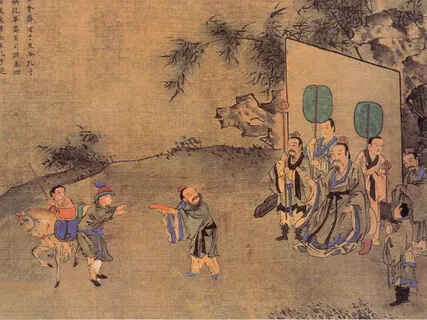
Many people are surprised to learn that Ruism,
Which we sometimes call Confucianism,
Has its own meditation tradition going back to the 11th century.
It's called Quiet Sitting,
Which I think is a great name.
In this session I'll give you some simple,
Practical advice on starting a Quiet Sitting practice.
This isn't the only method for practicing Quiet Sitting,
But it's a method that I've found useful and I hope you will too.
There are three steps.
Settling in,
Quieting the mind,
And contemplation.
In the first step,
Settling in,
You'll want to sit upright in a chair and place your hands softly on your knees.
Keep your back straight,
But not stiff.
You can either close your eyes or keep them half closed with your gaze slightly down and out of focus.
In the second step,
Quieting the mind,
You'll bring all your attention to the sensation of breathing.
When your attention wanders off,
Just gently bring it back to the breath.
When you find your attention is firmly settled in the breath,
You're ready to move on to step three.
In step three,
Contemplation,
You'll decide what to focus on for the remainder of the session.
It could be an image you find inspiring,
A phrase,
Or some problem or question you're dealing with in your daily life.
Use your calm and concentrated mind to contemplate this for the rest of your session.
And that's it.
Settling in,
Quieting the mind,
And contemplation.
If this practice appeals to you,
Look for the other sessions here on Insight Timer where I answer questions about the practice and talk about how quiet sitting fits into a larger,
Ruest worldview.