The world’s largest free audio library for everyday wellbeing
Sound-Based
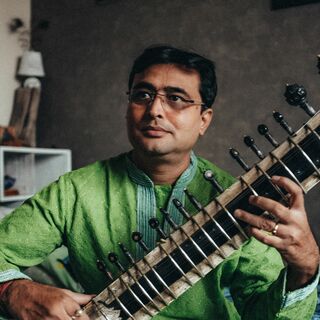
Raga Meditation is a sound-based meditation in which you listen deeply to an Indian classical raga, using its unfolding melody, tied to a particular mood and time of day, as the anchor for absorbed attention.
Last Updated
4 Jul 2026
We are still reviewing this page. Our research team checks every technique page for accuracy and evidence quality before final release. Details may change as that review completes. The evidence badge shows our current reading of the published research.
RECOMMENDED DOSE
Short daily sessions of 10–12 minutes have produced measurable mental-health and stress benefits in closely related seated meditation practices, including a randomised trial of 10-minute guided meditation videos and studies of 12-minute daily yogic and neurofeedback-assisted meditation. Raga Meditation has not been trialled directly, so this starting dose is extrapolated from those related modalities.
Related meditation programmes commonly deliver benefit over an 8-week course of daily practice, so daily practice sustained for roughly two months is a reasonable intermediate commitment. The step up to 15–20 minutes per session is an editorial extrapolation, as no study of Raga Meditation reports this specific duration.
No direct dose evidence; editorial synthesis. Longer 20–30 minute sessions as an ongoing maintenance practice reflect general meditation conventions rather than any specific study of Raga Meditation.
Session length
Session length: 10–12 minutes
10
MIN
How long each individual practice session should last from start to finish.
Frequency
Frequency: 7 days
7
DAYS
The number of days per week to fit a session into your routine.
Session length
Session length: 15–20 minutes
15
MIN
How long each individual practice session should last from start to finish.
Frequency
Frequency: 7 days
7
DAYS
The number of days per week to fit a session into your routine.
Session length
Session length: 20–30 minutes
20
MIN
How long each individual practice session should last from start to finish.
Frequency
Frequency: 7 days
7
DAYS
The number of days per week to fit a session into your routine.
About this card. Raga Meditation has not been studied directly; these ranges are extrapolated from closely related meditation practices and general practice conventions and should be treated as starting points only. These recommendations are not a substitute for personalised guidance from a qualified practitioner.
Quick answers to what people most often ask. Each card links to the deeper section below.
evidence
No trial has yet tested raga listening on its own, so evidence is drawn from meditation research broadly: meta-analyses show moderate reductions in anxiety, smaller effects on low mood, and lower long-term levels of cortisol (the body's main stress hormone) with sustained practice. Calming effects are plausible for raga listening but confirmed only for meditation generally.
Read moregood for
Adults facing everyday anxiety, stress, or restlessness may benefit from Raga Meditation, especially those drawn to music as a way into meditation or who find silent sitting too demanding. The unfolding melody gives attention a clear path to follow. It is not a substitute for treatment when anxiety, depression, trauma, or dissociation are severe.
Read moresafety
Most healthy adults can practise Raga Meditation with low risk, since it asks only that attention rest on the music. Sustained, intensive absorption can occasionally surface difficult emotions, low mood, or a sense of feeling detached from yourself. People with a history of trauma, dissociation, or acute depression should begin gently and seek support if distress lingers.
Read morehow it works
Raga Meditation works by giving attention something absorbing and structured to rest on: the raga's unfolding melody and emotional colour. This supports decentering, the shift from being caught inside your thoughts to watching them pass. Slow, descending evening phrases are also thought to move the body toward its rest-and-recovery state, easing heart rate and breath.
Read moreRaga Meditation is a sound-based practice of listening deeply to Indian classical ragas, each tied to a particular mood and time of day, using the unfolding melody as the anchor for absorbed, meditative attention.
A session centres on attentive listening rather than doing: the practitioner settles and follows a raga, often beginning with the slow, unmetered alap, letting attention rest on its ascending and descending phrases, microtonal ornaments (gamakas), and shifting emotional colour. Ragas are chosen to match the hour, with calmer evening ragas such as Yaman or Bhimpalasi built on descending, restful phrases. There is no rhythmic task or breathing routine to perform; the melody itself carries and holds attention.
Raga Meditation is contemplative listening to Indian classical ragas, not a music-theory lesson, a performance practice, or active singing and playing. It differs from generic relaxation-music or sound-bath listening in that the raga is a structured melodic framework tied to mood, time, and season, giving attention a predictable-yet-variable field rather than ambient sound. It is also distinct from breath- or mantra-based meditation, since here the external melody, not an internal anchor, holds attention.
Not to be confused with
Background or ambient music listening
Playing a raga as pleasant background sound is not Raga Meditation. The practice asks for active, sustained deep listening to the melodic detail, so attention rests on the music rather than drifting while it plays underneath other tasks.
Clinical music therapy
Raga Meditation is self-directed contemplative listening, not a therapist-delivered treatment with assessment and goals. Where clinical outcomes are needed, a qualified music therapist provides something this practice does not.
Nada yoga (yoga of inner sound)
Nada yoga is a broader contemplative tradition centered on subtle inner and outer sound as a path to absorption. Raga Meditation is a narrower practice built specifically on listening to Indian classical ragas and their rasa, not on the full inner-sound discipline.
Raga Meditation appears to work by giving attention something absorbing and structured to rest on, which supports decentering, the shift from being caught inside your thoughts to watching them pass as fleeting mental events. As attention settles into the raga's emotional colour, or rasa, rather than your own running commentary, that observing distance has been linked in mechanism research to feeling stressful mental events less intensely (Lebois et al., 2015). The slow, descending phrases of evening ragas are also thought to shift the body toward parasympathetic dominance, which slows heart rate and breathing and moves physiology into a rest-and-recovery state, though this shift is inferred from broader meditation research and traditional Indian music theory rather than measured in raga listeners themselves (Chambers et al., 2009).
A sticky, looping thought loosens its grip when you can watch it pass instead of living inside it. Raga Meditation may open that observing distance as attention absorbs into the mood, or rasa, of the melodic line rather than your own running commentary, and early mechanism research links this decentered stance to feeling stressful mental events less intensely (Lebois et al., 2015).
The braced, still-on-alert feeling can ease as attention rests inside a raga's slow, descending phrases, a shift toward the parasympathetic, rest-and-digest branch of the nervous system that governs recovery and calm. Meditative attention of this kind has been linked to a less reactive relationship with stress and difficult feelings (Lebois et al., 2015), (Chambers et al., 2009), though the calming effect of specific ragas rests largely on tradition rather than direct measurement.
In studies of sustained meditation practice, the body shows lower long-term levels of cortisol, the hormone that keeps you feeling braced and keyed-up when stress lingers, measured as a decrease in hair samples over three to six months (Puhlmann et al., 2021). Experienced meditators also return toward their resting heart rate and hormone levels faster after a stressful moment, which can feel like the body letting go and settling sooner rather than staying on high alert (Liudmila et al., 2019). Brain-imaging reviews link regular practice to quieter activity in the default mode network, which drives self-focused, looping thought, so mental chatter may loosen its grip (Calderone et al., 2024). All of these changes come from meditation in general, not raga listening specifically.
The keyed-up, still-buzzing feeling that outlasts a stressful day is shaped partly by cortisol, the body's main stress hormone, which sustained meditation practice has been measured lowering over time (Puhlmann et al., 2021), with experienced meditators returning to baseline faster after a stressor (Liudmila et al., 2019). These findings come from meditation broadly, not raga listening specifically, so treat them as what the practice may support rather than proof.
When strain drags on for weeks, the body can stay braced and slow to switch off. Sustained meditation training has been linked to lower long-term stress hormones, the cortisol that stays elevated during prolonged stress (Puhlmann et al., 2021). Raga Meditation itself hasn't been tested on this marker, but a calmer baseline often feels like waking less wired and settling more easily by evening.
The body can stay braced even during downtime, holding tension long after a stressful moment has passed. Sustained meditation training has been measured to lower long-term levels of cortisol, the main stress hormone that builds up under ongoing pressure (Puhlmann et al., 2021). Many practitioners feel this as the body sitting less keyed-up at baseline and settling more readily once pressure lifts.
That racing, pounding feeling in the chest can ease sooner once a stressful moment has passed, at least in people with a long meditation practice, whose heart rate settled back toward its resting pace faster than non-meditators after a lab stressor (Liudmila et al., 2019). In the body this feels like the thumping quieting and the sense of bracing letting go not long after the stress ends.
Looping, self-focused thoughts, the mental replaying and worrying that can crowd out the present moment, run largely on a brain system called the default mode network. Systematic reviews link regular meditation to lower activity and reactivity in this network (Calderone et al., 2024), a shift many listeners feel as mental chatter settling and rumination loosening its grip while the raga unfolds.
Limited direct evidence supports Raga Meditation itself; what exists is indirect, drawn from research on meditation broadly, and most consistently points to easing anxiety and, more modestly, low mood. A meta-analysis of mindfulness meditation in students studied during the COVID-19 pandemic found a standardized mean difference of -0.71 in anxiety versus control conditions, a moderate-to-large reduction meaning the average participant ended up less anxious than roughly three-quarters of those who did not meditate (Pranata et al., 2024), while a large review of 47 trials reported smaller anxiety and depression effects that faded over the months after training (Goyal et al., 2014). A controlled trial of audio-delivered meditation also lowered stress and anxiety in senior medical students (Warnecke et al., 2011). What is not yet supported: no trial has tested raga listening itself, so these benefits are inferred from a shared attentional mechanism rather than demonstrated for this practice (Zhang et al., 2021).
Racing, restless thinking can soften as attention settles into the slow, unhurried unfolding of a raga. Broad meditation research reports moderate reductions in anxiety (Pranata et al., 2024), and guided audio meditation lowered stress and anxiety in a controlled trial (Warnecke et al., 2011); direct raga-specific evidence is still limited, so this is a reasonable expectation rather than a proven result for the practice itself.
When stress lingers, the body can keep cortisol, its main long-term stress hormone, running high for weeks, leaving you braced and unable to fully switch off. Several months of regular meditation training has been linked to lower long-term cortisol measured in hair samples, felt as less keyed-up background tension, though this evidence comes from meditation broadly rather than Raga Meditation specifically (Puhlmann et al., 2021).
Low mood can flatten interest and make ordinary tasks feel heavy. Listening closely to a raga gives attention something absorbing to rest on, and broader meditation research suggests this kind of practice can modestly lift depressed mood (Goyal et al., 2014), (Pranata et al., 2024), though that evidence comes from meditation in general, not from raga listening itself.
When mood feels heavy, low mood can flatten interest and slow the whole day down. The clearest signal here comes from broader meditation research, where reviews of mindfulness practice report moderate reductions in depressive symptoms (Pranata et al., 2024). Raga Meditation shares that same absorbed, attention-anchoring quality, so it may offer similar support and a sense of the mind having somewhere steady to rest, though it has not yet been tested directly for depression.
Across research on meditation in general, not Raga Meditation itself, the practice shows moderate reductions in anxiety and smaller reductions in low mood, alongside lower stress-hormone levels with sustained practice (Pranata et al., 2024), (Puhlmann et al., 2021). The main areas studied are anxiety, depression, stress physiology, and brain networks tied to emotion. The clearest limit is directness: no adequately powered trial has tested raga listening on its own, and some related targets, such as neurofeedback-assisted cognition and telomere length, have shown no clear benefit (Treves et al., 2025), (Kaliman et al., 2024), so the calming effects people describe are plausible for raga listening but confirmed only for meditation broadly.
2
Meta-analyses
3
RCTs
1
Systematic reviews
1
Observational
6
Pilot
Studied populations
A shift in perspective: Decentering through mindful attention to imagined stressful events
2015
Finding: In this brain-imaging experiment, people who took an observing stance toward difficult moments, treating them as passing mental states rather than getting caught up in them, showed quieter activity in regions that process stress and stronger activity in areas linked to shifting perspective; when they instead immersed themselves in the moment, self-focused and body-based processing ramped up. For a practitioner, this points to why stepping back and watching an experience unfold, rather than being swept into it, can make a stressful thought feel less charged. Keep in mind this was a single lab session with people who were not experienced meditators, and it tested the observing-stance mechanism itself, not raga listening, so it explains a likely pathway rather than proving raga meditation produces this effect.
See full citation in referencesA randomised controlled trial of the effects of mindfulness practice on medical student stress levels
n = 66
Finding: In a controlled trial with 66 final-year medical students, a self-guided audio mindfulness practice lowered perceived stress and eased anxiety compared with no practice, and those gains were still present when researchers checked back at follow-up. For someone weighing up a regular meditation habit, this points to a practical payoff: a short daily practice you run yourself may leave you noticeably calmer under pressure. Keep in mind this trial tested general guided mindfulness in a small, high-stress student group rather than raga or sound-based meditation specifically, so it speaks to the broader family of meditation rather than this exact technique.
effect = -3.44
Raga Meditation grows out of the Indian classical music tradition, where each raga is tied to a specific mood or rasa, a time of day, and a season, and is traditionally held to act on particular emotional and physiological states. The slow, unmetered alap that opens a raga is especially meditative, offering a predictable-yet-variable field for attention to rest in. These roots help explain the practice's form, its time-of-day listening and rasa-based structure, not that tradition proves a clinical effect.
For most healthy adults, listening to a raga as meditation is a low-risk, settling practice that asks nothing more strenuous than resting attention on the music. A few situations still warrant care. Sustained or intensive absorption can occasionally surface difficult emotions, low mood, or a sense of watching your own experience from a slight distance rather than living inside it. An observational review of meditation research found such effects are uncommon and usually mild rather than a routine harm, so this is an evidence-based but low-frequency caution (Lambert et al., 2021). If a session leaves you distressed or ungrounded rather than calmer, ease off and reach out for support.
People with a history of trauma, a tendency toward dissociation, feeling disconnected from your body, thoughts, or surroundings, or an acute mental-health condition such as active depression or an anxiety crisis should approach deep, absorbed listening with care, because it can sometimes amplify difficult feelings rather than ease them. An observational review of meditation-related adverse effects grounds this as a practice-informed caution, not a sign the practice is unsafe (Lambert et al., 2021). A slower, gentler entry, and, where it helps, the support of a therapist or clinician, is the sensible approach.
For most healthy adults, listening to a raga as meditation is a low-risk, settling practice. But sustained or intensive absorption can occasionally surface difficult emotions, low mood, or a sense of watching your own experience from a slight distance rather than living inside it. An observational review of meditation research found such effects are uncommon and usually mild rather than a routine harm. Keep early sessions short, hold a light anchor to the present, and if a session leaves you distressed or ungrounded rather than calmer, ease off and reach out for support (Lambert et al., 2021).
| Technique | Best for | Use with care | Evidence strength | Distinction |
|---|---|---|---|---|
| Mindfulness Meditation | Building a portable, anchor-light attention practice with the widest research support for anxiety and low mood. | Sustained or intensive absorption can occasionally surface difficult emotions; ease in gradually. | strong EVIDENCE | Mindfulness meditation trains open, present-moment attention with the breath or body as the anchor, whereas Raga Meditation gives attention an external anchor: the slow melodic unfolding of a classical raga. The two likely share attentional mechanisms like decentering and parasympathetic recovery, but mindfulness carries a far larger direct research base, while raga-specific benefits are inferred from that broader literature rather than measured. |
| Receptive Music Therapy | Structured, goal-directed work with a trained therapist rather than solo listening. | Look for a qualified practitioner; self-guided listening is not equivalent to supervised therapy. |
Not quite. Raga Meditation is deliberate, sustained deep listening to an Indian classical raga used as the anchor for absorbed attention, not casually playing the music in the background while you do other things.
+
Not quite. The difference is how you listen: in Raga Meditation you follow the raga as it unfolds, often through the slow, unmetered alap, resting attention on its rising and falling phrases, ornaments (gamakas), and shifting emotional colour (rasa) rather than on your own inner commentary. Playing the same raga as pleasant background sound while working is not the practice. It grows out of the Indian classical music tradition, where each raga is tied to a particular mood, time of day, and season, and that heritage shapes the form of the practice rather than proving any health effect.
No. You don't need any musical training or theory to begin, the practice is simply deep, attentive listening, with the melody itself holding your attention. There is no breathing routine or posture to master.
+
No. Raga Meditation asks only that you rest your attention on the unfolding raga as it plays, so no background in Indian classical music is required to start. Some familiarity with the raga and its mood (rasa) can deepen engagement for listeners drawn to the tradition, but that is about personal connection and sticking with the practice, not a requirement for it to work. Simply choose a piece, settle in, and let the melody be your anchor.
A melodic framework in Indian classical music, defined by characteristic rising and falling note patterns and phrases, and traditionally tied to a specific mood, time of day, and season.
The slow, unmetered opening section of a raga performance, played without rhythmic accompaniment. Its gradual, exploratory unfolding is the most meditative part of the practice.
The emotional essence or mood a raga is felt to evoke. In this practice, attention absorbs into the rasa of the melodic line rather than into your own inner commentary.
The microtonal ornaments and glides that decorate the notes of a raga. Tracking these subtle shadings is part of what trains refined listening.
The very small pitch intervals, finer than the notes of a Western scale, that Indian classical music distinguishes. Noticing them is part of the sensory precision the practice develops.
The shift from being caught inside a thought or feeling to observing it as a passing mental event, which loosens automatic reactivity. It feels like watching a thought move through rather than living inside it.
A metacognitive stance (also termed cognitive defusion) of viewing thoughts and affect as transient mental events rather than facts, reducing identification and reactivity.
Increased activity in the body's rest-and-recovery branch of the nervous system, which shifts physiology away from fight-or-flight. It tends to feel like the body settling, breathing slowing, and tension easing.
Increased parasympathetic (largely vagal) tone with reduced sympathetic arousal, associated with lower heart rate and greater heart-rate variability.
The capacity to sense and stay attentive to the outside world through the senses, here the intricate detail of the music. It shows up as heightened clarity and vivid, detailed perception of sound.
Lauren A. M. Lebois, Esther K. Papies, Kaundinya Gopinath, Romeo Cabanban, Karen S. Quigley, Venkatagiri Krishnamurthy (2015). A shift in perspective: Decentering through mindful attention to imagined stressful events. https://doi.org/10.1016/j.neuropsychologia.2015.05.030
Cited in: Faq, How it works, Research
E Warnecke, Stephen Quinn, Kathryn Ogden, Nick Towle, Mark Nelson (2011). A randomised controlled trial of the effects of mindfulness practice on medical student stress levels. https://doi.org/10.1111/j.1365-2923.2010.03877.x
When your inner commentary won't switch off, meditation may quiet it: researchers have measured the default mode network, the brain's self-referential circuit that runs during mind-wandering and rumination, settling during practice (Calderone et al., 2024). You may notice attention resting more easily on the unfolding music than on looping thoughts about yourself.
When the mind feels scattered, meditation appears to strengthen the prefrontal cortex, the brain's hub for focus and steadying emotion, which shows greater engagement during practice (Calderone et al., 2024). People often notice this as holding attention more easily and being able to respond rather than react. This finding comes from meditation research broadly, not from raga listening specifically.
When something upsetting hits, the brain networks that flag it as a threat and then decide how hard to react are what researchers call emotional regulation circuitry. Across meditation studies this circuitry shows lower amygdala reactivity and stronger links to the regions that steady emotion (Calderone et al., 2024), which people often notice as feelings arriving with less charge and passing more easily. This evidence comes from meditation broadly, not Raga Meditation specifically.
Outcomes measured
| Outcome | Effect size | 95% CI | N | Comparator | Source |
|---|---|---|---|---|---|
| anxiety | effect size = 0.38 | 95% CI 0.12-0.64 | — | — | Goyal et al., 2014 |
| depression | effect size = 0.30 | 95% CI 0.00-0.59 | — | — | Goyal et al., 2014 |
| anxiety | SMD = -0.71 | 95% CI -1.02 to -0.39 | — | — | Pranata et al., 2024 |
| depression | SMD = -0.53 | 95% CI -0.81 to -0.25 | — | — | Pranata et al., 2024 |
| perceived stress (PSS) | effect = -3.44 | 95% CI -6.20 to -0.68 | — | — | Warnecke et al., 2011 |
| cognition / mindfulness / physiological health | Hedges' g = 0.07 | — | — | — | Treves et al., 2025 |
The research is useful for setting expectations, but study methods and participant groups vary. Treat the findings as general guidance rather than a promise about any single session, and not a replacement for clinical care.
Adverse effects of meditation: A review of observational, experimental and case studies
n = 39
Finding: Reviewing 39 studies of people who meditate outside of clinical settings, this analysis found that while meditation is generally well tolerated, some practitioners reported distressing experiences: low or difficult moods, a shifted sense of self, feeling detached from reality, and in rare cases hallucinations or delusions. For someone taking up a practice like Raga Meditation, this is a useful reminder that sitting with sustained inner focus can occasionally surface unsettling feelings, and it is worth pausing and seeking support if that happens. Keep in mind these findings come from broad, observational meditation research rather than trials of this specific technique, so they describe what can occasionally arise across meditative practices, not how often.
reported narratively
Meditation Programs for Psychological Stress and Well-being
n = 3,515
Finding: Drawing on 47 trials with roughly 3,500 participants, this review found that mindfulness meditation programs produced small-to-moderate improvements in anxiety, depression and pain after about eight weeks of practice, with weaker but still positive signs for general stress and mental well-being. In practical terms, a couple of months of regular practice may take the edge off worry and low mood for many people, though the gains were modest rather than dramatic. Keep in mind that this evidence covers meditation broadly, not Raga Meditation specifically, so it points to what sound-based practice might offer rather than proving results for this particular technique.
effect size = 0.38
Neurobiological Changes Induced by Mindfulness and Meditation: A Systematic Review
2024
Finding: This systematic review of the wider meditation research links regular practice to measurable changes in the brain, including greater capacity to form new connections, thicker cortical tissue in areas tied to attention, and a calmer response from the amygdala, the region that drives stress and fear reactions. In practical terms, that pattern points to why steady meditation can make it easier to stay level-headed and recover from stress over time. One important caveat: this evidence comes from meditation and mindfulness broadly, not from studies of Raga Meditation specifically, so it describes the family the practice belongs to rather than Raga itself.
See full citation in referencesComparative effects of meditation and exercise on physical and psychosocial health outcomes: a review of randomized controlled trials
2017
Finding: This review of 5 randomised trials (325 people total) put non-active meditation head to head with exercise, and found each had different strengths: meditation came out ahead for some psychological and social outcomes, including anxiety, altruism, and chronic neck pain, while exercise did more for several physical-health measures, and the two were roughly even for overall well-being and perceived stress. For someone weighing how to spend their time, this suggests meditation may be the stronger choice when the goal is easing anxiety or emotional strain, rather than replacing physical activity outright. Two caveats matter, though: this compares meditation as a broad category rather than Raga Meditation specifically, and most of the included trials had unclear or high risk of bias, so the findings are best read as suggestive rather than settled.</parameter> </invoke>
See full citation in referencesConsumer-Grade Neurofeedback With Mindfulness Meditation: Meta-Analysis
2025
Finding: This meta-analysis pooled trials of consumer brain-sensing headsets paired with mindfulness meditation and found no measurable edge over meditating without a device: memory and attention were essentially unchanged, people did not report feeling any more present or mindful, and physical stress markers stayed flat. The devices also failed to reliably shift the brain activity they claim to train. For anyone drawn to gadgets or sound-based tools that promise to sharpen your brain or body during practice, the practical takeaway is to keep expectations modest, as the added technology here did not deliver a real benefit. The review focused on consumer-grade neurofeedback rather than any single practice, so it speaks to overhyped claims about meditation technology more than to the value of quiet practice itself.
Hedges' g = 0.07
Contemplative Mental Training Reduces Hair Glucocorticoid Levels in a Randomized Clinical Trial
n = 227
Finding: In this trial, healthy adults who kept up several months of contemplative mental training showed steady drops in the stress hormones cortisol and cortisone stored in their hair, a marker of long-term stress load, with the biggest reductions among those who practised most consistently (measured across 227 people over three to six months). For a practitioner, this hints that a sustained, regular routine, rather than the occasional session, may be what shifts the body's long-term stress chemistry. Worth noting: this study tested meditation-based training in general, not Raga Meditation specifically, so the link to any single technique is indirect.
reported narratively
Mindful emotion regulation: An integrative review
2009
Finding: This integrative review maps out how mindfulness practice may help with emotions: not by changing what you think or feel, but by shifting how you relate to those thoughts and feelings, so a difficult emotion becomes something you can observe rather than get swept up in. For someone drawn to Raga Meditation, this points to a plausible reason meditative attention can ease emotional reactivity over time. Keep in mind this is broad background reasoning about the meditation family rather than a tested result for Raga Meditation specifically, and a review of this kind proposes how the process might work rather than measuring it directly.
See full citation in referencesEffectiveness of Mindfulness on Student Anxiety and Depression During the <scp>COVID</scp>‐19 Pandemic: A Systematic Review and Meta‐Analysis
2024
Finding: This review pooled multiple trials of mindfulness meditation among students during the COVID-19 pandemic and found moderate reductions in both anxiety and depression, with the effect on anxiety being the stronger of the two. For someone weighing up a meditation practice, that points to a real, measurable easing of worry and low mood when the practice is kept up over time. Worth noting, though: this evidence is about mindfulness meditation in general rather than Raga Meditation specifically, and the results come from a student population under unusual pandemic stress, so they may not carry over exactly to other people or settings.
SMD = -0.71
Effect of an 18-Month Meditation Training on Telomeres in Older Adults: A Secondary Analysis of the Age-Well Randomized Controlled Trial
2024
Finding: In this 18-month trial, 137 adults aged 65 and older were assigned to either meditation training or a comparison group, and the meditation group showed no clear change in telomere length, a marker of cellular aging, compared with the others. A closer look hinted that people who practised more may have fared slightly better, but that pattern came from secondary analysis and can't be treated as proof. For someone drawn to this practice, the honest takeaway is that it should not be expected to slow aging at the cellular level; any benefits you notice are likely to show up elsewhere.
See full citation in referencesExploration of psychological mechanisms of the reduced stress response in long-term meditation practitioners.
2019
Finding: In this study, 29 long-term meditators and 26 matched non-meditators of similar age and sex were put through a stressful social task, and the meditators' stress-hormone levels (cortisol) returned to baseline faster afterward, while they also leaned more on healthy ways of managing difficult emotions; heart rate and heart-rate variability were tracked too. For someone drawn to a regular contemplative practice, this hints that years of meditation may go hand in hand with bouncing back from stress more quickly. Keep in mind, though, that this compared experienced practitioners to newcomers at a single point in time, so it cannot prove that the practice caused the difference, the groups were small, and it looked at meditation broadly rather than Raga Meditation specifically.
See full citation in referencesMindfulness-based interventions: an overall review
2021
Finding: This broad review of mindfulness and meditation research found that regular practice can help with a wide range of conditions, from anxiety and stress to sleep and blood pressure, but it did not look at Raga Meditation specifically. It also flagged that many of the studies it drew on were of low methodological quality, so the size of these benefits should be read with caution. In practical terms, the promising picture here comes from meditation in general rather than from Raga Meditation itself, so treat it as encouraging background rather than direct proof of what this particular practice will do for you.
See full citation in referencesIf you have a history of trauma, a tendency toward dissociation (feeling disconnected from your body, thoughts, or surroundings), or an acute mental-health condition such as active depression or an anxiety crisis, approach deep, absorbed listening with care, because it can sometimes amplify difficult feelings rather than ease them. Start with short sessions, keep a simple anchor to the present such as the breath or the feeling of your body in the chair, and open your eyes or stop if absorption feels disorienting. This is a practice-informed caution, not a sign the practice is unsafe, and working with a therapist or clinician is sensible if distress lingers (Lambert et al., 2021).
Raga meditation sits most comfortably in a quiet, uninterrupted setting where you can rest your attention on the music without needing to be anywhere or do anything after. A gentle beginner-friendly format works best: a shorter listen with a slower, settling piece, and a light sense of where you are in the room, so you can notice how the practice lands for your mood and body before letting yourself sink any deeper. If a session ever leaves you more unsettled than calm, treat that as your cue to ease off rather than press on.
Choose a quiet spot where you can sit or recline comfortably for the length of the piece. If your aim is to wind down, pick a slower evening raga so its descending, restful phrasing helps the body settle rather than energise it.
Begin with ten to fifteen minutes rather than a long, immersive session. A shorter start gives you time to learn how the practice affects your mood and body before deepening it.
Let attention rest on the unfolding melody, the feeling of the breath, or the contact of your body with the chair or floor. If absorption starts to feel disorienting, you then have something simple to return to.
Partway through and at the end, notice whether you feel calmer or more unsettled. Feeling anxious, low, or oddly detached from yourself is a signal to pause, open your eyes, and reorient to the room rather than push on.
There is no need to finish a piece or reach any particular state. Ending early is always a reasonable choice if the experience becomes uncomfortable.
If unsettling feelings persist beyond a session, or if you have a history of trauma, dissociation, or an acute mental-health condition, speak with a mental-health professional and consider practising with their guidance.
This information is educational and is not medical advice. This practice is not a substitute for professional care and should not replace prescribed medication or treatment for any medical or mental-health condition. If you are managing a health condition or taking medication, talk with a qualified health professional before changing your practice. If you are in distress or crisis, seek professional support.
| Receptive music therapy is a clinician-guided intervention where a trained therapist selects and uses music toward specific therapeutic goals, often with reflection or discussion. Raga Meditation is a self-directed contemplative practice of deep listening with no therapist and no treatment protocol. The Indian music therapy tradition that studies ragas clinically overlaps here, but its methodological quality varies and its research base is still growing. |
| Mantra or Chanting Meditation (e.g., Kirtan Kriya) | People who settle more easily by actively producing sound or repeating a phrase than by listening. | emerging EVIDENCE | Mantra and chanting practices use the practitioner's own repeated sound or breath-linked vocalization as the meditative anchor, engaging the body actively. Raga Meditation is receptive: the listener rests attention on music produced by someone else. Both are sound-based, but one is produced from within and one is taken in, and the small trials touching mantra practices do not extend to raga listening. |
| Sound Bath / Singing Bowl Sound Healing | A passive, immersive tonal experience where the goal is to be bathed in resonance rather than to follow a melody. | EVIDENCE | Sound baths immerse the listener in sustained resonant tones from bowls, gongs, or chimes, emphasizing raw vibration and overtone rather than melody. Raga Meditation instead follows an intricate melodic framework with its own grammar of ascending and descending phrases and ornaments, giving attention a structured, evolving line to track rather than an enveloping drone. |

Indirectly. No trial has tested raga listening itself, so there is no direct proof it eases anxiety. But broader meditation research shows moderate anxiety reductions, which may carry over through the settled attention raga listening trains (Pranata et al., 2024), (Zhang et al., 2021).
+
Indirectly. The calming effects people describe are plausible but not yet demonstrated for raga listening specifically, because no adequately powered trial has tested it on its own (Zhang et al., 2021). What exists is indirect: a meta-analysis of mindfulness meditation found a moderate-to-large drop in anxiety (SMD -0.71) (Pranata et al., 2024), a large 47-trial review reported smaller effects that faded over the months after training (Goyal et al., 2014), and an audio-delivered meditation trial lowered stress and anxiety in senior medical students (Warnecke et al., 2011). Treat this as suggestive support through a shared attentional mechanism, not confirmed proof, and not a replacement for care when anxiety is severe.
Almost entirely meditation in general. No adequately powered trial has tested Raga Meditation on its own, so the calming and mood benefits described here are inferred from broader meditation research through a shared attention mechanism, not demonstrated for raga listening specifically (Zhang et al., 2021).
+
Almost entirely meditation in general. The research is indirect: reviews of mindfulness meditation report moderate reductions in anxiety and low mood (Pranata et al., 2024), (Goyal et al., 2014), and a controlled trial of audio-delivered meditation eased stress and anxiety in medical students (Warnecke et al., 2011), but none of these studied raga listening itself (Zhang et al., 2021). Not every meditation-linked target shows benefit either, with neurofeedback-assisted cognition and telomere length showing no clear effect (Treves et al., 2025), (Kaliman et al., 2024). The Indian music-therapy tradition does study ragas clinically, but that work is a growing base of variable quality, so raga-specific benefit remains suggested, not confirmed.
Likely because the slowly unfolding melody gives your attention an absorbing external anchor to rest on instead of your own racing thoughts. This kind of settled, observing attention has been linked in meditation research to feeling stressful thoughts less intensely (Lebois et al., 2015).
+
The raga's characteristic phrases and shifting emotional colour give attention something structured and absorbing to follow, which supports decentering, the shift from being caught inside your thoughts to watching them pass as fleeting mental events (Lebois et al., 2015). As attention settles this way, meditative focus appears to help people relate differently to difficult thoughts and feelings, and the slow phrasing is also thought to nudge the body toward its rest-and-recovery state (Chambers et al., 2009). These mechanisms are inferred from broader meditation research and traditional Indian music theory rather than measured in raga listeners specifically.
Likely, though this is inferred rather than measured for raga listening itself. Absorbed meditative attention is linked to a shift toward the body's parasympathetic (rest-and-recovery) state and a faster return toward resting heart rate after stress, so physical settling is plausible (Liudmila et al., 2019). Expect a gentle tendency, not a certain per-session heart-rate drop.
+
Likely, but the physical settling is inferred from general meditation research, not measured in raga listeners specifically. Studies of experienced meditators show a faster return of heart rate and stress hormones toward baseline after a stressor, which can feel like the body letting go sooner (Liudmila et al., 2019), and sustained practice has been linked to lower long-term cortisol, the hormone that keeps you braced when stress lingers (Puhlmann et al., 2021). Resting attention on the raga also supports decentering, the shift from being caught in thoughts to watching them pass, which is tied to feeling stressful moments less intensely (Lebois et al., 2015). This is a tendency toward calmer physiology, not a treatment or a certain drop in any single session.
Use care. For most healthy adults, listening to a raga is low-risk, but sustained, absorbed listening can occasionally surface difficult emotions or a sense of feeling detached from yourself. If a session leaves you distressed or ungrounded, ease off, open your eyes, reorient to the room, and reach out for support (Lambert et al., 2021).
+
Use care. An observational review of meditation research found that unsettling effects such as intense emotion, low mood, or dissociation (feeling disconnected from your body, thoughts, or surroundings) are uncommon and usually mild rather than a routine harm, so this is an evidence-based but low-frequency caution drawn from meditation broadly, not raga listening specifically (Lambert et al., 2021). If deep listening starts to feel overwhelming, keep the session short, keep a light anchor to the present, and stop whenever you need to. If distress lingers, or if you have a history of trauma, dissociation, or an acute mental health condition, speak with a qualified professional; this practice is not a substitute for care.
Use care. Listening to a raga is usually low risk, but sustained inward absorption can occasionally surface difficult emotions or a sense of detachment, which may be more likely with a history of trauma or dissociation. Begin gently, keep a grounding anchor, and stop if you feel distressed rather than calmer (Lambert et al., 2021).
+
Use care. An observational review of meditation-related effects found that unsettling experiences, such as intense emotion or feeling detached from yourself, are uncommon and usually mild rather than a routine harm, but no trials have tested raga listening specifically in people with trauma or dissociation (Lambert et al., 2021). The practical, evidence-informed approach is to start with short sessions, keep a simple anchor to the present (the breath or the feeling of your body in the chair), and open your eyes or stop if absorption feels disorienting. This is a caution, not a verdict that the practice is safe or unsafe, and working with a therapist or clinician is sensible if distress lingers.
Start short: around ten to fifteen minutes is a sensible first sitting, rather than a long, immersive session. Build up gradually as you learn how the practice affects your mood and body. This is a self-pacing suggestion, not a proven optimal dose.
+
Begin with a brief listen of about ten to fifteen minutes, then deepen gradually over repeated sessions once you know how the raga affects you. A shorter start lets you notice partway through and at the end whether you feel calmer or more unsettled, and gives you an easy point to stop if the experience becomes uncomfortable. Treat this as a practical starting point and self-pacing suggestion rather than an evidence-based optimal duration, since no trial has tested raga-listening length specifically.
The main difference is what your attention follows. Raga Meditation tracks an evolving melody, the alap and its rising and falling phrases and ornaments, as an anchor, while a sound bath immerses you in sustained resonant tones from bowls, gongs, or chimes, emphasizing raw vibration over melody.
+
The main difference is structural: Raga Meditation gives attention a melodic line to follow, the slow, unmetered alap with its characteristic ascending and descending phrases and microtonal ornaments (gamakas), so you actively track an unfolding musical shape. A sound bath instead surrounds you with enveloping, sustained overtones and vibration, inviting a more passive immersion with no melody to trace. Both are calming, receptive, sound-based practices, but no head-to-head study has compared them, so this is a difference in form and in what the listener does, not a claim that either produces better outcomes.
Conscious attention to environmental stimuli received through external sensory modalities, distinct from interoceptive awareness of internal body states.
The brain system most active during mind-wandering and self-focused thought. When it quiets, the running inner narration eases and looping, ruminative thoughts loosen their grip.
A set of interconnected brain regions engaged during self-referential processing and rumination; reduced activity and reactivity are associated with meditation practice.
The hormone that keeps you feeling braced and keyed-up when stress lingers. Sustained meditation practice has been linked to lower long-term levels of it.
A glucocorticoid stress hormone released by the HPA axis; chronically elevated levels reflect prolonged stress and can be measured in hair samples over months.
Danika Lambert, Nicholas van den Berg, Adrianna Mendrek (2021). Adverse effects of meditation: A review of observational, experimental and case studies. https://doi.org/10.1007/s12144-021-01503-2
Cited in: Faq, Research, Use with care, Who should use care
Madhav Goyal, Sonal Singh, Erica Sibinga, Neda F Gould, Anastasia Rowland-Seymour, Ritu Sharma (2014). Meditation Programs for Psychological Stress and Well-being. https://doi.org/10.1001/jamainternmed.2013.13018
Andrea Calderone, Dèsiréè Latella, Federica Impellizzeri, Paolo De Pasquale, Fausto Famà, Angelo Quartarone (2024). Neurobiological Changes Induced by Mindfulness and Meditation: A Systematic Review. https://doi.org/10.3390/biomedicines12112613
Cited in: Research, What happens in the body
Meghan K. Edwards, Paul D. Loprinzi (2017). Comparative effects of meditation and exercise on physical and psychosocial health outcomes: a review of randomized controlled trials. https://doi.org/10.1080/00325481.2018.1409049
Cited in: Comparison
Isaac N. Treves, Zia Bajwa, Keara D. Greene, Paul Alexander Bloom, Nayoung Kim, Emma Wool (2025). Consumer-Grade Neurofeedback With Mindfulness Meditation: Meta-Analysis. https://doi.org/10.2196/68204
Lara Puhlmann, Pascal Vrtička, Roman Linz, Tobias Stalder, Clemens Kirschbaum, Veronika Engert (2021). Contemplative Mental Training Reduces Hair Glucocorticoid Levels in a Randomized Clinical Trial. https://doi.org/10.1097/psy.0000000000000970
Cited in: Benefits, Faq, Research, What happens in the body
Richard Chambers, Eleonora Gullone, Nicholas B. Allen (2009). Mindful emotion regulation: An integrative review. https://doi.org/10.1016/j.cpr.2009.06.005
Cited in: Faq, How it works, Research
Gst. Kade Adi Widyas Pranata, Apryadno Jose Al Freadman Koa, Ying‐Ju Chang (2024). Effectiveness of Mindfulness on Student Anxiety and Depression During the <scp>COVID</scp>‐19 Pandemic: A Systematic Review and Meta‐Analysis. https://doi.org/10.1111/nhs.70003
P A Kaliman, María Jesús Álvarez‐López, Asrar Lehodey, Daniel Fernández, Anne Chocat, Marco Schlosser (2024). Effect of an 18-Month Meditation Training on Telomeres in Older Adults: A Secondary Analysis of the Age-Well Randomized Controlled Trial. https://doi.org/10.1016/j.bpsgos.2024.100398
Gamaiunova Liudmila, Brandt Pierre-Yves, Bondolfi Guido, Kliegel Matthias (2019). Exploration of psychological mechanisms of the reduced stress response in long-term meditation practitioners.. https://doi.org/10.1016/j.psyneuen.2019.02.026
Cited in: Faq, Research, What happens in the body
Dexing Zhang, Kam-Pui Lee, E Mák, Connie Y Y Ho, Samuel Yeung Shan Wong (2021). Mindfulness-based interventions: an overall review. https://doi.org/10.1093/bmb/ldab005
Cited in: Benefits, Faq, How it works, Research
Editorially curated. Tracks are not themselves clinically studied; evidence on the page applies to Raga Meditation as a technique.
Explore guided sessions to deepen your Raga Meditation technique.
Beginner content for Raga Meditation

★ 4.8
·
Music
·
23 min
Prosad Freeman
How hard is Raga Meditation?
This sacred-music row fits the active contemplative default rather than the passive listening exceptions.
2
Mental Effort
2 / 4
▾Emotional Depth
1 / 4
▾Physical Intensity
1 / 4
▾Prior Knowledge
1 / 4
▾