The world’s largest free audio library for everyday wellbeing
Sound-Based
Qawwali Listening means attentively receiving Qawwali, the devotional music of Sufi Islam, as it builds from slow, contemplative openings toward intense, ecstatic peaks.
Last Updated
4 Jul 2026
We are still reviewing this page. Our research team checks every technique page for accuracy and evidence quality before final release. Details may change as that review completes. The evidence badge shows our current reading of the published research.
RECOMMENDED DOSE
Studies of relaxing music listening report measurable calming effects on heart rate and autonomic activity after short 8–10 minute listening sessions, a closely related modality to devotional Qawwali listening. Session length is extrapolated from that overlap; frequency is a conservative editorial starting point with no direct dose evidence.
A modest step up for those comfortable with shorter sessions, allowing time to settle into a full Qawwali piece. No direct dose evidence supports this duration or frequency; these are editorial synthesis based on general music-listening practice.
A longer maintenance practice for those who find Qawwali listening rewarding and wish to make it a regular habit. No direct dose evidence supports this duration or frequency; these are editorial synthesis and should be treated as starting points only.
Session length
Session length: 8–10 minutes
8
MIN
How long each individual practice session should last from start to finish.
Frequency
Frequency: 3–4 days
3
DAYS
The number of days per week to fit a session into your routine.
Session length
Session length: 15–20 minutes
15
MIN
How long each individual practice session should last from start to finish.
Frequency
Frequency: 4–5 days
4
DAYS
The number of days per week to fit a session into your routine.
Session length
Session length: 30 minutes
30
MIN
How long each individual practice session should last from start to finish.
Frequency
Frequency: 5–7 days
5
DAYS
The number of days per week to fit a session into your routine.
About this card. Only short-session music-listening studies from related modalities informed these recommendations; longer durations and all frequencies are editorial synthesis, not direct dose-response evidence for Qawwali listening. These recommendations are not a substitute for personalised guidance from a qualified practitioner.
Quick answers to what people most often ask. Each card links to the deeper section below.
evidence
No randomized trial has tested Qawwali directly; all findings are borrowed from broader music-listening research. Large clinical reviews show music, especially self-chosen music, produces moderate reductions in anxiety for heart and cancer patients, plus lower pain. Results for heart-rate variability and depression are inconsistent.
Read moregood for
Qawwali Listening suits adults who feel anxious, wound-up, or restless and are drawn to devotional or emotionally intense music, especially those resonant with the Sufi tradition. It offers a structure for absorbed listening that can ease anxiety and hold a racing mind, not a treatment for diagnosed anxiety, depression, or trauma.
Read moresafety
Most healthy adults can listen to Qawwali safely; it tends to feel energizing rather than harmful. Because the music builds toward high-arousal, ecstatic peaks that quicken the heartbeat, people with cardiovascular conditions, trauma histories marked by hyperarousal, or a tendency to panic should ease in slowly and keep the volume moderate. No safety trial has tested it directly.
Read morehow it works
Qawwali works through its slow-to-ecstatic arc, which gives the nervous system practice moving between charge and calm. Slower passages shift the body toward its rest-and-recovery branch, while faster, louder peaks lift alertness and quicken the pulse. The steady tabla and handclap beat holds attention, and following the rising vocal lines can loosen racing thoughts.
Read moreQawwali Listening is the attentive, receptive listening to Sufi devotional music that builds from slow, contemplative openings toward intense, ecstatic peaks known as wajd.
A session is receptive rather than performative. The listener attends closely to a single Qawwali performance that unfolds over roughly 15 to 60 minutes, moving from slow, contemplative openings through driving tabla rhythms, harmonium drone, ecstatic vocal improvisation, and handclapping toward rapturous peaks. The carrier is this whole activation-and-release arc, not any single passage, and attention and arousal are allowed to rise with the music and then settle again.
Qawwali Listening is receptive listening, not singing or performing the music yourself, and not half-attentive background play; it asks for sustained, absorbed attention to a full performance. It is a Sufi devotional practice distinct from recited Quran listening, from silent seated meditation, and from generic relaxing-music tracks, because its defining feature is a deliberate build toward ecstatic intensity rather than steady calm. It should not be read as a clinical treatment, since its supporting evidence is inferred from broader music research.
Not to be confused with
Sufi whirling (sema / Mevlevi turning)
Whirling is an active, embodied movement practice in which the practitioner turns; Qawwali listening is receptive, with attention resting on the music while the body stays still.
Performing or singing Qawwali
Being a qawwal is a demanding vocal and musical performance tradition; this practice is the listener's side of it, attentively receiving the music rather than producing it.
Clinical music therapy
Music therapy is a structured intervention delivered by a trained therapist toward specific clinical goals; Qawwali listening is a self-directed contemplative and devotional practice, not a supervised treatment.
Qawwali works largely through its shape, the slow-to-ecstatic arc that lifts the listener into arousal and then lets the body settle, giving the nervous system practice moving between charge and calm, a flexibility researchers call autonomic balance. In studies of music listening in general, not qawwali itself, slower passages slow heart rate and shift the body toward its rest-and-recovery branch, while faster, louder passages raise alertness and quicken the pulse (Ooishi et al., 2017), (Baccarani et al., 2023). The driving tabla and handclap patterns also give attention a steady beat to lock onto, which many listeners feel as being carried, so staying present takes less effort (Archana & Mukilan, 2016). Following the rising and falling vocal lines can loosen the grip of racing thoughts, a shift toward watching thoughts pass rather than being swept along that one study of self-chosen music linked to greater present-moment awareness (Groarke et al., 2019).
Many listeners feel carried up into intensity as the music climbs, then allowed to settle as it eases. That rise and fall may give the nervous system practice moving between activation and rest, the flexibility researchers call autonomic balance; in broader music studies, calmer pieces raised markers of the parasympathetic, rest-and-recovery branch while more intense pieces lifted arousal (Baccarani et al., 2023), (Ooishi et al., 2017).
During a qawwali performance's slow, contemplative opening, the body can settle: a racing heart quiets and mental urgency eases as the nervous system leans toward its rest-and-recovery branch. In music research, slow-tempo listening lowers the stress hormone cortisol and shifts the nervous system toward its calming, parasympathetic side (Ooishi et al., 2017), (Baccarani et al., 2023).
The slow, devotional openings of a qawwali performance, and the settling that follows each ecstatic peak, may lean on the parasympathetic branch, the rest-and-recovery side of the nervous system. In studies of calming music this shows up as a slower heart rate and a shift toward parasympathetic activity (Baccarani et al., 2023), (Junko et al., 2022), felt in the body as the breath lengthening and the shoulders and jaw loosening.
As a qawwali performance climbs from its slow opening toward its rapturous peak, you may feel your heartbeat quicken and a surge of warmth and energy as the rising tempo and volume bring the body's fight-or-flight branch, the sympathetic nervous system, online. Faster, more exciting music has been shown to raise arousal in listeners (Ooishi et al., 2017), (Hilz et al., 2014), which many people experience as building alertness and devotional intensity.
As a Qawwali performance climbs toward its peak, the quickening pulse and rising intensity can leave the body feeling energized and alert. Faster, louder music raises this activation, what researchers call arousal upregulation, while slower passages relax it, mirroring how the practice builds and releases (Ooishi et al., 2017).
The driving tabla and handclap patterns of a qawwali give the body a pulse to lock onto, and as attention settles into that beat many listeners feel carried along, so staying present takes less effort and can start to feel like flow (Archana & Mukilan, 2016), (Baccarani et al., 2023).
Racing thoughts loosen their grip when you follow Qawwali's rising and falling vocal lines instead of the mental chatter. This is decentering, watching thoughts and feelings pass as temporary events rather than being swept into them, and early evidence suggests attentive music listening can raise this kind of present-moment awareness (Groarke et al., 2019).
During calmer listening, the body tends to downshift: pooled music-listening trials measure heart rate falling by roughly three to four beats per minute and systolic blood pressure by about five points, changes many people feel as the chest settling and the breath lengthening on its own (Joke et al., 2013), (Joke et al., 2016). These readings come from music research in heart and cancer patients rather than from qawwali, and breathing slows in the same direction during quieter passages. Qawwali complicates the picture, though, because its build toward ecstatic peaks is designed to raise arousal, so heart rate and breathing can quicken first and settle only afterward. The calming shifts are modest, and the more direct measure of heart-rate variability, the beat-to-beat flexibility that tracks recovery, has been inconsistent across studies (Thoma et al., 2013).
When stress leaves your heart racing, slower and calmer music listening is linked with a small, measurable drop in heart rate, the number of times your heart beats each minute, which many people feel as the chest settling and the body easing out of high alert (Joke et al., 2013), (Joke et al., 2016). Qawwali complicates this, since its build toward ecstatic peaks can quicken the pulse first, before the settling that tends to follow.
During the slow, calmer passages, many listeners feel the breath lengthen on its own, with less effort to draw air in and a settling that seems to arrive before you try to relax. That felt change tracks respiratory rate, how many breaths you take each minute, which has been measured lower in pooled trials of music for heart and cancer patients (Joke et al., 2013), (Joke et al., 2016). During Qawwali's building, ecstatic peaks the pattern can move the other way, toward faster, more activated breathing.
During Qawwali's slow, contemplative opening, many listeners feel the body loosen, shoulders dropping and breath slowing on its own. Pooled music-listening trials link this settling with a small dip in systolic blood pressure, the force of blood pushing against artery walls, of about 5 mmHg, though the reading can rise again as the performance climbs toward its more activating peaks (Joke et al., 2013), (Joke et al., 2016).
When you feel wound up, calming music listening can let the chest loosen and the breath slow as the body tilts toward rest, a change in sympathovagal balance, the ratio between the body's stress branch and its rest-and-recovery branch. Pooled trials show small drops in heart rate and blood pressure (Joke et al., 2013), (Joke et al., 2016), though Qawwali's building intensity carries stretches of arousal, so the settling tends to come in waves rather than all at once.
During the slow, calm passages, many listeners feel a slower pulse and a loosening in the chest and shoulders as sympathetic tone, the body's fight-or-flight arousal, tends to settle; pooled music studies measured small drops in heart rate and blood pressure (Joke et al., 2013), (Joke et al., 2016). As Qawwali builds toward its ecstatic peaks, that arousal can briefly lift again before the body settles.

Indirect evidence, borrowed from research on music listening rather than qawwali itself, most consistently supports easing anxiety, with large reviews of music for heart and cancer patients finding lower anxiety and stronger effects when people chose music that mattered to them (Joke et al., 2013), (Joke et al., 2016), (DeLoach, 2003). Related work on devotional sacred-sound listening links it with lower anxiety in Muslim populations, though one included trial found no difference from control (Ashraf & Afsaneh, 2018), (Moulaei et al., 2023). Music-based approaches have also shown a large reduction in pain in cancer care, on low-quality evidence (Joke et al., 2016). What is not yet supported: any randomized trial of qawwali specifically, reliable effects on heart-rate variability or depression, or any claim that it treats a diagnosed condition (Thoma et al., 2013).
Anxiety can loosen its grip when your attention rests fully inside devotional sacred sound. In related traditions of sacred listening, this kind of receptive focus has been linked with lower anxiety (Ashraf & Afsaneh, 2018), (Moulaei et al., 2023), an effect many people notice as racing thoughts slowing and the body feeling less braced.
Music that already means something to you tends to settle a racing mind faster than an unfamiliar playlist. In lab studies, people who listened to self-chosen, personally relaxing music reported lower anxiety than people given music picked for them (DeLoach, 2003), (Elliott et al., 2003), which is part of why a Qawwali recording you love may quiet anxious thoughts more than one you feel no connection to.
Listening to music, especially music people choose for themselves, tends to ease anxiety across large clinical reviews. In coronary heart disease patients, music produced a moderate drop in anxiety versus standard care alone, a standardized mean difference of roughly −0.70, meaning the average listener ended up less anxious than about three-quarters of those given usual care (Joke et al., 2013). Similar reviews in cancer patients found lower anxiety and pain (Joke et al., 2016), and studies of devotional sacred-sound listening report reduced anxiety in Muslim populations (Ashraf & Afsaneh, 2018). The main areas studied are anxiety, arousal, and autonomic response to music in general, not qawwali itself, so the connection to this specific practice is inferred rather than tested. Two honest limits stand out. No randomized trial has studied qawwali directly, and results for heart-rate variability and depression have been inconsistent, with music sometimes no more helpful than other absorbing activities (Thoma et al., 2013), (Groarke et al., 2019).
3
Meta-analyses
2
RCTs
1
Systematic reviews
0
Observational
9
Pilot
Studied populations
The Effect of Listening to Holy Quran Recitation on Anxiety: A Systematic Review.
n = 28
Finding: This systematic review drew together 28 studies of listening to and reciting the Holy Quran among Muslim general and clinical groups, and most of them reported lower anxiety afterward, with a few also noting easing of stress and low mood. For someone drawn to sacred-sound listening, that points to a low-cost, drug-free practice that may help settle an anxious mind. Keep in mind this looks at Quran recitation rather than Qawwali specifically, so it is only indirect support, and the reviewers themselves noted the underlying trials were uneven in quality and one found no clear benefit over a comparison group, calling for stronger, more rigorous studies.
reported narratively
Music for stress and anxiety reduction in coronary heart disease patients.
n = 1,369
Finding: Pooling 26 trials with 1,369 heart-disease patients, this review found that listening to music eased anxiety by a moderate amount compared with usual care, and the effect was stronger and steadier when people picked the music themselves. Music listening also came with small drops in heart rate and blood pressure, though there was no strong sign it changed heart-rate variability or lifted depression, and results varied a lot from one study to the next. It's worth knowing that these trials tested music listening in general, not Qawwali specifically, and many were of limited quality, so the takeaway is that choosing calming music you connect with may help settle nerves rather than that Qawwali itself has been proven to do so.
SMD = -0.70
Qawwali is the devotional music of Sufi Islam, a centuries-old tradition of sung poetry carried by vocal improvisation, harmonium, and tabla, and made globally famous by Nusrat Fateh Ali Khan. Within the Sufi practice of sama, or spiritual listening, the escalating music is an offering meant to draw the listener toward surrender and the divine, and its peaks can open into ecstatic states known as wajd or hal. These roots help explain the practice's form, its slow-to-ecstatic arc and devotional intent, rather than proving any clinical effect.
For most healthy adults, Qawwali listening is low-risk and tends to feel energizing and emotionally absorbing rather than harmful. Its defining feature, a slow build toward ecstatic, rapturous peaks, deliberately raises sympathetic arousal, the fight-or-flight branch that quickens the heartbeat and heightens emotional intensity, so a few listeners may find that escalation overstimulating. This is a mild caution inferred from how the practice works and from practitioner accounts, not a documented risk: no safety trial has tested Qawwali listening directly. If loud, high-arousal sound tends to leave you feeling wired or flooded, keep the volume moderate, begin with shorter sessions, and give yourself permission to step away when the intensity feels like too much.
People living with a cardiovascular condition, a trauma history that brings hyperarousal or dissociation, or a tendency toward panic and emotional flooding may find the accelerating tempo and volume activating rather than settling, so this group is wise to ease in gradually and keep the volume low. These are moderate cautions inferred from how the practice works, the escalating-arousal pattern described in accounts of Sufi practice and in broader music-physiology research, and they have not been established as risks in trials of Qawwali itself. Anyone managing a diagnosed heart or mental-health condition should treat the practice as a complement to, not a replacement for, professional care.
Qawwali's defining feature is a slow build toward ecstatic, rapturous peaks, which deliberately raises sympathetic arousal and heightens emotional intensity, so a few listeners may find that escalation overstimulating. This is a mild caution inferred from how the practice works and from practitioner accounts, not a documented risk, because no safety trial has tested Qawwali listening directly. If loud, high-arousal sound tends to leave you feeling wired or flooded, keep the volume moderate, begin with shorter sessions, and give yourself permission to step away when the intensity feels like too much.
| Technique | Best for | Use with care | Evidence strength | Distinction |
|---|---|---|---|---|
| Sacred recitation listening (Quran / murottal) | Listeners seeking a steady, calming devotional focus without the strong rise-and-fall intensity of a full Qawwali performance. | moderate EVIDENCE | Both are devotional sacred-sound practices that rest attention on a spoken or sung religious source, but recitation listening centres on the measured cadence of chanted scripture rather than Qawwali's escalating arc toward ecstatic peaks. Its research base is larger, drawn from reviews of Quran recitation and listening in Muslim populations, though still indirect for Qawwali itself. | |
| Receptive music listening (music therapy and calming music) | General anxiety and pain relief, including in clinical settings, where a predictable, soothing listening experience is the goal. | If you specifically want the building, ecstatic intensity of Qawwali, generic relaxation playlists may feel flat or under-stimulating. |
Yes, it's different. Qawwali Listening means attentively receiving Sufi devotional music as it builds from slow, contemplative openings toward ecstatic peaks. Unlike background play, the practice is your absorbed attention across that full rising-and-falling arc.
+
Yes, it's different. Qawwali Listening means giving a Qawwali performance your full, receptive attention as it unfolds over roughly 15 to 60 minutes, rising from quiet, prayerful openings toward soaring, rapturous peaks carried by vocal improvisation, harmonium, and driving tabla. Background play is passive; here the practice is the sustained, absorbed attention that lets the escalating arc lead your attention and energy. This is a distinction about how you listen, not a claim about clinical benefit.
No. You do not need to be Sufi or follow the lyrics, because the practice works largely through general music-listening effects like arousal shifts and absorbed attention. That said, music you find personally meaningful may ease anxiety more than an unfamiliar track (DeLoach, 2003).
+
No. The parts of Qawwali Listening the research can speak to, the rising-and-settling arousal arc, the pull of the rhythm, and the shift into absorbed attention, draw on how attentive music-listening affects most people, not on Sufi identity or understanding Urdu or Persian lyrics. Where background matters is engagement, not efficacy: lab studies suggest self-chosen or personally resonant music eases anxiety more than assigned tracks (DeLoach, 2003), and devotional sacred-sound listening is linked with lower anxiety among people who hold that tradition (Ashraf & Afsaneh, 2018), (Moulaei et al., 2023). So a Sufi frame may help you listen more fully and return more often, a matter of fit, not a Qawwali-specific treatment effect.
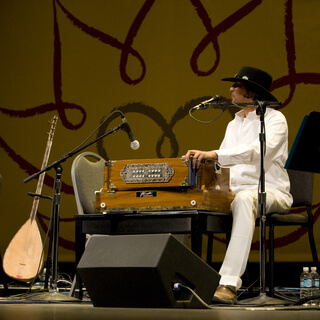
The devotional music tradition of Sufi Islam, built around ecstatic vocal improvisation over harmonium, driving tabla rhythms, and handclapping. A performance typically unfolds over roughly 15 to 60 minutes, rising from slow, contemplative openings toward intense, rapturous peaks.
The Sufi practice of spiritual listening, in which attentive hearing of devotional music or poetry is treated as a path toward spiritual connection rather than as entertainment.
The state of spiritual ecstasy that the escalating intensity of a Qawwali performance can open into, often felt as a surge of devotional intensity, heightened alertness, and emotional uplift.
Moving the nervous system toward flexible regulation so it can shift smoothly between activation and rest instead of feeling stuck in high alert or shutdown.
Sympathovagal balance and autonomic flexibility, the capacity to modulate between sympathetic and parasympathetic activity across changing demands.
The way body rhythms such as heartbeat and breathing loosely fall into step with a strong external beat, often felt as being carried by the rhythm so that staying present takes less effort.
Synchronisation of physiological rhythms (neural oscillations, heart rate, respiration, motor patterns) to an external rhythmic stimulus.
The shift from being immersed in thoughts and feelings to watching them pass as temporary mental events, which loosens automatic reactivity and the sense of being run by a passing mood.
Decentering or cognitive defusion, creating observational distance between awareness and mental content.
The rest-and-recovery side of the nervous system; when it takes over, heart rate slows, breathing eases, and the body moves out of alert mode, often felt as the shoulders and jaw loosening.
Ghiasi Ashraf, Keramat Afsaneh (2018). The Effect of Listening to Holy Quran Recitation on Anxiety: A Systematic Review.. https://doi.org/10.4103/ijnmr.ijnmr_173_17
Bradt Joke, Dileo Cheryl, Potvin Noah (2013). Music for stress and anxiety reduction in coronary heart disease patients.. https://doi.org/10.1002/14651858.cd006577.pub3
Cited in:
As the slow, contemplative passages carry you, the chest tends to loosen and the breath to lengthen, the body easing out of sympathetic arousal, its fight-or-flight branch, as heart rate and blood pressure edge downward (Joke et al., 2013), (Joke et al., 2016). Qawwali's rising, ecstatic peaks can push arousal the other way, so the practice moves through both settling and activation rather than one steady direction.
As the calmer passages settle the body, heart rate and blood pressure tend to drift down, the chest loosens and the breath slows on its own, a pattern read as rising parasympathetic tone, the rest-and-recovery side of the nervous system (Joke et al., 2013), (Joke et al., 2016). This shift is inferred from those cardiovascular changes rather than measured directly, and it is most likely during the slower, contemplative parts of a performance.
During Qawwali's slow, devotional openings, tension can loosen and the chest feel less braced, the body stepping down out of high alert as cortisol, the main stress hormone, drops the way it tends to with calming music (Ooishi et al., 2017). That pattern is borrowed from broader music research rather than measured in Qawwali itself, and as the music climbs toward its ecstatic peaks, arousal rises again, so any calming is only one phase of a rising-and-falling cycle.
Outcomes measured
| Outcome | Effect size | 95% CI | N | Comparator | Source |
|---|---|---|---|---|---|
| anxiety | SMD = -0.70 | 95% CI -1.17 to -0.22 | 1,369 | standard care alone | Joke et al., 2013 |
| anxiety with patient-selected music | SMD = -0.89 | 95% CI -1.42 to -0.36 | — | standard care | Joke et al., 2013 |
| anxiety (STAI-S) | mean reduction = -8.54 units (STAI-S) | 95% CI -12.04 to -5.05 | 3,731 | — | Joke et al., 2016 |
| pain | SMD = -0.91 | 95% CI -1.46 to -0.36 | — | — | Joke et al., 2016 |
| heart rate | mean difference = -3.40 bpm | 95% CI -6.12 to -0.69 | — | — | Joke et al., 2013 |
The research is useful for setting expectations, but study methods and participant groups vary. Treat the findings as general guidance rather than a promise about any single session, and not a replacement for clinical care.
The effect of the holy Quran recitation and listening on anxiety, stress, and depression: A scoping review on outcomes
2023
Finding: This review gathered 28 trials of listening to and reciting the Holy Quran and found that most reported lower anxiety, with several also showing eased stress and depression among the mostly Muslim participants studied. For anyone drawn to devotional sound, it points to a real, low-cost way that sacred listening may settle a restless mind, though one trial found no clear difference from a comparison group. Keep in mind this is a different sacred-sound tradition than Qawwali, so it is indirect evidence, and the reviewers themselves noted the underlying studies were often small or methodologically weak and called for stronger trials.
See full citation in referencesThe Effect of Music on the Human Stress Response
2013
Finding: In a controlled trial with healthy adults, researchers set out to test whether music listening could ease the body's stress response using a genuine stressor and careful measurement. When they compared the music group against a control group, resting heart rate and mood measures came out about the same, with no clear advantage for listening. For someone drawn to Qawwali, this is a useful reality check: the sound may feel deeply moving, but this study found no measurable shift in heart rate or mood, so it is worth approaching autonomic and mood benefits with modest expectations rather than treating them as proven.
See full citation in referencesIncrease in salivary oxytocin and decrease in salivary cortisol after listening to relaxing slow-tempo and exciting fast-tempo music
2017
Finding: In this laboratory experiment with healthy volunteers, slow-tempo music went hand in hand with a calmer body: higher levels of oxytocin in saliva, greater heart-rate variability (a sign of a relaxed, flexible nervous system), and a lower heart rate. Faster music showed the opposite pattern, with lower cortisol and a shift toward a more energized, aroused state. This mirrors the way Qawwali unfolds, from contemplative openings to rousing peaks, so the same tempo-driven swing between calm and excitement may be part of what you feel while listening. Keep in mind that the study used ordinary music rather than Qawwali itself, so it points to a likely mechanism rather than proving these exact effects for Qawwali.
See full citation in referencesDoes Listening to Music Regulate Negative Affect in a Stressful Situation? Examining the Effects of Self-Selected and Researcher-Selected Music Using Both Silent and Active Controls.
2019
Finding: In a controlled experiment with undergraduate students, listening to music after a stressful task raised participants' sense of present-moment awareness, and that heightened awareness went along with feeling less anxious when people chose the music themselves. Music also calmed anxiety more than sitting in silence, but it worked no better than another absorbing activity, listening to a radio show, so the benefit may come from being engaged rather than from music specifically. For someone drawn to attentive listening, this hints that focusing on sound can support a calmer, more present state, though the study used general music rather than Qawwali and involved a young student sample, so treat it as a suggestive parallel rather than direct proof.
See full citation in referencesThe effects of auditory perception and musical preference on anxiety in naive human subjects.
2003
Finding: In this lab experiment, anxiety dropped meaningfully when people listened to music they personally preferred or found relaxing, while unfamiliar or non-preferred music produced far smaller changes. For anyone drawn to Qawwali, that points to why devotionally meaningful listening may matter: the personal connection to the music appears to do much of the calming work, not the sound alone. Keep in mind this was small-scale laboratory work with induced anxiety in healthy adults and students, and it did not test Qawwali specifically, so the link to your own practice is suggestive rather than proven.
See full citation in referencesMusic interventions for improving psychological and physical outcomes in cancer patients.
n = 3,731
Finding: This Cochrane review pooled 52 trials with 3,731 cancer patients and found that listening to music noticeably eased anxiety and reduced pain, with smaller lifts in mood; some trials also recorded small drops in heart rate and blood pressure. For someone drawn to Qawwali, that points to a plausible calming effect from attentive music listening, alongside a slightly steadier body. Keep two limits in mind, though: this evidence is about music broadly, not Qawwali itself, and most of the underlying trials were at high risk of bias, so the results are encouraging rather than definitive.
mean reduction = -8.54 units (STAI-S)
A scoping review of music-based digital therapeutics for stress, anxiety, and depression
2026
Finding: This paper looks at music-based digital tools as a scalable way to support mood, ease anxiety, and steady the nervous system, drawing on music's broad influence on how we feel and recover from stress. It does not test Qawwali listening itself, so any benefit for this practice is inferred from the wider music-listening research rather than measured directly. If you are drawn to Qawwali for calm or emotional lift, this work offers a reasonable rationale for why sacred music might help, but treat it as a starting hypothesis: the underlying evidence covers mixed study designs of varying quality, and none of it follows Qawwali listeners specifically.
See full citation in referencesListening to J.S. Bach's "Brandenburg Concerto No. 4 in G Major" May Suppress the Sympathetic Nervous Activity.
2022
Finding: In a small study of 17 healthy young adults, listening to classical pieces by Mozart and Bach measurably shifted the balance of the nervous system, with heart rate, blood pressure, and autonomic activity moving toward a calmer, more parasympathetic state during listening. For someone drawn to Qawwali, this hints at a plausible reason music can settle the body: the act of listening itself can change how the nervous system regulates itself, rather than simply feeling nice. Keep in mind that this was a tiny sample using Western classical music, not Qawwali, so it points to a general mechanism rather than proving any specific effect from the practice you have in mind.
See full citation in referencesMusic induces different cardiac autonomic arousal effects in young and older persons.
2014
Finding: In a small study comparing 10 younger adults (around 23) with 10 older adults (around 62), researchers tracked breathing, heart rhythm, and blood pressure as people listened to either soothing or aggressive music. How the body responded depended both on the character of the music and on the listener's age, with calmer pieces tending to steady the nervous system and intense pieces stirring it up. For anyone drawn to Qawwali, this hints that music can genuinely shift how relaxed or energized your body feels, though with only 20 participants and no Qawwali tracks tested, it points to a general mechanism rather than proof of what this specific music does for you.
See full citation in referencesThe effect of preferred music genre selection versus preferred song selection on experimentally induced anxiety levels.
2003
Finding: In this randomised experiment, 90 adults had their anxiety deliberately raised and were then split into three groups: one listened to no music, one to relaxing music from a genre they liked, and one to a specific song they had chosen as calming. The clearest drops in anxiety came when people listened to music they personally preferred or had picked themselves, rather than silence, pointing to personal meaning as part of what makes listening soothing. This was short lab work with induced anxiety and did not test Qawwali directly, so it speaks to the value of choosing music that matters to you rather than to any measured effect for Qawwali itself.
See full citation in referencesBeneficial Effect of Preferential Music on Exercise Induced Changes in Heart Rate Variability.
2016
Finding: This study tracked how the heart's rhythm recovered after moderate exercise and found that listening to music people actually preferred shifted their nervous system back toward a calmer, more flexible state, the pattern linked to the body's "rest and recover" mode. For anyone drawn to Qawwali, it hints at why a piece you love can help your body settle after exertion or stress, since the effect here depended on the music being personally preferred rather than any particular genre. Keep in mind this was a small study of healthy adults measuring general music-listening physiology, not Qawwali itself, so it points to a plausible mechanism rather than proving a specific effect from this tradition.
See full citation in referencesRelaxing effects of music and odors on physiological recovery after cognitive stress and unexpected absence of multisensory benefit
n = 99
Finding: In this study, 99 adults were put through a mentally demanding task and then either listened to slow, relaxing music or sat in silence; those who listened showed a stronger rebound in heart-rate variability, a sign that the calming branch of the nervous system was coming back online more fully. In practical terms, gentle music seemed to help the body recover from stress a little faster, which is part of why unwinding with sound can leave you feeling settled. This looked at slow classical pieces rather than Qawwali specifically, and it measured a physiological shift rather than mood, so it points to how music-listening may steady the nervous system in general rather than proving a particular effect of Qawwali.
reported narratively
Music interventions for improving psychological and physical outcomes in cancer patients.
2011
Finding: This Cochrane review of 52 trials with 3,731 cancer patients found that music-based approaches lowered anxiety and eased pain, with smaller improvements in mood, suggesting listening to music alongside standard care may help some people feel calmer and more comfortable during treatment. The anxiety drop was sizeable on standard rating scales, so for someone facing the stress of illness, regular listening could be a low-cost way to take the edge off. Two important limits, though: this looks at music in general rather than Qawwali specifically, and most of the trials were of low quality, so the exact size of the benefit is uncertain.
See full citation in referencesPeople living with a cardiovascular condition may find the accelerating tempo and volume activating rather than settling, since the escalating arc raises heart rate and alertness. This is a moderate caution inferred from how the practice works and from broader music-physiology research, not a risk established in trials of Qawwali itself. Begin with the calm openings at moderate volume, ease in gradually, check with your clinician first, and treat the practice as a complement to, not a replacement for, professional cardiac care.
A trauma history that brings hyperarousal or dissociation, or a tendency toward panic and emotional flooding, can make the accelerating tempo and volume activating rather than settling. This caution is inferred from how the practice works and from practitioner accounts rather than a documented risk, since no trial has tested Qawwali listening in these groups. If loud, high-arousal sound leaves you feeling wired, flooded, or dissociated, begin with the calm openings, keep the volume moderate, shorten sessions, and stop when it feels like too much. When anxiety, mood, or trauma symptoms are severe, treat the practice as a complement to, not a replacement for, professional care.
Qawwali listening is most rewarding when you give the music room to build gradually, so a comfortable seat and a moderate volume make a sensible starting point, especially if intense sound tends to leave you feeling wired. Beginners are best served by shorter sessions with a recording that feels personally meaningful, letting the slow opening settle you before the ecstatic peaks arrive. Keep the freedom to lower the volume or step away in your back pocket, and leave yourself a little unhurried time afterward.
The early, contemplative passages are unhurried, and the body tends to soften as you listen. Let these quieter minutes carry you first so your nervous system finds a calm baseline before the intensity climbs.
A comfortable listening level, rather than a loud one, lets the rising arc energize you without tipping into overstimulation. This matters most if you are new to the practice or sensitive to intense sound.
Music you find personally meaningful or relaxing tends to ease a racing mind more than an unfamiliar track, so begin with a Qawwali performance you connect with rather than one picked at random.
As the performance climbs toward its ecstatic peaks, your heartbeat may quicken and emotion may rise. Notice this as part of the natural build-and-release, and lower the volume or step away whenever the charge feels like too much.
Give yourself a few unhurried minutes after the peaks before returning to activity, letting your breathing lengthen and the body come back down, particularly after a longer session.
This information is educational and is not medical advice. This practice is not a substitute for professional care and should not replace prescribed medication or treatment for any medical or mental-health condition. If you are managing a health condition or taking medication, talk with a qualified health professional before changing your practice. If you are in distress or crisis, seek professional support.
| This is the broader family Qawwali listening belongs to: attentive listening to music for calm, comfort, or emotion regulation. Most calming-music research uses slow, low-arousal pieces, whereas Qawwali is built to intensify toward ecstatic climax, so its arousal path is more variable than the steady downshift typical of relaxation-focused listening. |
| Mindfulness meditation | Building present-moment awareness and reduced reactivity without a musical or devotional frame. | moderate EVIDENCE | Both can cultivate decentering, the shift to watching thoughts pass rather than being swept into them, but mindfulness trains that stance directly through attention to breath or body, while Qawwali listening lets a devotional soundscape carry attention. Mindfulness is secular and self-generated; Qawwali is sound-led and rooted in Sufi devotion. |
Possibly, but the evidence is indirect. No trial has tested Qawwali itself; support borrows from music-listening research that links attentive, self-chosen music with lower anxiety (Joke et al., 2013). Its build toward high-arousal peaks also complicates a simple calming claim.
+
Possibly, though the evidence is borrowed rather than direct proof. Large reviews of music for heart-disease and cancer patients report lower anxiety, with stronger effects when people choose music that matters to them (Joke et al., 2013), (Joke et al., 2016), (DeLoach, 2003), and devotional sacred-sound listening is linked with lower anxiety in Muslim populations, though one included trial found no benefit (Ashraf & Afsaneh, 2018), (Moulaei et al., 2023). No randomized trial has tested Qawwali directly, so the link is inferred by analogy (Venkatesan et al., 2026), and Qawwali's rise toward ecstatic peaks is designed to raise arousal, which makes a straightforward calming claim harder to make. It may ease anxiety for some people, but it is not a treatment for a diagnosed condition.
It's borrowed. No randomized or clinical trial has studied Qawwali listening directly, so its evidence is inferred by analogy from broader music-listening research and related devotional sacred-sound studies rather than tested for this practice (Joke et al., 2013), (Ashraf & Afsaneh, 2018).
+
It's borrowed, not proven for Qawwali itself. The only Qawwali-specific source is a small ethnomusicological account of Sufi practice, not a clinical trial, so every health-related finding here is applied by analogy from research on music listening broadly and on devotional sacred-sound listening, such as Quran recitation, where attentive, personally meaningful listening is linked with lower anxiety (Joke et al., 2013), (Ashraf & Afsaneh, 2018). Treat this as suggestive rather than established: results for heart-rate variability and depression have been inconsistent, and no direct evidence confirms effects specific to Qawwali (Thoma et al., 2013), (Venkatesan et al., 2026).
Mostly afterward. Qawwali's slow-to-ecstatic arc raises arousal as the music intensifies, so calming tends to arrive on the down-slope once a peak passes rather than throughout; in general music research, not Qawwali trials, slower passages settle the body while faster, louder ones lift alertness (Ooishi et al., 2017).
+
Mostly afterward. The value is the arc itself: rising intensity raises alertness, and the settling comes as the music eases, giving the nervous system practice moving between charge and calm, a flexibility researchers call autonomic balancing, the capacity to shift smoothly between activation and rest (Junko et al., 2022), (Baccarani et al., 2023). Following the rising and falling vocal lines can also loosen the grip of racing thoughts, a shift toward watching them pass rather than being swept along (Groarke et al., 2019). This shows early promise but isn't established for Qawwali specifically, since the evidence is borrowed from broader music research and the calming signals may not extend to the high-arousal peaks (Ooishi et al., 2017).
By design. Qawwali builds from calm openings to ecstatic peaks, and its rising tempo and volume tend to switch on the body's fight-or-flight branch, quickening the pulse. Broader music research suggests faster, louder music raises arousal while slower passages calm it, so a racing heart is an expected part of the arc, not a fault (Ooishi et al., 2017).
+
By design, and this comes from general music-physiology research rather than trials of Qawwali itself. Studies of music listening find that faster, louder passages raise sympathetic arousal, the fight-or-flight response that speeds the heartbeat, while slower passages settle the body toward rest, so the practice gives the nervous system practice moving between charge and calm (Ooishi et al., 2017), (Junko et al., 2022). In calmer music-listening trials, heart rate tends to settle by a few beats per minute, but Qawwali's build toward ecstatic peaks is meant to lift arousal first (Joke et al., 2013), (Joke et al., 2016). If you tend to feel flooded by intense sound or manage a heart condition, ease in slowly and keep the volume moderate.
Check with your clinician first. Qawwali's build toward ecstatic peaks deliberately raises sympathetic arousal, the fight-or-flight branch that quickens the heartbeat, so if you have a heart condition, ease in slowly, keep the volume low, and treat it as a complement to, not a replacement for, cardiac care (Ooishi et al., 2017).
+
Check with your clinician first. No trial has tested Qawwali listening in people with cardiovascular conditions, so this caution is inferred from how the practice works and from practitioner accounts rather than a documented safety finding. In broader music research, slower passages tend to settle the body toward rest while faster, louder passages lift alertness and quicken the pulse, so Qawwali's escalating arc could feel activating for a sensitive heart (Ooishi et al., 2017), (Hilz et al., 2014). Begin with the calm openings at moderate volume, ease in gradually, and keep the practice as a complement to, not a substitute for, professional cardiac care (Junko et al., 2022).
Use care. Qawwali's slow-to-ecstatic build is designed to raise sympathetic arousal, the body's fight-or-flight activation, which can feel flooding rather than settling if you have a hyperarousal-linked trauma history or tend to get overwhelmed. Ease in slowly, keep the volume low, start with short sessions, and step away if the intensity feels like too much (Ooishi et al., 2017).
+
Use care. This caution is inferred from how the practice works and from practitioner accounts rather than a documented risk: no trial has tested Qawwali listening directly in trauma or high-sensitivity groups. Broader music research shows that faster, louder passages lift sympathetic arousal while slower ones settle the body toward rest, so the escalating arc can activate rather than settle for some listeners (Ooishi et al., 2017), (Baccarani et al., 2023). If loud, high-arousal sound leaves you feeling wired, flooded, or dissociated, begin with the calm openings, keep the volume moderate, shorten sessions, and stop when it feels like too much, and treat the practice as a complement to, not a replacement for, professional care when symptoms are severe.
Let one performance be your session. A full Qawwali piece runs roughly 15 to 60 minutes, building from slow openings to ecstatic peaks, so a single arc makes a natural length. If you're new, start shorter, keep the volume moderate, and pick a recording that resonates with you.
+
Let one performance set the length. Because a Qawwali piece typically unfolds over 15 to 60 minutes from contemplative openings toward intense peaks, one full arc is a natural session, and beginners can start with a shorter recording and build up. To begin, settle into the slow opening at a moderate volume, and choose a performance you find personally meaningful, since studies of self-selected music suggest familiar, resonant tracks ease anxiety more than unfamiliar ones (DeLoach, 2003). Allow yourself a few unhurried minutes to settle after the peaks. This is practice-informed guidance rather than a proven therapeutic dose.
The shape of the experience. Calming playlists aim for a steady, low-arousal settling, while Qawwali is built to intensify toward an ecstatic devotional peak, giving a rise-and-fall arc rather than a smooth downshift (Ooishi et al., 2017). This is a difference in arousal pattern and meaning, not proof one works better.
+
The main difference is arousal shape and framing, not a ranking of which works better. Relaxation-focused music tends toward slow, low-arousal listening that settles the body toward rest, whereas Qawwali deliberately builds toward an intense, ecstatic peak that Sufi practice calls wajd, a state of devotional absorption, so it can raise arousal before settling (Ooishi et al., 2017). Both belong to the broader family of receptive music listening, where attentive and self-chosen listening has been linked with lower anxiety in heart and cancer patients (Joke et al., 2013), (Joke et al., 2016). Bear in mind this comparison is drawn from general music research rather than trials of Qawwali itself, so the distinction is about structure and fit, not established clinical superiority (Venkatesan et al., 2026).
The parasympathetic division of the autonomic nervous system, indexed in part by high-frequency heart-rate variability.
The switching-on of the body's fight-or-flight branch in response to rising tempo and volume, felt as a quickening heartbeat, bodily warmth, and a lift of energy or intensity.
Sympathetic arousal via the sympathetic nervous system and adrenal pathways, raising heart rate and readiness for action.
Khadijeh Moulaei, AliA Haghdoost, K. Bahaadinbeigy, Fatemeh Dinari, Ali Akbar Haghdoost, Kambiz Bahaadinbeigy (2023). The effect of the holy Quran recitation and listening on anxiety, stress, and depression: A scoping review on outcomes. https://doi.org/10.1002/hsr2.1751
Cited in: Benefits
Myriam V. Thoma, Roberto La Marca, Rebecca Brönnimann, Linda Finkel, Ulrike Ehlert, Urs M. Nater (2013). The Effect of Music on the Human Stress Response. https://doi.org/10.1371/journal.pone.0070156
Cited in: Benefits, Research, What happens in the body
Yuuki Ooishi, H. Mukai, Ken Watanabe, S. Kawato, M. Kashino (2017). Increase in salivary oxytocin and decrease in salivary cortisol after listening to relaxing slow-tempo and exciting fast-tempo music. https://doi.org/10.1371/journal.pone.0189075
Cited in: How it works
Groarke Jenny M, Groarke AnnMarie, Hogan Michael J, Costello Laura, Lynch Danielle, Jenny M. Groarke (2019). Does Listening to Music Regulate Negative Affect in a Stressful Situation? Examining the Effects of Self-Selected and Researcher-Selected Music Using Both Silent and Active Controls.. https://doi.org/10.1111/aphw.12185
Cited in: How it works, Research
Salamon Elliott, Bernstein Steven R, Kim Seung-A, Kim Minsun, Stefano George B (2003). The effects of auditory perception and musical preference on anxiety in naive human subjects..
Cited in: Benefits
Bradt Joke, Dileo Cheryl, Magill Lucanne, Teague Aaron (2016). Music interventions for improving psychological and physical outcomes in cancer patients.. https://doi.org/10.1002/14651858.cd006911.pub3
Cited in: Benefits, Research, What happens in the body
Tara Venkatesan, Andrew M. Demetriou, Audrey Hempel, Daniel L. Bowling (2026). A scoping review of music-based digital therapeutics for stress, anxiety, and depression. https://doi.org/10.3389/fnhum.2026.1602004
Cited in: Research
Hoshi Junko, Sasaki Konosuke, Maruyama Ryoko (2022). Listening to J.S. Bach's "Brandenburg Concerto No. 4 in G Major" May Suppress the Sympathetic Nervous Activity.. https://doi.org/10.1620/tjem.2022.j100
Cited in: How it works
Hilz Max J, Stadler Peter, Gryc Thomas, Nath Juliane, Habib-Romstoeck Leila, Stemper Brigitte (2014). Music induces different cardiac autonomic arousal effects in young and older persons.. https://doi.org/10.1016/j.autneu.2014.02.004
Cited in: How it works
Walworth Darcy DeLoach (2003). The effect of preferred music genre selection versus preferred song selection on experimentally induced anxiety levels.. https://doi.org/10.1093/jmt/40.1.2
Cited in: Benefits
Archana R, Mukilan R (2016). Beneficial Effect of Preferential Music on Exercise Induced Changes in Heart Rate Variability.. https://doi.org/10.7860/jcdr/2016/18320.7740
Cited in: How it works
Alessia Baccarani, Sophie Donnadieu, Sonia Pellissier, Renaud Brochard (2023). Relaxing effects of music and odors on physiological recovery after cognitive stress and unexpected absence of multisensory benefit. https://doi.org/10.1111/psyp.14251
Cited in: How it works
Bradt Joke, Dileo Cheryl, Grocke Denise, Magill Lucanne (2011). Music interventions for improving psychological and physical outcomes in cancer patients.. https://doi.org/10.1002/14651858.cd006911.pub2
Cited in: Benefits
Editorially curated. Tracks are not themselves clinically studied; evidence on the page applies to Qawwali Listening as a technique.
Explore guided sessions to deepen your Qawwali Listening technique.
Beginner content for Qawwali Listening

★ 4.8
·
Music
·
6 min
Tahir Qawwal
How hard is Qawwali Listening?
This sacred-music row is one of the passive exceptions inside an otherwise active contemplative modality.
1
Mental Effort
1 / 4
▾Emotional Depth
1 / 4
▾Physical Intensity
1 / 4
▾Prior Knowledge
1 / 4
▾