The world’s largest free audio library for everyday wellbeing
Altered-State & Depth
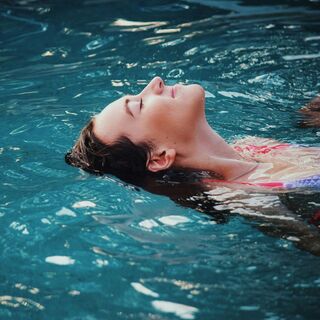
Flotation-REST is a practice in which a person floats effortlessly in a dark, quiet tank of skin-temperature, salt-saturated water that removes light, sound, gravity, and thermal contrast to encourage deep relaxation (Lashgari et al., 2025), (Jonsson & Kjellgren, 2014).
Last Updated
2 Jul 2026
We are still reviewing this page. Our research team checks every technique page for accuracy and evidence quality before final release. Details may change as that review completes. The evidence badge shows our current reading of the published research.
RECOMMENDED DOSE
A single 45-minute flotation-REST exposure was enough to produce measurable reductions in experimentally induced pain and subjective stress (Kjellgren et al., 2004), making it a comfortable, evidence-backed starting session length. A once-weekly cadence for newcomers is an editorial starting point, as the single-exposure study did not test a weekly schedule.
Studies using four 90-minute weekly float sessions reported reliable altered-state and relaxation effects (Huber et al., 2025), and a structured weekly program combining floating with supportive care showed benefit over several weeks (Kjellgren et al., 2014). A 60–90 minute session once per week reflects this typical protocol dose.
Longer, sustained float series — a ten-week program (Kjellgren et al., 2014) and a 19-session course in a clinical case report (Edebol et al., 2009) — describe maintained weekly practice for deeper or longer-term benefit. Session lengths of 60–90 minutes carry over from the trial-tested protocols.
Session length
Session length: 45 minutes
45
MIN
How long each individual practice session should last from start to finish.
Frequency
Frequency: 1 days
1
DAY
The number of days per week to fit a session into your routine.
Session length
Session length: 60–90 minutes
60
MIN
How long each individual practice session should last from start to finish.
Frequency
Frequency: 1 days
1
DAY
The number of days per week to fit a session into your routine.
Session length
Session length: 60–90 minutes
60
MIN
How long each individual practice session should last from start to finish.
Frequency
Frequency: 1 days
1
DAY
The number of days per week to fit a session into your routine.
About this card. Dose guidance is drawn from small flotation-REST studies and case reports; session frequency for beginners is an editorial starting point. These recommendations are not a substitute for personalised guidance from a qualified practitioner.
Quick answers to what people most often ask. Each card links to the deeper section below.
evidence
A 2025 systematic review of 63 studies and 1,838 participants found consistent reductions in stress and pain, and controlled trials support lower state anxiety and eased chronic muscle-tension pain. Blood pressure and a noradrenaline stress-marker also fell in pain patients. Most trials are small and single-session, so results read as promising but early-stage.
Read moregood for
Adults carrying everyday stress, chronic neck and back muscle-tension pain, or a wired nervous system that will not switch off may benefit most from flotation-REST, where controlled studies found reduced pain and lower anxiety. It is not a substitute for care when pain is structural or when anxiety, depression, or trauma symptoms are severe.
Read moresafety
Most healthy adults can float safely. People with very low blood pressure or who faint easily should leave the tank slowly, since flotation-REST lowers blood pressure. Those prone to claustrophobia, in acute emotional distress, or with a history of psychosis or dissociation should approach cautiously. Wait if you have open cuts, fresh tattoos, or skin and ear infections.
Read morehow it works
Flotation-REST works mainly by removing nearly every source of sensory input at once—light, sound, and the felt pull of gravity—so the nervous system's fight-or-flight arousal has little to react to and drifts toward a calmer baseline. Many floaters notice muscles releasing and breathing slowing within minutes, alongside a softening of the body's felt edges.
Read moreFlotation-REST means floating in a dark, quiet tank of warm, buoyant Epsom-salt water that reduces sensory input to encourage deep relaxation (Lashgari et al., 2025).
A typical session lasts around 60 minutes. The practitioner lies back, supine, in a soundproof, lightless tank holding skin-temperature water so saturated with Epsom salt that the body floats without effort. Light, sound, gravitational load, and thermal contrast are all removed, leaving little for the senses to track. The form is technological and procedural rather than ritual or lineage-based, and float centres usually frame the session as a bounded window for deep rest and inward attention.
Flotation-REST is not the same as a spa float or recreational swim; the defining feature is near-total sensory reduction, not the water itself. It also differs from chamber-REST, a dry form of sensory restriction done lying in a dark, quiet room, which tends to produce shallower altered states than floating. Though often called a sensory deprivation or isolation tank, the practice is a form of guided rest and inward attention, not clinical sedation or a treatment that replaces medical or psychological care.
Not to be confused with
Sensory deprivation tank or isolation tank
These are older names for the same equipment used in flotation-REST, not a separate practice. The current term, reduced environmental stimulation, reflects that input is minimised rather than truly eliminated, which is why researchers moved away from the word deprivation.
Psychedelic-induced altered states
Both can bring on dreamlike, self-dissolving experiences, but floating reaches them drug-free through sensory reduction, and the state is gentler and self-limiting rather than driven by a substance you cannot dial back once taken.
Spa soak or relaxation bath
A warm bath or spa pool is pleasant but keeps light, sound, and the pull of gravity in play. Flotation-REST specifically removes those inputs in dense, skin-temperature salt water, and that removal is what drives the deeper inward shift.
Flotation-REST appears to work mainly by removing almost every source of sensory input at once, which lets the nervous system's overall activation drift down toward a calmer baseline (Hruby et al., 2024), (Hruby et al., 2023). With no light, sound, or felt pull of gravity to track, sympathetic arousal, the fight-or-flight gear that keeps muscles braced and the mind on alert, has little to respond to, and many floaters notice tension releasing and breathing slowing within the first several minutes. Researchers also describe the felt edges of the body softening as the brain's ordinary body-map loses its usual cues, a shift that tends to travel alongside feeling calmer, though it remains a proposed pathway rather than a settled one (Hruby et al., 2024).
When the body finally has nothing to react to, muscles can unclench, breathing slows, and the wired, on-alert feeling starts to ease. Floating removes most of the cues, light, sound, gravity, and temperature change, that keep the nervous system braced, so arousal, the body's overall physiological activation, can drift toward a calmer baseline (Hruby et al., 2024).
With no light, sound, or pull of gravity to track, the felt line between body and surrounding water can start to blur, and your sense of exactly where you end loosens. Early research links this softening of body boundaries to feeling calmer and less anxious during a float (Hruby et al., 2024), (Hruby et al., 2023), though it remains a proposed pathway rather than a settled one.
Ordinary mental chatter fades as the tank takes away light, sound, and the felt pull of gravity, and with almost nothing left to track, attention turns inward and the mind's constant checking loosens into an absorbed, dream-like state (Hruby et al., 2024), (Hruby et al., 2023). Early evidence suggests this inward absorption may be part of how floating eases anxiety.
The body settles fast once the tank takes away gravity, sound, light, and temperature difference, leaving almost nothing to keep the nervous system on guard. Early studies link floating to lower blood pressure and fewer markers of nervous-system arousal (Kjellgren et al., 2001), and researchers propose this shift toward the parasympathetic, rest-and-recovery branch as one way floating may ease anxiety (Hruby et al., 2024).
In studies of people floating for chronic muscle-tension pain, blood pressure has been measured to decrease, alongside a fall in MHPG, a breakdown product of the stress chemical noradrenaline that tracks how activated the nervous system is (Kjellgren et al., 2001), (Bood et al., 2005). Endorphin levels stayed unchanged in the same work, which argues against a simple painkiller effect. In the body, this downshift often feels like a heavy, warm settling, the shoulders and jaw letting go, and a sense that the background push to stay alert has quieted.
Many floaters feel a heavy, warm settling through the body, as if the constant push to stay alert has quieted. In people who floated regularly for stress-related muscle pain, blood pressure, the force of blood pushing against the vessel walls, has been measured to fall, alongside a drop in a noradrenaline breakdown product that tracks how activated the nervous system is (Kjellgren et al., 2001), (Bood et al., 2005).
Many floaters feel tension unwinding, breathing slowing, and the body growing heavier and less braced for threat. In studies of people with chronic muscle-tension and stress-related pain, floating lowered a urinary marker of noradrenaline-type nervous-system activity and reduced blood pressure (Kjellgren et al., 2001), (Bood et al., 2005), signs that the body's fight-or-flight branch is powering down.
During a float, the wired, on-guard feeling tends to ease. In people with chronic, stress-related muscle-tension pain, floating was measured to lower sympathetic arousal, the body's fight-or-flight setting, with reduced blood pressure and less of a noradrenaline breakdown product, the stress chemistry behind feeling revved up (Kjellgren et al., 2001), (Bood et al., 2005). Practitioners often describe this as the body downshifting out of high gear: shoulders dropping, breathing slowing, and the sense of bracing letting go.
The wired, on-alert feeling of stress can ease during floating. In a small study of people with chronic muscle-tension pain, a marker of adrenaline-type arousal called MHPG decreased and blood pressure dropped after flotation sessions, while endorphin levels stayed the same (Kjellgren et al., 2001), (Bood et al., 2005), changes practitioners often experience as the body feeling less revved-up and tension quietly letting go.
The braced, tight feeling in the neck, shoulders, and jaw can ease as the warm salt water carries your full weight. In small studies of people with chronic neck and back pain, the flotation group reported lower muscle-tension pain alongside a reduced marker of nervous-system arousal, while a comparison group did not (Kjellgren et al., 2001), (Bood et al., 2005).

Moderate evidence supports flotation-REST for stress relief, chronic muscle-tension pain, and state anxiety, with the steadiest signal for stress and eased neck and back pain (Lashgari et al., 2025), (Kjellgren et al., 2001), (Hruby et al., 2024). Deep relaxation and altered-state experiences are commonly reported but rest on emerging, mostly descriptive evidence, so how deep they go is unpredictable (Norlander et al., 2000), (Kjellgren et al., 2015). What is not yet supported: clear benefit for sleep disorders, large long-term trials, and any claim that floating treats a diagnosed condition (Lashgari et al., 2025).
The ache of chronically tense neck and back muscles can loosen its grip during and after floating, as the dense salt water carries the body's full weight and lifts away the postural effort that keeps those muscles braced. In people with chronic muscle-tension pain, flotation-REST reduced the worst, most-severe pain, and a review across many studies reports pain easing fairly consistently (Kjellgren et al., 2001), (Lashgari et al., 2025).
Deep rest tends to arrive on its own once the tank takes away the usual pull of gravity, light, and sound. Many people describe the body feeling heavy and weightless at the same time, with time and the physical edges of the body softening into an altered state of awareness, a shift away from ordinary waking consciousness, as attention turns inward (Norlander et al., 2000), (Kjellgren et al., 2015).
Time can start to feel loose and the edges of the body less defined as outside input drops away, and many people describe floating as a doorway into unusual, dreamlike states of awareness (Norlander et al., 2000), (Kjellgren et al., 2015). Early studies document these altered states of consciousness, the non-ordinary shifts in how time, body, and imagery feel, in detail, though they are described by floaters rather than reliably produced on demand (Hruby et al., 2026).
A 2025 systematic review of 63 studies and 1,838 participants found consistent reductions in stress and pain across flotation-REST protocols, and controlled trials add support for lower state anxiety and eased chronic muscle-tension pain (Lashgari et al., 2025), (Kjellgren et al., 2001), (Hruby et al., 2024). Measured physiology in pain patients points the same way, with reduced blood pressure and a lower noradrenaline metabolite (Kjellgren et al., 2001). Most trials are small, several are single-session or uncontrolled, and results for sleep are mixed, so the picture is suggestive but not yet confirmed (Lashgari et al., 2025).
0
Meta-analyses
0
RCTs
1
Systematic reviews
0
Observational
17
Pilot
Studied populations
Elnaz Lashgari, Emma Chen, Jackson Gregory, Uri Maoz (2025). A systematic review of flotation-restricted environmental stimulation therapy (REST). https://doi.org/10.1186/s12906-025-04973-0
2025
Finding: This review drew together 63 studies covering 1,838 people who floated in dark, silent, salt-water tanks, and found the practice consistently lowered stress and anxiety, eased pain, and lifted overall mental well-being. For someone considering it, that points to flotation-REST as a promising way to unwind a tense body and a busy mind, though the same review found little or no clear benefit for sleep problems or quitting smoking, so it is not a reliable fix for those. Keep in mind the evidence is still early-stage: many of the included studies were small, so treat these as encouraging signals rather than settled proof.
reported narratively
Kristoffer Jonsson, Anette Kjellgren (2014). Curing the sick and creating supermen – How relaxation in flotation tanks is advertised on the Internet. https://doi.org/10.1016/j.eujim.2014.05.005
2014
Finding: This study examined how flotation tanks are marketed on the internet and found that many providers advertise sweeping health benefits, from curing illness to boosting performance, that reach well beyond what the science actually supports. For someone considering flotation-REST, floating supine in a dark, silent tank of warm, buoyant Epsom-salt water to quiet sensory input and settle into deep relaxation, the practical takeaway is to treat bold online promises with healthy skepticism. Because this was a review of advertising language rather than a test of the technique itself, it says nothing about whether flotation works; it simply flags the gap between marketing and evidence.
See full citation in referencesFlotation-REST grew out of mid-20th-century sensory-restriction research, beginning with John C. Lilly's experiments in the 1950s and 1960s and later commercialised as Reduced Environmental Stimulation Therapy in dedicated float centres (Kavková & Malůš, 2022), (Lashgari et al., 2025). These roots help explain the practice's form, a technological chamber built to strip away sensory input, not its clinical effects. Unlike lineage-based contemplative traditions, its structure is procedural rather than ritual, though centres often frame the session as a protected window for deep rest and inward attention.
For most healthy adults, flotation-REST is a low-risk way to rest deeply, and floating in warm, buoyant Epsom-salt water is generally well tolerated. A few situations call for care rather than avoidance. Floating has been measured to lower blood pressure, the force of blood pushing against the vessel walls, so anyone who already runs low or tends to feel lightheaded may notice a woozy, heavy-limbed feeling on standing and should leave the tank slowly (Kjellgren et al., 2001). The dark, enclosed quiet can also stir unease in people prone to claustrophobia, and the loosened sense of time and softened body boundaries that many floaters find pleasant can feel disorienting for someone in acute emotional distress.
People in acute psychological distress, or with a history of psychosis or strong dissociation, may find the inward, dreamlike shift in awareness unsettling rather than restful, and should approach floating cautiously and with support. Anyone who feels faint easily or lives with very low blood pressure should rise and step out gradually, since floating tends to bring blood pressure down further (Kjellgren et al., 2001). And anyone with open cuts, fresh tattoos, a skin infection, or an ear infection may find the dense Epsom-salt water stings or irritates, so it is sensible to wait until the skin has healed.
Floating has been measured to lower blood pressure, the force of blood pushing against the vessel walls, so anyone who already runs low or feels lightheaded easily may notice a woozy, heavy-limbed feeling on standing. Rise and step out of the tank slowly, rinse off, rehydrate, and give yourself a few unhurried minutes to reorient before driving or heading into a busy environment.
The dark, enclosed quiet can stir unease for people prone to claustrophobia. Modern tanks are more open than the name suggests and you stay in control throughout: tell the centre beforehand, start with the interior light on and the door propped, and treat any rising unease as a cue to open your eyes or step out rather than push through. The door is never latched, and you can sit up or end the session at any time.
| Technique | Best for | Use with care | Evidence strength | Distinction |
|---|---|---|---|---|
| Chamber-REST (dry sensory restriction) | Readers who want reduced-stimulation rest without water immersion or a float tank. | Chamber-REST tends to produce a shallower shift, so it may disappoint if the goal is a pronounced altered state. | emerging EVIDENCE | Both practices work by cutting environmental stimulation, but chamber-REST has you rest in a dark, quiet room while flotation-REST also removes the pull of gravity and the feel of touch by floating you in dense salt water. In comparative studies of healthy adults and athletes, floating produced deeper altered-state experiences than the dry chamber, so the added removal of gravity and touch appears to matter. |
| Mindfulness meditation | Building a portable, daily attention practice that needs no equipment or appointment. | Mindfulness asks for sustained practice and can be harder for people who struggle to settle an active mind unaided. |
You lie back for about an hour in a dark, silent tank of warm, skin-temperature Epsom-salt water dense enough to float you effortlessly, which removes light, sound, gravity, and temperature contrast so attention drifts inward (Lashgari et al., 2025), (Jonsson & Kjellgren, 2014). Most people notice the body feeling heavy and weightless at once, breathing slowing, and time loosening.
+
During a float session you settle supine into buoyant, skin-temperature salt water inside a dark, quiet tank and simply let the senses fall quiet, with no technique to sustain (Lashgari et al., 2025), (Jonsson & Kjellgren, 2014). As external input drops away, many floaters report the body turning heavy and weightless together, slower breathing, a looser sense of time, and the felt boundary between body and water softening (Norlander et al., 2000), (Hruby et al., 2026). How deep that inward shift goes varies widely from person to person and often deepens over repeated sessions, so it is best treated as restful, self-directed time rather than a certain experience (Kjellgren et al., 2015). You stay in control throughout and can sit up, open the tank, or end the session whenever you wish.
Yes. "Sensory deprivation tank" and "isolation tank" are older names for the same flotation-REST equipment, not a separate practice (Lashgari et al., 2025), (Jonsson & Kjellgren, 2014). The field shifted to "Reduced Environmental Stimulation Therapy (REST)" because sensory input is minimised, not truly removed.
+
Yes. A float tank, a sensory deprivation tank, and an isolation tank all describe the same thing: a dark, quiet tank of skin-temperature, salt-saturated water where you float while light, sound, gravity, and thermal contrast are stripped away (Lashgari et al., 2025), (Jonsson & Kjellgren, 2014). Researchers moved away from "deprivation" toward "Reduced Environmental Stimulation Therapy (REST)" precisely because external input is dramatically reduced rather than fully eliminated. This is a naming clarification only and does not imply any specific clinical or treatment effect.
The clinical name for flotation practice, reflecting that the tank minimises light, sound, gravitational load, and temperature contrast to encourage unusually deep rest. It replaced the older term sensory deprivation because stimulation is reduced, not fully removed.
Dramatically lowering the external input reaching the senses so attention turns inward. In a float tank this means near-total darkness, silence, effortless buoyancy, and skin-temperature water that the body barely registers.
Noticeable shifts away from ordinary waking awareness, such as a distorted sense of time, spontaneous dreamlike imagery, and a loosened feeling of where the body ends. Floating commonly evokes them, though their depth varies widely between people.
The sense of internal body signals like heartbeat, breathing, and muscle tension. With outside input stripped away, these inward sensations become the dominant content of awareness during a float.
The body's rest-and-recovery branch, which slows heart rate and moves physiology away from fight-or-flight toward calm. Floating is proposed to let it dominate once the usual triggers for vigilance fall away.
The parasympathetic (largely vagally mediated) branch of the autonomic nervous system; parasympathetic dominance during flotation is inferred from downstream markers rather than directly recorded vagal activity.
A breakdown product of noradrenaline, an adrenaline-family stress chemical. Lower levels suggest the body's fight-or-flight arousal has quietened, and floating has been linked to reduced MHPG in pain patients.
The drifting, dreamlike state on the edge of sleep, where loose imagery and thoughts surface on their own. Floating can evoke this quality while a person stays awake and aware.
Elnaz Lashgari, Emma Chen, Jackson Gregory, Uri Maoz (2025). A systematic review of flotation-restricted environmental stimulation therapy (REST). https://doi.org/10.1186/s12906-025-04973-0
Cited in: Benefits, Faq, Research, Roots and tradition, What it is
Kristoffer Jonsson, Anette Kjellgren (2014). Curing the sick and creating supermen – How relaxation in flotation tanks is advertised on the Internet. https://doi.org/10.1016/j.eujim.2014.05.005
Explore guided sessions to deepen your Flotation-REST technique.
Outcomes measured
| Outcome | Effect size | 95% CI | N | Comparator | Source |
|---|---|---|---|---|---|
| anxiety | reported significant; p<0.0001 | — | — | — | Collado et al., 2006 |
Most flotation-REST trials are small, and several report statistical significance without full effect-size estimates. Many outcomes rely on self-reported or subjective measures, and study authors describe the evidence as preliminary. Treat the findings as general guidance for setting expectations rather than a promise about any single session, and not a replacement for clinical care.
Helena Hruby, Stefan Schmidt, Justin Feinstein, Marc Wittmann (2023). Induction of altered states of consciousness during Floatation-REST is associated with the dissolution of body boundaries and the distortion of subjective time. https://doi.org/10.21203/rs.3.rs-3282453/v1
n = 50
Finding: In this crossover trial, 50 healthy adults each tried a 60-minute float and a 60-minute session simply lying on a bed, and they came out of the float feeling significantly more relaxed and less anxious than after the bed session. The float also brought on altered states of consciousness in which people's sense of their body's edges softened and their sense of time became distorted, and that loosening of body boundaries appears to be part of why anxiety dropped, a proposed explanation for why floating may calm the mind more than simply resting. This was a small study in healthy adults, and the boundary-dissolution mechanism is an early idea rather than a settled fact, so it points to how floating might work rather than proving it.
reported narratively
Helena Hruby, Stefan Schmidt, Justin S. Feinstein, Marc Wittmann (2024). Induction of altered states of consciousness during Floatation-REST is associated with the dissolution of body boundaries and the distortion of subjective time. https://doi.org/10.1038/s41598-024-59642-y
n = 50
Finding: In this crossover trial, 50 healthy adults spent 60 minutes floating in a dark, silent Epsom-salt tank and 60 minutes resting on a bed, and reported feeling significantly calmer and less anxious after floating than after simply lying down. While floating, many experienced altered states in which the felt edges of their body seemed to soften or dissolve and their sense of time shifted, and this loosening of body boundaries statistically tracked with the drop in anxiety, hinting that letting go of the body's usual sense of itself may be part of why floating feels so settling. This is an early proposal rather than settled fact, and because the study looked at single sessions in healthy volunteers, it does not tell us how floating affects people over the long term or those seeking help for a clinical anxiety condition.
reported narratively
Anette Kjellgren, Jessica Westman (2014). Beneficial effects of treatment with sensory isolation in flotation-tank as a preventive health-care intervention – a randomized controlled pilot trial. https://doi.org/10.1186/1472-6882-14-417
n = 65
Finding: In this small pilot trial, 65 healthy adults were randomly split into a group that floated across a 7-week, 12-session program and a group that simply waited; those who floated came away noticeably less stressed, and they also rated their sleep quality as better. In practical terms, this hints that regular floating may help ordinary, healthy people wind down and manage everyday stress, not just those already dealing with illness. Keep in mind this was an early, small study relying on how participants described their own experience, and the sleep improvement in particular is a self-reported result that hasn't held up consistently elsewhere, so treat it as an encouraging early signal rather than a settled fact.
reported narratively
Helena Hruby, Marc Wittmann, Stefan Schmidt, Prisca R. Bauer (2026). The micro-phenomenology of Floatation-REST. https://doi.org/10.1186/s12906-026-05415-1
2026
Finding: In detailed interviews with fourteen people who floated in a dark, silent Epsom-salt tank, researchers mapped a consistent four-phase arc to a session, ending in a state of deep calm marked by positive emotions and a fading of ordinary body sensations and busy thinking. Floaters commonly described time feeling stretched or blurred and a sense of weightlessness, and some reached more unusual experiences such as feeling merged with their surroundings. For someone trying it, this suggests floating tends to unfold gradually rather than all at once, and that a settled, dreamlike state often arrives later in the session. Because this was a small, interview-based study of just fourteen adults, it describes the texture of the experience well but cannot tell you how likely any one person is to reach these deeper states.
See full citation in referencesTorsten Norlander, Anette Kjellgren, Trevor Archer (2000). The Experience of Flotation-Rest as a Function of Setting and Previous Experience of Altered State of Consciousness. https://doi.org/10.2190/hcpm-h80r-q60d-v4r0
2000
Finding: This study set out to test whether the room's setting or a person's past experience with altered states changed how flotation-REST felt, and found that neither made much difference; the effects of floating held steady regardless. What did shift was pain and mood: participants reported less physical pain and a lifted, more positive mood after floating, and many described the session as genuinely pleasurable, marked by deep relaxation and shifts in their ordinary sense of time and body. For someone considering the practice, this suggests the core experience of floating, calmer and more comfortable, is fairly robust and does not seem to depend on being a seasoned meditator or having an elaborately staged environment. Because this was a small experimental study focused on the subjective experience rather than long-term outcomes, it speaks to what a session feels like more than to lasting change.
See full citation in referencesAnette Kjellgren, Ulf Sundequist, Torsten Norlander, Trevor Archer (2001). Effects of Flotation‐REST on Muscle Tension Pain. https://doi.org/10.1155/2001/768501
2001
Finding: In this three-week trial, 37 people with chronic neck and back muscle-tension pain were split into a flotation group and a comparison group, and those who floated across nine sessions saw their worst, most severe pain ease noticeably, while their milder everyday aches stayed about the same. Blood tests and readings also showed lower blood pressure and a drop in a marker of nervous-system arousal, pointing to a calmer, less revved-up body, though the practice did not change endorphin levels. Some participants also reported falling asleep more easily at night, but that sleep benefit is based on self-report and remains inconsistent across studies. This was a small, short trial in people with a specific kind of muscle pain, so it is best read as an early signal that floating may take the edge off severe tension pain rather than replace medical care.
reported narratively
Matt Gwyther, Jane E Aspell (2023). Alterations to self consciousness during mindfulness meditation and Flotation REST a comparative study. https://doi.org/10.31234/osf.io/8ncj6
2023
Finding: This study compared people floating in a flotation tank with people practising mindfulness meditation, and found that both experiences shifted their sense of self in similar ways, softening the usual boundary between "me" and the world into a feeling of ego-dissolution rather than a heightened sense of self. The intensity of these altered-state experiences landed between what a low and a high dose of psilocybin typically produces, and in the meditation group, the more people felt their bodily boundaries loosen, the stronger that dissolution became. For someone curious about floating, this suggests it can open the same kind of quiet, boundary-dissolving states that seasoned meditators describe. Keep in mind this was a small comparative study without a controlled trial design, so it maps out what these experiences feel like rather than proving cause and effect.
See full citation in referencesVeronika Kavková, Marek Malůš (2022). Possible Applications of Flotation REST and its Effects on Human Psychophysiology Regarding Stress, Anxiety and Depression. https://doi.org/10.15452/psyx.2021.12.0001
2022
Finding: This review traces flotation-REST back to a 1950s idea about restricting sensory input, and shows it has been studied in psychology and physiology since around 1960, particularly in the USA, Canada, and Sweden. For someone curious about floating today, that means you are stepping into a practice with a long research history rather than a recent trend. Keep in mind this is a summary of existing knowledge rather than a single controlled experiment, so it maps the landscape of what has been explored rather than proving a specific effect on its own.
See full citation in referencesTorsten Norlander, Anette Kjellgren, Trevor Archer (2003). Effects of Flotation-Versus Chamber-Restricted Environmental Stimulation Technique (Rest) on Creativity and Realism under Stress and Non-Stress Conditions. https://doi.org/10.2190/0lae-m7wp-r6uq-cr3p
n = 38
Finding: In this small study of 38 healthy adults randomly assigned to float once or on three occasions, floating brought on noticeably deeper altered states of consciousness than lying quietly in a dark room, while both settings produced a similar sense of relaxation. Floating also raised originality on open-ended creative tasks, but it dampened logical problem-solving, so the shift looks more like a change in how the mind works than a broad boost to creativity. For someone drawn to floating, this suggests it may loosen up free-associative, imaginative thinking rather than sharpen focused reasoning. Because the study was small and short-term with healthy volunteers, treat these as early clues about what the experience does, not settled conclusions.
reported narratively
Torsten Norlander, Henrik Bergman, Trevor Archer (1998). EFFECTS OF FLOTATION REST ON CREATIVE PROBLEM SOLVING AND ORIGINALITY. https://doi.org/10.1006/jevp.1998.0112
n = 40
Finding: In this randomised study of 40 healthy adults, a session of flotation-REST raised originality on open-ended creative tasks, so people generated more novel and unusual ideas, but it also worsened their performance on structured problem-solving and logic. The researchers read this as a shift toward looser, more associative thinking rather than an all-round boost to the mind. For someone considering floating, that suggests it may help you brainstorm freely or think in fresh directions, while it is less likely to sharpen tasks that need step-by-step reasoning. Keep in mind this was a single small study in healthy volunteers, so the picture on creativity remains genuinely mixed.
reported narratively
Hanna Edebol, Sven Åke Bood, Torsten Norlander (2008). Chronic Whiplash-Associated Disorders and Their Treatment Using Flotation-REST (Restricted Environmental Stimulation Technique). https://doi.org/10.1177/1049732308315109
2008
Finding: This early exploratory study followed just seven people living with long-term whiplash pain as they went through flotation-REST sessions, gathering their experiences through in-depth interviews rather than numerical measures. Those who took part described real relief, easing tension and a greater sense of calm, which points to flotation as a promising option for stubborn neck and pain conditions. Because the group was so small and the findings come from personal accounts rather than a controlled trial, treat this as an encouraging first look rather than proof; it suggests the practice is worth exploring, not that results are guaranteed.
reported narratively
Anette Kjellgren, Hanna Edebol, Tommy Nordén, Torsten Norlander (2013). Quality of Life with Flotation Therapy for a Person Diagnosed with Attention Deficit Disorder, Atypical Autism, PTSD, Anxiety and Depression. https://doi.org/10.4236/ojmp.2013.23020
2013
Finding: This case study followed a single 24-year-old woman living with attention and mood difficulties, anxiety, and trauma-related symptoms as she floated regularly over roughly a year and a half, and she reported meaningful gains in her day-to-day quality of life across that time. For someone curious about flotation, it offers an encouraging first-person account of how a steady floating routine might fit into managing a demanding mix of conditions. Because it tracks just one person with no comparison group, though, the results can't tell us whether floating caused the changes or how well they'd carry over to anyone else, so treat it as an early, promising signal rather than proof.
See full citation in referencesSven A Bood, Ulf Sundequist, Anette Kjellgren, Gun Nordstrom, Torsten Norlander (2005). Effects of Flotation‐Restricted Environmental Stimulation Technique on Stress‐Related Muscle Pain: What Makes the Difference in Therapy ‐ Attention‐Placebo or the Relaxation Response?. https://doi.org/10.1155/2005/547467
2005
Finding: In a small trial with 32 people suffering from stress-related muscle pain, regular sessions in a flotation tank lowered a blood marker of noradrenaline, one of the body's main arousal chemicals, while no such drop showed up in the comparison group. That points to floating easing the nervous system out of a keyed-up state, which may be part of why it helps stress-driven tension. The same study found no change in endorphins, so any relief people feel is unlikely to come from an endorphin boost. Because the group was small and limited to chronic-pain patients, these results are best read as an early signal rather than the final word.
See full citation in referencesAnette Kjellgren, Ulf Sundequist, Ulla Sundholm, Torsten Norlander, Trevor Archer (2004). ALTERED CONSCIOUSNESS IN FLOTATION-REST AND CHAMBER-REST: EXPERIENCE OF EXPERIMENTAL PAIN AND SUBJECTIVE STRESS. https://doi.org/10.2224/sbp.2004.32.2.103
2004
Finding: In a small randomized study, 23 male athletes each tried one 45-minute float session and one session of simply lying still in a dark, dry room, in random order. Floating produced a noticeably deeper altered state of consciousness, that drifting, dreamlike shift in awareness, than the dark-room condition, even though both left people feeling about equally relaxed. If you are drawn to floating for the distinctive mental shift rather than relaxation alone, this points to the water and weightlessness doing something the dark room does not, though the findings come from a single short session with a small, specific group and may not carry over to everyone.
See full citation in referencesAnette Kjellgren, Fransica Lyden, Torsten Norlander (2015). Sensory Isolation in Flotation Tanks: Altered States of Consciousness and Effects on Well-being. https://doi.org/10.46743/2160-3715/2008.1577
2015
Finding: In this small study, eight people living with depression, burnout, or chronic pain were interviewed in depth about what floating felt like, and they described slipping into a state of deep relaxation where the usual sense of time faded and the body felt weightless and quiet. Many also reported carrying a lasting calm and relief with them after leaving the tank. Because this was a detailed conversation with only eight participants and no comparison group, it captures the texture of the experience richly but cannot tell us how common these effects are or how strong they might be for everyone.
See full citation in referencesValérie Collado, Martine Hennequin, Denise Faulks, Marie-Noëlle Mazille, Emmanuel Nicolas, Serge Koscielny (2006). Modification of Behavior With 50% Nitrous Oxide/Oxygen Conscious Sedation Over Repeated Visits for Dental Treatment A 3-Year Prospective Study. https://doi.org/10.1097/01.jcp.0000236660.01039.eb
2006
Finding: This three-year study tracked people receiving a 50% nitrous oxide and oxygen mix during dental treatment and compared how they coped at their first sedation with how they coped over repeated visits, finding a clear drop in anxiety and disruptive behaviour across sessions. In practical terms, the calming effect held up and even improved with repetition rather than wearing off, which is reassuring for anyone who needs the same procedure more than once. Keep in mind the findings come from a specific dental-treatment setting, and the report does not spell out the exact size of the group or the strength of the effect, so it speaks to a fairly narrow situation rather than everyday relaxation practice.
reported significant; p<0.0001
The loosened sense of time and softened body boundaries that many floaters find pleasant can feel disorienting or destabilising during acute emotional distress, or for people with a psychosis history or a tendency to dissociate. Approach floating cautiously and with support, keep any session short with the light on and the tank unlatched, and treat it as rest rather than a treatment for trauma. If symptoms are severe, work with a qualified professional.
The dense Epsom-salt water can sting or irritate open cuts, freshly shaved or tattooed skin, a skin infection, or an ear infection. Cover small cuts with petroleum jelly, skip shaving beforehand, and wait until the skin has healed before floating.
Flotation-REST is best approached at a well-run, licensed centre where the tanks are properly maintained and the staff can talk through any health concerns with you beforehand. For a first float, it helps to arrive with grounded expectations and to remember that you stay in control the whole time, free to sit up, open the tank, or step out whenever you like. The warm, buoyant quiet is meant to be restful rather than something to push through, so give yourself unhurried time to settle in and to reorient afterward.
Pick a licensed float centre that maintains and sanitises its tanks, and treat bold promises with healthy skepticism. Flotation marketing often oversells, so hold onto what studies actually show: modest relief of stress, anxiety, and muscle-tension pain.
Tell the centre if you have very low blood pressure, a history of fainting, epilepsy, a current skin or ear infection, or if you are in a period of acute emotional distress, so staff can help you decide whether and how to float.
Cover any small cuts with petroleum jelly and skip shaving beforehand, since the concentrated Epsom-salt water can sting broken or freshly shaved skin.
Lie back and let the water carry your full weight. The door stays unlatched, the light can usually stay on if you prefer, and you are free to sit up, open the tank, or end the session at any point.
If the softened sense of time and body, or the quiet dark, starts to feel disorienting rather than restful, open your eyes, touch the side of the tank, or step out. There is no benefit to pushing through discomfort.
Because floating can lower blood pressure and leave you feeling lightheaded on standing, sit up gradually, rinse off, rehydrate, and give yourself a few unhurried minutes to reorient before driving or returning to a busy environment.
This information is educational and is not medical advice. This practice is not a substitute for professional care and should not replace prescribed medication or treatment for any medical or mental-health condition. If you are managing a health condition or taking medication, talk with a qualified health professional before changing your practice. If you are in distress or crisis, seek professional support.
| Mindfulness trains attention through deliberate mental effort in ordinary surroundings, whereas flotation lets near-total sensory reduction do much of the work with no technique to sustain. A comparative study found both routes produced altered states and ego-dissolution experiences of broadly similar character, though floating requires equipment and a session at a centre. |
| Bed-REST (lying-down rest) | A no-cost way to rest and downregulate when a float tank is not available. | emerging EVIDENCE | Bed-REST is simply resting on a bed in normal light, sound, and gravity, and it serves as the comparison condition in flotation research. Floating removes the very inputs bed-rest leaves in place, and in a crossover trial it produced stronger altered-state and mood shifts than an equal period of lying down. |
Moderately. A 2025 systematic review plus controlled trials support flotation-REST for reducing everyday stress and state anxiety (in-the-moment nervousness), with the steadiest signal for stress (Lashgari et al., 2025), (Kjellgren & Westman, 2014), (Hruby et al., 2024). Most trials are small, so treat this as genuine relief, not a treatment for a diagnosed anxiety disorder.
+
Moderately, and the evidence is promising rather than settled. A 2025 systematic review of 63 studies found consistent stress reduction, and controlled trials add support for lower state anxiety, the short-term nervousness measured right after a session (Lashgari et al., 2025), (Kjellgren & Westman, 2014), (Hruby et al., 2024). The honest limit is scale: most trials are small, several are single-session, so this reflects real relief of everyday stress and anxious restlessness rather than a treatment or replacement for care of a diagnosed condition (Lashgari et al., 2025), (Edebol et al., 2008).
Possibly, but indirectly and unevenly. Some floaters report better sleep, and floating reliably eases stress and anxiety, which can help winding down, but the sleep-specific evidence is mixed with no clear benefit for sleep disorders (Kjellgren & Westman, 2014), (Lashgari et al., 2025).
+
Possibly, but the sleep evidence is mixed rather than settled. Some people describe sleeping better after floating, yet controlled studies show no clear benefit for diagnosed sleep problems, so floating should not be treated as a therapy for insomnia (Kjellgren & Westman, 2014), (Lashgari et al., 2025). Its better-supported effects are stress relief and lower state anxiety, which may help an over-wired system settle before bed rather than acting on sleep directly (Hruby et al., 2024), (Hruby et al., 2023). If sleep problems persist, this is a support for winding down, not a replacement for clinical care.
Mostly because floating strips away almost all external input, light, sound, gravity, and temperature contrast, leaving your nervous system little to react to, so sympathetic "fight-or-flight" arousal can drift down toward a calmer baseline. Researchers describe this as a proposed pathway, not a settled mechanism (Hruby et al., 2024), (Kjellgren et al., 2001).
+
Largely because the tank removes nearly every source of sensory stimulation at once, which appears to let overall nervous-system activation settle. With no light, sound, or felt pull of gravity to track, sympathetic arousal, the fight-or-flight gear that keeps muscles braced and the mind alert, has little to respond to, and studies in pain patients have measured lower blood pressure and reduced markers of that arousal during floating (Kjellgren et al., 2001), (Bood et al., 2005). Researchers also describe the felt edges of the body softening as the brain loses its usual body-map cues, a shift that tends to travel alongside feeling calmer (Hruby et al., 2024), (Hruby et al., 2023). These read as proposed, indirect pathways rather than proven causes.

Yes, modestly. In small studies of people floating for chronic muscle-tension pain, blood pressure was measured to drop alongside a fall in MHPG, a marker of nervous-system arousal. This is an observed acute settling, not a treatment for high blood pressure (Kjellgren et al., 2001).
+
Yes, but the signal is early-stage and narrow. In studies of patients with chronic and stress-related muscle-tension pain, floating lowered blood pressure and reduced MHPG, a breakdown product of the stress chemical noradrenaline that tracks how activated the nervous system is (Kjellgren et al., 2001), (Bood et al., 2005). These are small samples, so read it as a measurable acute downshift rather than proof that floating manages hypertension. One practical corollary: because blood pressure can dip, some people feel lightheaded standing up, so leave the tank slowly.

Usually, with some self-management. Floating is generally low-risk and stays in your control: the door is unlatched, the light can often stay on, and you can sit up or step out at any time. If the dark, enclosed quiet stirs unease, ease in gradually rather than avoiding it outright (practice-informed caution).
+
Usually, with a few practical steps. Modern float tanks are more open than the term "isolation tank" suggests, and you stay in control throughout: the door is never latched, the interior light can typically be left on, and you are free to sit up, prop the lid, or end the session whenever you like. If claustrophobia (a fear of enclosed spaces) makes the dark quiet feel confining, tell the centre beforehand, start with the light on and the door ajar, and treat any rising unease as a cue to open your eyes or step out rather than push through (practice-informed and mechanism-inferred, moderate). This is fit-and-self-management guidance, not a clinical judgement that floating treats or rules out claustrophobia.
Use care. Floating softens the felt boundaries of the body and loosens the sense of time, and for people with a trauma or dissociation history, that inward, dreamlike shift can feel unsettling rather than restful, so approach it cautiously and with support (Hruby et al., 2024).
+
Use care. Flotation-REST is usually low risk, but the same softening of body boundaries and altered awareness that many floaters find calming can be destabilising if you are prone to dissociation (feeling detached from your body or surroundings), have a psychosis history, or are in acute distress (Hruby et al., 2024), (Hruby et al., 2023). This is a mechanism-based caution rather than proof of harm, and floating is not a treatment for trauma; if symptoms are severe, work with a qualified professional and keep any session short, with the light on and the tank unlatched.
A typical float runs about 60 minutes. There is no proven optimal frequency, so a practical starting point is to float occasionally and adjust to how you respond, guided by a well-run centre (Lashgari et al., 2025).
+
About an hour is standard: most sessions have you lie back and float in the dark, quiet, skin-temperature salt water for around 60 minutes (Lashgari et al., 2025), (Jonsson & Kjellgren, 2014). Frequency is less settled, because studies range from single sessions to multi-session series with no validated dosing schedule, so treat any set frequency as general practice-informed guidance rather than a clinical prescription. A sensible approach is to start with an occasional float, notice how your body and mood respond, and let a reputable centre help you adjust the rhythm.
The main difference is how each reaches a calmer, altered state: mindfulness trains attention through deliberate mental effort in ordinary surroundings, while flotation lets near-total sensory reduction do the work with no technique to sustain. A comparative study found both produced broadly similar ego-dissolution and mystical-type experiences (Gwyther & Aspell, 2023).
+
The difference lies in the vehicle, not the destination. Mindfulness asks you to actively sustain attention wherever you are, whereas flotation removes light, sound, and gravity so the shift toward inward, dreamlike states arrives largely on its own (Gwyther & Aspell, 2023). A comparative study reported that the two produced ego-dissolution and mystical-type experiences of broadly similar character, and floating commonly evokes a loosened sense of time and body (Norlander et al., 2000). This evidence is suggestive rather than settled, and neither is shown to outperform the other or to substitute for clinical care.
The softening of the felt line between body and surroundings, so it becomes unclear where you end and the water begins. Researchers link it to the calmer, less anxious feeling some floaters report.
Proposed reduction in body-schema and self-referential processing (implicating temporo-parietal junction and posterior parietal regions); in the supplied crossover data the link to lower anxiety is correlational, not confirmed causal.
A dry form of restricted environmental stimulation carried out resting in a dark, quiet room rather than floating in a tank. It reduces light and sound but leaves gravity and touch in place.
Cited in: Faq, What it is
Helena Hruby, Stefan Schmidt, Justin Feinstein, Marc Wittmann (2023). Induction of altered states of consciousness during Floatation-REST is associated with the dissolution of body boundaries and the distortion of subjective time. https://doi.org/10.21203/rs.3.rs-3282453/v1
Cited in: Benefits, Faq, How it works, Research, Use with care
Helena Hruby, Stefan Schmidt, Justin S. Feinstein, Marc Wittmann (2024). Induction of altered states of consciousness during Floatation-REST is associated with the dissolution of body boundaries and the distortion of subjective time. https://doi.org/10.1038/s41598-024-59642-y
Cited in: Benefits, Comparison, Faq, How it works, Research, Use with care, What it is
Anette Kjellgren, Jessica Westman (2014). Beneficial effects of treatment with sensory isolation in flotation-tank as a preventive health-care intervention – a randomized controlled pilot trial. https://doi.org/10.1186/1472-6882-14-417
Helena Hruby, Marc Wittmann, Stefan Schmidt, Prisca R. Bauer (2026). The micro-phenomenology of Floatation-REST. https://doi.org/10.1186/s12906-026-05415-1
Cited in: Benefits, Faq, Research, What it is
Torsten Norlander, Anette Kjellgren, Trevor Archer (2000). The Experience of Flotation-Rest as a Function of Setting and Previous Experience of Altered State of Consciousness. https://doi.org/10.2190/hcpm-h80r-q60d-v4r0
Anette Kjellgren, Ulf Sundequist, Torsten Norlander, Trevor Archer (2001). Effects of Flotation‐REST on Muscle Tension Pain. https://doi.org/10.1155/2001/768501
Cited in: Benefits, Faq, How it works, Research, Use with care, What happens in the body, Who should use care
Matt Gwyther, Jane E Aspell (2023). Alterations to self consciousness during mindfulness meditation and Flotation REST a comparative study. https://doi.org/10.31234/osf.io/8ncj6
Cited in: Comparison, Faq
Veronika Kavková, Marek Malůš (2022). Possible Applications of Flotation REST and its Effects on Human Psychophysiology Regarding Stress, Anxiety and Depression. https://doi.org/10.15452/psyx.2021.12.0001
Cited in: Roots and tradition
Torsten Norlander, Anette Kjellgren, Trevor Archer (2003). Effects of Flotation-Versus Chamber-Restricted Environmental Stimulation Technique (Rest) on Creativity and Realism under Stress and Non-Stress Conditions. https://doi.org/10.2190/0lae-m7wp-r6uq-cr3p
Cited in: Comparison, Research
Torsten Norlander, Henrik Bergman, Trevor Archer (1998). EFFECTS OF FLOTATION REST ON CREATIVE PROBLEM SOLVING AND ORIGINALITY. https://doi.org/10.1006/jevp.1998.0112
Cited in: Research
Hanna Edebol, Sven Åke Bood, Torsten Norlander (2008). Chronic Whiplash-Associated Disorders and Their Treatment Using Flotation-REST (Restricted Environmental Stimulation Technique). https://doi.org/10.1177/1049732308315109
Anette Kjellgren, Hanna Edebol, Tommy Nordén, Torsten Norlander (2013). Quality of Life with Flotation Therapy for a Person Diagnosed with Attention Deficit Disorder, Atypical Autism, PTSD, Anxiety and Depression. https://doi.org/10.4236/ojmp.2013.23020
Cited in: Research
Sven A Bood, Ulf Sundequist, Anette Kjellgren, Gun Nordstrom, Torsten Norlander (2005). Effects of Flotation‐Restricted Environmental Stimulation Technique on Stress‐Related Muscle Pain: What Makes the Difference in Therapy ‐ Attention‐Placebo or the Relaxation Response?. https://doi.org/10.1155/2005/547467
Cited in: Faq, Research, What happens in the body
Anette Kjellgren, Ulf Sundequist, Ulla Sundholm, Torsten Norlander, Trevor Archer (2004). ALTERED CONSCIOUSNESS IN FLOTATION-REST AND CHAMBER-REST: EXPERIENCE OF EXPERIMENTAL PAIN AND SUBJECTIVE STRESS. https://doi.org/10.2224/sbp.2004.32.2.103
Cited in: Comparison
Anette Kjellgren, Fransica Lyden, Torsten Norlander (2015). Sensory Isolation in Flotation Tanks: Altered States of Consciousness and Effects on Well-being. https://doi.org/10.46743/2160-3715/2008.1577
Valérie Collado, Martine Hennequin, Denise Faulks, Marie-Noëlle Mazille, Emmanuel Nicolas, Serge Koscielny (2006). Modification of Behavior With 50% Nitrous Oxide/Oxygen Conscious Sedation Over Repeated Visits for Dental Treatment A 3-Year Prospective Study. https://doi.org/10.1097/01.jcp.0000236660.01039.eb
Cited in: Research
Editorially curated. Tracks are not themselves clinically studied; evidence on the page applies to Flotation-REST as a technique.
Beginner content for Flotation-REST

★ 4.8
·
Music
·
30 min
James Anthony Walker
How hard is Flotation-REST?
Flotation-REST keeps a moderate base floor driven mainly by a mixed profile, while the reviewed modality defaults stay appropriate.
2
Mental Effort
2 / 4
▾Emotional Depth
2 / 4
▾Physical Intensity
1 / 4
▾Prior Knowledge
2 / 4
▾