The world’s largest free audio library for everyday wellbeing
Movement-Integrated
Nataraj Meditation is a three-stage dance meditation created by Osho in which about 40 minutes of free, eyes-closed dancing gives way to 20 minutes of lying stillness and then a brief celebratory dance (Foundation, n.d.).
Last Updated
4 Jul 2026
We are still reviewing this page. Our research team checks every technique page for accuracy and evidence quality before final release. Details may change as that review completes. The evidence badge shows our current reading of the published research.
RECOMMENDED DOSE
No direct dose evidence; editorial synthesis. Nataraj is a fixed three-phase active meditation (free dance, stillness, gentle closing dance); newcomers can begin with a shortened, lower-intensity version a couple of times a week to build comfort with uninhibited movement before extending the session.
No direct dose evidence; editorial synthesis. Once the movement phase feels natural, practitioners can move toward the fuller sequence and practise more regularly across the week to establish a steady rhythm.
No direct dose evidence; editorial synthesis. The complete traditional sequence runs roughly an hour (an extended free-dance phase, a lying-still phase, and a short celebratory dance); committed practitioners often make this a near-daily practice, though this frequency is a convention rather than a trial-tested dose.
Session length
Session length: 15–25 minutes
15
MIN
How long each individual practice session should last from start to finish.
Frequency
Frequency: 2–3 days
2
DAYS
The number of days per week to fit a session into your routine.
Session length
Session length: 30–45 minutes
30
MIN
How long each individual practice session should last from start to finish.
Frequency
Frequency: 3–5 days
3
DAYS
The number of days per week to fit a session into your routine.
Session length
Session length: 60–65 minutes (full protocol)
60
MIN
How long each individual practice session should last from start to finish.
Frequency
Frequency: 5–7 days
5
DAYS
The number of days per week to fit a session into your routine.
About this card. These recommendations are not a substitute for personalised guidance from a qualified practitioner. No DOI-backed dose-response study specific to Nataraj Meditation was available to cite; the durations and frequencies below are editorial starting points drawn from general active-meditation practice conventions and should be treated as flexible, not prescriptive.
Quick answers to what people most often ask. Each card links to the deeper section below.
evidence
No trial has tested Nataraj Meditation directly, so evidence stays indirect. A 21-day study of Osho's related Dynamic Meditation in 60 adults improved several mental-health measures, and a meta-analysis of 47 trials found meditation programs produced a small reduction in anxiety. None measured Nataraj's specific dance-and-stillness sequence.
good for
Nataraj Meditation suits adults who feel wired, emotionally stuck, or short on a sense of control over daily life and who prefer moving to sitting still. The long free dance gives pent-up energy somewhere to go before stillness. It offers release and rest, not treatment for any diagnosed condition.
Read moresafety
Most healthy adults can practise Nataraj Meditation safely. The 40 minutes of vigorous dancing places real aerobic and joint load, so people with a cardiac condition, high blood pressure, recent injury, or pregnancy should moderate the intensity. The free-dance phase can surface strong emotions, so those with a trauma history may prefer a trusted facilitator.
Read morehow it works
Nataraj Meditation swings the body between full exertion and deep rest: heart rate and fight-or-flight activation climb during the vigorous dance, then settle as you lie still. This cycle may train the nervous system to shift more flexibly between arousal and recovery. The pathway is proposed, drawn from broader meditation research rather than measured in Nataraj.
Read moreNataraj Meditation is Osho's three-stage dance practice: about 40 minutes of free, eyes-closed dancing, 20 minutes lying in stillness, then 5 minutes of gentle celebratory dance.
The practice runs in three timed phases. First comes roughly 40 minutes of free, eyes-closed dancing in which the body moves without conscious direction, carried by Osho's music as it escalates and then slows. Next comes 20 minutes of lying in complete stillness and silence. It closes with about 5 minutes of gentle, celebratory dance. The music and the phase changes do the structuring, so the dancer can follow the arc rather than watch the clock.
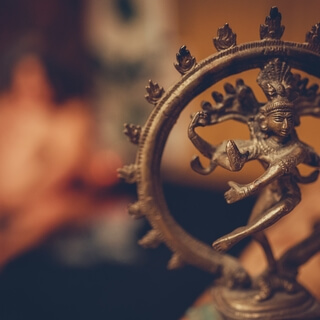
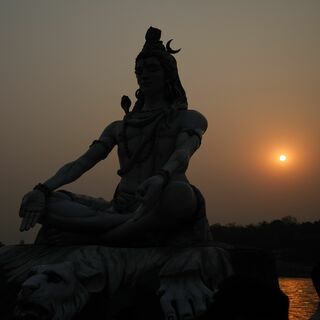
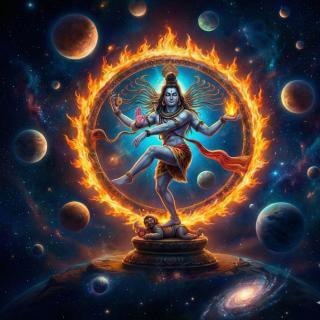
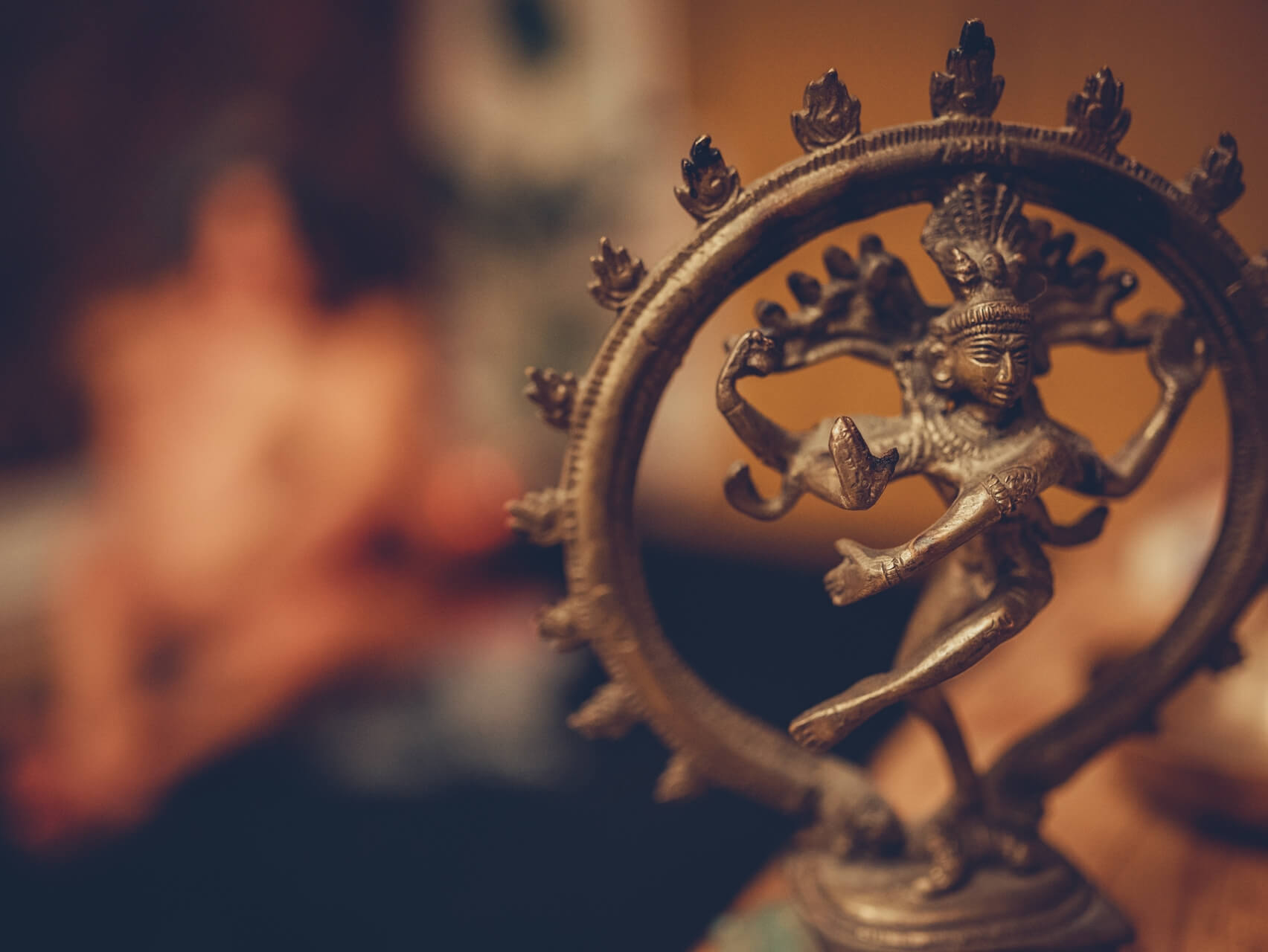
Nataraj Meditation is not Osho Kundalini Meditation, which opens with shaking; Nataraj's primary vehicle is continuous, free-form dance. It is a structured, guided sequence rather than open-ended ecstatic dancing without stages, and the stillness phase matters as much as the movement. The name refers to Shiva as Nataraj, the cosmic dancer, which marks the practice's lineage rather than any therapeutic claim.
Not to be confused with
Osho Kundalini Meditation
Kundalini Meditation opens with a shaking phase to loosen the body, then moves into dance; Nataraj skips shaking entirely and uses continuous free-form dance as its primary vehicle from the start.
Nataraja / Bharatanatyam classical Indian dance
Both take their name from Shiva as Nataraj, the cosmic dancer, but classical Indian temple dance is a precise, choreographed art form, while Nataraj Meditation is unstructured, eyes-closed movement with no set steps.
Osho Dynamic Meditation
Often grouped together as Osho active meditations, but Dynamic Meditation is shaking- and breath-led with distinct chaotic and cathartic stages, whereas Nataraj is dance-led with a single long stillness phase.
Nataraj Meditation is thought to work by swinging the body between full exertion and deep rest. The wild dance drives activation up, and the stillness that follows lets it fall, a cycle that may train the nervous system to move more flexibly between arousal and recovery instead of staying stuck in one gear. In practice that can feel like being less locked in high alert and more able to change states as needed. This is a proposed pathway rather than a measured one, and it draws on research about meditation broadly, not Nataraj specifically, which frames practices with a stillness phase as training attention and emotion regulation (Lutz et al., 2008).
When you feel locked in high alert or stuck in shutdown, cycling through Nataraj's wild dance, lying stillness, and gentle closing celebration may help you change gears more easily. Moving between full effort and deep rest could train autonomic flexibility, the nervous system's knack for shifting smoothly between revving up and winding down instead of staying in one state (Lutz et al., 2008).
Nataraj Meditation moves the body through a rise and fall in arousal. Heart rate and sympathetic activation, the fight-or-flight branch that keys the body up for action, climb during the vigorous dance and then settle as you lie still. This settling is inferred from broader meditation research rather than measured in Nataraj itself; a systematic review of meditation and mindfulness found reduced reactivity in the amygdala, the brain's threat-alarm region, along with changes in the circuits that steady emotion (Calderone et al., 2024). In the body this may feel like pounding, buzzing energy during the dance giving way to heaviness, slower breathing, and a quieter sense of urgency.
Once the wild dance gives way to the long stillness, racing energy can settle into a heavy, quiet calm. That shift reflects sympathovagal balance, the moment-to-moment tug-of-war between the body's stress-activating and rest-and-recovery systems, which broader meditation research suggests may tilt toward the rest side during the still phase (Calderone et al., 2024).
In Nataraj Meditation the wild dance first drives your body's keyed-up energy higher, then the lying-still phase lets it fall. Many people feel the racing, on-edge quality draining out and a heavier, settled calm taking its place. That settling reflects lower sympathetic arousal, the fight-or-flight activation that raises heart rate and muscle tension, which tends to ease after meditation practice (Calderone et al., 2024).
After the wild dance drops into deep stillness, a keyed-up, buzzing body often settles into heaviness, with breathing slowing and the sense of urgency quieting. That easing may reflect lower cortisol, the body's main stress hormone that broader meditation research links to regular practice, though Nataraj itself hasn't been measured, so the settling is an expected rather than a confirmed effect (Calderone et al., 2024).
As the wild dance gives way to lying still, many practitioners feel the body's alarm quieting, tension draining away and breathing slowing. Broad meditation reviews link regular practice to calmer stress-response circuitry (Calderone et al., 2024), from which steadier stress-hormone levels, such as cortisol, are inferred rather than measured directly in Nataraj.
In the 40-minute dance the chest can feel pounding and alive, and as you lie still for the next 20 minutes the pulse gradually settles into something slower and steadier. Heart rate, the speed at which the heart beats, climbs with the physical effort of dancing and is expected to fall during the stillness, though that downward shift is inferred from broader meditation research rather than measured in Nataraj itself (Calderone et al., 2024).
When a trigger lands with less force and you settle back to steadiness more quickly, that is the felt side of emotion-regulation circuitry, the brain networks that keep feeling steady. Reviews of meditation have measured reduced reactivity in the amygdala, the brain's threat-alarm region, along with greater cortical thickness and stronger connectivity in these circuits (Calderone et al., 2024). These changes were seen in meditation broadly, not yet in Nataraj Meditation specifically.
Limited and indirect evidence points toward mental wellbeing. A small trial of Osho's Dynamic Meditation, the closest studied relative of Nataraj, linked regular practice to gains in some dimensions of psychological wellbeing, such as a stronger sense of autonomy and of being able to handle daily demands, though other measures did not change (Iqbal et al., 2015). Broader meditation research adds background support for easing anxiety (Goyal et al., 2014). Not yet supported: any trial of Nataraj itself, large or long-term studies, and claims that it treats a diagnosed condition.
If stress or emotional heaviness leaves you feeling stuck, this practice may offer a little more room to move through a feeling rather than stay locked in it. That hope rests on a small trial of Osho's Dynamic Meditation, Nataraj's closest studied relative, which linked regular practice to a stronger sense of autonomy and of handling daily life, though the gains showed on some wellbeing measures and not others (Iqbal et al., 2015).
No study has tested Nataraj Meditation directly, so what is known comes from related practices. A 21-day trial of Osho's Dynamic Meditation in 60 adults improved several mental-health measures while leaving others unchanged (Iqbal et al., 2015), and a meta-analysis of 47 trials with 3,515 adults found meditation programs produced a small reduction in anxiety, a standardized effect size of 0.38 (95% CI 0.12-0.64) compared with nonspecific control conditions, meaning the average practitioner ended up less anxious than roughly six in ten people who did not practice (Goyal et al., 2014). The main limit is directness, since none of this measured Nataraj's specific dance, stillness, and celebration sequence.
0
Meta-analyses
0
RCTs
1
Systematic reviews
0
Observational
6
Pilot
Studied populations
Outcomes measured
Anxiety reduction following exercise and meditation
n = 75
Finding: In this early trial, 75 adult men were split evenly into three groups, one doing physical exercise, one meditating, and one simply resting quietly, and all three groups saw their in-the-moment anxiety drop by a similar amount, with no measurable physical differences between the meditation and rest groups. For someone weighing up a movement-based practice, this is a reminder that both moving your body and settling into stillness can each take the edge off acute anxiety, so the calming benefit may come from the pause itself as much as the activity. It is worth noting the study looked only at adult men and did not test Nataraj Meditation or any dance-based approach, so it offers useful background rather than direct evidence for this specific technique.
reported narratively
Attention regulation and monitoring in meditation
2008
Finding: This conceptual review describes meditation as a way of training two mental skills: steering your attention where you want it, and steadying your emotional responses. That framing offers a plausible reason why a practice like Nataraj, which moves between active focus and stillness, might help with concentration and emotional balance. Keep in mind that the work explains a general pathway rather than testing Nataraj itself, so it points to how the practice could work rather than proving that it does.
See full citation in referencesNataraj Meditation was created by Osho and named after Shiva Nataraj, the cosmic dancer, placing it within his lineage of active meditations that pair uninhibited movement with silent witnessing (Foundation, n.d.). These roots help explain the practice's form, the surrender into free dance followed by stillness, rather than proving any clinical effect.
For most healthy adults, Nataraj Meditation is low-risk, and broad reviews describe meditation-based practices as relatively safe (Zhang et al., 2021). Two situations warrant care, neither severe for most people. The roughly 40 minutes of vigorous, uninhibited dancing puts real aerobic and joint load on the body, so the exertion can feel intense. And the free-dance and stillness phases can surface strong or unexpected feelings, which some people find overwhelming. In either case you can slow the movement, shorten a phase, or dance with a trusted guide rather than pushing through.
People with a cardiac condition, high blood pressure, or a recent injury or joint instability should treat the sustained vigorous dance as genuine exertion, moderate the intensity, or check with a clinician first. Those who are pregnant may need to reduce the pace and impact of the movement phase. Anyone carrying a trauma history should approach the free-dance and stillness phases gently, since strong emotional discharge can surface during them, and may prefer the support of a trusted facilitator.
The roughly 40 minutes of sustained, uninhibited dancing puts real aerobic and joint load on the body, so the exertion can feel genuinely intense. If you have a cardiac condition, high blood pressure, or another cardiovascular concern, treat the dance phase as real physical exertion: check with a clinician first, keep the movement gentle, and slow or shorten the phase rather than pushing through (Zhang et al., 2021).
Because the free dance is vigorous and self-directed, a recent injury or joint instability can be aggravated by the movement. Moderate the intensity, avoid high-impact movement, or check with a clinician before practising. Those who are pregnant may need to reduce the pace and impact of the dance phase.
| Technique | Best for | Use with care | Evidence strength | Distinction |
|---|---|---|---|---|
| Osho Dynamic Meditation | People who want a strongly cathartic, shaking-led release rather than a dance-led one, and who have any early trial evidence behind the form. | Its cathartic phases can be highly activating; not a substitute for evidence about Nataraj itself. | emerging EVIDENCE | The closest studied relative of Nataraj, but structurally different: Dynamic Meditation opens with chaotic breathing and shaking to build catharsis, whereas Nataraj uses roughly 40 minutes of continuous free-form dance as its primary vehicle before the stillness phase. The only technique-adjacent trial studied Dynamic Meditation, not Nataraj, and reported gains on some mental-health dimensions with no change on others. |
| Seated mindfulness meditation | People who prefer a quiet, low-exertion practice or who cannot do sustained physical movement. | May feel too still or restless for those who need to discharge physical and emotional energy first. |
About 65 minutes in total. A full session runs roughly 40 minutes of free, eyes-closed dance, then 20 minutes lying in stillness, then about 5 minutes of gentle celebratory dance (Foundation, n.d.).
+
About 65 minutes in total. Nataraj Meditation is a three-phase practice as Osho set it out: around 40 minutes of free, eyes-closed dancing where the body moves however it wants, then 20 minutes lying in complete stillness, and a closing 5 minutes of gentle celebratory dance (Foundation, n.d.). These timings describe the practice's defined structure rather than a required dose, so you can shorten a phase if needed; the length simply reflects the arc from vigorous movement into deep rest.
No. Nataraj Meditation asks you to dance freely with eyes closed, letting the body move however it wishes with no set steps, so no dance skill or training is needed (Foundation, n.d.).
+
No. The practice is defined as roughly 40 minutes of free, eyes-closed dancing in which the body moves however it wants, followed by lying stillness and a short closing dance, so there are no steps to learn or perform (Foundation, n.d.). The point is uninhibited, self-directed movement rather than skilled choreography, which means beginners and experienced dancers can approach it the same way. Being unskilled is simply part of the form; it neither helps nor hinders the experience.
A family of practices, associated with Osho, that use vigorous movement, breath, or sound to release tension before settling into stillness, rather than beginning from seated quiet.
Deliberately moving the body between states of high activation and deep rest, as Nataraj does across its dance, stillness, and celebration phases, so the nervous system practises shifting gears.
Intentional alternation between sympathetic arousal and parasympathetic recovery across a structured protocol, proposed to support autonomic flexibility.
The body's fight-or-flight activation, felt as a racing, keyed-up, wired quality; it rises during Nataraj's dance phase and is expected to settle during the stillness that follows.
Sympathetic nervous system activation, raising heart rate, muscle tension, and readiness for action.
How strongly the brain's threat-alarm region fires in response to a trigger; lower reactivity feels like reacting less sharply and settling back to calm more quickly.
The magnitude of amygdala response to emotional or threatening stimuli, associated with emotional regulation.
The release of stored physical and emotional tension through sustained movement, often felt as trembling or shaking followed by a deep settling, as though the body is finally letting go.
Release of accumulated autonomic activation through motor activity, proposed to allow completion of interrupted fight/flight/freeze responses.
The way body and mind fall into step with an external rhythm such as music, so movement feels carried along rather than effortful, often producing a sense of flow and presence.
Synchronisation of physiological rhythms (neural oscillations, heart rate, respiration, motor patterns) to a repetitive external stimulus.
Michael S. Bahrke, William P. Morgan (1978). Anxiety reduction following exercise and meditation. https://doi.org/10.1007/bf01172650
Cited in: Comparison
Antoine Lutz, Heleen A. Slagter, John D. Dunne, Richard J. Davidson (2008). Attention regulation and monitoring in meditation. https://doi.org/10.1016/j.tics.2008.01.005
Cited in: How it works
Explore guided sessions to deepen your Nataraj Meditation technique.
| Outcome | Effect size | 95% CI | N | Comparator | Source |
|---|---|---|---|---|---|
| anxiety at 8 weeks | SMD = 0.38 | 95% CI 0.12-0.64 | — | — | Goyal et al., 2014 |
No clinical trial has studied Nataraj Meditation itself, so every claim here is inferred from related active meditations and from general meditation research. Those studies vary in quality, use small or specific samples, and measure different practices, so their findings may not transfer to Nataraj's particular dance-and-stillness sequence, and none establish long-term or condition-specific outcomes.
Meditation Programs for Psychological Stress and Well-being
n = 3,515
Finding: Reviewing 47 trials with 3,515 adults across a range of clinical settings, this analysis found that structured meditation programs produced a moderate reduction in anxiety after about eight weeks, along with smaller improvements in depression and pain. For someone drawn to a movement practice like Nataraj, that offers reassuring background: the broad meditation family it belongs to has a real, if modest, track record for easing anxious feelings and low mood. It's worth being clear about the limits, though, this review looked at meditation in general rather than Nataraj itself, so the results point to what the wider family can do rather than proving anything specific about this practice.
SMD = 0.38
Effect of Dynamic Meditation on Mental Health
n = 60
Finding: This trial followed 60 adults in India who were split evenly into two groups, with one group completing 21 days of Osho Dynamic Meditation, an active meditation from the same Osho tradition as Nataraj but not Nataraj itself. Those who practised showed marked gains in several aspects of mental health, including a stronger sense of personal integration, greater autonomy, and a firmer feeling of being able to handle their surroundings. The picture was mixed, though: the practice made no measurable difference to positive self-view, sense of reality, or group-oriented attitude, so it seems to lift some facets of wellbeing rather than all of them. Because this was a small, short study of a related technique, it points to promise for active Osho-style meditation broadly rather than proof for Nataraj specifically.
reported narratively
Mindfulness-based interventions: an overall review
2021
Finding: This wide-ranging review of mindfulness and meditation research reports that regular practice can help with a broad range of conditions, from depression, anxiety and everyday stress to insomnia, pain and high blood pressure. It looked at meditation in general, though, not Nataraj Meditation specifically, so any benefit for this particular practice is borrowed from the wider meditation family rather than proven for Nataraj itself. The review also cautions that many meditation studies are small and not especially rigorous, so it is fair to treat these results as encouraging signals rather than firm guarantees.
See full citation in referencesNeurobiological Changes Induced by Mindfulness and Meditation: A Systematic Review
2024
Finding: This systematic review gathered brain-imaging research on meditation and mindfulness and found consistent patterns: less reactivity in the amygdala, the region that drives fear and stress responses, alongside shifts in cortical thickness and how brain networks connect, changes that track with steadier emotions and greater resilience under pressure. For someone drawn to a practice like Nataraj, it points to a plausible reason regular meditation can leave you feeling calmer and more even-keeled over time. Keep in mind that these findings describe the meditation family as a whole rather than measurements taken from Nataraj itself, so they explain a likely mechanism rather than proving this specific technique reshapes the brain.
See full citation in referencesThe free-dance and stillness phases can surface strong or unexpected feelings, which some people find overwhelming. This is practice-informed guidance rather than measured adverse-event evidence, and Nataraj is not a way to process trauma. If emotion feels overwhelming, let it move at a pace you can tolerate, slow or shorten a phase, or open your eyes. Anyone carrying a trauma history may prefer to approach both phases gently and with the support of a trusted facilitator.
Nataraj Meditation is best approached in a soft, cleared space where you can move freely with your eyes closed, treating the long free-dance phase as genuine exertion rather than something to push through. A sensible starting format for most beginners is to ease into the movement, let the body find its own way with no set steps, and give yourself unhurried, quiet time to settle afterwards. If strong feelings or hard breathing arise, you can always slow the pace, shorten a phase, or lean on a trusted guide.
Clear a soft, open area free of furniture and hazards so you can move with your eyes closed without bumping into anything, and remove glasses or loose objects before you begin.
Ease into the 40-minute free-dance phase rather than starting at full intensity, and let the body move as it wishes with no set steps. If your heart is pounding hard or your muscles tire, reduce the vigour or slow down instead of forcing it.
When the dance ends, lie down for the 20-minute stillness with support under your head if that helps, and let the activation settle. There is nothing to achieve here; the settling often deepens with repetition rather than all at once.
If strong or unexpected feelings surface during the movement or the stillness, let them move through at a pace you can tolerate. Pause or open your eyes if the intensity becomes too much.
After the closing gentle celebration, return to standing or sitting gradually to avoid light-headedness, and give yourself a few quiet minutes before going back to activity.
If you have a cardiac, musculoskeletal, perinatal, or trauma-related concern, practise with a knowledgeable guide or check with a healthcare professional before beginning.
This information is educational and is not medical advice. This practice is not a substitute for professional care and should not replace prescribed medication or treatment for any medical or mental-health condition. If you are managing a health condition or taking medication, talk with a qualified health professional before changing your practice. If you are in distress or crisis, seek professional support.
| Seated mindfulness keeps the body still throughout and trains attention on breath or present-moment experience, while Nataraj reaches stillness only after sustained vigorous movement. Broader meditation research, covering seated practices, shows a modest effect on anxiety, whereas Nataraj's specific dance-then-stillness sequence has not been tested. |
| Ecstatic dance and free-form dance practices | People drawn to communal, music-led movement who do not want a devotional or lineage framing. | Often lacks the structured stillness and recovery phase that gives Nataraj its arousal-then-settle shape. | emerging EVIDENCE | Secular ecstatic dance shares Nataraj's uninhibited, eyes-closed free movement, but usually as ongoing communal dance without Osho's fixed three-phase arc of dance, long silent stillness, and a short closing celebration. Nataraj's deliberate swing into 20 minutes of complete stillness is what distinguishes it. |
| Aerobic exercise for stress relief | People whose main goal is physical fitness alongside stress relief, using structured, measurable activity. | Directed exercise does not include the free-form, self-surrendering movement or the stillness phase central to Nataraj. | moderate EVIDENCE | Both use vigorous physical movement, but exercise is directed and goal-oriented while Nataraj lets the body move without conscious control and pairs the exertion with a meditative stillness phase. Older research suggests exercise, meditation, and quiet rest can each ease acute anxiety to a similar degree, though that study did not test Nataraj. |
Not proven. No study has tested Nataraj Meditation itself, so it cannot be called clinically proven. The nearest evidence is indirect: a small trial of the related Osho Dynamic Meditation improved some mental-health measures but not others (Iqbal et al., 2015), and broader meditation research shows a small reduction in anxiety (Goyal et al., 2014).
+
Not proven, but plausible rather than established. No clinical trial has measured Nataraj's specific dance-stillness-celebration sequence, so any benefit is inferred from a related practice family rather than confirmed for this technique. A small 21-day trial of Osho Dynamic Meditation improved several mental-health dimensions while leaving others unchanged (Iqbal et al., 2015), and a meta-analysis of meditation programs found a small anxiety reduction (Goyal et al., 2014). Treat these as reasonable expectations from a broader family of practices, not evidence that Nataraj treats any condition (Zhang et al., 2021).
Possibly, though this is suggestive rather than confirmed. No trial has tested Nataraj itself, but broader meditation research links regular practice to a small reduction in anxiety (Goyal et al., 2014). Treat it as a plausible route into release and rest, not a proven treatment for an anxiety disorder.
+
Possibly, but not proven. No study has tested Nataraj Meditation for anxiety, so any support is indirect. A meta-analysis of meditation programs found a small reduction in anxiety versus nonspecific controls (Goyal et al., 2014), and a small trial of the closely related Osho Dynamic Meditation linked practice to gains in some mental-health measures while others were unchanged (Iqbal et al., 2015). Because this evidence comes from related practices rather than Nataraj's specific dance-and-stillness sequence, treat any easing of anxiety as a plausible expectation, not a condition-specific treatment (Zhang et al., 2021).
The idea is that hard dancing drives your nervous system's arousal up and the stillness that follows lets it fall, a swing thought to train more flexible shifting between activation and rest. This is a proposed pathway drawn from broader meditation research, not something measured in Nataraj itself (Lutz et al., 2008).
+
The proposed logic is a deliberate rise-and-fall: 40 minutes of vigorous free dance drives sympathetic arousal, your fight-or-flight activation, upward, and lying in stillness afterward lets it settle, a cycle that may help the nervous system move between arousal and recovery instead of staying stuck on high alert. Broader meditation research also frames practices with a stillness phase as training attention and emotion regulation (Lutz et al., 2008), and reviews link meditation to calmer activity in emotion-regulating brain circuits, including reduced reactivity in the amygdala, the brain's threat-alarm region (Calderone et al., 2024). This remains a plausible mechanism rather than a measured one for Nataraj, and it is not a treatment for any condition.
Yes. The free-dance and stillness phases can surface strong or unexpected feelings, and that is an ordinary part of the practice. If the intensity becomes too much, you can slow the movement, shorten a phase, pause, or open your eyes.
+
Yes. During the roughly 40 minutes of uninhibited dance and the stillness that follows, feelings can rise unexpectedly, and this is a normal experience rather than a sign something has gone wrong. This is practice-informed guidance, not a treatment claim: Nataraj is not a way to process trauma or treat an emotional condition. If emotion feels overwhelming, let it move at a pace you can tolerate, slow or shorten a phase, open your eyes, or practise with a trusted guide; anyone carrying a trauma history may prefer to approach both phases gently and with facilitator support.
Check with your clinician first. No study has tested Nataraj Meditation's cardiac safety, and its roughly 40 minutes of vigorous dancing is genuine exertion, so treat the dance phase as real physical load and moderate or shorten it if you have a heart condition (Zhang et al., 2021).
+
Check with your clinician first. Meditation-based practices are generally considered relatively safe, but that broad reassurance does not extend to the sustained vigorous dancing at the heart of Nataraj, which places genuine aerobic and cardiovascular load on the body (Zhang et al., 2021). No trial has examined Nataraj's cardiac safety, so this guidance rests on the physical demands of the practice and on practical caution, not on evidence that it is safe for heart conditions. If you have a cardiac concern, get medical clearance first, keep the movement gentle, and slow or shorten the dance phase rather than pushing through; this is not a substitute for medical advice.
Use care. No study has tested Nataraj Meditation in people with a trauma history, so this is practice-informed guidance, not proof of safety: approach the free-dance and stillness phases gently, since strong emotional release can surface, and consider a trusted facilitator. It is not a substitute for care when trauma is significant.
+
Use care. Meditation-based practices are broadly described as relatively safe (Zhang et al., 2021), but no trial has examined Nataraj's specific dance-and-stillness sequence in people carrying trauma, so this stays practice-informed caution rather than tested safety evidence. Both the uninhibited free dance and the silent stillness can surface strong or unexpected feelings, so move gently, slow or shorten a phase, or pause and open your eyes if intensity builds. Working with a trusted facilitator can help, and this practice does not replace professional support when trauma is significant.
Clear a soft, open space, remove glasses, then move through the three stages: about 40 minutes of free, eyes-closed dance, 20 minutes lying in stillness, and 5 minutes of gentle celebration (Foundation, n.d.). Ease into the dance, let feelings pass at a tolerable pace, and rise slowly to finish. It is low-risk for most healthy adults (Zhang et al., 2021).
+
Start by setting up safely: clear a padded, hazard-free area so you can move with eyes closed, and take off glasses or loose items. Follow Osho's three stages, roughly 40 minutes of free-form dance where the body leads, 20 minutes of lying stillness, then about 5 minutes of gentle celebratory dance (Foundation, n.d.). Pace the vigorous dance rather than starting flat-out, let strong emotions move through without forcing them, pausing or opening your eyes if intensity peaks, and come up slowly at the end to avoid light-headedness. Meditation-based practices are generally considered relatively safe, but check with a guide or clinician first if you have a cardiac, musculoskeletal, perinatal, or trauma-related concern (Zhang et al., 2021).
The main difference is the primary movement. Nataraj uses about 40 minutes of continuous free-form dance before lying in stillness and a short celebration, while Dynamic Meditation opens with chaotic breathing and shaking for catharsis. Only Dynamic Meditation has been studied in a small trial, with mixed results (Iqbal et al., 2015).
+
The main difference is the vehicle: Nataraj Meditation moves through roughly 40 minutes of eyes-closed free dance, then 20 minutes of lying stillness, then a brief celebratory dance, whereas Osho Dynamic Meditation leads with chaotic breathing and shaking to build catharsis. The evidence also differs in directness: no trial has tested Nataraj itself, while a small trial of Dynamic Meditation in 60 adults improved some mental-health dimensions and left others unchanged (Iqbal et al., 2015). This is a difference in form and in what has been studied, not a sign that either practice treats a specific condition.
The moment-to-moment tug-of-war between the body's stress-activating system and its rest-and-recovery system; a healthier balance feels like being able to wind up or wind down as needed rather than staying stuck on high alert.
The relative activity of sympathetic versus parasympathetic (vagal) influence on the heart and other organs, often indexed via heart rate variability.
Findings drawn from similar or related practices rather than from studies of this exact technique; for Nataraj, support comes from broader meditation and related Osho-meditation research, not trials of Nataraj itself.
Osho International Foundation (n.d.). OSHO Nataraj Meditation Instructions.
Cited in: Roots and tradition, What it is
Madhav Goyal, Sonal Singh, Erica Sibinga, Neda F Gould, Anastasia Rowland-Seymour, Ritu Sharma (2014). Meditation Programs for Psychological Stress and Well-being. https://doi.org/10.1001/jamainternmed.2013.13018
Naved Iqbal, Archana Singh, Sheema Aleem (2015). Effect of Dynamic Meditation on Mental Health. https://doi.org/10.1007/s10943-015-0082-x
Dexing Zhang, Kam-Pui Lee, E Mák, Connie Y Y Ho, Samuel Yeung Shan Wong (2021). Mindfulness-based interventions: an overall review. https://doi.org/10.1093/bmb/ldab005
Cited in: Research, Use with care
Andrea Calderone, Dèsiréè Latella, Federica Impellizzeri, Paolo De Pasquale, Fausto Famà, Angelo Quartarone (2024). Neurobiological Changes Induced by Mindfulness and Meditation: A Systematic Review. https://doi.org/10.3390/biomedicines12112613
Cited in: What happens in the body
Editorially curated. Tracks are not themselves clinically studied; evidence on the page applies to Nataraj Meditation as a technique.
Beginner content for Nataraj Meditation

★ 4.9
·
Music
·
6 min
Gotama
How hard is Nataraj Meditation?
Nataraj Meditation belongs in the top tier because it is a long-form abandon-dance protocol with an explicitly front-loaded effort curve.
4
Mental Effort
2 / 4
▾Emotional Depth
3 / 4
▾Physical Intensity
4 / 4
▾Prior Knowledge
2 / 4
▾