One of the.
.
.
Core insights of.
Buddhism is that.
When we are completely caught up.
In ourselves in the idea of me as a fixed separate self.
That we suffer a lot.
My mind.
Is built to see myself as the center of the universe.
I'm the star of the show.
And I think one of the great teachings.
Of Buddhism and particularly of Master Dogen.
Is that?
This self-centeredness.
Is a source of pain and can be worked with.
To quote Shihoku Okamura,
The great translator and interpreter.
Of Dogen.
Our basic way of thinking is based on separation between subject and object.
We think in deluded,
Self-centered ways.
We often think that everything in this world exists to make us happy.
For me,
It's a challenge to keep bringing myself out of this self-centered place.
Where my mind wants to go and wants to reside.
Last week.
I had the great honor.
To be able to be in a place that completely took me out.
Of my self-centeredness.
I traveled to the country of Mozambique.
To a place that is being restored after being destroyed by war and colonialism.
Mozambique is the second poorest country in the world.
65% of the population doesn't have enough food.
15% of children die.
Before the age of five.
And yet,
Mozambique is one of the richest countries in natural resources in the world.
Fertile soil.
Huge.
Natural gas and precious metals and rare metal deposits and some of the best fishing in the world.
And so it's this paradox of immense riches and grinding poverty.
And it's a country that was decimated by First World War.
Portuguese colonies and then Bye.
Civil wars that tore the country apart.
And destroyed so much of it.
Included.
The animal.
These great African animals,
Lions and elephants and leopards.
Will the Beast?
And one of the reasons this was allowed to happen is That we get lost in this delusion that we are separate that we don't have to care for the natural world.
We are separate from the natural world.
We can take from it what we want.
And there will be no consequences.
To go back to Dogen's teaching.
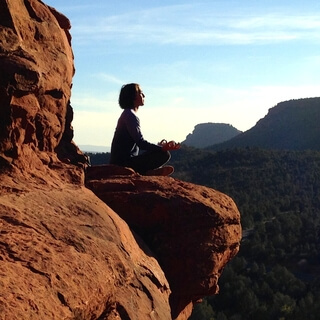
Zazen,
Meditation that is,
Enables us to see clearly that we are part of the world.
We're part of nature.
We're part of Buddha.
So I traveled to a place called Gorongosa National Park in Mozambique,
Where a philanthropist has spent 30 years donating his treasure,
But more than that.
His efforts to repopulate the animals that were decimated by war.
And he's recruited other people,
Other people to donate money,
To donate time and energy.
And now.
In this.
National Park.
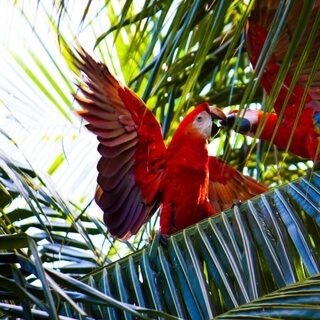
Lions roam freely,
Herds of elephants.
Are there again.
Leopards.
Painted walls.
So many variety of antelope.
I had the privilege of being able to go out and see these animals at sunset.
At sunrise.
And to realize how not separate I am from them.
But there was another teaching here that was so powerful for me.
This philanthropist.
Was really not so interested in the animal.
Although he knew it was a good thing to restore that.
But what he was really interested in was the cycle of grinding poverty and how to address that,
How to take care of all of these suffering beings in Mozambique.
And so what he understood was that if he restores the National Park,
If he brings the animals back.
Tourists will come,
Travelers will come who want to see these animals and with them they will bring jobs.
For the many people in Mozambique who have no work and not enough food.
Not only that,
But philanthropists in this national park have funded started preschools where hundreds of three-year-olds and four-year-olds are brought together.
They are fed a meal every day.
Where on their subsistence farms these three-year-olds will be lucky if they get one meal every other day.
So they feed them,
They teach them to read and write.
And they give them a shot at going to school and staying in school.
And breaking the cycle of poverty.
In which they were born.
And in addition,
There are girls clubs for girls 14,
12,
13,
14.
To try to help girls stay out of this cycle of being married off by their parents.
So young,
Married off to have babies,
And continue this cycle of too many young children,
Not enough resources,
And women having no future.
But to be mothers.
On subsistence farm.
There's a science center where 70 colleges and universities come to collaborate.
And there are coffee farms that have been introduced so that these farmers can raise good crops for which there is a good market.
And then they can make the money to sustain themselves and their families.
All of this.
In a country where the government is among the most corrupt,
Where the natural resources are being extracted by foreign companies,
With big payoffs to a very small number of government officials in Mozambique.
And so amid poverty and disease and corruption.
What you see.
Are those in beacons who are warm.
Cool.
Love being together.
Who sit by fires every night and laugh.
And tell stories.
And pass on their traditions.
When we went to visit the schools,
The children and the teachers,
Took us into their circle and danced and sang including three year olds.
Who sang songs about the vowels and their ABCs.
And what we saw was a kind of joy amid suffering.
That you hear talked about.
That joy is possible.
Particularly when we share with each other,
When we give to each other.
Now right next to this huge national park which is thriving now.
And supporting thousands of people.
Next to it.
Is a place where people can come and spend tens of thousands of dollars to kill a large animal.
It's called a hunting concession,
Where people can come and take their prey.
Kill a lion or a leopard as a trophy.
So again,
You have to a group of people who understand fully that we are a part of nature,
And they are restoring the natural world,
And then you have a group of people who feel totally separate enough to kill beautiful animals.
For their hides.
As trophies.
We often think that everything in this world exists to make us happy.
How can we be free of this great delusion?
What I came to understand.
In Mozambique is how much abundance we live in.
That it's stunning.
How much we have.
Even the poorest among us.
And how can we hold on to a sense of connectedness that prompts us to share what we have,
To share this abundance?
The Buddha is quoted as saying,
If you knew what I know about the power of giving,
You would not let a single meal pass without sharing it in some way.
That what the Buddha understood,
What these philanthropists in Mozambique have understood,
Is that there is so much joy,
So much genuine happiness in giving.
Now,
Most of us are not going to travel halfway around the world.
To Africa.
And we don't need to.
We can meditate on our abundance,
On what we have.
And we can meditate on this even and maybe especially.
When we feel downtrodden,
When we feel demoralized.
We're not going to save all the beings in the world,
Even though in our Zen tradition we vow to do that.
But each of us can practice with the question,
What can I share in my small sphere of influence What can I give?
Where can I be of help?
Where help is needed.
And then we can accept the challenge to step forward.
And to give where we can give,
To help with our time,
Just with our listening,
With our compassion.
And maybe sometimes with our food.
With our money,
Whatever we have to offer.
To practice in this way.
To quote Gauguin,
Is to awaken to the self that is part of all things.
The subject of meditation practice is not the personal self,
But all beings.
And the challenge that each of us can take up is to practice de-centering.
From this view of ourselves as beings.
The main actor,
The center of the universe,
Separate from everything.
And 2.
See ourselves.
As we really are,
As completely intertwined with everyone and everything.
In the universe.
And from this place.
To find what we have in our hearts.
To give to those around us.
Thank you.