So,
Hello everyone.
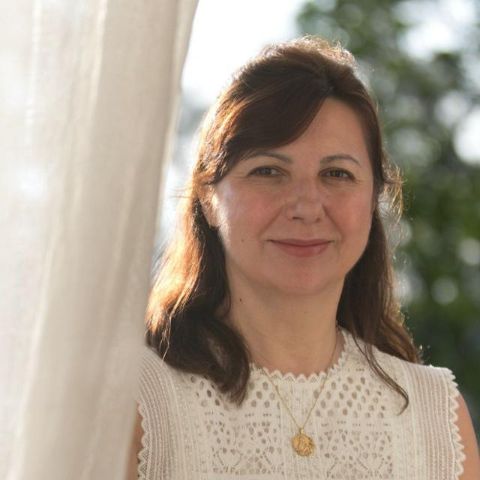
My name is Maggie.
I am a certified mindfulness meditation teacher,
And One Kind Voice aims to create a space that is inclusive,
Promotes kindness,
And a space where we can approach mindfulness and meditation with a beginner's mind,
And also with compassion and kindness.
This is an opportunity for us to build an oasis of practice for those with similar interests.
So today I will be offering a guided meditation called Body Scan.
And just to understand for today's pace,
The cadence will be a little bit slower.
To allow you the time to listen and lean in deeper.
To attune more with your body.
This meditation is set up to be around 30 minutes.
If in case we have any chances at the end for any time left,
You know,
We might take up on questions.
Normally we do not have so much time,
But nevertheless.
So I welcome you here and I will start by the sound of gong,
Just simply to create the space between what was was before this time you came here and what is to come after that.
So we will hear the gong.
And I would like to take this opportunity to start with a short recap of our Mindful May.
And the question we asked during Mindful May was how much are we aware of our own body?
We then practice through.
Two ways.
One,
To adjust our posture.
So the simplest way to connect with our body in a meditation is actually to adjust your posture.
You can simply sit in a chair if you feel comfortable.
Or lie down.
For the sake of this meditation,
I would recommend to lie down,
Maybe just to have this kind of idea of a body scan in a,
Let's say,
Easier way.
The second way of connecting with our body is through our attention,
Through our breathing.
So we actually bring our attention to the present moment.
Through simple act of breathing.
Breathing.
Breathe out.
Why is this important and why we call this an anchor.
Is because it can release us from connecting too much to our past,
Connecting too much with what's going to happen in the future.
So by just simply breathing in and out,
We are actually remain in the present moment.
So find your own rhythm.
And bring your attention inwards to the breath.
As natural as possible.
So.
.
.
Take your time,
Find your posture.
Lie down on our back.
Of course,
It's very easy to practice while sitting on a chair as well,
Like I'm doing right now.
If you do not want to fall asleep,
That's another way of practicing.
The intention of this sort of meditation,
Which is like a complete body scan,
Is to be present here and now.
Without wanting anything at all.
So for example,
We cannot focus or we shouldn't focus too much even to strive for relaxation.
We are simply noticing.
What we do is we simply check in with each area of our body.
And what's really important is not to have any sort of judgments.
Our body is a source for us to kind of judge ourselves quite a bit.
So what we want to do here is just to notice.
Of course,
We will notice some sensations,
What's happening with our body,
But we do not want to add some weight of the sensation and change their story.
So take this moment.
And now you are already lie down.
You can.
Close your eyes.
Usually when we take a seat or we lie down,
We feel the gravity pulling our body.
Down,
And one example is you can feel your shoulders,
For example.
Just dropping into the mat.
You can feel like a slow surrender,
Something heavier and heavier.
Is going on,
Your body is relaxing.
Into the floor,
Into the chair.
And Another easy way,
As I said,
With these adjustments.
Of your posture.
We actually feel the contact of our legs.
We feel the points of contact of our back.
We feel the point of contact with our arms.
With our head on the floor.
We feel where our feet ride is touching the ground.
Or we can feel our bottom sitting on the chair.
If it's easier,
If it's not so easy at first to connect this way with the body.
You can try to imagine that you can see yourself.
From the distance.
With your mind's eye.
So like this,
Observing yourself from afar.
You can notice your breath.
Entering and leaving the body.
Breathing.
Breathe out.
Notice sensations.
This breathing is like a sort of a point of return.
What this means,
It means that when you notice too many thoughts,
Return to the breathing.
We start again.
We repeat few times just for you to pick up the pace.
Breathe in.
Breathe out.
Notice.
Breathe in.
Breathe out.
Now please.
Breathing.
Breathe out.
Notice.
I would also say,
Should you feel restless at any point,
You can move a little bit or wiggle a little bit.
Through your body.
And see if there are any changes in the way you feel.
It is also not mandatory to feel anything at all.
Maybe there will be numbness.
Or maybe you do not feel anything in particular.
So the idea is here not to push ourselves into seeing things,
Not to create stories,
Not to recall many memories.
It's simply just to try to connect with something through a little bit of imagination,
A little bit of breathing.
And slowly,
Slowly,
We start.
Now we are established,
Right?
We have our point of contacts.
We start from the feet upwards.
And we connect with the body one by one.
So we are now with our feet on the ground or not.
If we are not on the ground fully,
If we are on a chair.
Maybe we feel our toes.
Maybe we can feel a little bit of tingling.
We can feel maybe that our feet are cold,
Right?
So one of the sensation,
It's easier to feel it through temperature,
Cold.
Or haunt.
We can feel maybe our heels.
Lying on the floor and if we had a busy day,
If we walked a lot during today,
Maybe we feel this tiredness pulsating through our feet.
Take your time.
With our feet,
We can also ground,
We can establish more stability.
Especially if we are sitting on a chair and it's easier to feel into the entire area of our feet.
Now,
We are moving our attention.
To our ankles.
We are moving our attention to our lower legs.
What are we feeling?
That will be your question the entire meditation.
What are we feeling into our body?
Maybe our ankles are a little bit swollen.
Tired And I would like to kind of share a little example,
Personal example.
I attended once a silent retreat after I fell from the stairs.
And my feet were in pain,
Were recovering.
And I had a lot of sensitivity.
As the entire body was adjusting and helping me get back on track.
So what I felt was like my heart.
Was pulsating through my feet.
And I would sit sometimes for a longer time,
Sometimes for less.
And mostly I just felt this energy,
Like I had an engine in my lower legs.
And then lying down really helped me a lot.
So I attended most of the meditation sessions just lying down.
When it was too much,
I would wiggle a little bit.
What you also notice is that your attention will go far away from my instructions.
I'm sure there were so many thoughts took you somewhere else.
And that's why I'm here.
To remind you gently.
That you can return to your body.
Or to your breath.
It's not a problem at all.
The mind likes to travel.
One helpful way,
For example,
Is to reconnect with your body.
By imagining that you are breathing and sending the oxygen into that particular body part.
So we were at our lower legs.
Imagine you are just sending all this oxygen there.
Again an easy way just to imagine for example you have like a pointer You have a light.
Just highlighting your lower legs.
Imagining.
A flow of oxygen.
Breathing into your legs.
With that.
We are moving our attention to our knees and thighs.
What is here to feel?
Maybe again some pressure.
We hold a lot of pain sometimes in our knees.
Maybe we feel great.
Sometimes with changes in weather right some of us we feel stronger like more sensations in the knees or our joints.
Take this pause and see what it means.
Tawas.
Now letting go of the ties and We are moving the attention.
To the lower trunk.
The pelvis.
And the belly up to the belly button.
So the lower part.
Can you try to feel breathing in the lower belly?
Maybe not yet,
But with a little deepening.
Of our breath.
Maybe this time with a little bit longer inhalation.
We can feel and reach into new areas.
Let's try again,
A longer inhalation.
Release.
Most of us we can easily feel the lower throne.
We can also feel moving up and down.
Now leaving this aside as well.
We are moving upwards toward the upper trunk.
Our stomach area.
The chest,
Feeling the sensations of the breath here.
With each inhalation and each exhalation.
Breathe in.
Breathe out.
Now it is.
Rising.
Falling.
We can see or notice the chest,
Stomach rising.
Four rings.
Going deeper.
We are now all connected.
Lower trunk,
Upper trunk,
We feel these movements.
With these movements,
We can also reach out the spine against the floor.
Or if we are seated to the back of the chair.
Notice any sensations.
Or notice the absence of sensations.
Remember.
We don't need to force ourselves to feel particular things.
We do not have to imagine anything else.
Colours.
Nothing.
They are not already there.
From here,
We move the attention into our hands.
This is one of my favorite and easy access gateways.
For feeling any sensations.
You can.
Feel your hands,
Right?
You don't have to see them.
You don't have to judge them.
You can playfully move the fingers if you want now.
Maybe you want to raise a little bit the hands,
Do a little gesture.
You can tighten a little bit your fists.
Very gently.
Just to understand the differences or to feel them.
Particular.
Sensation.
And when you're ready Let's move the attention into the wrists and forearms right now.
What is there to feel?
Maybe again some pain in our joints or no pain.
Maybe it's weekend,
We didn't spend too much time on our computers.
Our wrist didn't feel too much pressure.
Maybe we didn't do too much physical work.
So maybe we just feel fine.
And pulsating again with life.
Take again the light,
The highlighter.
The flashlight and Move on to your elbows.
And upper arms.
If you are on your back.
Again.
Feel that your shoulders by now after you know I don't know 20 minutes or so that already dropped.
You can feel slower moving upwards the back of your neck.
And bend.
Your hat,
And I'm your gentle reminder.
When your mind travels around.
Bring it back.
Just right here.
With breathing.
Breathe in.
Raise arms.
Breathing in.
Breathing out.
We are already in our head.
Pushing away,
Pulling away,
Pulling in maybe some thoughts.
But always breathing in.
Breathing out.
You are feeling your face.
Again.
Let's not move into judgments.
We usually.
.
.
Spend a lot of time looking at our face,
Checking signs.
Wrinkles or imperfections.
So we raise a lot of expectations,
We expect too much of us.
Just take this time to kind of just connect one by one.
Remember,
Like a kid.
Your mouth,
Nose,
Cheeks,
Eyes,
You can count them.
You can name them.
You can blink your eyes.
Maybe by now you are feeling sleepy.
No judgment,
Please.
This actually might not be the easiest meditation because we hold a lot in our body.
And we could also find unnatural to connect this way through this sort of instructions.
But as with everything with some practice we will see that We can calm.
Our nervous system just by doing this simple exercise.
And also we are opening to being alive.
And being thankful for that.
We just allowed now.
All the sensations to come in and join us.
And What did we do?
We just paid attention.
And we paid attention on purpose.
This is all that we do in our sessions.
We find a new level of awareness and we shift perspectives.
And.
.
.
Before closing this beautiful evening with you.
Let allow a couple of minutes of silence.
To customise our own inner checking.
Breathe.
Breathing.
Breathe out.
Breathing.
Breathe out.
Allowing now.
Some movement back into your body.
Like wiggling your fingers and toes.
Stretch your body in any way it wants,
If that feels good.
Just stretch away,
Stretch away.
And when you're ready.
In your own time.
Opening your eyes.
And come back.
Into a seated position.
Just take a moment to reflect.
On your experience in this new moment with me.
I will.
Start the gong one more time.
To close the session.
Thank you so much.
Thank you and have a beautiful evening or day wherever you are.
Bye bye.