Hello and welcome.
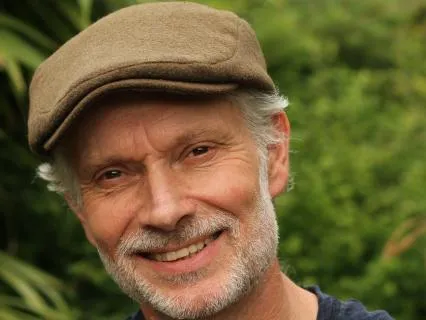
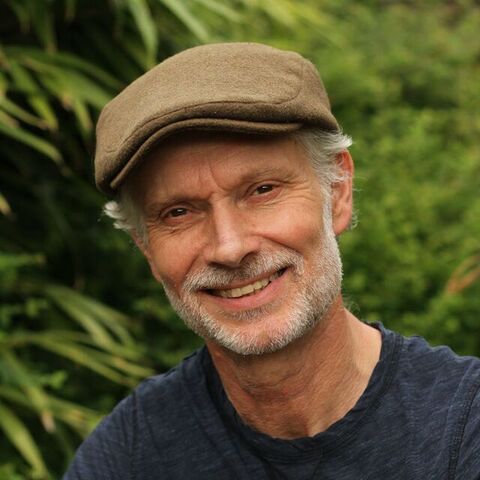
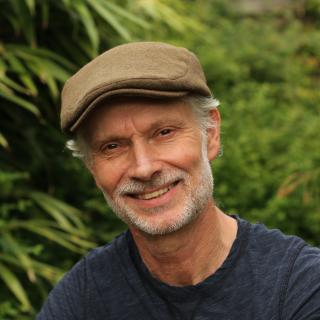
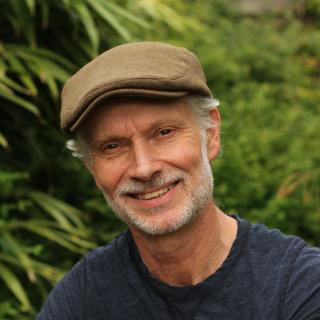
My name is Kev Webster and today I'm going to be presenting this small presentation titled The Illusion of the Healer.
This is a still point conversation for therapists who are ready to see something differently and it's based on my understanding of the three principles by Sidney Banks.
So we're going to dive straight in and look at some important questions and one of the most important questions for me is what if the most powerful moments in your therapy room have nothing to do with your technique?
Now just let that settle for a moment because this might unsettle you but that's intentional because I'm challenging beliefs that well sometimes catch therapists out and I've met hundreds of therapists over the years and there's a very common issue and that issue is imposter syndrome,
Doubting their own ability.
So when we consider what if the most powerful moments in the therapy room have nothing to do with your technique,
When we question that it really does lift the pressure.
So I want you to sit with these two questions just for a moment.
Who do you believe is doing the healing in your sessions?
And what would it mean personally and professionally if it wasn't you?
And remember there are no right answers here,
Only the honest ones.
So most therapists carry that hidden layer beneath their professional confidence,
That quiet fear of missing something important,
The effort of appearing certain when you feel uncertain,
The incongruence that you feel in that.
I've felt it myself,
The invisible weight of feeling responsible for whether that client changes or not.
And there's always that background question of am I good enough for this person?
And those questions don't start during the session,
They start way before the session.
So all of that,
Let's call it negative thinking,
All of that insecurity is building up over time.
So here's the belief underneath it all.
If you believe you are the one who causes transformation,
You must also believe that you can fail to create it.
I'll say that again,
If you believe you are the one who causes the transformation,
You must also believe that you can fail to create it.
That's a lot of pressure.
How much energy does that belief quietly require?
So I'm just going to give you a very brief,
Brief overview of the three principles as understood through the works of Sidney Banks.
We have mind,
Thought and consciousness.
Mind is not your personal mind,
That individual narrator that's always commenting on things.
Mind,
As described here,
Is the intelligence behind life itself.
Now some people might call it spirit,
God,
Wisdom,
Insight,
There's all different names for it.
It's the same principle that organizes all those trillions of cells in your body without you even having to think about it.
It is the source.
It's not something that you have,
But something you are part of.
So your client's well-being ultimately rests in something larger than your techniques.
That's what this is pointing to.
Thought is how human beings create experience from the inside out,
Not occasionally,
Constantly.
Every feeling,
Every perception,
Every story about ourselves and our clients are all thought in action.
All of it.
And thought looks like reality.
It doesn't feel like an opinion,
It feels like the truth about how things are.
So look at it like this.
Thought is the paintbrush.
The world you see in your therapy room is a painting.
It's not the wall.
And then we come to consciousness.
Consciousness,
The faculty that brings thought to life as a lived experience.
It's the animator.
When I think of consciousness,
I think of lights,
Camera,
Action,
Surround sound.
And together,
Thought and consciousness create that felt sense of being alive in the world that seems completely real and completely external.
So if you're talking to a client about something in the past,
Your client isn't responding to the event in the past.
They're responding to their thinking about it.
And it's made vivid and real by consciousness,
Which means the past isn't actually in the room.
The thinking about it is.
And thinking can change the world.
And it can change in an instant.
So let's look at the nature of insight.
Insight is not something a therapist delivers.
It's what appears when thought settles,
When the noise clears,
When a person stops defending their story long enough to see something new.
Now you didn't insert those moments.
You were simply present and they appeared.
So I'd like you to think about the most powerful sessions you've ever had.
What actually changed in that moment?
Did the change come from something that you did?
Or something that the client suddenly saw?
And where do you think that seeing came from?
Now you can stop the video now and consider those questions.
So let's reframe that therapist role.
Your role isn't to create change.
Your role is to create conditions where thought can settle enough for something new to appear.
It's not a technique.
Not a performance.
It's quite simply presence.
So let's have a look at what this looks like in practice.
Presence.
Meeting your client without an agenda.
Being genuinely curious rather than already composing the next interventions.
Being prescriptive.
Diagnostic.
Listening.
Not as a technique but as an active form of trust which is open enough to be affected by what someone says rather than responding from a prepared position,
An opinion.
And silence.
Not as a sign that something has gone wrong.
Silence is where thought settles,
Where insight is most likely to arise.
So another reflection.
If you genuinely trusted that insight doesn't come from you,
How might your sessions feel different?
How would you listen differently?
What pressure might quietly drop away?
Is there anything you currently do to manage sessions that you might be able to let go of?
The intelligence behind life.
Mind.
Right now,
Without any of us thinking about it,
Our hearts are beating.
Our immune systems are making thousands of decisions a second.
Our cells are communicating,
Regulating and repairing.
That same intelligence is the source of insight.
You don't generate it.
You're downstream of it.
And so are your clients.
So take a quiet moment with this question.
What might change in your work,
In how you sit with people,
How you listen,
How you show up,
If you truly trusted that insight doesn't come from you?
You might want to write something down about that.
So that's the end of the presentation.
You are not the healer.
And that might be the most freeing thing that you hear today.
Your presence matters deeply.
Not because you create transformation,
But because you create space for it.