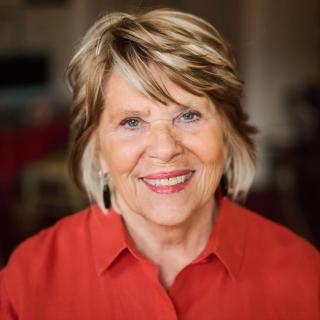
And I'm here today with Kate Truitt,
Really excited about this.
It's going to be great.
So let's take a moment,
Just settle yourself a little bit in your chair as people come in to join us.
Yeah,
And then just allowing yourself to pause a little bit.
When we have embodied dialogues,
We really want to invite a sense of what Jean Gendlin called body trust,
Trusting in our bodies.
So slowing things down.
And taking a moment to just Maybe notice what's around you.
And then if it feels okay,
You could soften your gaze.
And just bring your attention.
Somewhere down into the center of your body.
If that feels okay for you.
So we're going to spend some time today talking about joy and sorrow,
Healing and trauma.
Working with trauma in the brain and the body.
Just bringing that into your awareness and your body.
Maybe feeling down into where you are right now in your nervous system.
How safe do I feel in my body?
And then when you're ready.
Just slowly and gently.
Bringing your awareness back into our room here together.
And I'm here today with Kay Truitt.
Dr.
Kate.
And so I've been really been looking forward to this.
I think we actually met each other in person,
Believe it or not.
Right.
These days.
Well,
Although I think we actually first met at a deep brain reprocessing or reorienting training.
That's right.
That's right.
In Toronto.
Yeah.
And then you came here to Toronto.
We were both presenting at Leading Edge seminars and we had dinner together.
We did.
Yeah.
It was lovely.
And you had also just been in an accident.
Yes,
It was a terrible accident.
And I had my cane and everything.
Old faithful graduated from the cane from the cane.
Wow.
Yeah,
Nine months ago today,
I was hit by a drunk driver leaving work.
So one of the things I really like about your work,
Kate,
In addition to I think it being really just brilliant in terms of understanding how the brain works and how that impacts trauma and our own lived experience in the body.
And this is so valuable to understand.
But I love the way that you really bring in what Gendlin would call your shaky being.
Um,
That you have really modeled,
Uh,
Something that I think is essential in this work that we do is sharing,
Um,
Who you are as a person and how your personal journey,
Uh,
Impacts your own intellectual,
Emotional,
Spiritual development.
And that I believe is really.
The.
.
.
The foundation of embodied presence.
Of being another person with another person,
As Jenlyn would say,
You know,
Just being that shaky being that we are.
And of course,
We want to hold a space that people feel safe enough and contained.
But we can do that,
Right?
We can find that murky edge between our vulnerability and our strength.
Absolutely.
Yeah,
Yeah.
So,
Do you want to say a little bit about more about who you are,
Where I think you're in LA?
Yes,
What you're doing with yourself these days.
And yeah,
Greetings from sunny LA.
And I would imagine it's probably a bit warmer here than it is in Toronto.
Yes.
It's sunny,
Though.
But it's cool.
It's cool.
Yeah.
Yeah.
So I'm,
I'm a shaky being.
And I find that term so endearing and so powerful.
Also,
Yeah,
It's real.
And it's true.
My professional occurs,
So to speak.
I'm a clinical psychologist and applied neuroscientist.
I also have an MBA in healthcare administration.
So we do a lot of work.
That's right.
Yeah.
And policy,
Mental health,
Literacy,
And how do we create access to tools and care.
And underserved or under-resourced communities,
But obviously across the world.
And so writing books is a part of that,
Running trainings.
And also giving myself permission to be human in my own journey,
Which is,
I think sometimes the hardest thing to do because being a shaky being can be hard.
And painful and dovetailing into the inner being of who we are,
That core,
That center,
Especially when we're navigating pain or loss.
It's tender.
And so holding that murky edge,
As you've said,
Is a lot of what I'm doing right now.
Still on disability.
I'm working a little bit as much as I can.
I have a clinic here and an institute and a research foundation that all work together.
And really my teams are.
The wind beneath my wings.
And allow us to keep doing what we're doing while I'm doing physical therapy and concussion treatments and shockwave therapy and all sorts of other things every day.
Yeah,
Getting better.
Yeah,
I can see that.
Yeah,
Yeah.
Boy I'm really honored and delighted to be here.
Yeah,
Yeah,
Of course.
Well,
It's pacing,
Right?
Yeah.
Yeah.
And yeah,
I think that kind of transparency is what makes a kind of co-regulation.
Right for people.
As long as we also,
You know,
We don't want to be like falling apart in that.
So that's,
That's the,
The,
The balance both ends there.
Right.
And,
And I think,
You know,
Really fleshing this out and talking about it is it's just so important because we've been trained not to do it.
Exactly.
And not just in the field as mental health professionals.
I grew up in the Midwest in Kansas City.
And from the time I've spent in Toronto,
I feel like there are some dovetailing experiences.
My family's from Michigan originally.
Of being fine no matter what's happening inside.
Be fine.
Yeah.
And finding that space and that permission to be messy and be human and be vulnerable.
Whether we're a healthcare professional or a human navigating the world.
And I don't know a single human who's not a caregiver for somebody.
Yeah.
It's just part of who we are as humans is we care,
We give.
And so how do we create that co-regulating space?
With the boundaries of being a messy human,
Being a caregiving human,
And also having the safe space within ourselves.
And that's a lot of the work I know you do and the work that I do.
And then I bring in a lot of the brain science.
Yeah.
Yeah.
I love that.
So let's get in there.
Let's get in there.
Yeah.
So talk to us about the brain science and brain,
You call this brain partnership.
Yeah.
Say more.
Yeah,
Well.
I mean,
I'll bring this to the group.
How often,
When any of us are struggling or we see people are struggling.
Do we speak harshly to ourselves or we say there's something wrong with my brain.
There's something wrong with me.
And so brain partnership is a way that I started developing this for context.
I started developing this all the way back in my early twenties,
Working in rat labs.
And I started working in rat labs doing a lot of research on fear learning.
It was a kind rat lab,
Don't worry.
Our rats were very well cared for.
I was in charge of all of their health and wellbeing.
But noticing that when they became fearful,
They isolated,
They withdrew,
They became lonely,
And then they had to overcome those fears in order to re-engage.
And rats are extremely communal.
They thrive in connected,
Engaging,
Interesting spaces.
Yeah,
And noticing that dichotomy and realizing that so many of these micro wrap behaviors were the same behaviors that humans do.
And at 20 years old being you know,
Ego specific to me.
Oh,
I have really severe social phobia,
Which I did.
And I had really severe complex PTSD.
And noticing the fascinating parallel between the sweet little rats and myself.
Mmm.
And knowing that their brains were processing information through the amygdala.
And learning about survival and turning that around to my own little brain and going,
Oh,
My brain's doing the same thing.
What if,
Rather than feeling fearful or judging myself or hurting myself or had a very severe eating disorder.
Severe anxiety as a child.
My mom's like,
Let's get you into modeling.
That'll get you over it.
Exacerbated it,
Right?
Don't die.
Not,
Not,
Not the best parenting tactic.
Yeah.
Bless her.
And she and I are very,
Very close,
But no,
Not the best.
But rather than saying there's something wrong with me going,
Oh,
My brain's doing its best.
I'm scared of food because my brain has learned that if I look a certain way,
I will be accepted.
Oh.
And so changing the dialogue internally with my brain's not trying to hurt me,
I'm not hurting me,
My brain's trying to help me.
Well,
There's the basic paradigm shift that we embody in polyvagal theory,
Right?
And in somatics,
It's like seeing brain trust,
Our body trust,
Seeing that our bodies actually hold a lot of adaptive wisdom.
Yes,
Yes.
Brain trust,
Yeah,
Yeah,
Yeah.
That's why we connect.
We have that shared Shift in the paradigm.
Yes.
Yeah,
There's so it creates space from shame.
Like nothing else,
Right?
Like nothing else.
You know,
I do a lot of work in the area of addiction.
And understanding addiction also as,
You know,
These state regulation strategies that shift you from sympathetic to dorsal and back again.
And when folks really get that in the body.
It just heals shame like nothing else I've seen,
Particularly in the area of addiction.
Well,
And with eating dysregulation too.
Huge shame,
Right?
Yes.
Yeah.
They go hand in hand.
They do.
Shame really is embodied.
Shame is not a feeling state.
It is a living,
Breathing state in ourselves.
Yeah.
Yeah.
So it started with rats.
Started with rats.
But there wasn't a language for feelings.
And that's where so much of my work now is about helping people create safety,
Embodied safety,
Brain trust safety with all of the feelings.
Yeah.
Yeah.
And so it's creating that spaciousness and when we all come together and do this work together,
Because there's no one tool one fix for anybody.
Yeah,
That's what the power of the embodied dialogue we're embodying.
Not just the co-regulation,
But the interpersonal and the interpersonal regulation that's happening in here and out there.
Yeah.
Interoception and narrow-ception.
Yeah.
Sensing.
Yeah.
And Jenlin's work too.
So before we got on,
You were talking a little bit about this really sounded like a very cool growth practice.
Yes.
Do you want to tell us a little bit about that and the research significance that it's having there?
That you're discovering as well,
Yeah.
Yeah,
So as I mentioned a moment ago,
We have a research foundation.
And that allows us to really just get in and look at how are we applying neuroscience-based principles to the field of mental health and wellness.
And so our entire focus is on trauma recovery and resilience,
Personal empowerment development.
And many years ago,
We began honing a protocol.
It's called a grow practice.
The idea being that we're going to intentionally use neuroplasticity to plant the seeds of what we want more of.
Because we know our brain is good at the easy button survival tactics.
And Resilience is a skill.
And that's one of the most important little feedback.
Data points that I like to share with people is resilience and self-compassion are both skills.
We do not come into the world with them.
We are shown them,
Modeled them as we're growing up.
But what happens if we're not shown self-compassion or we don't learn to have resilience in an adaptive way?
Addiction is a resilient way to survive in the world.
Good job,
Brain.
It is.
But it stops working eventually.
Yeah,
And it hurts us too.
So the grow practice is a way to teach the brain to start learning intentionally the ways we'd like to be and building those neurobiological patterns through neuroplasticity.
That old adage,
Neurons that fire together,
Wire together.
Wire together,
Yeah.
The Hebbian hypothesis.
It's not a hypothesis.
It's very real.
Yeah,
Yeah.
And so the practice is drawing on something that everybody has already in their system,
A memory,
A felt sense.
Something that is beloved or meaningful.
And so I'll just invite everybody to for a moment first to identify a feeling state you'd like more of in this moment,
Or into taking with you into the rest of your day.
Hmm.
Could be a feeling of courage.
Self-compassion.
Calm.
Joy Anything you'd like a little bit more of.
And once you have that.
Now we're going to generate.
An internal connection to it.
Think about a time.
When you've felt this in the past.
Sometimes that can be elusive.
You can also think about a color.
That embodies that energetic state,
That feeling.
An experience where you've seen somebody else embodying it.
Real or imagined.
I've noticed there's a lot of my clients bring in Care Bears and My Little Ponies.
They seem to be really solid embodiments of some of the chosen states that my clients want.
Spotlight that experience that you're connecting to and that feeling state,
A time where you felt it or you've experienced it.
And now we're going to relish that experience.
What is your role in co-creating this internal experience right now?
The very act that you're here.
And choosing to participate in this exercise.
If this is a memory that you're drawing on.
How did you create that memory?
Because you did.
You were there.
And your brain remembered it.
Good job,
Brain.
Or if it's an imaginal experience.
You were there,
You turned on the TV,
You chose that episode.
And now invite your attention to turn to your senses.
What are you feeling in your mind or your body right now?
We're going to optimize this,
Bring it to life.
If this experience had a color.
Or scent.
What might it even smell like?
Salty sea air.
Evergreen grass after a good rainy storm.
Soothing lavender.
It's really bringing it to life.
Is there a temperature?
Or motion or movement to this energy that you've chosen.
Now invite everybody to welcome in a gentle breath.
Deep into your belly if you can.
And as you breathe in,
Inviting the energy to expand.
And as you release,
Inviting your attention to open up into your space,
Into your chosen world that you've created around you.
And notice if there's something in your environment.
Could be an item or a color.
Perhaps.
It's a piece of jewelry or a special tattoo that you have,
Something around you.
That you can connect this chosen energy to.
Weaving it into your world,
The present moment.
And inviting your system to know that whenever you see that color,
That item,
That weaving in experience in your day-to-day life.
Your brain can return to this energy and remember it.
That it's possible.
Can shine the light on it and strengthen it.
And I'll invite everybody to,
As you return to the here and now,
End with a simple,
Loving question.
What if?
I had this experience in my life.
What it is.
The brain loves to be curious about that possibility.
What if I had more joy?
What if.
.
.
I was courageous.
And noticing that possibility.
And that you can intentionally bring it back.
The rest of this morning,
This afternoon.
Through the weekend.
Through the entirety of your life.
It's right there.
And perhaps as we take a final gentle breath in,
May a gentle hand on your heart space.
Thank you.
Thank you to yourself.
To your mind and your body.
That body trust,
That brain trust.
That was lovely.
Thank you for the opportunity to share.
For sure.
Wonderful.
The more we were spotlighting that salient system.
And,
You know,
Trauma,
Neuro divergence,
And So many different experiences,
Our salient system gets hijacked by all of those old survival patterns.
And this tiny little exercise,
Which as you mentioned in the research,
We're seeing huge,
Powerful shifts.
The more our clients and our patients practice this,
We have a data set right now,
The last data that we ran was 320 individual therapy sessions all over the nation.
And.
It's point 0001 significance,
Which means the leaps that we're seeing an interoceptive growth and personal empowerment resilience development.
Through this.
Baby little exerciser is huge.
As we're teaching our amygdala to know that there's a different direction we can go.
And building that pathway through the core areas of our brain that are impacted by traumatic stress,
By chronic pain.
By grief.
Yeah,
By grief,
By loss.
Well,
That was really beautiful.
And you have a great voice.
And the pacing I found really,
Yeah,
Thank you.
Really good.
And I'm so struck by how that was a beautiful felt sense practice.
You know,
That was what I do.
That's what we do.
That's what we do.
I know.
And so seeing how when we find this place,
That you can see it in good work that people are doing,
Right?
That was a beautiful focusing practice.
Yeah.
Yeah.
And it's designed,
So one of my areas of specialization is the amygdala.
I lovingly call her Amy.
I love it.
Amy gets a bit of a bad rep.
And,
You know,
Jan,
When you think about the amygdala,
What comes to mind for you?
Flight fight.
Yeah,
Fight or flight.
Flight fight.
Yeah,
Yeah.
Sympathetic.
Rush.
Rush.
Yeah.
Or freeze.
Shut down.
Doors open.
Disappear.
Yeah.
And she doesn't get the praise that she really deserves for the fact that she's involved in all of our feelings.
So,
And passion and love and inspiration and purpose,
Our amygdala really loves those things too.
Yeah.
She does focus on keeping us alive first.
Yeah.
Rather than helping us thrive.
Yeah.
And so these little micro practices that tie into these critical brain systems.
That help our amygdala know,
Oh.
There's a different option here.
Yeah.
Redirect her from fear to courage,
Anxiety to excitement.
Yes.
This is really cool because,
Yeah,
Because in the model that I use with the nervous system that we call the 7Fs,
That blended state of having enough ventral energy,
So we've got the grounding and safety,
But we also have some nice amygdala sympathetic rush in there.
We call that fun fired up.
Love it.
I love it.
Yes.
And that's what I think you're saying,
Right?
You're saying,
Hey,
You know,
Don't,
Don't short change her.
She's got some great energy.
And then it's so wonderful when you can feel into the titrating of that.
I feel that a lot these days because being out there more in a public sphere is,
Is it really,
You know,
Ignites that flight fight and then noticing how,
Oh,
You can bring in this gorgeous ventral energy.
Like by doing a practice like you did.
And then we can,
We can titrate it.
So,
Oh,
This is actually exciting.
Yeah.
And I can enjoy it when I can titrate that so that it's not just about flight fight.
Yes.
Yeah.
Yeah.
In our research,
What we've been seeing,
And,
And I had a theory around this for a long time,
But we're actually seeing the data now,
Which is a research scientist.
I'm like,
Good job.
Yeah,
Yeah,
The amygdala.
Boils down to about what we call three core values.
That are focused on human survival or thriving and not just human.
I mean,
I can think about my,
My cat has these values or my,
My,
I have a rescue thoroughbred that I saved several years ago.
And even my thoroughbred has these values of,
Am I safe fundamentally.
Yeah.
I think,
I mean,
For all of us in this space that we're sharing together right now,
The difference between feeling safe and unsafe.
Is a complete nervous system reset.
That's foundational.
And then from there.
It moves to belonging,
Which encompasses connection and love.
Do I belong?
Do I have a village?
Am I lovable?
Can I safely connect to people?
Yeah.
And that's deeply tied into brain and body trust.
We have to feel lovable and deserving.
And we have our communities that teach us about that as we're growing up.
Mm hmm.
Yeah.
And then the third value is agency.
Yeah,
I love it.
Can I create change?
Yeah.
Do I have choice?
Empowerment.
Empowerment,
Yes.
Love that.
And she's going to index on either side of the equation,
I am unsafe,
I am unlovable,
I don't belong,
I am powerless.
Or,
I am safe.
I can be lovable.
There's a possibility.
I do belong.
I can belong.
I can have psychological safety going to a coffee shop and interacting with somebody.
I think about my young 18,
19 year old self.
He was terrified to go to a coffee shop and get a cup of coffee because people were scary.
And we can create change.
But to your beautiful point,
Jan,
What you just shared is.
It's not all or nothing.
So we can feel safe,
But also feel disconnected.
And sometimes for amygdala,
That's the safest space.
I am safe in disconnection.
I am safe in isolation.
And that's the opportunity.
I'm saying,
Well,
And what if?
Yeah.
It's interesting.
It's fun how we're weaving together the nervous system and brain mapping,
Right?
And,
You know,
I think we need to do more of this.
That's my mission.
Yeah.
I think this is important to talk about Amy,
The amygdala and how she is relating to and featured in the nervous system and really bridging those two,
Because there's ways where we can really silo information,
Right?
And that,
That doesn't help a lot of the time because we work in systems and we know our bodies are feedback loops.