Sometimes stillness.
Can make our thoughts louder.
Sometimes.
Creating this space where we have to just sit.
Creates chaos within our nervous system,
Within our mind and our emotional body.
This is especially true.
If we are someone who deals with anxiety,
Have ADHD,
Any neurodivergency at all.
That creating this space of quote groundedness feels so out of reach for us because We don't respond the same way as someone who has,
Quote,
Normal processing.
So,
I want to really give you a space where there's permission and allowance that movement is allowed.
And actually welcomed.
When we try to work with breathwork.
So often when we feel chaotic.
In the nervous system,
Overstimulated,
Having anxiety,
Racing thoughts.
Feeling like sitting still is a punishment,
And especially when the body wants to move.
It takes us out of that space of being able to get grounded.
And it also takes us out of the space of using some of these beautiful and brilliant tools that can help our parasympathetic nervous system.
Get activated.
That is our rest and relax system.
In the body.
So we want to take away some of the stress,
Some of the chaos.
Of sitting still,
Of closing our eyes,
Of trying to regulate our stimulation.
And add gentle.
Well done,
Ben.
Each of these videos will provide you with a tool that becomes sort of a toolbox.
For you.
So that any time.
That you need to find a place,
Not of stillness,
But of movement,
That you can connect the breath.
If we haven't met,
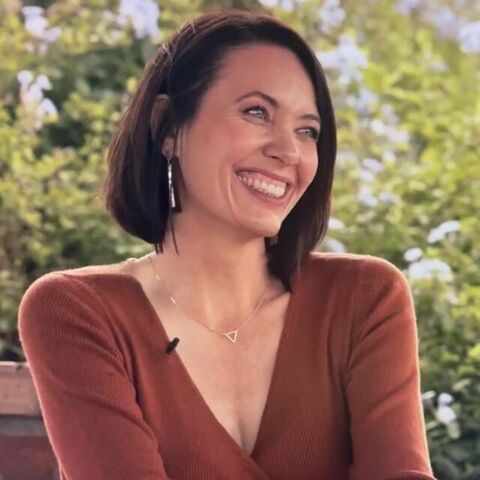
My name is Danielle Bann.
I'm a cognitive behavioral therapist,
Life coach,
Expert on the nervous system and anxiety,
And a meditation teacher.
And truly,
I have this passion to teach friendly breath work no matter where we sit in our thinking and processing abilities.
So let's start by dropping into.
And experience together.
My.
Sound my movement are all just sort of They are not necessarily set in rhythm and rule.
Instead,
I want you to listen to your own body and use that movement as regulation.
Feedback.
Evidence of regulation is not stillness but instead it is stillness.
How do we feel?
So I'm going to give you two tools,
One to drop in and then one to actually add to a toolkit.
You do not have to sit cross-legged.
You can have your legs up.
You can lie down if it's easier for you.
And maybe,
You know,
Move on a different part of your legs.
We're going to use three contact places.
As we drop in.
I want to show you.
The practice and the drop in first and then we will work together.
So take the palm of each of your hands and gently Press in to your knees.
Gentle movement.
Nothing too much,
Making sure that our shoulder doesn't sit here at our ears,
But instead they're rolled back.
Our spine is tall.
We're not hunched,
But instead we're getting space.
For that inhale.
And exhale.
So just light pressure.
Two Three.
This mimics.
And inhale.
And an exhale.
What's so beautiful about our nervous system is self-touch.
Gives us a sense of safety and regulation.
When it doesn't feel aggressive or forward.
Or feeling unrhythmatic.
So we're creating rhythm here.
Here in a moment,
When we connect our breath,
It'll be.
We'll talk about that in just a moment.
We come to the middle of our leg,
To our thigh here.
So,
Um.
.
.
Amazing.
Rhythm Mountain.
Creating.
That beautiful safety.
Is so necessary.
To be able to find.
Bye.
Regulation.
Moving now to where the hip bends.
At the leg pressing.
Gently here.
Have any soreness,
It's also a nice way to sort of work it out.
And.
Ew.
As we practice,
You can close your eyes or you can keep them open.
Don't allow the eyes to dart across the room,
But instead pick a focal point.
And lock in there.
You may feel it best to do that,
Or you might feel it best not to.
To simply.
Closer.
Let's start together palm not pressure with the whole hand that can definitely signal to the nervous system there's too much right too much stimulation so just using the palm You see how my fingers are.
And we're going to move from side to side here.
Gentle.
Don't worry about the breath yet.
Just create this drop in.
You may feel your body just naturally.
Begin to soften.
It's just beautiful.
Will add the breath.
In our next round.
We just want the body.
Y'all.
Heart rhythm.
Let's move now.
To the middle of our leg.
Giving that same applied pressure.
That safety.
You can let your neck move.
If it feels good.
Whatever you need.
Allow it.
Be curious.
Now let's move on.
To the back.
Creating that same applied pressure.
Here we tend to want to rush.
We want to allow those shoulders to sneak up towards the ears,
All of that.
Triggers the nervous system telling it that perhaps it's not as safe.
As it felt just a few moments ago,
So be aware.
That you're in the proper position.
Feel it.
Another one.
With it.
Be.
Beautiful.
We're gonna start again at our knees.
Here we're going to add our breath.
Now I have a rule for you.
We do not need to have massive inhales and exhales.
We want to go to what feels natural and not stimulating to you.
However deep that is.
It could be shallow.
It could be.
Longer.
Again,
I am a guide,
Not your regulation.
So hand,
Inhale.
Hand.
Here,
We're going to move slower to allow that intake and the Stella.
So here we go,
Inhale.
Exhale.
Inhale.
And exhale.
I'm going to allow you now to find that breath for yourself,
Right?
If closing your eyes feels good,
Do it.
If keeping them open feels best.
Do that.
Two more here.
Beautiful,
Now move to the thigh.
Inhale.
And exhale.
Inhale.
And exhale.
Now find the breath and the movement.
On your own.
Two more here.
And onto the back.
Inhale.
Exhale.
Inhale.
And exhale.
Find this rhythm on your own.
Slow.
Control.
At your own pace.
Three more.
Last one here.
Gently bring your hands together,
Keeping the palms together with slight pressure.
Leaving the fingers free.
And just feel that safety.
Feel that joint togetherness.
Of each side of your body coming together in harmony.
Take a nice inhale here.
Exhale it out.
If you feel the urge to sway,
To move.
Everything is allowed.
Again with an inhale.
And an exhale.
Beautiful.
Let's start our tool outside of our drop-in now.
But first check in with yourself.
How do you feel?
Do you feel more at peace?
Less stimulated.
More in control.
How?
The nervous system is sort of calling the shots today.
Ink that in your mind.
Let's hold on to it for just a moment.
This tool is especially helpful because it combines all the things that we need to find regulation.
When we have a nervous system,
A brain processing,
Mind-body connection that requires movement.
We're going to use our hand as the visual tool.
We're going to use another finger,
And it doesn't matter which side you use.
To be our guide and to create that pressure,
Acupressure.
And we're going to connect the breath.
In the movement.
So we're combining all the things.
That are really delicious.
To the nervous system.
When we think.
Y'all And thanks.
The world a little differently.
Right again,
ADHD.
Neurodivergency,
I believe,
Is a superpower.
But we have to have the right tool set to use it to our benefit.
So take your hand.
I'm going to show you.
I'm going to demonstrate.
And we'll work through it together.
Again,
We have our hand as the guide,
Our finger as the acupressure,
Our breath is the tool,
And the movement is our regulation.
What we're going to do is start at the wrist.
We're going to inhale to the top of the finger.
And then blow it out like we're blowing out a birthing candle on the movement down.
So that looks like this.
Very simple.
It combines all the things that we need.
We will then start at the other side at the bottom.
And repeat our steps.
We do not have to do this a long time,
20 to 30 seconds to allow that drop in to happen.
An additional piece to it to allow that groundedness to come in.
And you can do it three to five times,
Even more.
If you're in a space where you're overstimulated.
You could hide it under the table.
Then do some soft.
Gentle inhales and exhales while tracing the hands.
When you practice this tool,
What will happen if you start doing this,
ADHD especially,
We have a lot of hand movement.
Because we're looking for groundedness in our stimulation.
What happens is the brain begins to recognize the pattern.
And it will begin to.
Intentionally move the breath into that space of calming and groundedness.
So again,
This is a tool for practice.
So the brain takes the ritual and the habit and allows you to have access to it when you most need it.
So let's practice together.
So again.
Start at the bottom.
And inhale.
Allowing that exhale through the mouth.
Inhale.
Exhale.
Let's trace the other way.
Inhale.
And exhale.
Inhale.
And exhale.
Let's repeat it again.
Inhale.
And access.
Yeah.
Inhale.
And exhale.
And inhale.
And exhale.
Inhale.
.
.
And exhale.
Let's do it again.
Inhale.
And exhale.
Inhale.
And exhale.
End.
And exhale.
Inhale.
And backs.
One last time.
On your rhythm and your breath call.
We'll win you.
Then lunch.
Just shake out your hands gently,
Open and close them.
Sure.
Stretch your arms a little bit.
Bend and open the wrist.
And bring your hands back together,
Keeping your fingers free,
Giving the palms.
That gentle pressure.
I invite you to close your eyes if they're not already closed here.
Take a good inhale.
And exhale.
Begin to sway here with your inhale.
And exhale.
Even just go from one side inhaling.
And exhaling to the neck.
Keeping that gentle pressure.
One more inhale.
And exhale.
Bring your body.
To center.
Giving it permission to move if it still needs light.
Little movement.
Take another inhale.
Let it go.
Let your hands fall.
So whatever is comfortable.
And open your eyes.
Check in again.
How do you feel?
Even assign a number to it from 1 to 10.
Being so overstimulated.
Really having a hard time catching our breath,
And a want.
Which is good.
Grounded.
And feeling the body.
Connecting mind,
Body,
And mind.
Nervous system.
It feels good to allow movement.
In your breath work.
Give yourself permission.
Understand that pacing.
Meaning how quick.
Or slow.
Allows the body to recognize.
This ground.
You do not have to be still.
To be grounded.
You do not have to.
Stop allowing the nervous system to speak.
To give you what you need.
This is about permission and finding what works for you.
I hope this tool will serve you.
Come back to it at any time.
I look forward to seeing you again with more ADHD.
Anxiety and neurodivergent friendly breathwork and movement tools.
Until we meet again,
Take care of yourself.
And give yourself permission to be curious.
About what works best for you.