
The world’s largest free audio library for everyday wellbeing
Real people. Real life. Real time.
Retreat categories
All RetreatsYoga RetreatsWellness RetreatsMeditation RetreatsYoga Teacher TrainingWomen's RetreatsYoga Retreats in BaliYoga Retreats in United KingdomYoga Retreats in AustraliaYoga Retreats in ItalyFind Your Perfect Retreat
Discover transformative Retreats led by Insight Timer's best teachers.Reconnect, recharge, and return renewed.
The world’s largest free audio library for everyday wellbeing
Blog categories
Mental Health and WellbeingTips and GuidesScience and ResearchTraditionSpiritualityAt WorkTop Articles
How to Meditate
Meditation is something everyone can do. Practicing can help improve your health and wellbeing.
Explore MeditationMeditation Timer
Free meditation timer with customizable intervals, bells, and ambient sounds.
Meditation Timer Online
COURSE
The Dichotomy Of Control: Stoic Skills To Stop Overthinking & Find Peace
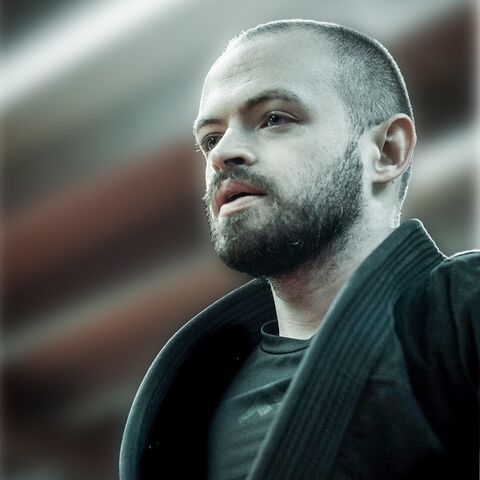
With Jon Brooks
Most of your suffering comes from one mistake: trying to control things that aren't yours to control. Other people's opinions. Outcomes you can't guarantee. A future that won't sit still. You already know you should "focus on what you can control." The problem is, knowing doesn't stop the 2 a.m. spiral. This 10-session course turns the Stoics' most famous idea into a set of trainable skills. Not a quote to agree with. Not a concept to admire from a distance. A practice you can run when you're anxious, triggered, or gripping an outcome you were never meant to guarantee. Each session is short, clear, and built around one concept with a guided exercise you can use immediately. This isn't about becoming cold. It's about becoming free: free from the constant need for things to go your way, so you can bring your energy back to the one place it belongs. Your judgements, your actions, your character. Complete one session per day. Then return to Session 7 every morning for 30 days. It's designed as a permanent anchor, and 30 days of use is where the shift stops being intellectual and starts being automatic. Already building a daily Stoic structure? The Stoic Morning Routine course builds a complete 10-minute morning ritual around the same foundation.
Meet your Teacher
read more
10 Days
1.8k students
5.0 stars
13 min / day
Happiness
English
5.0 (196)
Recent Reviews
Kay

October 16, 2026
Great course. I’m going to do it again. There are great “tools” to practice here and I want to take them in and really learn from what you are teaching here. Thank you 🙏
Elizabeth
October 15, 2026
I really liked this course.
Natalia
October 12, 2026
Jon, brilliant as always. His courses are just a pleasure, very clear with profund and meaningful knowledge. He is so far, one of my favourites teachers in this platform. 100% recommended.
Stacey
October 8, 2026
Incredible course! So practical, insightful, and life changing. Really enjoyed the teaching style, it’s designed with care and intention. Thank you 🤍🤍
Christine
October 5, 2026
Thank you
Josee
October 2, 2026
A course very well laid out , practical and with several images meant to help as many types of learners as possible . Jon has a gift with teaching ! I understand stoiscm better now but what inspires me the most are the 10 baby steps we were given to embrace this philosophy . Thank you 🙏
Kathleen
October 1, 2026
Helpful in navigating life. Thanks
Jess
September 30, 2026
Outstanding course! Perfect balance of philosophy & practical tools you can apply to your daily life. I will definitely be repeating this course to help lock it in!
Stacey
September 22, 2026
This course is one of the most remarkable, enlightning, and practical that I have ever encountered. I appreciate the way it was structured, the way information was given, and the practical aspects to apply to real life. Anyone looking for introspection and expansion, this is the course for you. Thank you Jon 💞💞💞✨✨✨
Theresa
September 21, 2026
What a fantastic course, thank you, I will really try to focus on this daily when I notice I'm being pulled in to things that aren't mine! Thank you so much for putting this on Insight Timer xx
Diane
September 19, 2026
I’ve done a lot of listening to stoicism both with you and others, this was a nice concise collection. I particularly like the Stoic archer and will continue to use that imagery. Thanks!
RD
September 17, 2026
Excellent course!
Andie
September 15, 2026
Excellent course!
Lucy
September 14, 2026
Brilliant
Diana
September 8, 2026
This has really helped me to understand why I get anxious
Raine
September 8, 2026
I absolutely loved this course. It was clear and applicable. And it is nice to know I am not alone in how my mind obsesses and replays. Is there a book you recommend to further my studies in this way of Being? Your voice and inflections were perfect. I enjoyed listening to you. Thank you for your efforts.
Evelyn
September 8, 2026
Excellent, Rich, meaningful and practical course that can be a life-changer. Great presentation and voice! Thank you!
Jackie
September 8, 2026
Thank you 🙏 Useful ideas. Clarity. A practical, positive way of being mindful. 'Mine, not mine' resonated with me.
Cassandra
September 7, 2026
I enjoyed this practice and see myself using it again
Katori
September 7, 2026
This was wonderful!!!
More from Jon Brooks

Trusted by 37 million people. It's free.

Get the app


