What if aging well was less about luck and more about what you know,
And more importantly,
What you do?
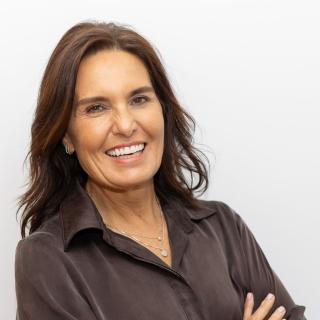
I'm Dr.
Linda Friedland,
And this is the Longevity Blueprint.
I used to think that if I wasn't doing something,
I was wasting time.
Rest was what happened after work.
After exercise,
After I'd attended to everybody else,
The children and anyone who needed my help.
After looking after my patients,
If there was any time left.
But over the years,
I've completely changed the way I think about recovery.
And the science is changing too.
The science is compelling.
Because we don't become stronger during the work.
We become stronger during the recovery phase.
One of the most fascinating concepts in longevity science is something called hormesis.
Hormesis simply means that a small amount of stress can actually make us stronger.
Exercise is the perfect example.
When we lift weights or challenge our muscles,
We're not making them stronger during the workout.
We are creating a small controlled stress.
Even causing a tearing of our muscles.
It's during recovery that our body adapts.
It repairs and comes back stronger.
Without recovery,
There is no adaptation.
And that principle doesn't just apply to exercise.
Our body responds to all kinds of stress,
A demanding job,
Poor sleep.
Emotional strain,
Even the constant notifications on our phones.
The body doesn't distinguish between them,
Real stress and apparent stress.
It simply experiences stress.
The trick isn't to avoid the stress.
The trick is to recover really well,
To recover enough that your body can adapt to it.
I think this is one of the biggest misconceptions in modern life.
We've become very good at pushing ourselves.
We're much less good at recovery.
One of the key systems involved is called our autonomic nervous system.
This automatic system is the system that regulates functions such as heart rate,
Breathing,
Blood pressure and digestion.
It has two important branches,
The sympathetic nervous system,
Our activation system,
Often called fight or flight,
And the parasympathetic nervous system,
Our recovery system,
Responsible for rest,
Repair and restoration.
The problem for many people today is that we spend Too much time activated and not enough time recovering.
We're always connected,
Always responding,
Always switched on.
And over time,
This affects our sleep.
Can cause inflammation,
Affects our metabolism,
And reduces our resilience.
One of the ways scientists now measure recovery is through something called heart rate variability or HRV.
Many smartwatches now track it.
Rather than simply telling us how fit we are,
HRV gives us an indication of how well our nervous system is recovering from the demands we've placed on it.
It is a reminder that recovery isn't just a feeling.
It's measurable biology.
And this becomes even more important after 50.
Our muscles repair more slowly.
Hormonal changes can affect our sleep and our metabolism.
We may not bounce back from stress quite as quickly as we once did.
That doesn't mean we should stop challenging ourselves.
It simply means recovery deserves the same attention as exercise.
So what does good recovery actually look like?
It starts with quality sleep.
You can watch the full sleep video.
Eat enough nourishing foods.
Make sure that we're having a lot of nutrient density.
Building moments of calm into busy days.
Allow time between hard training sessions.
And recognizing that sometimes the healthiest thing we can do is not push harder.
But pause.
I've stopped thinking of rest as something I have to earn.
I now see it as an essential investment in my current health and my future health.
Because healthy aging isn't about constantly doing more.
It's about finding the right balance between challenge and recovery.
The goal isn't simply to get through another busy week,
Another busy month.
It's to have the energy,
The resilience and the vitality to enjoy the decades ahead.
This is the Longevity Blueprint with Dr.
Linda Friedland.
Until next time,
Age boldly,
Live well.