What if aging well was less about lack and more about what you know,
And more importantly,
What you do?
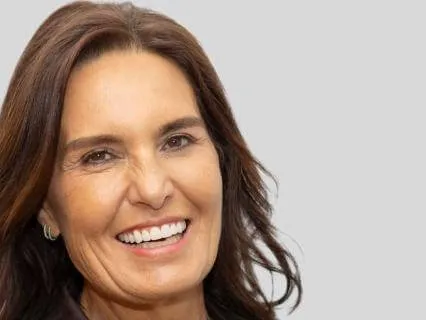
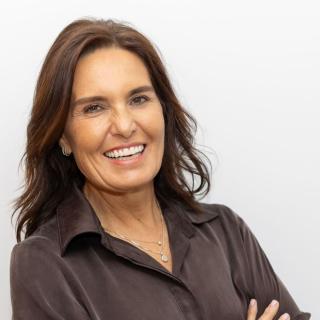
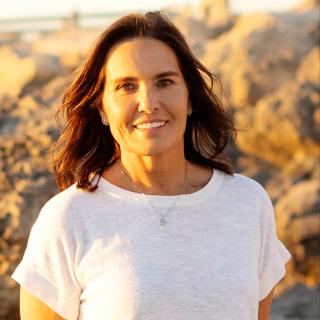
I'm Dr.
Linda Friedland,
And this is the Longevity Blueprint.
I want to make a confession.
I've never loved the gym.
And perhaps that surprises you.
After nearly four decades as a doctor,
Years of writing and speaking about healthy aging,
You might imagine I've always enjoyed lifting weights or following a structured strength diet.
But the truth is,
I didn't.
The dumbbells,
The barbells,
The machines,
They simply weren't my thing.
I loved movement instead,
Running,
Walking,
Swimming,
Cycling.
I still love those things,
Things that felt natural and enjoyable.
For years,
I thought that was enough.
Then something happened that completely changed my perspective.
I injured my back.
I developed a prolapsed extruded disc in my lower back with persistent back and leg pain that lasted almost two years.
Suddenly strength training was no longer something I thought might be beneficial.
It became something I really needed.
At the time.
.
.
The science around strength training and healthy aging.
Was rapidly evolving.
I began reluctantly,
Simply trying to recover.
But something unexpected happened.
Strength training didn't just improve my back.
It improved my stability,
My balance and my resilience.
And it made me realize that muscle isn't simply something that moves us.
Muscle,
In fact,
Behaves like an organ.
It's one of the most important organs we have for healthy aging.
For decades.
We focused on preventing disease.
That has been the focus of aging and disease prevention.
Managing cholesterol,
Controlling blood pressure,
Maintaining a healthy weight.
All of these things matter,
But longevity science is now highlighting something equally important.
Preserving muscle.
From around our 40s,
We gradually lose muscle mass and importantly,
Muscle strength.
This has a name,
It's called sarcopenia.
But this isn't simply about becoming weaker.
Muscle is one of the body's major metabolic organs.
It helps regulate our blood sugar.
It supports healthy mitochondria.
These are our cells energy factories,
Like little batteries in the cells.
And it also releases signaling molecules called myokines that influence inflammation,
Immunity,
Bone health,
And even the brain.
One of the most exciting discoveries is the connection between muscle and brain health.
When we challenge our muscles,
They release substances that increase what is called brain derived neurotrophic factor or BDNF.
I like to think of BDNF as almost like a fertilizer for the brain.
It helps our brain cells grow,
Connect and adapt.
It supports learning,
Memory and our cognitive resilience.
It's a reminder that our muscles and our brain are constantly communicating,
Almost talking to each other.
So what does this mean for us?
It means we need to rethink the whole concept of strength training.
This isn't about becoming a bodybuilder.
Yes,
It's about building strength that feels good and looks good,
But it's mostly about maintaining the strength and independence that allows us to keep living the life we love way into our older decades.
One of the simplest measures of healthy aging is grip strength.
It may sound surprising,
But the strength of your wrist,
The strength of your handshake is a remarkably good reflection of your overall muscle strength.
Research and the data has consistently shown that lower grip strength,
Weakness in our grip,
Is associated with frailty,
With falls,
With disability,
And even a shorter lifespan.
The good news is that building strength doesn't have to mean hours and hours in the gym.
Two or three resistance sessions a week,
20 to 30 to 40 minutes,
Can make a real difference.
This might include squats,
Lunges,
What's called farmer carries,
Resistance bands,
Or simple bodyweight exercises.
Could include Pilates,
Yoga,
The goal is simply to challenge your muscles a little more than yesterday.
And perhaps we also need to redefine what successful strength training looks like.
It isn't necessarily about having bigger muscles.
It's having a body that continues to serve you well.
Can you climb the stairs with ease?
Can you carry your heavy shopping bags or your suitcase when traveling?
Can you stay active?
Can you remain independent for as long as possible?
Those are the outcomes that really matter.
Because muscle may look like it's about appearance,
But it's mostly about possibility and functionality.
The wonderful thing is that muscle responds to training at every age.
It is never too late to become a little stronger.
And perhaps one of the greatest investments we can make in our future health is the strength we build today.
This is the Longevity Blueprint with Dr.
Linda Friedland.
And until next time,
Age boldly,
Live well.