What if aging well was less about luck and more about what you know,
And more importantly,
What you do?
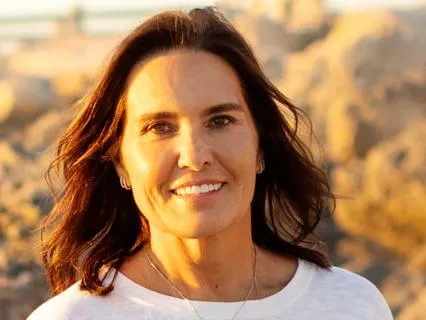
I'm Dr.
Linda Friedland,
And this is the Longevity Blueprint.
I want to clear up one of the biggest myths in health right now.
According to social media,
Cortisol is responsible for almost everything.
Belly fat,
Cortisol.
Poor sleep?
Cortisol.
Weight gain,
Cortisol.
Brain fog cortisol.
Everyone seems to be trying to lower their cortisol.
But here's the problem,
Without cortisol,
You wouldn't survive.
So perhaps it's time we understood what cortisol is and what it actually does.
For many years,
I lectured extensively on stress management and corporate performance and corporate health.
Back then,
Much of the conversation centered around adrenaline,
The hormone responsible for our immediate fight or flight response.
Today,
The spotlight has shifted almost entirely.
To cortisol,
Which is the second stage stress hormone.
But somewhere along the way,
We turned an essential hormone into the real enemy.
And cortisol is not the enemy.
It is one of the body's most important hormones.
It's produced by the adrenal glands,
Helps regulate our metabolism,
Our blood sugar,
Our blood pressure.
Immune function and inflammation,
Acute inflammation.
Calling cortisol simply the stress hormone is a little like calling your heart the exercise organ.
It's true,
But it barely scratches the surface.
I like to think of cortisol as our adaptation hormone.
It helps us wake up in the morning.
It gives us energy when we need it.
It helps us respond to illness,
To injury and to life challenges.
It is part of our body's incredible ability to adapt.
The problem isn't simply cortisol.
The problem is losing the balance.
Healthy cortisol follows a natural daily rhythm,
Guided by what is called our circadian clock,
Our body clock.
It rises in the morning,
Almost like an internal sunrise,
Helping us to feel alert and ready for the day.
Then it gradually declines,
Reaching its lowest levels at night,
So we can sleep and recover.
So the goal is not necessarily to lower cortisol.
The goal is the right cortisol at the right time.
Our bodies are beautifully designed to cope with short periods of stress.
A challenge appears.
Adrenaline helps us respond quickly.
Cortisol then steps in to help us sustain us through this challenge.
And once that challenge passes,
The system is designed to settle and cortisol should fall.
The problem is that modern life often doesn't give us enough opportunities to switch off.
Work pressures,
Family responsibilities,
Financial stress,
Poor sleep.
The constant stream of information coming at us every day.
We stay switched on,
We keep our phones next to us until we close our eyes.
The brain can begin receiving the message that the threat never really ends.
And it's not one stressful day that causes the problem,
It's months or years of never fully recovering.
Over time that normal stress response can become disrupted.
And this is where chronic stress and chronically high cortisol can begin to affect our health.
Sleep can suffer.
Blood sugar regulation can be affected.
Inflammation can increase.
Muscle can be lost.
Mood and resilience can decline.
But notice something important.
This doesn't happen because cortisol in and of itself is a bad hormone.
It happens because a normal survival response has been switched on for too long without enough recovery.
We need to switch off in order for our cortisol to fall on its own.
People often ask me whether they should have their cortisol measured.
And the answer is yes,
Sometimes.
But unlike cholesterol or blood sugar,
Cortisol is not a simple number that you can measure once.
It naturally rises and falls throughout the day.
It changes with exercise or illness or medication and sleep.
And even the stress of having a blood test can cause it to rise.
So unless we're investigating a specific medical condition,
A single cortisol result often doesn't tell the whole story.
If your doctor is checking your cortisol,
They may do a few cortisol levels.
The more important question we need to ask.
Is how well are we supporting the systems that regulate our cortisol.
That means protecting our sleep.
Moving our bodies.
Building muscle,
Eating nourishing food,
Creating enough moments of recovery.
Spend time outdoors maintaining meaningful relationships.
Enjoyment,
Which causes the release of dopamine,
Which also helps.
Regulate cortisol.
Make space for joy and purpose.
We can't remove all the stress from our lives,
And we wouldn't want to.
Some stress helps us grow.
This is the principle of hormesis,
The idea that a manageable challenge followed by adequate recovery can make us stronger and more resilient.
The goal isn't to eliminate cortisol.
It's to restore balance,
To challenge our bodies,
And then allow them to recover.
Resilience isn't about avoiding the stress,
It's about recovering really well from it.
And perhaps that is one of the greatest gifts we can give our future selves.
This is the Longevity Blueprint with Dr.
Linda Friedland.
Until next time,
Age boldly and live well.