How can we create deeper,
Wiser communities?
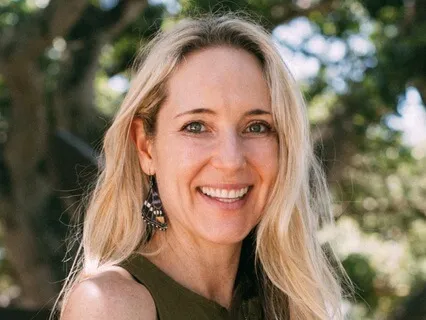
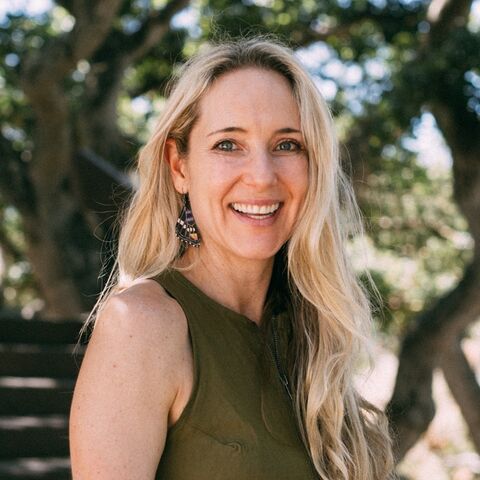
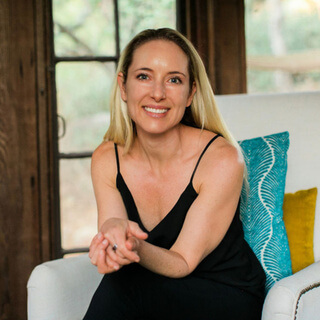
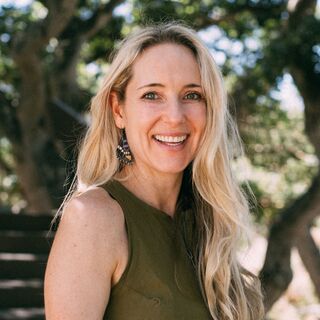
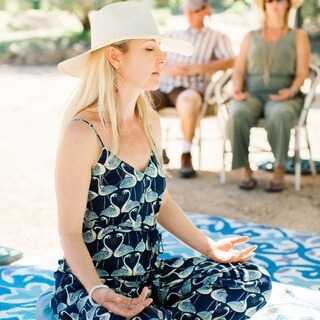
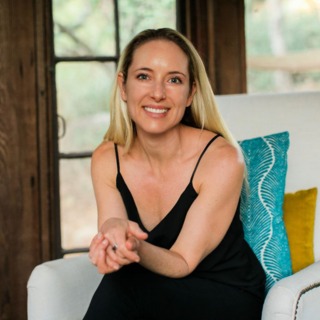
That's what we're going to explore today with Jennifer Rudolph Walsh on the Wise Effort Show.
Welcome back.
I'm Dr.
Diana Hill,
Clinical psychologist and the author of Wise Effort,
How to Focus Your Energy on What Matters Most.
And I'm starting to theme out this show a bit the way that I theme out the end of the book.
Last month,
We talked about wise effort and creativity.
This month,
We are talking about wise effort in community.
So I'm going to be having folks on that are demonstrations of wise effort in community.
And Jennifer Walsh is a force of wise effort in community in my little community of Santa Barbara,
But she's not so little.
She's doing big things in our little town.
She is a visionary leader in publishing,
Storytelling,
Community building.
For decades,
She was a top agent and board member at WME.
She represented some of the world's most influential voices.
She co-founded events like Oprah's The Life You Want Tour and Thrive with Arianna Huffington.
She created Together Live,
Which we'll talk a little bit about,
Which was a touring storytelling event that brought thousands of women together across the US.
She shared stages with changemakers like Glennon Doyle,
Abby Wambach,
Cheryl Strayed,
Jamia Wilson,
Weaving personal narrative with activism and spirituality and wisdom.
So she's lived a pretty big life.
But we're not going to talk about that as much on the show.
We're going to talk about why she opened a little bookshop called Godmothers in a little tiny community called Summerland,
Which is just down the road from where I live.
This little bookshop popped up and I was learning more about it and discovered here's Jennifer Walsh,
Who named it after Prince Harry's memoir came out,
Spare,
And he called her his fairy godmother.
Oprah came along and said,
Yeah,
That's what you should call this shop,
Godmothers.
So this is the town I live in.
It's pretty wild,
A little town with big people.
But who maybe are craving something different,
Craving community,
Craving conversation.
And we all need community.
Actually strengthening your local community is one of the things that is going to be a resilience factor for you as we move forward.
Local,
Local,
Local.
Do you know your neighbors?
Do you have a local bookshop that you go to?
Are you having deeper conversations with people?
Because as we've experienced,
It's sometimes weak ties that are actually are our strongest ties.
If you have,
Like I did,
A person to come take care of your chickens during a wildfire,
You feel safe in this world.
We're going to be all right.
But really the practice is three simple steps.
The first one is about getting curious and what are your values that you want to be in community with?
You'll hear Jennifer talk about things like intimacy and deep and diverse conversation.
And then also getting curious about what your unique genius is,
How you can use your genius to start a community or build on a community,
Deepen a community that's already there.
Go down your list of contacts and notice where you have some group texts going.
These are little mini communities that you could build out and go deeper with.
Whether your genius is in bookkeeping or in flower arranging or in organizing spreadsheets,
There is a community already here that you are part of that needs you.
So we get curious and we also get curious about the things that block us from stepping into community.
So when I had Jennifer come to the space to record this with me,
I was pretty nervous and I could feel myself closing down a little bit or wanting to stay in the space of kind of controlling this thing.
And we do that in communities.
We hold back a part of ourselves.
We don't dive fully in,
We don't show all of ourselves.
And when we do that,
We prevent the other person from showing themselves fully.
So we can drop that a little bit.
Drop our ego,
Drop our,
I think I am a somebody or you are a somebody and that we are all just humans.
It will foster more relaxed,
More welcoming communities.
And then finally,
We need to focus our genius.
What is worth putting your energy into?
And you'll hear Jennifer talk a little bit about the boundaries that she set,
The way that she focused up her energy in starting Godmothers.
She's putting a lot of energy into the curation of this magical space and not a lot of energy into trying to be relevant.
That's a thing running around trying to be relevant or be seen or be known.
And what does that pull energy from that is maybe a better place for you to put some energy into?
So we focus up our energy in the service of our values.
All right.
I think you'll enjoy this conversation with Jennifer Rudolph Walsh.
So I didn't share with you how I came to you,
How I found you.
And yes,
Through a mutual friend,
But it was before that.
My mom was driving home one day and called me and she said,
Have you been to Godmothers?
It's the best bookstore.
It's this new bookstore in Summerlin.
You've got to go.
Come with me.
You've got to go.
I talked to the owner for the longest.
This is my mom.
She'll talk to everyone.
I talked to the owner for the longest time.
I just loved her.
And as you do with your mom,
You kind of roll your eyes and I was like,
Yeah,
I'll get there.
I'll get there.
I don't know.
Godmothers sounds good.
I love bookstores.
But,
And then a mutual friend who has been reading and actually working through my book,
He said,
You got to go to Godmothers.
It's like the best.
So then he connected us and I went to this talk and I had no idea what I was getting into.
Except for just,
It was a great bookstore that my mom and this friend told me about.
Love it.
No,
I love it.
Listen,
It's not a store.
It's a storefront for magic and people come through the portal and they have the experience that they have with the information that they have at the time.
There's the walking in and the context,
The environment,
The space,
The energy that you've created,
The ladder that goes up to the very top of the ceiling with the books from floor to ceiling,
You're kind of transported into your imagination of the most magical bookshop would be.
Like I could climb all the way up to the,
Up the top of the ladder and pull that red one from the top.
I mean,
It's just like,
Like a child's imagination to him.
So tell us a little bit about how this all came about.
Well,
Um,
I answered a call from my soul,
My higher self,
Uh,
Five years ago to complete a chapter of my life that had been actually my whole life in New York city as a media executive.
And I realized that while I loved it every single solitary moment,
At some point my dream evolved and it no longer felt in alignment.
And so I concluded my,
My time there in January of 2020.
And I imagined that I would take a brief period of time off and then I would just jump right into something else because,
Um,
You know,
I wasn't a human being,
I was a human doing.
And even though I was 20 plus years into a spiritual practice,
I really hadn't spent any time seriously considering my relationship with nature.
I was so busy moving at the pace of culture that I really had never even tried to move at the pace of nature.
And so when COVID hit 12 weeks later,
I was forced to be still and it was then that it became very clear to me that I needed to move out west and I needed to commune with trees.
I needed to know where my food came from.
I needed to grow my own vegetables.
I needed to know where my waste was.
And I just committed myself fully to that process and found myself two miles up a mountain with many donkeys and goats and cows and growing my own food.
And I started what I call my sacred pause.
And I named it my sacred pause because retirement didn't sound quite right,
Even though I thought quite possibly I would be retired.
I wanted it to feel active.
And so sacred pause is what came to me.
And during those years of which I had no idea how long it would last,
It might last me the rest of my life,
I learned how to be and I also learned how to take control of the details of my own life,
Many of which I've been farming out for most of my career.
So I literally had to learn how to return a package,
How to do certain kinds of errands,
How to fill out insurance forms.
I mean,
A lot of things that in my corporate life had been done by other people.
And so I just embraced all of that and making sure that every day I asked myself the question of what do I need to do to protect my peace today and prioritizing the answer to that.
And it generally had me out in the mountains with the trees,
With the birds,
With my own animals and I just kind of luxuriated in that sacred pause for years,
Not knowing if there would be any kind of work element.
And then I'd say about four and a half years into it,
One morning in my meditation,
I realized that I was missing something.
I wasn't missing New York.
I wasn't missing being in a corporation managing people.
I wasn't missing having power or influence.
I wasn't missing the business of books,
But I was missing the tribe of book lovers.
I was missing getting together around an amazing book or an amazing idea and just diving into the deep end.
And so just that day I was having lunch with a dear friend of mine,
Victoria Jackson,
Who's my co-godmother,
And we shared this love of gathering people together in community.
And I shared my feeling that there was a space for a bookstore and for a gathering space.
And Godmothers was born at that lunch,
Sealed with a hug by the end of it.
And it was 15 months later from that lunch to when we opened our doors.
So there is an energy to you,
A genius to you that is,
Yes,
Being in community with book lovers,
But you also have a genius of gathering and highlighting people.
And I imagine as an agent,
That was sort of what you were doing.
You were like collecting gems from all over and helping them sort of polish themselves and shine in their own unique way.
And actually what led me to learn more about you is that we're at an event at Godmothers.
It's like a little small cozy bookshop that's like,
Yeah,
It's magical,
But on the stage you're with the co-founder of Twitter and the co-founder of Pinterest,
Whom you ask,
Who were your godmothers?
Who were the inspirations in your life?
And at the very end,
The co-founder of Pinterest says,
You,
Jennifer Walsh.
I was like,
Who is this woman?
I thought this was just like this little bookshop that my mom said I should go check out in Summerland.
I lived in Summerland when I was a teenager.
I lived on the beach,
In a little beach house in Summerland.
We'd walk up into the burger place,
You know.
So shout out to Tinkers.
Shout out to Tinkers and shout out to Summerland,
Which is now a different Summerland than the one I grew up in.
There's a quality to godmothers,
And I was thinking about fairy godmothers,
Because that's what Prince Harry calls you,
His fairy godmother.
Not just a godmother,
A fairy godmother,
Which has magical qualities.
And fairy godmothers bring magic to make things happen for other people,
But they don't solve their problems.
So whoever the protagonist in the story is has to figure it out,
But with the help of this fairy godmother,
Kind of clearing the path a little bit.
For Pinocchio,
The godmother,
You know,
It's like you need to be an integrity.
You can't tell lies.
Right.
So you've been a fairy godmother to many.
Sure.
Sure.
And I had a traveling tour as well called Together Live,
Where we went around the country and women,
Diverse and intersectional women,
Sharing their stories.
And so it's something that I've,
You know,
I've spent my life doing.
I mean,
As the kids say,
I'm not new to it,
I'm true to it.
But it is very nice to have a home base and to have that home base be 12 minutes from my house and to just,
You know,
Take all the best parts of my prior career.
And as I've said,
Just create like a little dollhouse with all my favorite parts of it,
Which is really about intimacy and truth and sharing stories and breadcrumbs for transformation and purpose.
Yeah.
But it's different.
I mean,
It seems like it feeds you in some way a little bit more or differently,
Or maybe at this stage in your life.
Yeah.
I mean,
I've always felt fully nurtured in everything that I've done.
It's just that I've allowed myself to evolve in that process.
And what once,
You know,
What once felt really nurturing no longer is in alignment with me.
So this is a snapshot of me now.
Yeah.
Yeah.
Yeah.
Yeah.
The sort of evolution of you or the developmental changes that happen through our different time zones of who we are.
Completely.
Yeah.
Yeah.
Let's go back to trees for just a minute,
Because you said you're a nature lover in trees.
Yes.
And I was thinking about Anne Lamott.
Did you see her when she came to Arlington?
No,
I didn't.
Oh,
She came to Arlington.
It was this year she came.
I know.
I know.
It was recently.
On her book,
Somehow.
And it was so good.
I love her.
She's so good.
It was so good.
I know.
I love her.
It was so good.
And one of the things that she said,
She was helping us with creative writing prompts.
And she said,
Because I used this prompt for a while,
She said,
A great writing prompt to start with is,
There was a tree.
And go from there.
Yeah.
And I was like,
Oh,
What would Jennifer,
What would you say to that?
Like there was a tree.
Well,
That's interesting because it's not going to be what you'd expect.
It's none of the incredible trees that I have fallen madly in love with and been in romance with for the last five years.
My parents planted an apple tree when I was born in my front yard.
And ultimately,
My parents got divorced and we moved when I was nine.
But the pride that I felt in that tree that had been buried as a testament to my birth and watching it grow was really kind of something that I can almost cry thinking about because I would just tell people,
You know,
That's my tree.
That was put there when I came home from the hospital to signify that I was there.
We were born at the same time.
Yeah.
What kind of apples?
Did you eat the apples?
Did you make pie with the apples?
I don't know.
We definitely did not make pie with the apples.
I feel like they were small,
Sour apples.
Yeah.
Yeah.
Well,
That's a.
.
.
But the tree,
The pride in that,
Like the connection to it.
So there was a tree that was planted when I was born.
Yeah.
And there's.
.
.
I'm Jewish and there's a big tradition of planting a tree in Israel in honor of somebody as a way of actually forest,
You know,
Making forest.
So there's always been like a sense of honor to me with,
You know,
Having had once a tree that was planted for me.
Yeah.
So divorce,
Parents at age nine.
And that's a story you write about.
You did a collection of essays from that tour that you were on.
We had to cancel that spring tour because of COVID.
And so all the people that were going to be joining us on the tour,
We all decided to do an anthology that we hoped we would sell on our fall tour.
But then I decided to close Together Live and just take my sacred pause.
But the anthology was born and I'm grateful that it was because it's a living testimony of those five years that we spent traveling the countries together,
Sharing our stories of belonging and forgiveness and desire.
You chose to tell the one about the divorce.
Correct.
Correct.
Yeah.
I'd like to know why you chose that one.
You have a lot of stories to tell,
I imagine.
Well,
The reason I chose to tell that story is because it was about a moment where my life turned from before and after.
And I think whenever there's a before and after moment,
We have so much opportunity for growth and knowledge and change and wisdom or shut down,
You know,
Fear.
And it was my first before and after moment,
Really.
It was my first time where I thought,
Well,
I know what my life is.
And as a result of a single meeting,
A family meeting,
I found out that I actually didn't know anything about how my life was going to go.
And I learned that it's not what happens,
It's what happens next.
You decide what happens next.
You decide your response to any given situation.
And so it was through that heartbreak and that blindsiding that I began my journey to self-discovery and personal agency.
So you're a nine-year-old girl.
Did you have siblings?
Yeah,
I had an older brother and sister,
So they'll do.
So you're the youngest of three and this divorce hits you and there's the before and after and it's the first time you realize it's not going to go the way you expected.
Now there's this great scene in the movie of the line which the wardrobe,
The warlock,
You know,
Whatever that is.
But the prince has woken up in the middle of the night and by the person who's helping,
Who's like basically his manservant,
He's dead asleep and his father's died and the house is being invaded and the manservant says to him as he's putting him in the wardrobe,
He says,
Everything you've ever known about anything is about to change.
And he closes the door and then the other door opens and he's in Narnia.
And that's exactly how I felt in that meeting.
Everything I've ever known about anything is about to change.
And then what?
Right.
And then what?
Yeah.
I was actually just coaching a client yesterday who today is telling their kids about a separation.
Very difficult.
Any way you slice it,
Being told that your parents are separating is a devastating psychological wound for a child.
And as you're an adult now,
I mean that wound sticks with people.
And can transform their life.
I know very little about you except for these little pieces.
And I was wondering,
Well,
Does that influence this longing for belonging?
We call our little stage our family meeting on Together Live.
I created a living room space and we called it the show The Family Meeting.
I mean,
I've been recreating The Family Meeting for 30 years.
I mean,
The part of the story is we had been told in the morning that we were going to have a family meeting.
I had never had a family meeting.
It sounded amazing.
Meetings,
Oh my God,
I was dying to go to a meeting.
And so I went to many of my friends and I said,
Well,
What happens in a family meeting?
And many of my friends told me,
It means you're going on a family vacation.
And I'd also never been on a vacation,
So I was like,
Oh my God,
What a day.
And I figured that we were probably going to be each advocating for our own ideas.
So I wanted to be prepared.
And I spent the day collecting information about Disneyland and I wanted to make a strong case for why I thought that was going to be an educational experience.
And heard all about it's a small world after all and all of this different stuff.
And so I came very prepared to advocate for my choice.
So one of my dear friends used to joke that,
You know,
I still think like I'm going to get my family back together and we're going to Disneyland.
But the truth is,
Actually,
I'm grateful that we never made it to Disneyland because what happened next is I wouldn't be sitting here without all the transformations that came as a result of that,
Of that very difficult family meeting.
Yeah,
It says a little something about you,
Too,
Where you go into the like the planning and the big and the Disneyland and the magic.
I mean,
Even back then,
It's like,
How am I going to make this vacation magical?
Totally.
And then the heartbreak.
Yeah,
The heartbreak.
Yeah,
A nine-year-old girl.
Yeah,
Well,
I didn't see it coming.
And definitely then for many,
Many years,
I called it my Scooby-Doo investigation.
I was,
You know,
Always investigating every possibility because I never wanted to be blindsided ever again.
And a big piece of my post-work sacred pause was closing the agency because,
I mean,
It's not a literal agency,
Closing the Scooby-Doo agency.
It was a metaphorical agency,
But closing the investigations because I realized that in 45 years,
I'd never actually solved a case.
And the reason why I'd never solved a case is because there's always a lower bottom.
People don't know why they do the things they do.
They know partial reasons.
They don't know the whole story.
And so I realized that I had spent my life trying to protect myself from ever being blindsided from behaviors that will always be there to blindside you.
Right.
Well,
These are the habits of just the human condition when we're hurt is we try and develop a story about it,
A narrative about it,
Which can be helpful sometimes,
But also can be very unhelpful because that narrative becomes the lens through which you view the whole world and you don't do things because of the narrative.
Correct.
Or we hold too tight to things or we avoid,
We run away.
All of the above.
All of the above.
So instead,
What I decided to do is just get really comfortable in the dark and really comfortable with not knowing and really comfortable with discomfort to be so far out at sea that I can't even see shore and still know that I'm home within myself.
And then it's come what may,
Then it's okay,
Let's see how it's going to roll.
And then we'll go in the direction of what feels like next right action and next right decision given whatever the circumstances are.
So you were Brene Brown's agent.
Indeed.
How can that not shape you and you kind of have to do the work if you're her agent?
She's had a profound,
Profound,
Profound impact on my life.
First of all,
I consider her a sister and a friend.
She's walked me through my sacred paws through the,
What I called driving by my high beams at night.
You can only see six feet in front of you and you're trusting that you're going to find your way home.
And for that whole five years,
Brene was there saying,
You got this,
My sister.
You're not alone in that car.
You got this.
So she's profound as a human being,
As well as obviously a profound philosopher,
Thinker,
Scientist,
Psychologist.
And yes,
She taught me to check the story.
But I also imagine part of that transformation to go from being the fairy godmother to,
You know,
Birthing people's books to going around the country telling people's stories.
I mean,
Telling people live in person stories to now sort of the downsizing of that to continuing to tell stories,
But in face-to-face humans.
Well,
My journey is a journey from scale to intimacy.
It's a very rare direction to go.
Most people are going in the opposite direction.
And because I've said I'm very comfortable with discomfort and not knowing,
I'm really okay with the fact that everybody's going in one direction and I'm going in the other direction because I'm not looking to be relevant or looking to compete with my former chapter.
I'm not looking for anything external,
Actually.
I'm looking for rightness.
I'm looking for alignment.
I'm looking for ease.
And I have found all those things at Godmothers.
How do you not let the relevance seep its way in?
I mean,
The gatherings that you have,
I mean,
I don't know.
I sensed it not from you or anyone on the stage,
But I sensed it from some of the folks in the room.
The questions that were asked,
You can smell it when someone's asking a question to sound smart.
Yeah.
This happens all the time when I'm doing like trainings for therapists and I'm like,
This therapist is just trying to sound smart right now.
They're using lingo to indicate that they know what they're talking about,
As opposed to a true,
Authentic,
I'm asking this question because I'm deeply curious.
Right.
So people are probably poking at you all the time.
They are.
For relevance.
They are.
For their own relevance to snuggle up against yours.
Sure.
Sure.
How do you keep your ground in that?
Well,
I mean,
I do have 30 years experience in that and I am a very grounded person and my boundaries are very clean.
I'm going to do what I say and say what I do.
If I can be of service and I wish to be,
I will be in exactly the way that I'll tell you I will be.
And if I can't be of service,
I won't be.
And it's just,
It's not an agony for me.
It's like,
It's as easy as recognizing my sister in a crowd.
I see what I can do.
I recognize it and I do what I say or not.
I mean,
People are always amazed that I have no cards up on the stage.
As I said,
As I joked with you,
I live a prepless life,
No homework.
So what does that mean to have no cards?
It means that I'm not going to be out there trying to sound smart.
My questions are not going to sound smart.
They might be smart.
I don't know.
But my questions are just going to be me opening myself to the moment,
Only listening and just trusting that what comes through will be what people need to hear.
It's just as much,
You know,
Magic as it is science.
You know,
Sometimes it's better than others.
Sometimes,
Literally,
I find myself pushing somebody in an interview to,
You know,
I had an interview recently where I read the book.
I felt it was a very angry book.
It was a book about grief.
And I opened it by saying,
First question,
I never have a plan of what I'm going to say.
I just sit down and my first question was,
There's a quote that I love.
I sat with my anger for long enough until she told me her real name was grief.
And the woman that I was speaking to said,
Well,
I'm not angry.
And I just said,
Have you read your book?
And that's how we started our interview.
I mean,
And it was wonderful.
It was wonderful.
But certainly,
There was,
You know,
There was an energy to it of,
You know,
This is what I'm bringing to this conversation.
I'm bringing it with love.
But I'm going to bring my perspective to the conversation.
Take note how I said,
Love has no pride.
Yeah,
For sure.
You have to like put pride down to show love.
For sure.
Love is brave,
Too.
Love is brave.
And at the end of sort of two thirds of the way through,
She goes,
I guess my book is kind of angry.
You know,
And I go,
Yeah,
Of course,
You're right to be angry.
Yeah,
You're right to be angry.
Yeah,
Because something's been taken from you.
That's exactly what I said.
Lost something.
That's exactly what I said.
Yeah.
And she said,
Well,
You know,
I'm angry for him,
For the person that had passed.
And I said,
It's okay to be angry for you,
Too.
Frances Weller talks about becoming an apprentice to grief,
Because otherwise,
That anger will dominate.
Yeah,
Sure.
It will seep out of your pores.
Yep.
So you were like,
Like rabid dogs in a basement.
Yeah,
It will find its way out.
Yeah,
You were calling it by its true name there.
Yeah,
Because I have no judgment.
Yeah.
Because it's just a it's just a human emotion.
Yeah.
Yeah.
So you may feel people pulling on you grabbing on you wanting the relevance.
I mean,
Like these articles in the,
You know,
The forums in the Vanity Fair,
And it's just,
Well,
When you go silent for five years,
Yeah,
When you literally drop off the face of the earth,
I mean,
Just in a hilarious kind of state of events,
My email,
Which had been the same for 30 years,
It went away.
And there was no bounce back.
Right.
So I,
I literally I disappeared to people.
Yeah.
I mean,
Not to the people who mattered to me.
But certainly there was,
You know,
An interest in seeing how this person who was,
You know,
So identified with New York,
So identified with culture,
So identified with entertainment,
Is suddenly found up a mountain,
Opening a little bookstore in a town called Summerland.
So sure,
People felt an interest.
And I'm,
You know,
I'm happy to share my journey if it's resonant for people.
But,
You know,
All that,
That other part of it,
The part that interests other people is the part that interests me the least.
So the part that interests me the most is what you've created in that bookstore.
So that the community.
Yeah.
The groups.
Well,
My partner,
Victoria Jackson,
And I are so,
We feel so gratified when people tell us all the time that in the nine months since Godmothers has been there,
They feel more part of a community than they have in the 25 years they've lived there.
And the most common thing we hear when people walk in the door is,
Oh,
I don't know why this makes me feel like crying.
And,
You know,
We know why.
Because it's the love.
It's a cathedral.
We built a cathedral.
Many floors.
Many floors.
You're curated by,
You know,
You kind of go into a section and it's like there's like little mini communities within the other communities.
You could go into a community of like wise women authors in this little section and a community of like the children's books and family kind of feel.
And it's what people are craving.
There is in psychology a whole new field of psychology,
Which is community resilience,
Collective resilience.
And they're looking more less at individual resilience.
And they're seeing that individual resilience is not actually enough and could be potentially dangerous if we're relying on the individual to be resilient.
So if you look at the plant world and you look at biomimicry,
All resilience is within the web of community.
So why wouldn't that be the same for humans?
Yeah.
This is our overstory.
Yeah.
Yeah.
Absolutely.
And then you said somewhere,
I think it was in the Vanity Fair article where you said,
I created this because it's what I,
I could quote you exactly.
You don't need to,
Please.
But it was basically,
I created this because it was exactly what I needed.
Oh,
For sure.
If I need it,
Then someone else needs it.
Absolutely.
I mean,
Absolutely.
Created for us,
First and foremost,
You know,
Out of that Lenny Kravitz song,
I built this garden for us,
You know,
It's,
So yes,
You know,
We were looking for that,
That sense of belonging and that sense of depth.
I mean,
If there is something that can be a little bit harder to find in Santa Barbara,
Amongst all the beauty and the nature and the incredible people and the animals and the,
You know,
All of that is a place to deepen,
You know,
To dive into the deep end of conversations.
I didn't have a forum to talk about important books,
But it was just these deeper conversations,
These conversations that tie together all the,
All the things that I,
That I love and that I believe in and that I want to learn from.
Conversations where we safely talk about our differences.
So it was more that specific.
That's what I meant by the diving into the deep end of conversation.
Yeah.
Have you found it more in other places or?
Well,
New York is that.
Yeah.
The entire city is that.
So it's,
You could literally get into a taxi cab and in a 25 minute conversation to where you got to your thing,
Have the deepest conversation you've ever had.
Learned all about some remote village in Poland where the driver lived,
Discussed differences and similarities and things.
I mean,
It's just a very different kind of interaction.
Whereas here people,
You know,
Are often asking,
What are you doing this afternoon?
And,
You know,
What a great day it is.
So it's just a different kind of interaction.
They're both great,
But I wanted both.
And so creating Godmothers was a big piece of that.
You know,
We now have people who feel very comfortable to come and talk about losing a loved one or talk about,
You know,
Mercy and justice and incarceration.
Talk about their stories,
Their memoirs of sexual abuse of whatever it is.
And there's a safe container where they know they can go,
You know,
As Rumi would say,
In the field beyond right doing and wrong doing.
You know,
We're in that open field and people feel that.
And so what are some of the groups that you have?
We have all sorts of events.
I mean,
We have,
Yes,
Every Saturday and every Monday we have events for children.
And then during the week we just have,
You know,
Different events that interest us.
You know,
We're very,
We're very both proactive and reactive.
You know,
We get excited about different ideas and we just build events that feel like they're in alignment.
And right now we're working on a whole new thing,
Which,
You know,
You'll be part of where we're going to be helping adults go back to school.
So one Sunday a month on our third floor,
We're going to have professors and other kinds of experts.
Three hours of teaching and,
You know.
Is this what you want to go back to?
We never want to stop school.
No,
There's nothing like learning and growing.
There's nothing like it except learning and growing in community.
And that is just,
That is just the delicious alchemical,
You know,
Formula.
Especially if you feel welcome and there's something around the corner,
That what's next kind of idea.
Like there's going to be something around the corner that's going to be fabulous and magical and I'm going to learn this and then I'm going to go to that.
And then I'm going to see that same person,
You know,
In that room that day sitting two seats away from me was the head of the school that I went to,
The high school I went to,
And my son's getting started in.
And I hadn't really talked with her much.
And so I got to,
When we went upstairs and we had a drink and we were chatting,
I got to talk to the head of school that my son's going to go to and connect with her in that space.
Well,
I call that the sacred web.
Yes.
And there's no coincidence.
So I love to be a place where people discover the web and rediscover the web because you already know about it.
But it's the remembering.
It's the reunion that I love and then bringing new people into that.
You know,
Back to your suggestion,
You know,
About a wall.
It's like,
That's not the energy for me.
And I'm a powerful energy holder,
Container holder.
I don't really,
People who are like that,
Who are exclusive,
They're not going to really spend too much time at Godmothers because they're not going to really find that it's a resonant experience for them because we're not looking for exclusive.
We're not looking for,
You know,
That kind of special VIP treatment.
We do have a group of founders called our Founders Circle.
And those are the families that allow us to have such a big and expansive program and so many wonderful people working there through their support.
We're able to just exhale a little bit because we live in a town with 1200 people.
So,
You know,
If we didn't have their support,
We'd have to worry more about transactions.
And in exchange of that,
We let them have early looks at our programming so they can reserve seats.
We do these cocktail meet and greets with the authors afterwards,
Which is,
You know,
Where you and I talked.
And we give them discounts.
But it's really such a glorious relationship.
And the Founders Circle are really kind of the spine of our community.
But they're people of all walks of life.
I mean,
It is costly,
But not so costly that,
You know,
A single mom who's a professor couldn't,
If chose to prioritize it,
It's the same thing as going to a gym membership.
Right,
But this is the nature of any organization.
If you talk to nonprofit organizations,
They're doing the same thing where they have the Founders Table.
Because you're contributing to keeping this going because you see the benefit to all.
It's a regenerative collective benefit.
Exactly.
So it's not just about them.
It's about also their children and their grandchildren and the communities as a whole.
Yeah,
So it's beautifully reciprocal and sustainable.
Yeah,
Which trees.
Yeah,
Back to trees.
That apple tree.
I hope it's doing well.
You should go drive by and see it someday.
That's like a pretty fun thing.
Go by and see your house.
Yeah,
I did.
Yeah,
Yeah,
Yeah.
Little green sour apples.
Exactly,
Exactly.
But it's not just about the apples,
Right?
It's not just about harvesting.
It's about enjoying.
Well,
Right.
Yeah,
I mean,
There's that like that.
There's that,
You know,
Hope is planting seeds under a tree you know you'll never sit under,
You know.
Well,
I brought a little gift for you.
I was like,
What am I going to give you?
That is something that you could take forward and give to others.
So I brought these.
These are little beans.
I'm going to find the perfect one for you that actually a monastic gave to me.
And she called it the interbeing.
Okay,
They're beautiful.
You know,
An interbeing,
Interbeing.
And it's a little yin yang.
Yeah,
It sure is.
So you see the little white and the black and the little black and the white and how we are in each other.
Yeah,
Thank you.
And also how,
You know,
We can transform.
I love that.
And grow.
So I'm going to give you a bunch of them and you can plant them in your garden.
Okay,
I will.
And you can grow them,
Little calypso beans and harvest them.
Share them.
Thank you so much.
What a thoughtful gift.
Thank you.
But thank you so much,
Jennifer Walsh,
For spending this time.
Oh,
Great.
People can go check out Godmothers.
It's a little weekend getaway.
It's a travel from LA app and go check it out.
We call them our pilgrims.
They come from San Francisco.
They come from Seattle.
They come from all over.
Yeah,
And you can plan ahead like you would plan ahead to go see a concert or go see a show.
But come and visit an event at Godmothers.
We have a little food truck outside where you can have some lunch.
Yeah,
Not just any food truck by like the best chef in Montecito.
But yes,
But it's a little food truck.
It's like that.
Like everything is quaint and adorable and curated to such a degree that you want to just look at the little vase of flowers a little longer because it's the most beautiful vase of flowers.
Well,
I always say if you want magic,
Be magic.
And we're being magic.
And it's contagious.
So people should come and get some.
Thank you so much for listening to this episode of the Wise Effort Podcast.
Wise Effort is about you taking your energy and putting it in the places that matter most to you.
And when you do so,
You'll get to savor the good of your life along the way.
I would like to thank my team,
My partner in all things,
Including the producer of this podcast,
Craig.
Ashley Hyatt,
The podcast manager.
And thank you to Bangold at Bell & Branch for our music.
This podcast is for informational and entertainment purposes only,
And it's not meant to be a substitute for mental health treatments.