
The world’s largest free audio library for everyday wellbeing
Real people. Real life. Real time.
Retreat categories
All RetreatsYoga RetreatsWellness RetreatsMeditation RetreatsYoga Teacher TrainingWomen's RetreatsYoga Retreats in BaliYoga Retreats in United KingdomYoga Retreats in AustraliaYoga Retreats in ItalyFind Your Perfect Retreat
Discover transformative Retreats led by Insight Timer's best teachers.Reconnect, recharge, and return renewed.
The world’s largest free audio library for everyday wellbeing
Blog categories
Mental Health and WellbeingTips and GuidesScience and ResearchTraditionSpiritualityAt WorkTop Articles
How to Meditate
Meditation is something everyone can do. Practicing can help improve your health and wellbeing.
Explore MeditationMeditation Timer
Free meditation timer with customizable intervals, bells, and ambient sounds.
Meditation Timer Online
COURSE
The Wisdom Of Our Wounds: Healing From Trauma
With Dr. Megan Kirk Chang
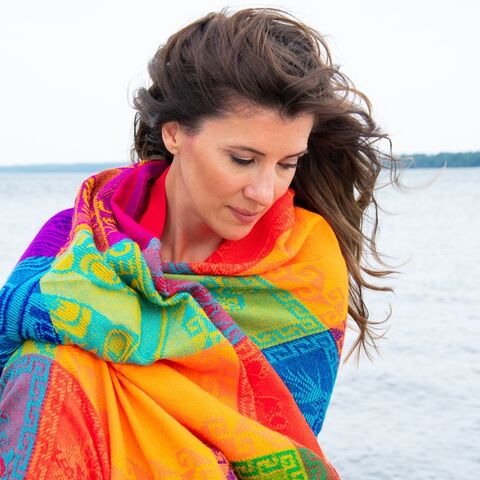
The experience of trauma imprints on every single fiber of our being - physically, emotionally, socially and mentally. Contrary to popular belief, trauma is not predominantly psychological. In this course, you will learn how to apply an integrated approach to healing from past trauma by understanding the neurobiological mechanism of the trauma response that occurs in the brain and the body. You will learn about the centrality and wisdom of the body in helping us to survive, process and heal from trauma by drawing on the current scientific evidence. Each session ends with a gentle and compassionate guided mindfulness practice that embeds somatic sensory awareness techniques to return the nervous system to a regulated state. By the end of this course, you will reconnect and rediscover the inner wisdom and resilience you have carried within you all along to help you survive and heal from unresolved trauma. This course is for anyone who has experienced any personal hardship or traumatic event that they still feel affects them, or for anyone who may be lovingly supporting a friend or family member through their own healing. **Disclaimer** Given the nature of this course focuses on healing from trauma of any kind, there is a potential for triggers or emotional discomfort to arise during or after listening to the educational content and somatic practices. This course does not replace the advice or guidance of a trained and qualified mental health practitioner and is designed to be educational in nature. It is also recommended that listeners who have recently been traumatised or are actively healing from acute symptoms have support by a trained and qualified professional. (Image credits to Taryn Elliott)
Meet your Teacher
read more
15 Days
27.9k students
4.9 stars
20 min / day
Healing
English
Ask your teacher
This course includes 344 community questions and 269 audio replies from Dr. Megan Kirk Chang. The community classroom and teacher audio replies are only available via the app.
4.9 (772)
Recent Reviews
Irene

September 5, 2026
I just finished day 15 and I’m going to start all over again. So profoundly helpful.
Linda
August 9, 2026
Absolutely wonderful! Finally understood Trauma as a life long struggle in not being in touch with myself. The mask is a fabulous symbol used as hiding from oneself. Namaste.
MsDaisy
July 27, 2026
Wonderful course! Thank you.
Sophie
April 18, 2026
I found this course very insightful, informative, gentle and inspiring. Although some of the material touched on things I had learned before, I really valued the way Dr Megan Kirk Chang put it together. The bite-sized sections, with a meditation included, felt far more manageable, especially being spread over 15 days. For those of us living with complex trauma and chronic health issues, exhaustion is a real factor, and many trauma talks can simply feel too long-winded and too much to take in. This course felt caring, compassionate and realistic in its pacing, and I also appreciated its holistic approach. The questions at the end were thoughtful and helped me focus not only on areas that may still need attention, but also on how much progress I have made over the years. I am very grateful for this course and found it very useful.
Jessica
February 18, 2026
Great course! Very informative and supportive.
Caroline
December 27, 2025
Simply just profound and amazing. Insightful and practically helpful.
Amy
December 27, 2025
Thank you. Knowing some of the science helped me so much.
Rich
December 14, 2025
Another great course Megan on how to heal from our trauma. Thank you for giving us tools and understanding about what happened to us and how it impacts us today and what to do about it.
Nicole
November 6, 2025
A wonderful course. I learned a lot about myself and my trauma. I am now able to honor the wounded parts of myself.
Sarah
November 3, 2025
I loved Megan’s course! I found it very informative and informational; I learned why I do so many of the trauma responses that I have in this course and helped me to see them as normal, helping me to start to realize that nothing’s wrong with me. It really is just a natural response. I also appreciate how authentic and vulnerable she’s willing to be in this course, to help get a full understanding of the topics discussed. I love that I can go back to different course anytime for a refresh as I continue to work on self-compassion. It also was great having this course to help me along in my therapy work. A great course for any survivor whether just starting on their healing journey or continuing to work through it, as I am! 10/10
Jill
July 12, 2025
My deepest thank you Megan for this course and the obvious heart felt thought and hard wotk that went into it. Your sincerity, genuineness and integrity shone though like a beautiful sunrise over waves in the ocean, glistening and gently moving with honesty and grace, never pushing or rushing, radiant, graceful, and quietly powerful, never hurried or forceful. Your knowledge, delivery and exceptional care, encouragement and support for those of us who joined you on this course was truly amazing. Bless you. 🙏🪷
Mary
June 10, 2025
I experienced multiple profound, life altering moments in this course. I am not exaggerating nor do I say that lightly. Take the course. Change your life.
Jill
May 30, 2025
Thank you very much for offering this excellent course. Each day, you provided helpful, insightful information, as well as beautiful guided meditations. I especially loved Day 15, regarding the importance of identifying our trauma masks. Thank you 💗💗🪷🪷
Lucy
May 17, 2025
Amazing course - I feel so seen and validated by Megan’s kind approach and her deep knowledge of the subject. I took it really slowly to let it sink in, and I’m sure I’ll take the course again. Thank you 🙏 ❤️
Jen
April 28, 2025
Excellent content, practical tips, gentle delivery. Thank you so much for your part in my healing journey. Love, light, and gratitude to you! 🩷☀️🙏🏻
Cindy
April 13, 2025
Much needed and timely support. Namasta. ❤️
Peg
December 28, 2024
This course is thoughtfully and lovingly presented. It offers a balance between a comprehensive and mindful approach. Thank you 🙏🏼
Dani
December 18, 2024
Wow! So powerful. It has really helped me through a C-PTSD relapse. There’s still more work to do, but spending 15 days with Megan has been extremely helpful, calming and impactful.
Michele
December 6, 2024
There is a lot of very helpful and validating information on the effects of CPTSD and how to heal from it packed into this course, whether you are just beginning this journey, or already on the path. Highly recommend!!
Camellia
November 24, 2024
This is a brilliant, well organized course, exploring what trauma is and where it lands in the body. Thank you for putting such care into it’s creation! I feel like it’s helped me take an important step toward honouring my own trauma and living more consciously. 🙏
More from Dr. Megan Kirk Chang
Trusted by 37 million people. It's free.

Get the app


