Hello.
Welcome to Sleep Stories with Steph,
Your go-to romantic podcast that guarantees you a calm and entertaining transition into a great night's sleep.
Come with me as we immerse ourselves in a romantic journey to a time long since forgotten.
But before we begin,
Let's take a moment to focus on where we are now.
Take a deep breath in through your nose and let it out with a long sigh.
That's it.
Now close your eyes and feel yourself sink deeper into the support beneath you.
It is time to relax and fully let go.
There is nothing you need to be doing now and nowhere you need to go.
Happy listening.
Chapter Eight Oliver walks to London.
He encounters on the road a strange sort of young gentleman.
Oliver reached the style at which the by-path terminated and once more gained the high road.
It was eight o'clock now.
Though he was nearly five miles away from the town,
He ran and hid behind the hedges by turns till noon,
Fearing he might be pursued and overtaken.
Then he sat down to rest by the side of the milestone and began to think for the first time where he had better go and try to live.
The stone by which he was seated bore in large characters an intimation it was just 70 miles from that spot to London.
The name awakened a new train of ideas in the boy's mind.
London,
That great place.
Nobody,
Not even Mr.
Bumble,
Could ever find him there.
He had often heard the old men in the workhouse,
Too,
Say that no lad of spirit need want in London and that there were ways of living in that vast city which those who had been bred up in country parts had no idea.
It was the very place for a homeless boy who must die in the streets unless someone helped him.
As these strange things passed through his thoughts,
He jumped upon his feet and again walked forwards.
He had diminished the distance between himself and London by four miles more before he recollected how much he must undergo ere he could hope to reach his place of destination.
As this consideration forced itself upon him,
He slackened his pace a little and meditated upon his means of getting there.
He had a crust of bread,
A coarse shirt and two pairs of stockings in his bundle.
He had a penny,
Too,
A gift of salaries after some funeral in which he'd acquitted himself more than ordinarily well.
A clean shirt,
Thought Oliver,
Is a very comfortable thing and so are two pairs of darn stockings and so is a penny,
But they're small helps to a sixty-five miles walk in wintertime.
But Oliver's thoughts,
Like those of most other people,
Although they were extremely ready and active to point out his difficulties,
Were wholly at a loss to suggest any feasible mode of surmounting them.
So,
After a good deal of thinking to no particular purpose,
He changed his little bundle over to the other shoulder and trudged on.
Oliver walked twenty miles that day,
And all that time tasted nothing but the crust of dry bread and a few draughts of water,
Which he begged at the cottage doors by the roadside.
When the night came,
He turned into a meadow and,
Creeping close under a hay-rig,
Determined to lie there till morning.
He felt frightened at first,
For the wind moaned dismally over the empty fields,
And he was cold and hungry and more alone than he had ever felt before.
Being very tired with his walk,
However,
He soon fell asleep and forgot his troubles.
He felt cold and stiff when he got up the next morning,
And so hungry he was obliged to exchange the penny for a small loaf in the very first village through which he passed.
He had walked no more than twelve miles when night closed in again.
His feet were sore and his legs so weak they trembled beneath him.
Another night passed in the black damp air,
Making him worse,
And when he set forward on his journey the next morning,
He could hardly crawl along.
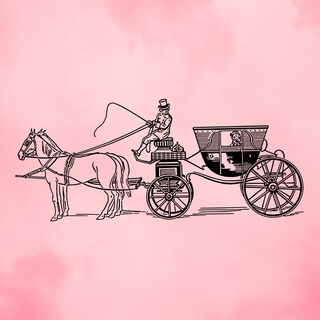
He waited at the bottom of a steep hill till a stagecoach came,
And then begged of the outside passengers,
But there were very few who took any notice of him,
And even those who told him to wait until they got to the top of the hill,
And then let him see how far he could run for half a penny.
Poor Oliver tried to keep up with the coach a little way,
But he was unable to do it,
By reason of his fatigue and sore feet.
When the outside saw this,
They put their halfpence back into their pockets again,
Declaring he was an idle young dog and didn't deserve anything.
Then the coach rattled away and left only a cloud of dust behind it.
In some villages large painted boards were fixed up,
Warning all persons who begged within the district they would be sent to jail.
This frightened Oliver very much and made him glad to get out of those villages with all possible expedition.
In others he would stand about the inn-yards and look mournfully at everyone who passed,
A proceeding which generally terminated in the landlady's ordering one of the post-boys who were lounging about,
To drive that strange boy out of the place,
For she was sure he had come to steal something.
If Oliver begged at a farmer's house,
Ten to one but they threatened to set the dog on him,
And when he showed his nose at a shop they talked about the beadle which brought Oliver's heart into his mouth.
In fact,
If it had not been for a good-hearted turnpike man and a benevolent old lady,
Oliver's troubles would have been shortened by the very same process which had put an end to his mother's.
In other words,
He would most assuredly have fallen dead upon the king's highway.
But the turnpike man gave him a meal of bread and cheese,
And the old lady,
Who had a shipwrecked grandson wandering barefoot in some distant part of the earth,
Took pity upon him and gave him what little she could afford with such kind and gentle words,
And such tears of sympathy and compassion that they sank deeper into Oliver's soul than all the sufferings he had ever undergone.
Early on the seventh morning after he had left his native place,
Oliver limped slowly into the little town of Barnet.
The window shutters were closed,
The street was empty,
Not a soul had awakened to the busyness of the day.
The sun was rising in all its splendid beauty,
But the light only served to show the boy his own lonesomeness and desolation,
As he sat with bleeding feet and covered with dust upon a doorstep.
By degrees the shutters were opened,
The window blinds drawn up,
And people began passing to and fro.
Some few stopped to gaze at Oliver for a moment or two,
Or turned round to stare at him as they hurried by,
But none relieved him or troubled themselves to enquire how he came there.
He had no heart to beg,
So there he sat.
He had been crouching on the step for some time,
Wandering at the great number of public houses,
Gazing listlessly at the coaches as they passed through,
And thinking how strange it seemed that they could do with ease in a few hours what it had taken him a whole week of courage and determination beyond his years to accomplish.
When he was roused,
By observing,
A boy who had passed him carelessly some minutes before had returned,
And was now surveying him most earnestly from the opposite side of the way.
He took little heed of this at first,
But the boy remained in the same attitude of close observation so long that Oliver raised his head and returned his steady look.
Upon this,
The boy crossed over,
And walking close up to Oliver,
Said,
Hello McCovey,
What's the row?
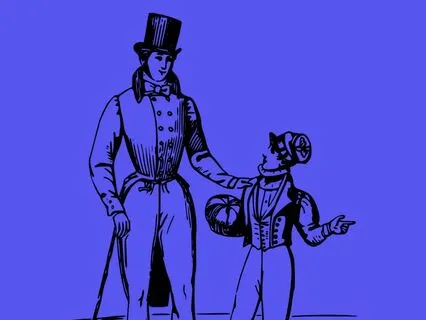
The boy who addressed this enquiry to the young wayfarer was about his own age,
But one of the queerest looking boys Oliver had ever seen.
He was a snub-nosed,
Flat-browed,
Common-faced boy enough,
And as dirty a juvenile as one would wish to see,
But he had about him all the airs and manners of a man.
He was short for his age,
With rather bow-legs and little sharp,
Ugly eyes.
His hat was stuck on the top of his head so lightly that it threatened to fall off any moment,
And would have done so very often if the wearer had not a knack of every now and then giving his head a sudden twitch,
Which brought it back to its old place again.
He wore a man's coat,
Which reached nearly to his heels.
He turned the cuffs back,
Halfway up his arm,
To get his hands out of the sleeves,
Apparently with the ultimate view of thrusting them into the pockets of his corduroy trousers,
For there he kept them.
He was altogether as roistering and swaggering a young gentleman as ever stood four feet six,
Or something less,
In the blutches.
Hello,
McCovey,
What's the row?
Said this strange young gentleman to Oliver again.
I'm very hungry and tired,
Replied Oliver,
The tears standing in his eyes as he spoke.
I've walked a long way.
I've been walking these seven days.
Walking for seven days?
Said the young gentleman.
Oh,
I see.
Beaks order,
Eh?
But,
He added,
Noticing Oliver's look of surprise,
I suppose you don't know what a beak is,
My flash companion.
Oliver mildly replied he'd always heard a bird's mouth described by the term in question.
My eyes!
How green!
Exclaimed the young gentleman.
Why,
A beak's a magistrate,
And when you walk by a beak's order it's not straightforward,
But always going up and never coming down again.
Was you ever on the mill?
What mill?
Inquired Oliver.
What mill?
Why,
THE mill,
The mill that takes up so little room it'll work inside a stone jug,
And always goes better when the wind's low with people than when it's high,
Because then they can't get workman.
But come,
Said the young gentleman.
You want grub,
And you shall have it.
I'm at a low water mark myself.
Only one bob and a magpie,
But as far as it goes I'll fork out and stump.
Up with you on your pins,
Then.
How then,
Maurice?
Assisting Oliver to raise,
The young gentleman took him to an adjacent childless shop,
Where he purchased a sufficiency of ready-dressed ham and a half-gordon loaf,
Or as he himself expressed it,
A folpony bran,
The ham being kept clean and preserved from dust by the ingenious expedient of making a hole in the loaf by pulling out a portion of the crumb and stuffing it therein.
Taking the bread under his arm,
The young gentleman turned into a small public house and led the way to a taproom in the rear of the premises.
Here a pot of beer was brought in,
By direction of the mysterious youth,
And Oliver,
Falling to at his new friend's bidding,
Made a long and hearty meal,
During the progress of which the strange boy eyed him from time to time with great attention.
Going to London?
Said the strange boy when Oliver had at length concluded.
Yes.
Got any lodgings?
No.
Money?
No.
The strange boy whistled and put his arms into his pockets as far as the big coat-sleeves would let them go.
Do you live in London?
Inquired Oliver.
Yeah,
I do,
When I'm at home,
Replied the boy.
I suppose you want some place to sleep in tonight,
Don't you?
I do indeed,
Answered Oliver.
I've not slept under a roof since I left the country.
Don't fret your eyelids on that score,
Said the young gentleman.
I've got to be in London tonight,
And I know a spectacle old gentleman has lived there,
What will give you lodgings for nothing,
And never ask for the change,
That is,
If any gentleman he knows introduces you.
And don't he know me?
Not in the least,
But no means certainly not.
The young gentleman smiled as if to intimate the latter fragments of discourse were playfully ironical,
And finished the beer as he did so.
This unexpected offer of shelter was too tempting to be resisted,
Especially as it was immediately followed up by the assurance that the old gentleman referred to would doubtless provide Oliver with a comfortable place without loss of time.
This led to a more friendly and confidential dialogue,
From which Oliver discovered his friend's name was Jack Dawkins,
And that he was a peculiar pet and prodigy of the elderly gentleman before mentioned.