Hello my friend,
Welcome to humorously dull history for sleep.
My name is Stephen Dalton and it is my hope that that as I tell you lots of different facts about particular periods in history tonight,
You find me so incredibly boring that you fall asleep very quickly.
And maybe.
.
.
Even with a smile upon your face.
It is humorous history after all.
Tonight I'll tell you the humorously dull history of a medieval peasant.
Yes,
We'll hear about a day in the life of a medieval peasant called Clive.
I've called him Clive,
And his wife Sandra.
Because I want them to feel less like distant figures from a history book.
And more like people you might actually know.
Except they live in the year 1300.
And own a horse called Philip.
So,
Just before we get started,
Allow yourself to settle into this moment.
Leave the day that was behind.
Feel the support.
Of whatever you lie upon.
If your eyes aren't closed yet.
Allow them to close.
Whatever has been.
Has been.
It's history now.
Whatever will be.
Will be.
All you have is this moment.
And my voice.
So allow your curiosity to be a part of this pleasant experience as I tell you the humorously dull history of a medieval peasant.
Part one.
In which Clive wakes up.
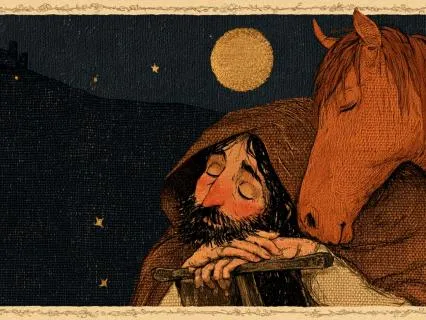
With a horse in his face.
It is somewhere around the year 1300,
On the edge of Dartmoor in Devon,
And a medieval English peasant named Clive is about to wake up.
Clive is fictional,
But almost everything surrounding him today will be drawn from what we know about the lives of ordinary rural people.
In medieval England.
We are putting him in Devon.
Partly because medieval longhouses survived there particularly well.
And partly.
Because if we are going to spend an entire day with a medieval peasant.
.
.
It seems only right.
That at some point it should rain.
And rain it does in Devon.
Clive wakes up.
Because something warm and wet.
Is moving across his cheek.
For several seconds he lies completely still.
He is not yet awake enough to identify the sensation.
But he is awake enough to know that he dislikes it.
Then he opens one eye.
A horse is looking at him.
The horse is called Philip.
Philip licks him again.
This is not,
Strictly speaking,
How Clive intended to begin Tuesday.
The explanation is relatively simple.
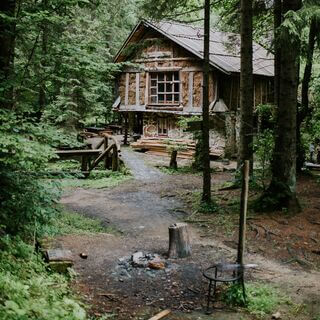
Clive lives in a longhouse.
A type of rural farmhouse.
In which humans occupy one end.
And livestock can be used at the other.
Excavated medieval settlements,
Such as Hound Tor on Dartmoor,
Contained precisely these sorts of buildings.
With the animal buyer at the lower end.
And the human living space.
Uphill from it.
There is normally a separation between the two areas.
Normally.
Unfortunately,
Clive returned home last night.
After what medieval people might call an ale.
Meaning not merely as a drink.
But a social gathering.
At which considerable quantities of ale could be consumed.
Medieval English Communities held all sorts of ales around weddings,
Festivals,
And local events.
And contemporary churchmen.
Complained often enough about excessive drinking.
To reassure us that the medieval English were perfectly capable of making a bad decision.
On a Monday night.
So.
.
.
Clive failed to secure the barrier.
Between the humans and the animals properly.
The horse.
Has discovered this.
Philip has therefore spent part of the early morning exploring the human end of those.
And has eventually located Clive.
Who smells faintly of yesterday's ale,
And possibly oats.
Philip considers both encouraging.
Clive pushes his nose away.
Philip returns.
Clive pushes him away again.
Philip interprets this as an exciting new game.
There are moments in history.
When humanity advances through courage.
Ingenuity.
And determination.
This is not one of them.
This is a hungover agricultural labourer losing a territorial dispute with a horse before sunrise.
And we should correct one romantic medieval idea immediately.
Clive probably did not spend last night drinking goblets of mead.
Beside roaring fire.
Well,
Somebody played a lute.
Mead existed,
Certainly.
But for an ordinary English peasant.
Ale was the everyday drink.
Wine was much more associated with wealth.
While ale was brewed constantly.
And consumed across ordinary society.
Clive's headache has a much less cinematic origin.
He did not spend the evening shouting.
Another horn of honey wine.
He spent it drinking ale with a man named William.
While William explained,
For the fourth time,
Why the Reeve had measured his barley incorrectly.
Some experiences do not change very much.
Clive finally sits up.
His bed is not a modern bed.
With a sprung mattress,
Duvet,
Memory foam,
And fourteen decorative cushions that nobody is allowed to sleep on.
They may be sleeping on a simple wooden frame or raised platform.
With bedding made from straw or other plant material.
Covered by blankets or woollen textiles,
According to what the household can afford.
He shares neither the privacy.
Nor the abundance of possessions.
That we associate with a modern bedroom.
In fact.
.
.
Calling this a bedroom.
Is already being generous.
The main living area of an ordinary medieval house.
Us to do several jobs.
People sleep here.
People eat here.
People work here.
Food is stored here.
Tools appear here.
Smoke appears almost everywhere.
And at the other end of the building there are animals.
A modern estate agent would describe it as Open plan rural living.
The photographs would be taken very carefully.
The listing would mention original natural flooring,
Without specifying how much of the natural world is currently attached to it.
Clive's wife,
Whom we will call Sandra,
Is already awake.
Zandra has been awake for some time.
She is looking at Clive.
This is not an affectionate look.
It is the particular expression of a person who went to bed sensibly,
Woke up sensibly,
And has now discovered that her husband has allowed a horse into the sleeping area.
Clive explains that Philip must have pushed the barrier open.
Agnes looks at the barrier.
Agnes looks at Clive.
Clive decides not to develop the argument.
Marriage was invented long before written records,
Which means humanity has had thousands of years to perfect the moment when one partner realizes that further explanation will only make things worse.
Outside.
Dawn is beginning.
There is no alarm clock beside the bed.
No phone.
No gentle electronic birdsong,
Gradually increasing in volume.
Clive's morning is controlled by light,
Season,
Animals,
Church bells,
Where they can be heard,
And the unavoidable fact that agricultural work tends to announce itself fairly clearly.
A cow does not care whether you press to snooze.
Neither does Philip the horse.
Philip is currently attempting to eat something that might once have been part of Clive's bedding.
Clive gets dressed.
For an ordinary rural man around this period,
That means linen next to the skin.
Woolen clothing over it.
Hose covering the legs.
And practical shoes,
If he is fortunate enough to have a serviceable pair.
Clothing is valuable.
It is repaired,
Reused.
And expected to survive rather longer than anything bought during a modern online sale,
Because it was reduced by 40%.
Clive does not stand in front of a wardrobe,
Thinking.
I have nothing to wear.
Life has things to wear.
They are the same things he wore yesterday.
The crisis is resolved immediately.
He pulls on a woollen tunic.
It smells of smoke.
Everything smells slightly of smoke because the household fire has been filling the interior with it for years.
There may be an opening or simple venting arrangement for smoke,
But medieval rural houses are not operating with the kind of chimney system that will later become common.
If Clive could be transported into a modern kitchen and shown an extractor fan,
He would probably stare at it with the reverence we reserve for space travel.
You mean.
The smoke.
Simply leaves.
Yes Clive.
Every time.
Yes,
Every time.
Clive would immediately begin questioning whether the 21st century had any serious problems at all.
Before leaving the house.
There is washing.
We should abandon another cliché here.
Medieval peasants were not people who had never encountered water,
And simply developed an immunity to their own smell.
People washed their hands and faces.
And cleanliness measured.
Even though standards,
Facilities and bathing habits were obviously very different from ours.
For our friend Clive does not step beneath a rainfall shower and select forest mist shower gel.
He has water.
The water is cold.
This concludes the SPUR experience.
He splashes his face.
Philip watches.
Clive is now significantly cleaner than Philip.
But Philip remains much happier.
Breakfast is not necessarily the large daily meal we imagine today.
Regular breakfast was not universal in medieval society,
Though people doing hard labour travellers,
Children and others.
Might certainly eat early.
And medieval records sometimes specifically provide breakfast for harvest workers engaged in demanding labour.
Clive,
However,
Has physical work ahead of him,
And Sandra has no intention of sending a hungover man into a field armed only with regret.
There is bread.
Probably coarse bread made from grains available to an ordinary household,
Rather than the fine white wheat bread of the wealthy.
There may be a little cheese.
And there is ale.
Clive looks at the air.
The ale looks back at Clive.
Neither mentions last night.
Medieval ale could vary greatly in strength,
And weaker ale formed part of ordinary consumption.
Clive is not necessarily beginning the morning by getting drunk again.
Although his body,
Having recently processed rather more enthusiastic ale,
May not fully appreciate the distinction.
Eat spread slowly.
Sandra is already thinking about the day's work.
Their children,
If old enough.
Will also have jobs.
Rural medieval childhood does not involve spending the morning deciding which cartoon to watch.
Children contribute to household tasks.
Tend animals.
Fetch things.
And gradually learn the work that keeps the family alive.
One child is sent to deal with chickens.
Another is given something to carry.
Nobody asks whether the activity aligns with their personal interests.
The medieval family as a very straightforward careers service.
You are eight.
Yes.
Excellent.
Here is a goose.
Clive steps outside.
It has rained.
Of course it has rained.
The ground around the house has become a mixture of earth,
Straw,
Water,
Hoof prints,
And substances whose precise identification would not improve the morning.
There is no paved driveway.
There is no gravel path.
There is mud.
Medieval Mud is one of history's great background characters.
Kings may change.
Popes may quarrel.
Crusades may begin and end.
The English village remains extremely committed to putting mud on your shoes.
Five looks towards the fields.
As a tenant farmer,
Perhaps a villain,
He may hold strips of land for his family while owing rents,
Labour services,
Or other customary obligations to the lord of the manor.
Not every peasant is legally or economically identical.
Medieval rural society contains free tenants,
Villains,
Carterers,
And others with different holdings and obligations.
At places such as Wharram,
Percy,
Archaeology reveals peasant households of different status and different sized plots.
Our Clive has enough land to keep his household busy.
And enough obligations to make sure that some of his working week does not entirely belong to him.
Today he has work in the fields.
He takes up the tools he will need.
Philip is brought out.
The horse looks refreshed.
Clive does not.
This seems unjust.
Given that only one of them spent the night.
Wandering freely through the house,
Licking people.
The sun is now properly rising behind a bank of grey devon clouds.
Clive tightens his clothing,
Looks at the mud,
Looks at Philip,
And begins walking toward another day of medieval agriculture.
It is not yet seven in the morning.
He has already been licked by a horse,
Mildly judged by his wife,
Washed in cold water,
Eaten bread,
And been reminded that part of his labour belongs to somebody richer than he is.
In other words,
The medieval working day is off to an excellent start.
Part 2.
In which Clive works very hard on land that is not his.
By the time Clive reaches the manor fields,
The village is properly awake.
Smoke is rising from the roofs behind him.
Somewhere farther down the lane,
Somebody is shouting at a pig.
A cart is moving toward the village,
With one wheel making a noise that suggests it has been asking to be repaired since approximately Easter.
And trotting behind Clive is the family dog,
Roger.
Roger has no agricultural responsibilities whatsoever.
This does not stop him attending.
He runs ahead,
Comes back.
Investigates a ditch.
Chases something invisible through a hedge.
And then looks at Clive.
With the enormous satisfaction of an animal,
Convinced that the two of them are having exactly the same working day.
They are not.
It is late September,
By the way.
And the landscape around them.
Has begun changing colour.
Much of the grain harvest has already been brought in.
Double lies across some of the fields,
While elsewhere the earth is being turned for autumn sowing.
Leaves are beginning to dull along the hedges.
And the air carries that first cold edge that reminds everyone winter is not a philosophical concept.
Winter is coming.
This requires food.
Clive would prefer not to discuss it.
The fields around the village do not look like a modern patchwork of tidy private farms.
Much of the arable land is organized into large open fields,
Divided into long narrow strips.
Different households,
Old different strips.
Sometimes scattered around the village,
Rather than gathered conveniently in one place.
Convenience has not been consulted.
Clive's family has strips of its own to work with.
Unfortunately,
These are not the strips Clive is working today.
Today is on the domain.
The domain is the land kept for the lord of the manor himself.
Clive is what medieval records might call a villain,
Although his main crime this morning is looking slightly resentful,
Because a villain is not a villain in the modern sense.
A villain is an unfree tenant.
He has land to support his household.
But in return he owes the Lord various rents,
Dues,
And labor services according to local custom.
So,
Clive can spend part of the week working his own land.
And another part working somebody else's.
Modern employment as invented over time.
Medieval employment simply gave the overtime a different owner.
Already waiting in the field is the wreath A wreath is essentially the manor's agricultural supervisor.
He helps organize the work.
Keeps an eye on labour.
And make sure the Lord receives what he is owed.
The reeve is often himself a local peasant of some standing.
Rather than a distant aristocrat.
Which means he may have spent years working beside the other villagers before being promoted into the deeply dangerous position of having to notice what they are doing.
Clive knows him as Robert.
Robert used to be perfectly normal.
Then somebody gave Robert authority.
Now Robert can stand silently beside a field with his hands behind his back and make six grown men suddenly discover that they have been using their tools incorrectly.
He does not even have to say anything.
The Reeve possesses the ancient managerial ability to generate productivity simply by appearing at the edge of your vision.
Clive joins the other men.
William is there,
Unfortunately.
William is still unhappy about the barley.
Clive realises this before William has finished saying hello.
Apparently,
There has been further thought overnight.
This is bad news.
William begins explaining that if the grain had been measured properly in the first place,
None of this would have happened.
Clive is not entirely sure what this is.
He has already heard the beginning of the story three times and somehow still has not reached the event.
Roger the dog sits beside them.
Roger appears fascinated.
Clive briefly considers giving William the dog.
The work today involves autumn preparation of the manor's fields.
Ploughing and sowing winter crops,
Such as wheat or rye,
Could occupy the weeks after harvest,
Depending on local soil and rotation.
A heavy medieval plough might be drawn by oxen or horses.
And not every peasant household owns an entire team.
Animals,
Plough equipment and labour.
Can involve cooperation between neighbours.
Philip has been brought along to help with hauling.
Is therefore doing something useful.
Roger is attempting to bite a clod of earth.
Everyone contributes according to ability.
The plough moves through the soil ahead of Clive.
Turning over dark strips of earth.
This is not delicate work.
The ground is heavy.
Roots cut.
Stones emerge exactly where nobody wants them.
The men have to guide animals,
Clear obstructions,
Move seed and equipment,
And keep the whole operation proceeding at a pace the Reeve considers satisfactory.
Clive's pace and the Reeve's definition of satisfactory.
I've never fully met.
There is a moment when Robert the Reeve turns away.
Clive immediately straightens his back.
William stops moving altogether.
Another man leans on a tool.
Roger lies down.
For approximately 15 seconds the medieval economy enters recession.
Then Robert turns around.
The recovery is remarkable.
Everyone is suddenly extremely committed to agriculture.
This behavior will survive in two offices.
Centuries later.
The boss enters the room.
And a document nobody has touched since Tuesday,
Becomes the most urgent thing in Europe.
Life works steadily.
The repetitive labour gives his mind room to wander.
Which is not always helpful.
He thinks about his own strips of land.
He thinks about whether the roof needs more thatch before winter.
He thinks about the sack of grain Sandra said was getting low.
He thinks about whether the pig is becoming too clever.
This is a genuine concern.
A pig with confidence can alter the emotional atmosphere of an entire household.
Then Clive thinks about the market.
Sandra mentioned it earlier.
He has been deliberately keeping this thought at a safe distance.
The nearest market-town is not London.
Clive is not about to encounter cathedrals,
Royal processions,
And foreign ambassadors before lunch.
But even a modest market-town is much larger,
Noisier,
And more varied than his own settlement.
There will be merchants.
Craftsman strangers,
Different food.
News.
Things for sale that Clive does not need.
This last category is the most dangerous.
Clive has very little spare money,
Which means he possesses the exact financial circumstances required to become intensely interested in an unnecessary knife.
He has not yet seen the knife.
But somewhere in Devon,
Historically speaking,
It is waiting.
Around mid-morning,
The first drops of rain begin.
Nobody reacts.
This is Devon.
A single raindrop is not weather.
Then several more arrived.
Robbers looks at the sky.
Clive looks at Robert.
Everybody is waiting to see whether the rain has reached the administrative threshold at which work becomes unreasonable.
Robert does not move.
The men continue.
The rain strengthens.
Roger runs in a circle.
The reasons known only to Roger.
Philip lowers his head.
Life pulls his hood farther forward.
Water begins collecting along the furrows and the soil that was merely heavy becomes adhesive.
Clive lifts one foot and discovers that the field has developed an emotional attachment to his shoe.
He pulls.
The shoe remains.
For one horrifying second Clive imagined spending winter with one shoe,
Because the Lord's field has taken the other as a labor due.
He drags it free with a wet,
Sucking sound.
William loves.
Thirty seconds later,
William loses his own footing.
And sits down heavily in the mud.
Clive experiences a small but profound spiritual renewal.
He does not laugh immediately.
Awaits.
This makes it better.
William stands up with the solemn dignity of a man whose backside has just entered the agricultural record.
Roger comes over to investigate.
William tells him to go away.
Roger does not recognise William's authority.
The rain is now falling properly.
The village beyond the fields begins disappearing behind a grey curtain.
Roofs darken.
Water runs from hedges.
The church tower remains visible above everything.
Blurred against the sky.
And despite the mud.
There is something beautiful about the scene.
The harvested fields.
Roll towards the village.
Thin columns of smoke.
Bend in the rain.
Sheep gather close together.
The lanes shine dark between the hedges.
Live notices this for perhaps three seconds.
The water runs down the back of his neck.
Beauty has concluded.
Eventually Robert calls a halt.
The men begin gathering tools and animals with the speed of people who have suddenly remembered that somewhere else exists.
Clive wipes rain from his face.
Is closer with.
His shoes are muddy.
His back aches.
William has mud on an area of his clothing that will remain funny for the rest of the day.
Roger is the happiest any dog has ever been.
And Clive has finished his labor on the Lord's land.
For today.
He starts tour at home with Philip and Roger beside him.
Clive's thoughts have already moved toward warmth,
Oud,
And sitting down.
This is premature.
As the house comes into view through the rain.
He sees Sandra standing near the doorway Beside her is a basket.
There are eggs inside it.
There is wool.
There is another small bundle wrapped in cloth.
And Sandra is wearing the expression of somebody who has been waiting for a man to return so that she can tell him what is happening next life slows.
Roger runs happily toward her.
Philip continues at exactly the same pace Only Clive appears to understand the significance of the basket.
It is market day.
And the medieval working day,
Having briefly suggested it might be finished,
Has changed its mind.
Part 3,
In which Clive goes to market and discovers that the world is much bigger than his village.
Sandra does not ask Clive whether he would like to go to market.
Sandra tells him that he is going to market.
This distinction has survived very well into the modern world.
Life has barely reached the doorway.
When she begins placing things in front of him.
Excel.
A small bundle of wool.
And a list of things the household needs.
And you do.
Something from The Smith,
If the price is not ridiculous.
Clive listens carefully.
Until Sandra reaches the sentence.
And don't buy anything we don't need.
At this point his attention wanders.
Somewhere.
Without yet knowing it.
An unnecessary knife is already calling to him.
Philip is saddled or loaded for the journey.
Roger decides he is also coming.
And within a short while Clive is back on the road The rain has eased to a fine drizzle.
Water hangs from the hedges and drips from leaves whenever Roger charges through them.
The lane is narrow,
Deeply rutted and soft underfoot.
There are no road markings,
No pavement.
And no helpful brown sign,
Saying,
Medieval Market,
Three miles.
The road exists because people keep using roughly the same piece of ground.
This is infrastructure by persistence.
Clive knows the route because he has travelled it before.
His world may be geographically small by modern standards,
But it is not empty.
Farms lie beyond the hedges.
Smoke rises from scattered houses.
Sheep graze on damp slopes.
A church tower appears and disappears as the road bends.
There are cupses,
Streams,
Little bridges.
And stretches of open country,
Where the wind comes straight across the moor.
And reminds Clive that wool was an excellent invention.
Roger is having a magnificent journey.
Every hedge contains information for a dog.
Every puddle deserves investigation.
Every pile of horse manure appears to contain a message from another dog.
Clive has never seen anyone approach travel.
With such professional enthusiasm.
A few other people are heading the same way.
A man drives pigs toward market.
Another leads the pack horse loaded with goods.
A woman carries baskets.
Farther along the peddler walks with merchandise hanging from his back.
This is how news moves too.
There is no newspaper waiting on Clive's table tomorrow morning.
There is no radio.
There is certainly no phone vibrating in his tunic with an alert saying King Edward says the Scotland situation is developing.
News travels with people.
A merchant hears something in Exeter.
Priest hears something from another priest.
A soldier comes home.
A traveller repeats what he heard at an inn.
By the time the story reaches Clive,
The King may have gained four feet in height,
And personally defeated Scotland with a chair.
Around 1300 the King is Edward I,
And England has spent years entangled in war in Scotland Edward invaded in 1296,
Removed the stone of Scone from Scotland,
And defeated William Wallace's army at Falkirk in 1298.
In 1300,
The king is campaigning north again.
Clive knows some version of this.
He probably does not possess a beautifully organised understanding of Anglo-Scottish politics.
He knows the king is fighting Scots.
He knows fighting costs money.
And whenever a medieval king requires money,
Ordinary people eventually become interested.
A man walking beside him says he has heard the king is raising more men.
Another says his cousin heard the Scots are impossible to defeat.
A third says.
.
.
William Wallace is dead.
Someone immediately corrects him Wallace is not dead.
Nobody present is certain where Wallace is.
This does not prevent a 20-minute discussion.
The Medieval News Cycle is essentially five men beside a muddy road saying,
That's not what I heard.
As they approach the market settlement,
The road becomes busier.
Clive hears more voices and more accents.
And the English being spoken around him would not sound like modern English.
Plive speaks a local form of Middle English,
The stage of the language used between roughly the Norman period and the later Middle Ages.
A modern English speaker dropped into this market would recognise some words and then become increasingly concerned.
It would feel less like visiting Shakespeare,
And more like overhearing English through a wall,
While somebody occasionally says something completely familiar.
And English is not the only language around.
Latin remains enormously important in the Church,
Official records and learned culture.
French,
Particularly Anglo-Norman varieties,
Still has prestige among parts of the aristocracy,
Law and administration.
Although English is becoming increasingly important across society.
Clive himself is not wandering between all three.
If a clerk begins reading formal Latin.
Life's expression probably becomes very similar to a modern person listening to the terms and conditions of a mortgage.
He understands that something important is happening.
He would prefer somebody to tell him the number at the bottom.
Then the market appears.
And certainly.
The world becomes loud.
Animals.
People.
Carts,
More dogs.
Doors.
The smell of bread.
Fish.
Wet wool.
Smoke.
Leather.
Onions.
And livestock.
All competing for control of the same air.
A pig objects loudly to something.
Nobody knows what.
A woman is selling eggs.
A butcher is working nearby.
There are pots,
Wooden bowls,
Leather goods.
Iron tools.
Class.
Baskets.
Cheers.
And other produce.
Depending on the importance of the market and the roots feeding it,
There may also be goods that have travelled surprisingly far.
This is not a supermarket.
There are no aisles.
No fluorescent lighting.
No soft elevator style music Nobody announces that assistance is required at aisle three.
If Clive wants onions,
He goes to the person with onions.
If he wants cloth.
Goes to someone with cloth.
If he wants a live goose.
The goose itself may become involved in negotiations.
Markets and fairs were regulated places.
Many operated under rights granted by the Crown,
Or through long-established custom.
And officials had concerns about tolls,
Prices,
Weights and measures.
This does not mean nobody cheats.
It means cheating as administration.
Human civilization has advanced.
Clive begins with the wool.
Will matters enormously to medieval England.
By this period it is England's major export.
And royal customs are collected on wool leaving the country.
Much of it ultimately goes across the channel to the great cloth-producing regions of Flanders and elsewhere.
This means the small bundle Sandra has sent with Clive belongs to a much larger economic world.
A sheep near Dartmoor grows wool.
Sandra handles it.
Clive brings it to market.
A merchant buys it.
It may pass through several hands,
Travel to a port,
And eventually crossed the sea.
The medieval economy.
As a supply chain.
It simply has considerably more sheep in the middle.
Life does not stand there feeling connected to international commerce.
He thinks the merchant is offering too little.
This is the proper response to international commerce.
They bargain.
The merchant examines the wall with the expression of a man who has just discovered serious flaws in an object he was desperate to buy thirty seconds earlier.
Clive responds by explaining that this is exceptionally good wool.
Neither man believes everything the other man is saying.
Capitalism is functioning beautifully.
Eventually,
They agree.
Clive now has a few more coins than he possessed when he arrived.
This produces a dangerous sensation.
Wealth.
Not actual wealth.
But the brief intoxicating feeling that occurs when you sell something for twelve and forget that Sandra has already allocated eleven of it Life goes to buy the salt.
Bend the needle.
Then he sees the knife.
It is not an extraordinary knife.
That is important.
If it were extraordinary,
Buying it might make sense.
It is simply a slightly nicer knife than the one Clive already owns.
He picks it up.
The seller immediately tells him it is excellent.
Of course it is.
No medieval trader has ever watched a customer pick up an object and said,
I wouldn't.
We have much better knives next week.
Life turns it in his hand.
The handle feels good.
Imagines using it.
Imagines William noticing it.
This is now relevant.
Sandra's voice enters his mind.
Don't buy anything we don't need.
Live examines the blade again.
Roger sits beside him.
Clive looks at Roger as though expecting advice Roger has recently eaten something found beneath a cart.
His financial judgment is limited.
Then a commotion farther along the market distracts him.
Traveller has news from the North within moments.
A small crowd has formed.
The king is campaigning again.
The Scots are resisting.
Someone says men may be called up.
Someone else says.
.
.
Taxes will rise.
An older man announces that kings have always been expensive.
Nobody disagrees.
Clive stands listening.
For a few minutes.
His little world opens outward.
Beyond these wet Devon lanes.
There are castles.
Armies.
Ports and ships.
There are merchants crossing the channel.
There are Scottish soldiers fighting English ones.
Their Flemish weavers working with English wool.
There are people speaking languages Clive cannot understand.
Living in cities larger than anything he has ever seen.
And at the centre of it all is a king Clive will almost certainly never meet.
Considers this enormous world.
Then he remembers the soul.
This is how most people experience history.
Somewhere a king is attempting to change the map somewhere else the man is thinking Sandra will kill me if I forget the salt.
Part 4,
In which Clive briefly becomes wealthy.
And immediately mismanages it.
Life has remembered,
The soul.
This is already the most important achievement of the afternoon.
He still has Sandra's eggs to sell,
A little money from the wool,
And several purchases to make.
For perhaps five glorious minutes.
The coins in his pouch create the sensation that his financial circumstances have improved.
They have not.
The money is merely passing through Clive on its way to other people.
This remains one of the most convincing ways to feel wealthy.
Around 1300,
Ordinary English money is based largely on the silver penny.
There are twelve pennies in a shilling,
And twenty shillings in a pound.
Although a pound is mainly an accounting unit,
Rather than a large coin Clive might casually pull from his pocket,
Under Edward I,
Actual half pennies and farthings,
A farthing being a quarter of a penny,
Are also being minted in useful quantities,
So even Clive's small purchases can involve quite a lot of mental arithmetic.
There is no debit card.
There is no calculator.
There is no phone appearing politely above the counter to tell him he has spent £4.
73.
Clive has to remember how much money he started with,
What Sandra told him he could spend,
And how much the man selling needles has just said.
This is difficult.
Because Clive is also looking at the knife again.
The Knife Seller notices.
A professional salesman can detect weakness in any century.
He picks it up and tells Clive something complimentary about the blade.
Clive asks the price.
The price is unreasonable.
The seller explains why it is actually extremely reasonable.
Nothing has changed.
Clive were buying a car in the 21st century,
This man would already be saying,
You have to remember,
This one has the upgraded package.
Clive puts the knife down.
Then he picks it up again.
This is becoming serious.
Roger sits beside him and scratches himself.
Philip is tied nearby and has begun examining somebody else's basket with his lips Neither animal is helping.
Fortunately.
Clive still has errands.
He sells the eggs.
He buys the soul.
He finds a needle for Sandra.
And spends a long time looking at several nearly identical needles.
Because once an object costs actual money.
Differences in visible 30 seconds earlier become extremely important.
One needle is slightly straighter.
Another appears stronger.
Life begins behaving like a modern person comparing televisions.
I don't know.
The other one seemed better.
It is a needle,
Clive.
Eventually he chooses one.
Nearby,
An official is checking measures being used by traders.
Medieval markets were not simply commercial free-for-alls.
Town and royal authorities could regulate weights,
Measures,
And the sale of basic foods.
And the a size of bread and ale set rules,
Intended to control the weight and price of bread,
And the quality and price of ale.
This is important because medieval shoppers worry about exactly the same thing modern shoppers do.
Am I actually getting what I paid for?
The technology differs.
Today you might complain that the cereal box is mostly air.
Clive worries that the man selling grain has a suspiciously generous definition of full measure.
A baker who sells underweight loaves can face punishment.
An alewife selling poor quality or incorrectly priced ale can be fined.
The medieval state has therefore already arrived at one of government's most enduring responsibilities.
Making sure somebody does not quietly make the loaf smaller.
Clive watches an argument about a measure for several minutes.
He has no connection to either side.
This does not reduce his interest.
Public disputes are free entertainment.
One trader insists his measure is perfectly fair.
The official disagrees.
A small audience forms immediately.
Three people begin offering expertise they do not possess.
Clive joins them.
Or a man who complained all morning about William discussing barley.
Life has adapted remarkably quickly.
Then he hears a different accent behind him.
A merchant is speaking with men involved in the world trade.
He has travelled through Exeter,
And from his conversation,
Clive hears references to ships,
Ports,
And merchants dealing with buyers across the channel.
Live Nose Exeter.
He may even have visited it occasionally.
But the merchant talks about places Clive knows mostly as names.
London,
France.
Flounders.
The Low Countries.
But anyway,
Clive has been at the market long enough.
The rain has started again.
Philip is becoming restless and Roger finally looks bored and Clive still has to get home before Sandra begins wondering whether she married a man or simply released one into the countryside he checks the purchases sought needle The Repaired Iron Fitting Everything Sandra asked for is there.
For perhaps the first time all day.
Life has completed a task exactly as instructed.
Then he looks at the knife The knife was not instructed.
Slyve turns it over in his hand once more.
And begins the ancient male ritual of converting an unnecessary purchase into a practical necessity after the money has already been spent.
His old knife was getting worn.
This one is better made.
A good knife lasts.
It may actually save money over time.
By the time Clive reaches home,
He fully expects to have transformed the purchase into an act of household financial planning He ties the goods securely to Philip.
Roger follows happily behind.
They begin leaving the market as the afternoon crowd thickens around them.
Traders are shouting prices.
Someone is arguing about a pig.
A child is crying.
Clive passes a clerk writing something down.
The marks on the page mean little to him.
Literacy in medieval England is uneven and strongly shaped by occupation and status.
Clergy,
Officials,
And merchants may use writing routinely,
While an ordinary rural tenant such as Clive might recognize certain names,
Symbols,
Or practical marks without being able to sit down and read a document fluently.
This gives paperwork a particular power.
If somebody produces a document covered in Latin.
That life's immediate problem is not merely what it says.
It is that the person holding it probably knows what it says.
The medieval equivalent.
Of someone opening a spreadsheet during an argument.
Has arrived.
Art 5,
In which Clive comes home and discovers that everyone has been busy without him.
Life gets home in steady rain.
Roger reaches the house first.
Because Roger has spent the entire journey home behaving as though rain is a recreational activity.
Clive comes through the doorway behind him and immediately discovers that life inside the house has continued perfectly well in his absence.
This may be disappointing.
Sandra is at the fire.
Their eldest boy,
Wayne,
Who is eleven,
Is carrying fuel inside.
Their daughter Sharon,
Aged eight,
Is helping Sandra with vegetables for supper,
And their youngest,
Five-year-old Darren,
Has been given the relatively simple task of keeping the chickens away from the doorway.
Darren is failing.
One hen comes inside.
Darren follows it.
Roger sees Darren following the hen.
And assumes that whatever is happening has been organized for his benefit.
Within seconds,
The house contains a running child,
A running dog,
And a chicken that has made the excellent tactical decision to go underneath a bench.
Sandra does not move.
Wayne.
Wayne catches Roger.
Sharon.
Sharon catches Darren.
The chicken remains at large.
Clive has been home for perhaps 40 seconds.
This is family life.
Around the year 1300.
Cassandra has not spent the day standing attractively beside a medieval hearth waiting for her husband to return She has been working continuously.
Food has to be prepared.
Fire maintained.
Poultry and other animals tended.
Clothes repaired.
Children supervised.
Water carried.
And fibres spun into thread.
Textile work alone consumes an extraordinary amount of time in a medieval household.
Wool or flax does not become clothing,
Because somebody clicks.
Medium.
Add to basket.
It has to be cleaned,
Prepared,
Spun,
Woven,
Cut and sewn.
A tunic represents hours and hours of somebody's life.
This is why clothes are repaired repeatedly.
If Wayne tears something.
Sandra does not say.
Well.
You needed some new clothes anyway.
She looks at the tear.
Then she looks at Wayne.
Wayne suddenly regrets having a body.
Sharon is already learning many of the same household skills.
At eight,
She is useful in ways that would make a modern eight-year-old suspicious.
She can help prepare food.
Tend poultry.
Carry things.
And begin learning textile work.
Nobody has created a brightly colored chore chart with a star beside help mummy.
The family needs things done.
Sharon is a family member.
The system has been explained.
Wayne's work is increasingly taking him outdoors as well.
At 11,
He can help with fuel,
Animals and agricultural jobs.
Darren is five.
Darren can carry small objects.
Whether the object that eventually arrives is the object requested remains variable.
Earlier,
Sandra asked him for a wooden bowl.
Darren brought a stick.
Sandra asked why.
Darren did not understand the question.
Clive removes his wet outer layer and moves toward the fire.
He would like to sit down.
He knows this.
Sandra knows this.
Therefore,
Decides not to sit down immediately.
But instead to become extremely interested in the fire.
He adjusts the log.
Than another.
He pokes something He steps back and examines his work.
He is essentially a modern husband opening the dishwasher and moving one mug so that there is documentary evidence he participated.
Sandra continues cooking The evening meal is based around pottage,
One of the ordinary staples of medieval life.
It can contain grains,
Peas or beans,
And whatever vegetables are available.
Onions,
Leeks,
Cabbage,
Herbs and other produce.
Tonight,
Sandra has added a small amount of bacon.
This creates genuine excitement.
Meat is not absent from peasant diets,
But an ordinary family is not eating roast meat every night.
Pork is particularly useful because pigs are relatively practical animals to keep,
And preserved bacon can stretch through meals.
The basic philosophy of pottage is very sensible.
There is a pot.
There is food.
Eventually the food goes into the pot.
No one asks whether the leek should be served separately,
With a drizzle of anything.
It has already been captured.
Bread goes with the meal.
Clive's household is eating a coarse loaf rather than the finest white bread available to wealthy people.
In medieval society,
Even bread carries status.
The richer you are,
The whiter your bread can be.
This produces the strange historical situation in which an extremely wealthy medieval lord would look at a modern,
Expensive,
Artisan,
Whole grain loaf and think,
I'm terribly sorry.
Is there a shortage of white bread?
Clive would look at the same loaf,
Hear that it costs seven pounds,
And assume civilization had suffered some kind of administrative collapse.
Late September also means the household is thinking seriously about the colder months ahead.
Not romantically.
There is little medieval enthusiasm for autumn,
Because everyone is excited to wear knitwear and drink something containing cinnamon.
That live already wears wool.
The novelty is limited.
Winter means calculating whether there is enough grain,
Fodder and fuel,
Whether clothing is serviceable,
And whether the roof will remain a roof when the weather becomes less cooperative.
There is also the period around Mykomos,
The feast of Saint Michael on the 29th of September.
An important date in the medieval calendar.
It often marks a point for paying rents,
Settling accounts and making agricultural arrangements.
So when Clive looks at the changing season,
He does not merely see golden leaves.
He sees invoices.
The emotional connection between autumn and financial anxiety is older than we might think.
Sandra has a much better idea of the household's position than Clive does.
She knows how much food is stored.
Which clothes need repairing?
How much fuel they have.
And what still needs to be done.
Clive knows they have grain.
Sandra knows how much grain.
These are different levels of information.
If Clive asks.
We're all right for grain,
Aren't we?
Sandra can answer with a degree of specificity that immediately makes him wish he had not asked.
The family may also soon be thinking about the pigs.
In autumn,
Where local rites permit it,
Pigs can be driven into woodland to feed on acorns and beech mast,
A practice known as pannage.
This is essentially medieval free-range catering.
The pig goes into the woods and eats whatever falls from trees.
There is no packaging.
There is no feeding schedule.
There is,
However,
The significant problem that the pig has its own intentions.
Life distrusts their pig.
The pig is called Keith.
Keith has learned how the gate works.
This has changed the relationship.
An animal becomes much more unsettling once you realise it has been watching the latch.
Clive has fixed it twice.
Keith continues to study the matter.
Clive is convinced the pig is thinking.
Sandra says Clive is being ridiculous.
Sandra has never made prolonged eye contact with Keith.
Eventually everyone sits down to eat.
Wayne wants to hear about the market.
Sharon wants to know whether Clive saw anyone interesting.
Darren asks whether there were bears.
There were no bears.
Darren asks whether there were wolves No wolves.
He thinks for a moment.
Any Frenchmen?
Says he did not see any Frenchmen either.
Darren appears disappointed by the market generally.
Life tells them some of the news he heard about King Edward and the fighting in Scotland.
To the children,
The king is a remote and almost imaginary figure.
They hear his name in prayers,
Proclamations,
Taxes and stories,
But none of them has ever seen him.
Wayne asks what Edward looks like.
Life has never seen Edward.
This does not prevent him answering.
Very tall.
Edward I really was unusually tall for his time so Clive has accidentally produced sound historical information Wayne asks whether Edward is taller than William from the village.
Life says yes.
Whether Clive has any basis for comparing the King of England with William is irrelevant He is a father.
The child has asked a question.
An answer must now exist.
Outside,
The rain keeps falling.
Inside.
The fire burns low.
The family eats.
Roger the dog sleeps beside the warmth.
Philip the horse shifts at the far end of the longhouse and Keith the pig is presumably somewhere outside thinking about the gate a little while,
Nothing particularly historical happens.
Which is probably how Clive would prefer it.
Part 6,
In which Clive goes out for one quiet ale,
And immediately learns too much.
After supper.
Clive announces that he is going out.
For one ale.
Sandra looks at him.
This is the man who began the day being licked awake by a horse because of the amount of ale he drank the previous evening.
Life clarifies that tonight will be different Sandro continues looking at him Clive reduces the plan to one small ale.
Marriage has begun negotiations.
The destination is not a pub in the modern sense.
There is no polished wooden bar,
No brass tubs,
No television showing football,
And no man standing outside vaping beneath a sign saying the king's head.
Instead,
A woman in the village named Debbie has brewed more ale than her household needs.
And is selling some from her house.
Debbie is also.
.
.
For absolutely no historical reason called Debbie.
You may have noticed this fact about the other people in this story as well Brewing ale was an important part of women's work in medieval England,
And women who brewed for sale are often described in records as ale-wives.
Some brewed regularly enough that their homes became familiar places to buy a drink.
So.
.
.
When William appears at Clive's door,
And says Debbie has fresh ale This is not an invitation to a purpose-built tavern.
It is essentially somebody saying.
.
.
Debbie's made too much again.
Live looks at Sandra.
Sandra says nothing.
Life takes this as permission.
Because men have been interpreting silence optimistically for thousands of years.
William and Clive step outside.
Roger tries to follow.
Clive sends him back.
Roger stands in the doorway looking personally betrayed,
As though Clive has excluded him from an important diplomatic reception,
Rather than an evening involving dump men drinking ale in Debbie's house.
The rain is still falling.
The lanes are almost black with mud,
And darkness has settled quickly.
Clive and William know the route by memory.
A little light escapes from doorways and shutters.
But beyond the houses the countryside is properly dark.
Not the streetlights are poor,
Dark.
Not the power has gone out,
Dark.
Dark enough that if you leave the path,
Nature immediately becomes a legal matter.
William walks slightly ahead.
Clive trusts William's knowledge of the lane more than William's opinions about barley.
Debbie's house is already busy.
A handful of neighbours are there,
Sitting on stools,
Benches.
And anything else capable of holding an adult.
Someone has brought dice.
Someone else is singing a song badly enough.
That the melody has become more of a rumor.
The ale is passed around.
Clive takes his first drink.
It is fresh,
Cloudy and very different from modern industrial beer.
Medieval ale is brewed without hops as the defining bittering ingredient that later becomes standard in English beer,
Although hopped beer is already known elsewhere in Europe and will become much more important in England later.
Life does not care about the future development of brewing.
Clive thinks Debbie's ale is good.
Debbie agrees.
This is useful because she made it.
William begins telling somebody about the barley.
Clive physically turns his stool in the opposite direction There are dice on the table,
And several men are playing.
Dice games are common enough in medieval life to attract repeated criticism from moralists,
Authorities and churchmen.
Which is generally how historians know people were enjoying themselves.
If a medieval preacher spends 20 minutes warning everybody not to gamble,
It is reasonable to assume somebody has been gambling.
Clive watches.
He does not join immediately.
Clive is a responsible household man with winter approaching.
Then somebody rose well.
Life suddenly develops a small recreational budget.
The sums involved are tiny,
But the emotional experience is completely modern.
Clive loses one coin.
He tells himself this is entertainment.
He loses another.
He tells himself the next throw will correct the first two.
Humanity has now invented gambling mathematics.
Before Clive can test this theory further,
A stranger begins talking near the fire.
He is not from the village.
He has travelled through Exeter and farther east,
And he has news of something extraordinary happening in Rome.
This year,
1300,
Pope Boniface VIII has proclaimed a great jubilee.
Pilgrims are travelling to Rome in enormous numbers.
Visit holy sites and receive spiritual benefits associated with the pilgrimage.
For Clive,
Rome is almost unimaginably distant.
He knows what Rome is.
He knows the Pope is there.
But knowing that Rome exists is not the same thing as being able to picture it.
The stranger says,
There are crowds so large that streets are packed with pilgrims.
People have come from different kingdoms.
There are priests,
Nobles,
Merchants,
Poor pilgrims and travellers who have crossed mountains and rivers to reach the city.
Live listens carefully.
William asks how long it takes to get there.
The stranger gives an answer.
William immediately says he heard it was shorter.
William has never been to Rome.
This is not an obstacle.
Another man says his wife's cousin once met a pilgrim who had seen the Pope.
A third man says the Pope wears red shoes.
Someone asks whether they are always red.
Nobody knows.
Within two minutes,
The conversation has moved from one of the largest religious gatherings in medieval Europe to the Pope's footwear.
This is how human beings process major historical events.
A modern government announces a huge international summit.
Ten minutes later,
Everybody online is discussing somebody's coat.
Life tries to imagine the journey.
Devon to London would already seem substantial.
Rome is another world.
Ships,
Foreign roads mountains.
Languages he does not speak.
Cities filled with buildings larger than anything he has seen.
And thousands upon thousands of people moving toward the same sacred destination.
The stranger describes churches crowded with worshippers.
Clive thinks of his own parish church.
He tries to multiply it mentally until Rome appears His imagination gives up.
Religion in Clive's life is not something separate from ordinary existence.
The church calendar shapes the year.
Saints' days matter.
Mass matters.
Sin,
Confession,
Salvation and the afterlife are not abstract historical concepts to him.
They belong to the structure through which he understands the world.
Sir,
The jubilee genuinely impresses him.
The idea that somebody could travel that far for faith makes sense.
The idea that Clive himself might travel that far does not.
He thinks about the road to the market earlier.
That was enough.
Rome can remain where it is.
Then the conversation drifts.
As conversations always do.
Someone mentions a cow that has stopped giving milk.
Someone else complains about a boundary.
Debbie says a neighbour still owes her for ale from last month.
The Jubilee in Rome has survived approximately seven minutes before being defeated by village administration.
Clive has another drink.
He notices William preparing to tell the barley story to the stranger.
The stranger has no idea what is coming.
Clive briefly considers warning him.
Then decides everyone deserves to experience William once.
By the time Clive stands to leave,
He has drunk exactly two ales.
This is one more than agreed,
But considerably fewer than last night.
Clive regards this as personal growth.
He steps back into the rain The village is quiet now.
William walks beside him,
Still talking.
Somewhere behind them,
Debbie's house remains warm and noisy.
Somewhere unimaginably far away,
Thousands of pilgrims are moving through Rome beneath church bells and torchlights.
And somewhere much closer,
Sandra is still awake.
Clive suddenly remembers that unlike the Pope,
Sandra can ask what time he got home.
Part 7,
In which Clive goes to bed,
And Philip is specifically asked not to join him.
Life gets home in complete darkness.
Not modern darkness,
I'll remind you,
Where a distant petrol station is glowing orange,
And somebody three streets away has left the bathroom light on.
This is darkness with commitment.
The clouds have covered the moon.
The rain is still falling.
And once Clive leaves the small patch of light around Debbie's house,
Most of the village simply disappears.
William walks with him part of the way,
Then turns toward his own house.
Clive continues alone and eventually the door of his house appears ahead,
With faint firelight showing around it.
Inside,
Sandra is awake.
She asks whether he had one ale.
Clive says.
More or less.
This is not a recognised medieval unit of measurement.
Sandra decides not to investigate Wayne,
Sharon and Darren are already asleep.
Medieval households do not usually provide every child with a separate bedroom,
Desk,
Wardrobe,
And little sign saying,
Wayne's room,
Keep out.
The family sleeps close together in the main living space,
Sharing bedding and warmth where necessary.
Privacy is limited.
The medieval teenager cannot storm upstairs and slam his bedroom door.
Wayne can perhaps turn over quite sharply.
That is roughly what is available.
Roger is asleep near the fire.
Keith the pig is secured outside.
Philip is where Philip is supposed to be,
Behind the partition at the lower end of the longhouse.
Live checks this.
Then he checks it again Philip looks at him.
Clive looks at Philip.
There is an understanding between them now.
You stay there.
Your lip says nothing.
This is exactly what Philip said yesterday.
Before bed,
There may be a little washing.
Electric life does not have the modern routine of shower,
Moisturizer,
Electric toothbrush,
Charging phone,
And then lying awake for 40 minutes watching videos about a man restoring an abandoned swimming pool in Ohio.
He has water.
He washes what seems necessary.
There is a pot or other arrangement for relieving oneself during the night.
Because walking outside into the cold rain every time nature calls would turn sanitation into an endurance sport.
Then comes prayer.
As I said earlier,
Religion is woven into Clive's understanding of the world.
He may say familiar prayers before sleep,
Asking protection for his household and commending himself to God.
He is not doing this because he is a medieval character performing medieval behaviour.
To Clive.
The spiritual world is real.
Saints are real.
Sin matters.
Salvation matters.
The possibility that God is paying attention to what happens in this damp little house in Devon makes perfect sense to Clive.
Clive lies down beside Sandra.
The fire is allowed to sink lower.
Rain falls outside.
Philip shifts.
Roger makes a small noise in his sleep.
Darren mutters something completely unintelligible.
And eventually Clive falls asleep.
Now we come to the famous idea of first sleep and second sleep.
There really are historical references to people having a first sleep and a second sleep,
Including references from medieval and later European sources.
Historian Roger E.
Kirch has argued that segmented sleep was widespread before strong artificial lighting,
With people sleeping for several hours,
Waking for a period around the middle of the night,
And then returning for a second sleep.
Other historians have questioned how universal or regular this pattern actually was.
So we should not imagine that every medieval English person automatically woke at precisely one in the morning and began phase two of the official sleep program.
But it is entirely plausible that Clive might wake naturally during the night and remain awake for a while.
Sometime after midnight he does.
For several seconds.
Clive does not know why he is awake.
Then here's the rain.
The fire has almost gone out.
Sandra is asleep.
Roger is asleep.
The children are asleep.
Clive lies there looking into the darkness.
This is one of the few times today when nobody wants anything from him.
No wreath.
No market-trader,
No William.
No Sandra asking where something is no child asking whether the pope could defeat the king in a fight.
Just darkness.
Clive thinks about the coming winter.
He thinks about Wayne getting older.
He thinks about whether the roof will hold He thinks briefly about Rome.
And all those thousands of pilgrims walking through a city he cannot imagine.
For perhaps 30 seconds,
Clive touches the enormous mystery of human existence.
Then Philip farts.
The moment passes.
Clive gets up and tends the fire.
Perhaps he drinks a little water,
Or relieves himself.
Perhaps he whispers a prayer.
People waking between sleeps might pray,
Talk,
Work quietly,
Or simply lie awake before returning to sleep.
Clive does none of this for very long.
He has been awake since dawn.
Worked in the fields,
Traveled to market,
Come home.
Eaten,
Gone out again.
And walked back through rain.
His body has submitted a fairly persuasive argument.
He lies down again.
Before closing his eyes.
Here's Philip,
Moving behind the partition.
Clive opens one eye Silence.
Awaits.
Nothing.
Satisfied,
He closes it again.
Tomorrow there will be more mud.
Moral work.
More food to find.
More things to repair.
More weather.
William will still have opinions about barley.
Sandra will still know where everything is.
Wayne,
Sharon and Darren will require feeding.
Roger will remain professionally unemployed.
Keith will continue studying the gate.
And Philip will almost certainly wake up feeling better than everyone else.
But for now around the year 1300.
In a wet little corner of Devon.
Life is a sleep.
And this time,
Thankfully.
There is no horse.
On his face.