Welcome to Restful Journeys.
In this track,
I will continue reading a romance story from J.
W.
Van Gogh titled,
The Sorrow of Young Werther.
I will be reading The Letters from the Month of August.
This is a story through passionate letters to a friend,
Young artist Werther recounts his enchantment with a fictional village and its simple peasants.
There he meets Charlotte,
A beautiful young woman caring for her siblings and falls deeply in love despite knowing she's engaged to another man.
As their friendship deepens and circumstances shift,
Werther's unrequited passion becomes an unbearable torment that demands resolution.
Before we begin,
Please find a comfortable place to sit or lie down and relax.
Take a few moments to clear your mind and allow yourself to listen to these words.
Let's continue with Letters from the Month of August from Book One.
Believe me,
Dear Wilhelm,
I did not allude to you when I spoke so severely of those who advise resignation to inevitable fate.
I did not think it possible for you to indulge such a sentiment,
But in fact you are right.
I only suggest one objection.
In this world,
One is seldom reduced to make a selection between two alternatives.
There are as many varieties of conduct and opinion as there are turns of feature between an equiline nose and a flat one.
You will,
Therefore,
Permit me to concede your entire argument,
And yet contrive means to escape your dilemma.
Your position is this,
I hear you say.
Either you have hopes of obtaining Charlotte,
Or you have none.
Well,
In the first case,
Pursue your course and press on to the fulfillment of your wishes.
In the second,
Be a man and shake off a miserable passion which will innervate and destroy you.
My dear friend,
This is well and easily said,
But would you require a wretched being,
Whose life is slowly wasting under a lingering disease,
To dispatch himself at once by the stroke of a dagger?
Does not the very disorder which consumes his strength deprive him of the courage to effect his deliverance?
You may answer me,
If you please,
With a similar analogy.
Who would not prefer the amputation of an arm to the periling of life by doubt and procrastination?
But I know not if I am right,
And let us leave these comparisons.
Enough.
There are moments,
Wellhelm,
When I could rise up and shake it all off,
And when,
If I only knew where to go,
I could fly from this place.
My diary,
Which I have some time neglected,
Came before me today.
I am amazed to see how deliberately I have entangled myself step by step,
To have seen my position so clearly,
And yet to have acted so like a child.
Even still,
I behold the result plainly,
And yet have no thought of acting with greater prejudice.
August 10.
If I were not a fool,
I could spend the happiest and most delightful life here.
So many agreeable circumstances,
And of a kind to ensure a worthy man's happiness,
Are seldom united.
Alas,
I feel it too sensibly.
The heart alone makes us happy.
To be admitted into this most charming family,
To be loved by the father as a son,
By the children as a father,
And by Charlotte,
Then the noble Albert,
Who never disturbs my happiness by any appearance of ill humor,
Receiving me with the heartiest affection,
And loving me,
Next to Charlotte,
Better than all the world.
Wilhelm,
You would be delighted to hear us in our rambles and conversations about Charlotte.
Nothing in the world can be more absurd than our connection,
And yet the thought of it often moves me to tears.
He tells me sometimes of her excellent mother,
How,
Upon her deathbed,
She had committed her house and children to Charlotte,
And had given Charlotte herself in charge to him.
How,
Since that time,
A new spirit had taken possession of her.
How,
In care and anxiety for their welfare,
She became a real mother to them.
How every movement of her time was devoted to some labor of love in their behalf,
And yet her mirth and cheerfulness had never forsaken her.
I walked by his side,
Plucked flowers by the way,
Arranged them carefully into a nosegay,
Then flinged them into the first stream I pass,
And watched them float gently away.
I forget whether I told you that Albert is to remain here.
He has received a government appointment,
With a very good salary,
And I understand he is in high favor at court.
I have met few persons so punctual and methodical in business.
August 12th Certainly Albert is the best fellow in the world.
I had a strange scene with him yesterday.
I went to take leave of him,
For I took into my head to spend a few days in these mountains,
From where I write you now.
As I was walking up and down his room,
My eye fell upon his pistols.
''Lend me those pistols,
'' said I,
''for my journey.
'' ''By all means,
'' he replied,
''if you would take the trouble to load them.
For they only hang there for form.
'' I took down one of them,
And he continued,
''Ever since I was near suffering from my extreme caution,
I will have nothing to do with such things.
'' I was curious to hear the story.
I was staying,
Said he.
Some three months ago,
At a friend's house in the country,
I had a brace of pistols with me,
Unloaded,
And I slept without any anxiety.
One rainy afternoon I was sitting by myself,
Doing nothing,
When it occurred to me,
I do not know how,
That the house might be attacked,
That we might require pistols,
That we might end short,
You know how we go on fancying,
When we have nothing better to do.
I gave the pistols to the servant to clean and load.
He was playing with the maid,
And trying to frighten her,
When the pistol went off.
God knows how,
The ramrod was in the barrel,
And it went straight through her right hand,
And shattered the thumb.
I had to endure all the limitation,
And to pay the surgeon's bill.
So since that time,
I have kept all my weapons unloaded.
But,
My dear friend,
What is the use of prejudice?
We can never be on our guard against all possible dangers.
However,
Now,
You must know I can tolerate all men,
Till they come to,
However,
For it is self-evident that every universal rule must have its exceptions.
But he is so exceedingly accurate,
That,
If he only fancies,
He has said a word too precipitate,
Or too general,
Or only half true.
He never ceases to qualify,
To modify,
To extenuate,
Till at last he appears to have said nothing at all.
Upon this occasion,
Albert was deeply immersed in his subject.
I ceased to listen to him,
And I became lost in reverie.
With a sudden motion,
I pointed the mouth of the pistol to my forehead,
Over the right eye.
What do you mean?
Cried Albert,
Turning back the pistol.
It is not loaded,
Said I,
And even if not,
He answered with impatience.
What can you mean?
I cannot comprehend how a man can be so mad as to shoot himself,
And the bare idea of it shocks me.
But why should anyone?
Said I,
And speaking of an action,
Ventured to pronounce it mad or wise or good or bad.
What is the meaning of all this?
Have you carefully studied the secret motives of our actions?
Do you understand?
Can you explain the causes which occasion them and make them inevitable?
If you can,
You will be less hasty with your decision.
But you will allow,
Said Albert,
That some actions are criminal.
Let them spring away from whatever motives they may.
I granted it and shrugged my shoulders.
But still,
My good friend,
I continued,
There are some exceptions here too.
Theft is a crime,
But the man who commits it from extreme poverty,
With no design but to save his family from perishing,
Is he an object of pity or of punishment?
Who shall throw the first stone at a husband who,
In the heat of just resentment,
Sacrifices his faithless wife and her perfidious seducer?
Or at the young maiden who,
In her weak hour of rapture,
Forgets herself in the impetuous joys of love?
Even our laws,
Cold and cruel as they are,
Relent in such cases and withhold their punishment.
That is quite another thing,
Said Albert,
Because a man under the influence of violence loses all power of reflection and is regarded as intoxicated or insane.
Oh,
You people of sound understandings,
I replied,
Smiling,
Are ever ready to exclaim extravagance and madness and intoxication.
You moral men are so calm and so subdued.
You abhor the drunken man and detest the extravagant.
You pass by like the levity and thank God like the Pharisee that you are not like one of them.
I have been more than once intoxicated.
My passions have always bordered on extravagance.
I am not ashamed to confess it,
For I have learned by my own experience that all extraordinary men who have accomplished great and astonishing actions have ever been decreed by the world as drunken or insane.
And in private life,
Too,
Is it not intolerable that no one can understand the execution of noble or generous deed without giving rise to the exclamation that the doer is intoxicated or mad?
Shame upon you,
You sages!
This is another of your extravagant humors,
Said Albert.
You always exaggerate a case,
And in this matter you are undoubtedly wrong.
For were we speaking of suicide,
When you compare the great actions,
When it is impossible to regard it as anything but a weakness,
It is much easier to die than to bear the life of misery with fortitude.
I was on the point of breaking off the conversation,
For nothing puts me so completely out of patience as the utterance of a wretched commonplace,
When I am talking from an inmost heart.
However,
I composed myself,
For I had often heard the same observation with sufficient vexation,
And I answered him,
Therefore,
With a little warmth.
You call this a weakness.
Beware of being led astray by appearances,
When a nation,
Which has long groaned under the intolerable yoke of a tyrant,
Rises at last and throws off its chains.
Do you call that weakness?
The man who,
To rescue his house from the flames,
Finds his physical strength redoubled,
So that he lifts burdens with ease,
Which,
In the absence of excitement,
He could scarcely move,
He who,
Under the rage of an insult,
Attacks and puts to flight,
Half a score to his enemies,
Are such persons to be called weak?
My good friend,
If resistance be strength,
How can the highest degree of resistance be a weakness?
" Albert looked steadfastly at me,
And said,
�Pray forgive me,
But I do not see that the examples you have inducted bear any relation to the question.
� �Very likely,
� I answered,
�for I have often been told that my illustration borders a little on the absurd,
But let us see if we cannot place the matter in another point of view,
By inquiring what can be a man�s state of mind who resolves to free himself from the burden of life,
A burden often so pleasant to bear,
For we cannot otherwise reason fairly upon the subject.
Human nature,
� I continued,
�has its limits.
It is able to endure a certain degree of joy,
Sorrow and pain,
But becomes annihilated as soon as this measure is exceeded.
The question,
Therefore,
Is,
Not whether a man is strong or weak,
But whether he is able to endure the measure of his sufferings.
The suffering may be moral or physical,
And,
In my opinion,
It is just as absurd to call a man a coward who destroys himself as to call a man a coward who dies of a malignant fever.
� �Paradox,
All paradox,
� exclaimed Albert.
�Not so paradoxical as you imagine,
� I replied,
�you allow that we designate a disease as mortal when nature is so severely attacked and her strength so far exhausted that she cannot possibly recover her former condition under any change that may take place.
Now,
My good friend,
Apply this to the mind.
Observe a man in his natural isolated condition.
Consider how ideas work and how impressions fasten on him,
Till at length a violent passion seizes him,
Destroying all his powers of calm reflection and utterly ruining him.
It is in vain that a man of sound mind and cool temper understands the condition of such a wretched being.
In vain he counsels him.
He can no more communicate his own wisdom to him than a healthy man can instill his strength into the invalid by whose bedside he is seated.
� Albert thought this too general.
I remind him of a girl who had drowned herself a short time previously and related to her story.
She was a good creature,
Had grown up in the narrow sphere of household industry and weakly appointed labor,
One who knew no pleasure beyond indulging in a walk on Sundays,
Arrayed in her best attire,
Accompanied by her friends,
Or,
Perhaps,
Joining in the dance now and then at some festival,
And chatting away her spare hours with a neighbor,
Discussing the scandal or quarrels of the village,
Trifle sufficient to occupy her heart.
At length the warmth of her nature is influenced by certain new and unknown wishes.
Inflamed by the flatteries of men,
Her former pleasures become by degree insipid,
Till at length she meets with a young youth whom she is attracted by an indescribable feeling.
Upon him she now rests all her hopes.
She forgets the world around her.
She sees,
Hears,
Desires nothing but him and him only.
He alone occupies all her thoughts.
Uncorrupted by the idle indulgence of innervating vanity,
Her affection moving steadily towards its object,
She hopes to become his,
And to realize in an everlasting union with him.
All that happiness which she has sought,
All that bliss for which she longed,
His repeated promises confirm her hopes,
Embraces and endearments,
Which increase the ardor of her desires,
Overmaster her soul.
She floats in a dim,
Delusive anticipation of her happiness,
And her feelings become excited to their utmost tension.
She stretches out her arms,
Finally to embrace the object of all her wishes,
And her lover forsakes her.
Stunned and bewildered,
She stands upon a precipice.
All its darkness around her,
No prospect,
No hope,
No consolation.
Forsaken by him in whom her existence was centered,
She sees nothing of the wide world before her,
Thinks nothing of the many individuals who might supply the void in her heart.
She feels herself deserted,
Forsaken by the world,
And blinded and impaled by the agony which wrings her soul.
She plunges into the deep,
To end her sufferings,
And the broad embrace of death.
See here,
Albert,
The history of thousands,
And tell me,
Is not this a case of physical infirmity?
Nature has no way to escape from the labyrinth,
Her powers are exhausted,
She can contend no longer,
And the poor soul must die.
Shame upon him who can look calmly and exclaim,
The foolish girl,
She should have waited,
She should have allowed time to wear off the impression,
Her despair would have been softened,
And she would have found another lover to comfort her.
One might as well say,
The fool to die of fever.
Why did he not wait till his strength was restored,
Till his blood became calm?
All would then have gone well,
And he would have been alive now.
Albert,
Who could not see the justice of this comparison,
Offered some further objections,
And amongst others urged that I had taken the case of a mere ignorant girl.
But how any man of sense,
Of more enlarged views,
And experience,
Could be excused,
He was unable to comprehend.
My friend,
I exclaimed,
Man is but man,
And whatever be the extent of his reasoning powers,
There are little avail when passion rages within,
And he feels himself confined by the narrow limits of nature.
It were better then,
But we will talk of this some other time,
I said,
And caught up my hat.
Alas!
My heart was full,
And we parted without conviction on either side.
How rarely in this world do men understand each other!
August 15.
There can be no doubt that in this world nothing is so indispensable as love.
I observed that Charlotte could not lose me without paying,
And the very children have but one wish,
That is,
That I should visit them again tomorrow.
I went this afternoon to tune Charlotte's piano,
But I could not do it,
For the little ones insisted on my telling them a story,
And Charlotte herself urged me to satisfy them.
I waited upon them at tea,
And they are now as fully contended with me as was Charlotte,
And I told them my very best tale of the princess who was waited upon by dwarfs.
I improve myself by this exercise,
And I am quite surprised at the impression my stories create.
I have sometimes invented an accident which I forget upon a narration.
They remind me one directly,
That the story was different before,
So that I now endeavor to relate with exactness the same anecdote in the same monotonous tone,
Which never changes.
I find by this how much an author injures his work by altering them,
Even though they can be improved in a poetical point of view.
The first impression is readily received.
We are so constituted that we believe the most incredible things,
And once they are engraved upon the memory,
Woe to him who would endeavor to efface them.
August 18.
Must it ever be thus,
That the source of our happiness must also be the fountain of our misery?
The full and ardent sentiment which animated my heart with the love of nature,
Overwhelming me with a torrent of delight,
And which brought all paradise before me,
Has now become an insupportable torment,
A demon which perpetually pursues and harasses me.
When in bygone days I gazed from these rocks upon yonder mountains,
Across the river,
And upon the green flowery valley before me,
And saw all nature budding and bursting around,
The hills clothed from foot to peak with tall thick forest trees,
The valleys in all their varied windings shaded with the loveliest woods,
And the soft river gliding along amongst the lisping reeds,
Mirroring the beautiful clouds which the soft evening breeze wafted across the sky.
When I heard the groves about me,
Melodious with the music of birds,
And saw the million swarms of insects dancing in the last golden beams of the sun,
Whose setting rays awoke the humming beetles from their grassy beds,
While the subdued tumult around directed my attention to the ground,
And I there observed the arid rock compelled to yield nutriment to the dry moss,
While the heath flourished upon the barren sand below me,
All this displayed to me the inner warmth which animates all nature,
And fulfilled and glowed within my heart.
I felt myself exalted by this overflowing fullness to the perception of the Godhead,
And the glorious form of an infinite universe became visible to my soul.
Stupendous mountains encompassed me,
Abysses yawned at my feet,
And cataracts fell headlong down before me,
Impetuous rivers rolled through the plain,
And rocks and mountains resounded from afar.
In the depths of the earth I saw innumerable powers in motion,
And multiplying to infinity whilst upon its surface,
And beneath the heavens,
There teemed ten thousand varieties of living creatures.
Everything around is alive with an infinite number of forms,
While mankind fly for security to their pretty houses,
From the shelter of which they rule in their imaginations over the wide extended universe.
Poor fool,
In whose petty estimation all things are little,
From the inaccessible mountains across the desert which no mortal foot has trod,
Far as the confines of the unknown ocean breathes spirit of the Eternal Creator,
And every atom to which He has given existence finds favor in His sight.
Ah,
How often at that time has the flight of a bird soaring above my head inspired me with desire of being transported to the shores of the immeasurable waters,
There to quaff the pleasures of life from the foaming goblet of the Infinite,
And to partake if but for a moment even with the confined powers of my soul.
The beatitude of that Creator who accomplishes all things in Himself and through Himself.
My dear friend,
The bare recollection of those hours still consoles me.
Even this effort to recall those ineffable sensations and give them utterance exalts my soul above itself,
And makes me doubly feel the intensity of my present anguish.
It is as if a curtain has been drawn before my eyes,
And instead of prospects of eternal life the abyss of an ever-open grave yawned before me.
Can we say of anything that it exists when it all passes away,
When time with the speed of a storm carries all things onward,
And our transitory existence,
Hurried along by the torrent,
Is either swallowed up by the waves or dashed against the rocks?
There is not a moment but praise upon you,
And upon all around you,
Not a moment in which you do not yourself become a destroyer.
The most innocent walk deprives of life thousands of poor insects.
One step destroys the fabric of the industrious ant and converts a little world into chaos.
No,
It is not the great and rare calamities of the world,
The floods which swept away whole villages,
The earthquakes which swallow up our towns.
That affects me.
My heart is wasted by the thought of that destructive power which lies concealed in every part of universal nature.
Nature has formed nothing that does not consume itself and every object near it.
So that,
Surrounded by earth and air,
And all the active powers,
I wander on my way with aching heart,
And the universe is to me a fearful monster,
Forever devouring its own offspring.
August 21st In vain do I stretch out my arms towards her when I awaken in the morning from my weary slumbers.
In vain do I seek for her at night in my bed when some innocent dream has happily deceived me and placed her near me in the fields when I have seized her hand and covered it with countless kisses.
And when I feel for her in the half-confusion of sleep with the happy sense that she is near,
Tears flow from my oppressed heart,
And,
Bereft of all comfort,
I weep over my future woes.
August 22nd What a misfortune,
Wilhelm!
My active spirits have degenerated into contended indolence.
I cannot be idle,
And yet I am unable to set to work.
I cannot think.
I have no longer any feeling for the beauties of nature,
And books are distasteful to me.
Once we give ourselves up,
We are totally lost.
Many a time,
And oft I wish,
I were a common labourer,
That,
Awakening in the morning,
I might have but one prospect,
One pursuit,
One hope for the day which has dawned.
I often envy Albert when I see him buried in heaps of paper and parchments,
And I fancy I should be happy were I in his place.
Often impressed with this feeling,
I have been on point of writing to you and to the minister for the appointment at the embassy which you think I might obtain.
I believe I might procure it.
The minister has long shown a regard for me,
And has frequently urged me to seek employment.
It is the business of an hour only.
Now and then the fable of horses recurs to me.
Weary of liberty,
He suffered himself to be saddled and bridled,
And was ridden to death for his pains.
I know not what to determine upon,
For is it not anxiety for change of the consequences of that restless spirit which would pursue me equally in every situation of life?
August 28th If my ills would admit of any cure,
They would certainly be cured here.
This is my birthday,
And early in the morning I received a packet from Albert.
Upon opening it,
I found one of the pink ribbons which Charlotte wore in her dress the first time I saw her,
And which I had several times asked her to give me.
With it were two volumes and the duodecimo of Wettstein's Homer,
A book I have often wished for,
To save me the inconvenience of carrying the large Ernestine edition with me upon my walks.
You see how they anticipate my wishes,
How well they understand all those little attentions of friendship so superior to the costly presence of the great,
Which are humiliating.
I kissed the ribbon a thousand times,
And in every breath inhaled the remembrance of those happy and irrevocable days which filled me with the keenest of joy.
Such Wilhelm is our fate.
I do not murmur at it.
The flowers of life are but visionary,
How many pass away and leave no trace behind,
How few yield any fruit,
And the fruit itself,
How rarely does it ripen,
And yet there are flowers enough.
And is it not strange,
My friend,
That we should suffer the little that does not really ripen,
To rot,
Decay,
And perish unenjoyed?
Farewell.
This is a glorious summer.
I often climb into the trees in Charlotte's Orchard and shake down the pears that hang on the highest branches.
She stands below and catches them as they fall.
August 30th Unhappy being that I am,
Why do I thus deceive myself?
What is it to come of all this wild,
Aimless,
Endless passion?
I cannot pray except to her.
My imagination sees nothing but her.
All surrounding objects are of no account,
Except as they relate to her.
In this dreamy state I enjoy my happy hours,
Till at length I feel compelled to tear myself away from her.
Ah,
Well,
Helm,
To what does not my heart often compel me,
When I have spent several hours in her company,
Till I feel completely absorbed by her figure,
Her grace,
The divine expression of her thoughts?
My mind becomes gradually excited to the highest excess.
My sight grows dim,
My hearing confused,
My breathing oppressed as if by the hand of a murderer,
And my beating heart seeks to obtain relief from my aching senses.
I am sometimes unconscious whether I really exist,
If in such moments I find no sympathy,
And Charlotte does not allow me to enjoy the melancholy consolation of bathing her hand with my tears.
I feel compelled to tear myself from her,
When I either wander through the country,
Climb some precipitous cliff,
Or force a path through the tackless thicket,
Where I am lacerated and torn by thorns and briars,
And thence I find relief.
Sometimes I lie stretched on the ground,
Overcome with fatigue and dying thirst.
Sometimes,
Late in the night,
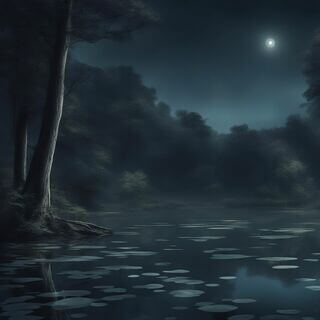
When the moon shines above me,
I recline against an aged tree in some sequestered forest to rest my weary limbs,
When,
Exhausted and torn,
I sleep to the break of day.
Oh,
Wilhelm,
The hermit's cell,
His sackcloth and girdle of thorns,
Would be luxury and indulgence compared to what I suffer.
Adieu,
I see no end to this wretchedness,
Except the grave.
And that concludes the letters from August,
From book one,
From the story,
The Sorrow of Young Werther.
Thank you so very much for listening.
I hope that you have enjoyed this story.
Become relaxed,
And possibly fallen asleep.