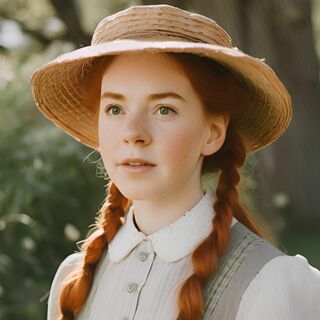
Hello there,
Thank you so much for joining me for this continued reading of The Enchanted April,
The charming old book from 1922 from author Elizabeth von Arnhem.
As you'll know if you've already been listening along to this story,
We are following along with the adventures of four rather different women from England who are escaping a wet and dreary London.
London,
April,
To share a medieval castle in Italy.
This book was extremely popular when it first came out,
More than a century ago.
And some of the themes in the book that seemed to really appeal to people the most was the idea of escaping everyday routines and responsibilities and expectations,
And instead immersing oneself and enjoying the sunshine,
The flowers and gardens,
The natural world around us.
Them.
It's a story of human connection,
Of friendships and kindness and the new beginnings and experiences we can perhaps have if we open to something completely different.
So,
Before we get further into the story here,
Let's just take a moment to have a nice deep Exhale.
Letting go of the day.
Letting go of whichever baggage we might be bringing along with us into this moment for right now.
There's nowhere else we have to go.
Nothing else we have to be doing.
So we can just relax,
Get ourselves comfortable and enjoy the ongoing story of the enchanted April.
Chapter 6 When Mrs Wilkins woke next morning,
She lay in bed a few minutes before getting up and opening the shutters.
What would she see out of her window?
A shining world or a world of rain?
It would be beautiful.
Whatever it was would be beautiful.
She was in a little bedroom with bare white walls and a stone floor and sparse old furniture.
The beds,
There were two,
Were made of iron,
Enamelled black and painted with bunches of gay flowers.
She lay.
Putting off the great moment of going to the window as one puts off opening a precious letter.
Gloating over it.
She had no idea what time it was.
She had forgotten to wind up her watch.
Ever since.
Centuries ago,
She last went to bed in Hampstead.
No sounds were to be heard in the house.
So she supposed it was very early.
Yet she felt as if she had slept a long while.
So?
Completely rested.
So perfectly content.
She lay,
With her arms clasped round her head,
Thinking how?
Happy she was.
Her lips curved upwards in a delighted smile.
In bed.
By herself.
Adorable condition.
She had not been in a bed without Mellish once now for five whole years.
And the cool roominess of it,
The freedom of one's movements,
The sense of recklessness,
Of audacity.
In giving the blankets a pull if one wanted to or twitching the pillows more comfortably.
It was like the discovery of an entirely new joy.
Mrs Wilkins longed to get up and open the shutters.
But where she was,
Was really so very delicious.
She gave a sigh of contentment.
And went on lying there.
Looking round her.
Taking in everything in her room.
Her own little room.
Her very own,
To arrange just as she pleased for this one blessed month.
Her room bought with her own savings.
The fruit of her careful denials.
Whose door she could bolt if she wanted to,
And nobody had the right to come in.
It was such a strange little room.
So different from any she had known.
And so sweet.
It was like a cell.
Except for the two beds,
It suggested a happy austerity.
And the name of the chamber,
She thought,
Quoting and smiling round at it,
Was Peace.
Wow.
This was.
Delicious.
To lie there thinking how?
She was.
But outside those shutters,
It was more delicious still.
She jumped up,
Pulled on her slippers,
For there was nothing on the stone floor but one small rug,
Ran to the window and threw open the shutters.
Wow!
Cried Mrs Wilkins.
All the radiance of April in Italy lay gathered together at her feet.
The sun.
In on her.
The sea lay asleep in it.
Hardly stirring Across the bay,
The lovely mountains,
Exquisitely different in colour,
Were asleep too in the light.
And underneath her window,
At the bottom of the flower-starred grass slope from which the wall of the castle rose up,
Was a great cypress tree.
Cutting through the delicate blues and violets and rose colours of the mountains and the sea like a great black sword.
She stared.
Such.
Beauty.
And she.
There to see it.
Such beauty.
And she alive to feel it.
Her face was bathed in light.
Lovely scents came up to the window and caressed her.
A tiny breeze gently lifted her hair.
Far out in the bay,
A cluster of almost motionless fishing boats hovered like a flock of white birds on the tranquil sea.
How beautiful.
How?
Beautiful.
Not to have died before this.
To have been allowed to see,
Breathe,
Feel.
This?
She stared.
Her lips parted.
Happy?
Ordinary,
Everyday word.
What could one say?
How could one describe it?
It was as though she could hardly stay inside herself.
It was as though she were too small to hold so much of joy.
It was as though she were washed through.
Right.
And how astonishing to feel this sheer bliss!
For here she was.
Not doing and not going to do a single unselfish thing.
Not going to do a thing she didn't want to.
According to everybody she had ever come across,
She ought at least to have twinges.
She had not one twinge.
Something was wrong somewhere.
Wonderful.
That at home she should have been so happy.
Good.
So terribly good and merely felt.
Tormented.
Twinges of every sort.
Had there been her portion?
Aches,
Hurts,
Discouragements.
And she,
The whole time,
Being steadily unselfish,
Now she had taken off all the goodness and left it behind her like a heap of rain-sodden clothes and she only felt Joy!
She was naked of goodness and was rejoicing in being naked.
She was stripped and exulting.
And there,
Away in the dim mugginess of Hampstead,
Was.
.
.
Mellish.
Being.
Angry.
She tried to visualize Mellish.
She tried to see him having breakfast.
Thinking bitter things about her.
And lo,
Mellosh himself began to shimmer.
Became rose-coloured,
Became delicate violet.
Became an enchanting blue.
Became formless,
Became.
.
.
Iridescent.
Actually,
Mellish,
After quivering a minute,
Was lost in light.
Well,
Thought Mrs Wilkins,
Staring,
As it were,
After him.
How extraordinary not to be able to visualise MELLISH!
And she,
Who used to know every feature,
Every expression of his by heart.
She simply could not see him.
As he was.
She could only see him,
Resolved.
Into beauty.
Melted into harmony.
With everything else.
The familiar words of the general thanksgiving came quite naturally into her mind and she found herself blessing God.
For her creation?
Preservation.
And all the blessings of this life but above all for his inestimable Love.
Out loud.
In a burst of acknowledgement.
While Melesh,
At that moment,
Angrily pulling on his boots before going out into the dripping streets,
Was,
Indeed,
Thinking better things.
About her.
She began to dress,
Choosing clean white clothes in honour of the summer's day.
Unpacking her suitcases,
Tidying her adorable little room.
She moved about with quick,
Purposeful steps,
Her long,
Thin body held up straight,
Her small face so much puckered at home with effort and fear.
Smoothed out.
All she had been and done before this morning.
All she had felt and worried about.
Worms.
Each of Hawari's behaved as the image of Melesh had behaved,
And dissolved into colour and light.
And she noticed things she had not noticed for years.
When she was doing her hair in front of the glass.
She noticed it and thought,
Why?
Pretty stuff!
For years she had forgotten she had such a thing as hair.
Plaiting it in the evening and unplaiting it in the morning,
With the same hurry and indifference with which she laced and unlaced her shoes.
Now!
She suddenly saw it.
And she twisted it round her fingers before the glass.
And was glad.
It was so pretty.
Melesh couldn't have seen it either,
For he had never said a word about it.
Wow.
When she got home,
She would draw his attention to it.
Malish,
She would say.
Is that mine?
Aren't you pleased?
You've got a wife!
With hair like curly honey.
She laughed.
She had never said anything like that to Mellish yet.
And the idea of it amused her.
But.
.
.
Why had she not?
Oh,
Yes.
She used to be afraid of him.
Funny?
To be afraid of anybody.
And especially of one's husband?
Whom one saw in his most simplified moments,
Such as asleep and not breathing properly through his nose,
When she was ready,
She opened her door to go across to see if Rose,
Who had been put the night before by a sleepy maidservant into a cell opposite,
Were awake.
She would say good morning to her and then she would run down and stay with that cypress tree till breakfast was ready.
And after breakfast,
She wouldn't so much as look out of a window till she had helped Rose get everything ready for Lady Caroline and Mrs Fisher to eat.
There was much to be done that day.
Settling in,
Arranging the rooms.
She mustn't leave Rose to do it alone.
They would make it all so lovely for the two to come.
Have such an entrancing vision ready for them of little cells bright with flowers.
She remembered she had wanted Lady Caroline not to come.
Fancy!
Wanting to shut someone out of heaven.
Because she thought she would be shy of her.
And as though it mattered if she were.
And as though she would be anything so self-conscious as shy.
Besides.
.
.
What a reason!
She could not accuse herself of goodness over that.
And she remembered she had wanted not to have Mrs Fisher either because she had seemed lofty.
Funny of her.
So funny.
To worry about such little things.
Making them important.
The bedrooms and two of the sitting rooms at San Salvatore were on the top floor and opened into a roomy hall with a wide glass window at the north end.
San Salvatore was rich in small gardens in different parts and on different levels.
The garden this window looked down on was made on the highest parts of the walls and could only be reached through the corresponding spacious hall on the floor below.
When Mrs Wilkins came out of her room,
This window stood wide open.
And beyond it,
In the sun,
Was a Judas tree in full flower.
There was no sign of anybody.
No sound of voices or feet.
Tubs of arum lilies stood about on the stone floor,
And on a table flamed a huge bunch of fierce nasturtiums.
Spacious.
Flowery,
Silent,
With the wide window at the end opening into the garden and the Judas tree absurdly beautiful in the sunshine.
It seemed to Mrs Wilkins.
Arrested on her way across to Mrs Arbuthnot.
Two.
To be true.
Was she really going to live?
In peace.
For a whole month.
Up to now,
She had had to take what beauty she could as she went along,
Snatching at little bits of it when she came across it.
A patch of daisies on a fine day in a Hampstead field,
A flash of sunset between two chimney pots.
She had never been in love.
Definitely.
Completely beautiful.
Places.
She had never been even in a venerable house.
And such a thing as a profusion of flowers in her rooms!
Was unattainable to her?
Sometimes,
In the spring,
She had bought six tulips at Shawbreads.
Unable to resist them.
Conscious that Malish,
If he knew what they had cost.
.
.
Would think it inexcusable.
But they had soon died and then.
.
.
There were no more.
As for the Judas tree.
She hadn't an idea what it was and gazed at it out there against the sky.
With the rapt expression of one who sees a heavenly vision.
Mrs Arbuthnot,
Coming out of her room,
Found her there,
Like that,
Standing in the middle of the hall,
Staring.
Now,
What does she think she sees?
Now,
Thought Mrs.
Arbuthnot.
We are in God's hands!
Said Mrs Wilkins,
Turning to her,
Speaking with extreme conviction.
Oh,
Said Mrs.
Arbuthnot quickly,
Her face,
Which had been covered with smiles when she came out of her room,
Falling.
Why?
What has happened?
For Mrs Arbuthnot had woken up with such a delightful feeling.
Security.
Of relief.
And she did not want to find.
She had not,
After all,
Escaped from the need of refuge.
She had not even dreamed of Frederick.
For the first time for years,
She had been spared the nightly dream that he was with her,
That they were heart to heart,
And its miserable awakening.
She had slept like a baby.
And had woken up?
Confident.
She had found there was nothing she wished to say in her morning prayer except Thank you.
It was disconcerting to be told.
She was,
After all,
In God's hands.
I hope nothing has happened,
She asked anxiously.
Mrs Wilkins looked at her a moment.
And laugh.
How funny,
She said,
Kissing her.
"'What is funny?
' asked Mrs Arbuthnot,
Her face clearing,
Because Mrs Wilkins laughed.
We are.
This is everything.
It's all so wonderful.
It's so funny.
And so adorable that we should be in it.
I dare say,
When we finally reach heaven,
The one they talk about so much,
We shan't find it a bit more beautiful.
Mrs Arbuthnot relaxed to smiling security again.
Isn't it divine,
She said.
Were you ever,
Ever in your life so happy?
Asked Mrs Wilkins,
Catching her by the arm.
No,
Said Mrs.
Harbathlott.
Nor had she been.
Not once.
Ever.
Not even in her first love days with Frederic.
Because.
.
.
Always pain had been close at hand.
In that other happiness,
Ready to torture with doubts.
To torture even with the very excess of her love.
While this.
.
.
Was the simple happiness of complete harmony with her surroundings.
The happiness that asks for nothing.
That just accepts,
Just breathes.
Just.
Is.
Let's go and look at that tree close,
Said Mrs Wilkins.
I don't believe it can only be a tree.
And arm in arm,
They went along the hall.
And their husbands.
Would not have known them.
Their faces were so young with eagerness.
And together they stood at the open window.
And when their eyes,
Having feasted on the marvellous pink thing,
Wandered farther among the beauties of the garden.
They saw sitting.
On the low wall at the east edge of it.
Gazing out over the bay,
Her feet in lilies.
Lady Caroline!
They were astonished!
They said nothing in their astonishment,
But stood.
Quite still,
Arm in arm,
Staring down at her.
She too had on a white frock.
And her head was bare.
They hath had no idea that day in London,
When her hat was down to her nose and her furs were up to her ears,
That she Well,
So.
.
.
Pretty.
They had merely thought her different from the other women in the club,
And so had the other women themselves,
And so had all the waitresses,
Eyeing her sideways and eyeing her again as they passed the corner where she sat talking.
But they had had no idea!
She was so.
.
.
Pretty.
She was exceedingly.
Pretty.
Everything about her.
Was very much that which it was.
Her fair hair was very fair.
Her lovely grey eyes were very lovely and grey.
Her dark eyelashes were very dark.
Her white skin was very white.
Her red mouth was very red.
She was extravagantly slender,
The merest thread of a girl.
Though not without little curves beneath her thin frock,
Where little curves should be.
She was looking out across the bay.
And was sharply defined against the backdrop of empty blue.
She was full in the sun.
Her feet dangled among the leaves and flowers of the lilies,
Just as if it did not matter that they should be bent or bruised.
She.
.
.
Alt 2.
Have a headache?
Whispered Mrs.
Arbuthnot at last.
Sitting there in the sun like that.
She ought to have a hat.
Whispered Mrs.
Wilkins.
She's treading on lilies!
But.
.
.
There hers as much as ours only one fourth of them Lady Caroline turned her head.
She looked up at them a moment,
Surprised to see them so much younger than they had seemed that day at the club.
And so much less unattractive.
Indeed.
They were really almost quite attractive.
If anyone could ever be really quite attractive in the wrong clothes?
Her eyes,
Swiftly glancing over them,
Took in every inch of each of them.
In the half second before she smiled and waved her hand and called out,
Good morning.
There was nothing,
She saw at once,
To be hoped for in the way of interest from their clothes.
She did not consciously think this,
For she was having a violent reaction against beautiful clothes and the slavery they impose on one.
Her experience being that the instant one had got them,
They took one in hand and gave one no peace.
Till they had been everywhere and been seen by everybody.
You didn't take your clothes to parties.
They took you.
It was quite a mistake to think that a woman,
A really well-dressed woman,
Wore out her clothes.
It was the clothes that wore out the woman.
Dragging her about at all hours of the day and night.
No wonder men stayed young longer.
Just new trousers?
Couldn't excite them.
She couldn't suppose that even the newest trousers ever behaved like that.
Taking the bit between their teeth.
Her images were disorderly,
But she thought,
As she chose,
She used what images she liked.
As she got off the wall and came towards the window,
It seemed a restful thing.
To know she was going to spend an entire month.
With people in dresses,
Made as she dimly remembered dresses used to be made five summers ago.
I got here yesterday morning,
She said.
Looking up at them and smiling.
He really was bewitching.
She had.
A free thing.
Even a dimple!
It's a great pity,
Said Mrs Arbuthnot,
Smiling back.
Because we were going to choose the nicest room for you.
But I've done that,
Said Lady Caroline.
At least,
I think it's the nicest.
It looks two ways.
I adore a room that looks two ways,
Don't you?
Over the sea to the west and over this Judas tree to the north.
And we had meant to make it pretty for you with flowers,
" said Mrs Wilkins.
Oh.
Domenico did that.
I told him to directly I got here.
He's the gardener.
He's wonderful.
It's a good thing,
Of course,
" said Mrs Arbuthnot a little hesitatingly.
To be independent and to know exactly what one wants.
Yes,
It saves trouble.
Agreed Lady Caroline.
But one shouldn't be so independent,
Said Mrs Wilkins,
As to leave no opportunity for other people to exercise their benevolences on one.
Lady Caroline,
Who had been looking at Mrs Arbuthnot,
Now looked.
At Mrs Wilkins.
That day,
At that queer club,
She had had merely a blurred impression of Mrs Wilkins,
For it was the other one who did all the talking.
And her impression had been of somebody so shy,
So Awkward.
It was best to take no notice of her.
She had not even been able to say goodbye properly.
Doing it in an hour.
Agony.
Turning red.
Turning damp.
Therefore,
She now looked at her in some surprise.
And she was still more surprised when Mrs Wilkins added,
Gazing at her with the most obvious,
Sincere admiration,
Speaking indeed with a conviction that refused to remain unuttered.
I didn't realise you were so pretty.
She stared at Mrs.
Wilkins.
She was not usually told this quite so immediately and roundly.
Abundantly as she was used to it,
Impossible not to be after 28 solid years,
It surprised her to be told it with such bluntness and by a woman.
It's very kind of you to think so,
She said.
Why?
You're lovely.
Said Mrs Wilkins.
Quite.
Quite lovely.
I hope,
Said Mrs Arbuthnot pleasantly,
You make the most of it.
Lady Caroline then stared at Mrs Arbuthnot.
Yes,
She said,
I make the most of it.
I've been doing that ever since I can remember.
Because,
Said Mrs Arbuthnot smiling and raising a warning forefinger,
It won't last.
Then Lady Caroline began to be afraid.
These two.
Were originals.
If so.
.
.
She would be bored.
Nothing bored her so much as people who insisted on being.
Original.
Who came and buttoned hold her and kept her waiting while they were being.
.
.
Original.
And the one who admired her?
It would be tiresome.
If she dogged her about in order to look at her.
What she wanted of this holiday was complete escape.
From all she had had before.
She wanted the rest of complete.
Contrast.
Being admired,
Being dogged.
Wasn't contrast,
It was repetition.
And as for originals.
.
.
To find herself shut up with two on the top of a precipitous hill in a medieval castle built for the express purpose of preventing easy goings out and in.
Would not,
She was afraid,
Be especially Restful.
Perhaps she had better be a little less encouraging.
They had seemed such timid creatures,
Even the dark one,
She couldn't remember their names,
That day at the club that she had felt it quite safe to be very friendly.
Here.
They had come out of their shells.
Already!
Indeed,
At once!
There was no sign of timidity about either of them here.
If they had got out of their shells so immediately at the very first contact… Unless she checked them,
They would soon begin to press upon her.
And then,
Goodbye to her dream of thirty restful,
Silent days,
Lying unmolested in the sun,
Getting her feathers smooth again.
Not!
Being spoken to.
Not waited on,
Not grabbed at and monopolised,
But just Recovering.
From the fatigue.
The deep and melancholy fatigue of the too much.
Besides,
There was Mrs Fisher.
She too must be checked.
Lady Caroline had started two days earlier than had been arranged for two reasons.
First,
Because she wished to arrive before the others in order to pick out the room or rooms she preferred.
And second,
Because she judged it likely that otherwise she would have to travel with Mrs Fisher.
She did not want to travel with Mrs.
Fisher.
She did not want to arrive with Mrs Fisher.
She saw no reason whatever why,
For a single moment,
She should have to have anything at all to do with Mrs Fisher.
But unfortunately.
.
.
Mrs.
Fisher also was filled with a desire to get to San Salvatore first and pick out the room or rooms she preferred.
And she and Lady Caroline had,
After all,
Travelled.
Together.
As early as Calais.
They began to suspect it.
In Paris,
They feared it.
At Modane,
They knew it.
At Mezago,
They concealed it,
Driving out to Castagneto in two separate flies,
The nose of the one almost touching the back of the other the whole way.
But when the road suddenly left off at the church and the steps.
.
.
Further evasion.
Was impossible.
And faced by this abrupt and difficult finish to their journey,
There was nothing for it but to amalgamate.
Because of Mrs Fisher's stick.
Lady Caroline had to see about everything!
Mrs Fisher's intentions,
She explained from her fly when the situation had become plain to her,
Were active but her stick prevented their being carried out.
The two drivers told Lady Caroline boys would have to carry the luggage up to the castle and she went in search of some,
While Mrs Fisher waited in the fly because of her stick.
Mrs Fisher could speak Italian.
But Oni,
She explained,
The Italian of Dante.
Which Matthew Arnold used to read with her when she was a girl.
And she thought this might be above the heads of boys.
Therefore,
Lady Caroline,
Who spoke ordinary Italian very well,
Was obviously the one to go and do things.
I am in your hands,
Said Mrs Fisher,
Sitting firmly in her fly.
You must please regard me as merely an old woman with a stick.
And presently,
Down the steps and cobbles to the piazza,
And along the quay and up the zig-zag path,
Lady Caroline found herself as much obliged to walk slowly with Mrs Fisher as if she were her own grandmother.
It's my stick.
Mrs Fisher complacently remarked.
At intervals.
And when they rested at those bends of the zigzag path where seats were,
And Lady Caroline,
Who would have liked to run on and get to the top quickly,
Was forced,
In common humanity,
To remain with Mrs Fisher because of Her stick.
Mrs Fisher told her how she had been on a zigzag path once with Tennyson.
Isn't his cricket wonderful?
Said Lady Caroline absently.
"'The Tennyson,
' said Mrs Fisher,
Turning her head and observing her a moment over her spectacles.
Isn't he?
Said Lady Caroline.
I am speaking.
Said Mrs.
Fisher.
Of Alfred.
Said Lady Caroline.
And it was a path to.
.
.
Mrs.
Fisher went on severely.
Curiously,
Like this.
No eucalyptus tree,
Of course,
But otherwise curiously like.
This.
And at one of the bends,
He turned and said to me,
I see him now turning and saying to me.
.
.
Yes,
Mrs.
Fisher.
Would have to be checked.
And so would these two up at the window.
She had better begin at once.
She was sorry she had got off the wall.
All she need have done was to have waved her hand and waited till they came down and out into the garden to her.
So.
.
.
She ignored Mrs Arbuthnot's remark and raised forefinger and said,
With Ma.
Coldness.
At least she tried to make it sound marked,
That she supposed they would be going to breakfast and that she had had hers.
It was her fate that however coldly she sent forth her words,
They came out sounding quite warm and agreeable.
That was because she had a sympathetic and delightful voice.
Due entirely to some special formation of her throat and the roof of her mouth.
And having nothing whatever to do with what she was feeling.
Nobody,
In consequence,
Ever believed they were being snubbed.
It was most tiresome.
And if she stared,
Icily,
It did not look icy at all because her eyes lovely to begin with,
Had the added loveliness of very long solos.
Duh.
Eyelashes.
No icy stare could come out of eyes like that.
It got caught and lost in the soft eyelashes.
And the persons stared at merely thought they were being regarded with a flattering and exquisite Attentiveness.
And if she was ever out of humour,
Or definitely cross,
And who would not be sometimes in such a world.
She only looked so pathetic.
That people all rushed to comfort her.
If possible,
By means of kissing.
It was more than tiresome.
It was.
Maddening.
Nature was determined that she should look and sound Angelic.
She could never be disagreeable or rude without being complete.
Completely misunderstood.
I had my breakfast in my room,
She said,
Trying her utmost to sound curt.
Perhaps I'll see you later.
And she nodded.
And went back to where she had been sitting on the wall.
With the lilies being nice and cool.
Round her feet.