Hi,
Thank you for checking out this audio.
I hope this helps.
Quick disclaimer up top,
As we are all used to,
This is not medical advice.
This is not treatment or diagnosis.
This is not therapy.
It is also not bicycle repair.
There's not a lot of things.
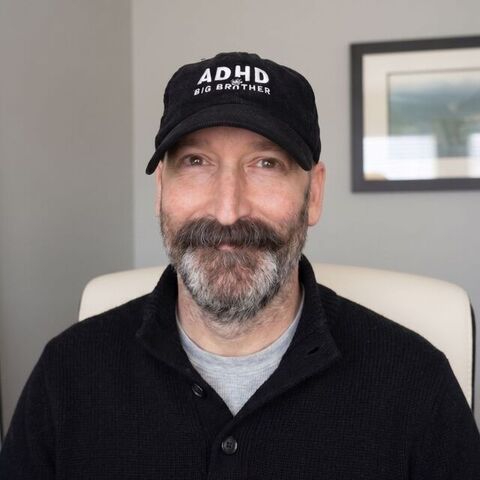
I am your ADHD big brother.
What I share here is what works for me as an individual,
And it may or may not work for you.
What I like about this work is that it's skills training.
That's what it is to me.
Similar to what I've learned personally,
In my spiritual practice even,
Is these are not things that you need to believe in.
You don't have to believe it without testing it.
As the famous Sam I Am,
I believe,
Once said about the use of timers.
You do not like setting timers,
You say?
Try them.
Try them.
And you may.
Try them and you may,
I say.
And this completes the disclaimer.
There's no novelty,
There's no urgency.
To make it the most easy to understand,
I relate everything to interest.
Novelty also is interest-based,
Right?
I'm interested in the new thing.
Urgency is the interest in survival.
I'm interested in surviving this burning building,
So I shall motivate myself to exit.
I'm interested in keeping my job,
So I'm going to turn this report in to my boss just before she fires me.
And every single time we think,
I do not like this anxiety,
This fear,
Always at the last minute.
I just need a system for this.
This is not how it works for the ADHD brain.
So I'm going to give you a methodology for getting started that I'd love for you to practice on multiple things per week.
And I would love for you to practice it when you don't need to practice it.
ADHD is about skills training.
And so we have to practice the skills.
Like let's say you're in a rock and roll band and you play the guitar.
Are you only ever going to have experience with the guitar when you have a show?
Like that's the only time that you play guitar.
This is how it is with behavior.
Change,
Right?
If we want to adopt the ability to get started on anything,
Then we have to practice the chords.
We have to play the music when we don't have to perform.
And then when it comes time to play in the big show,
We'll be able to have fun.
It won't be a panic and oh my gosh,
I hope I remember what the notes to play.
We've played the notes so many times that it will be autopilot and we can just play.
How fun would that be?
So this is the practice.
This is the art of getting started on anything.
We don't need help,
But the stuff that we enjoy.
This is the thing that you don't feel like doing.
You have no executive function juice for it,
No desire,
But you have the time and you decided that you wanted to do it in advance to make this things the easiest to understand.
And remember acronyms work pretty well.
This is called ready,
Set,
Go.
And set is the acronym.
S stands for specificity.
E stands for easy point of entry and T stands for timer.
Let us go through them real quick.
Uh,
Specificity is crucial for the ADHD brain.
If your thing is I'm going to clean my house today,
That's pretty vague.
What room?
What rooms?
When?
If a client says to me,
Um,
You know,
I'll do it at some point today.
That's not going to work for ADHD because it allows for us to keep,
You know,
Punting it forward to keep moving.
I'll do it later.
Okay.
I'll do it later.
Not now.
Maybe a little bit later.
And then the day's ending and we don't have any juice for it.
So it's gone.
It's not going to happen.
Saying something like I'm going to work on cleaning the kitchen at 8 a.
M.
That is super specific.
And we will have most likely been thoughtful about it,
Right?
I've been awake for an hour.
The kids are at camp or they're at school.
I typically have the energy for stuff that early.
That's super thoughtful,
Dan.
That's specific.
E is for easy point of entry,
And that's literally the first physical movement of your specific task.
That's it.
What exactly is that?
Walk to dishwasher or open dishwasher,
Something like that.
Something that if somebody said to you,
Could you real quick open the dishwasher?
" You'd be like,
Well,
First you'd probably be like,
What?
Why?
Well,
Okay.
But the idea is that you would have the energy for it.
It would be super easy for you to do.
You wouldn't have to think about it.
Done and done.
You would just have the ultra confidence about it.
Like,
Yeah,
I can open the dishwasher.
Boom,
Done.
And then T is for timers.
And I'll do another talk on timers because I could go all day on that one.
But I believe they are necessities for managing an ADHD life.
In this case,
You ask yourself,
Okay,
What's the the smallest amount of time that I can see myself working on this thing.
I've done these personally for as little as two minutes.
Dishes to me are a nightmare level.
I cannot tick not Han mindful washing of the dishes.
I cannot.
It is so difficult.
But what I can do is say,
I only have to work on the dishes for two minutes and then I get to quit.
Oh man,
The power of the permission to quit is glorious.
I highly recommend you try it.
When you put all these together,
You push start on the timer and you only think about doing the easy point of entry on your specific task.
Try that and you will marvel at the fact that you just technically,
You literally got started on a thing.
And more often than not,
We have the motivation to keep going.
We think that we need to manufacture motivation and then Then we can activate,
Right?
The dopamine,
I have the,
I do the dopamine thing and that's not how it works.
We need some kind of kickstart,
A pushstart,
A nudge to get us rolling down the hill towards those good intentions.
And on those days when the timer goes off and you just can't,
You get to still marvel at how much you did in that little time.
And you also get to call it a win because you did what you said.
You worked on the kitchen for two minutes.
This is how we do it.
This is the ADHD.
Way.
Many of us are looking,
We're looking to learn new tips and tricks and we might say,
Oh,
That's a good idea.
I'm going to try that.
And then we forget,
Or then we don't.
And this is when you need other people.
Find your judgment-free,
Shame-free people,
Your accountability partners,
Friends,
Family members,
Join a community,
Hire a person.
I've been coaching ADHD for over six years now.
I personally,
I use masterminds.
I use my own community.
I have friends.
I don't do this alone.
Right knuckle and just suck it up and just do it is not an effective way.
It's not the spast way to get in the other end of managing your ADHD.
Alrighty,
Feel free to reach out if you have any questions about any of this.
I hope you found it helpful.
Remember,
The acronym is SET,
Specificity,
Easy point of entry,
And timers.
Good luck.