Worksheet
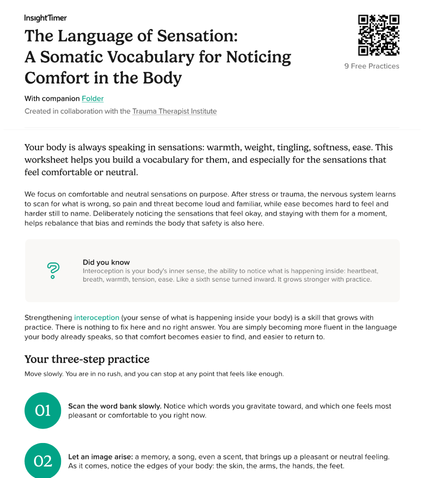
The Language of Sensation: A Somatic Vocabulary for Noticing Comfort in the Body
This clinical handout helps individuals notice comfortable or neutral states to counter post-trauma threat bias. Developed with the Trauma Therapist Institute, it provides a structured framework to build a somatic word bank, expand internal awareness, access felt safety, and balance chronic stress.

by Insight Timer in collaboration with Trauma Therapist Institute
How to Use This Worksheet
Introduce this three-step somatic practice slowly during or between sessions. Guide the client to scan the word bank, recall a pleasant memory, and select a word describing their present physical sensation. This tool encourages clients to sit with pleasant sensations to reinforce physiological safety.
Who This Worksheet Is For
This resource is for trauma survivors, individuals navigating hypervigilance, and adults strengthening their mind-body connection. It is also an explicit framework for trauma therapists, somatic coaches, and counselors looking to safely introduce somatic tracking without overwhelming a client's nervous system.
Expected Outcomes
- Clearer awareness of the distinction between comfortable, neutral, and threatening physiological states.
- Improved ability to locate, name, and anchor pleasant somatic experiences using a specialized word bank.
- Practical experience using internal tracking and self-regulation techniques to counter systemic hypervigilance.
- Enhanced resilience by expanding interoceptive capacity and teaching the nervous system that ease is available.
Related Topics
References
Levine, P. A. (2010). In an Unspoken Voice: How the Body Releases Trauma and Restores Goodness. North Atlantic Books. (Somatic Experiencing principles of tracking body sensation and felt safety).
Ogden, P., Minton, K., & Pain, C. (2006). Trauma and the Body: A Sensorimotor Approach to Psychotherapy. W. W. Norton & Company. (Sensorimotor techniques utilizing somatic vocabulary and interoception development).
Van der Kolk, B. A. (2014). The Body Keeps the Score: Brain, Mind, and Body in the Healing of Trauma. Viking. (Clinical support for building interoception to rebalance post-traumatic stress).
Levine, P. A. (1997). Waking the Tiger: Healing Trauma. North Atlantic Books. (Applied to somatic vocabulary development and interoceptive awareness as tools for trauma recovery and nervous system regulation.)
Frequently Asked Questions About The Language of Sensation: A Somatic Vocabulary for Noticing Comfort in the Body Resources
© Copyright 2026 Insight Network Inc. All rights reserved.
If you are in a crisis or any other person may be in danger - don’t use this site. Use these resources