Worksheet
Reset Your Nervous System: 5 Vagal Brake Exercises You Can Do Anywhere
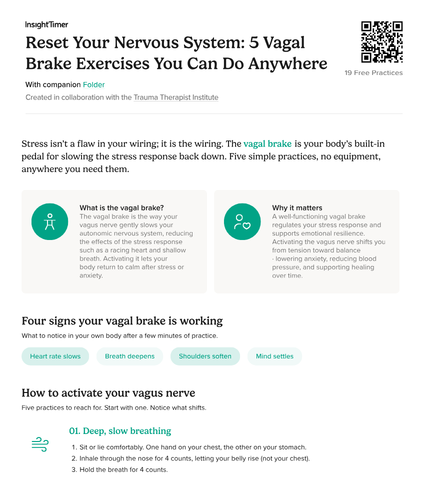
This resource features five no-equipment somatic exercises to stimulate the vagus nerve. Created with the Trauma Therapist Institute, it helps slow the body's acute stress response. These physical practices - breathing, sighing, humming, cold exposure, and gargling - help lower blood pressure, ease shallow breathing, and slow a racing heart.

by Insight Timer in collaboration with Trauma Therapist Institute
How to Use This Worksheet
This guide can be integrated into daily routines or used directly within clinical sessions to manage acute distress. Individuals should review the five practices and select one accessible exercise to practice for two minutes at a recurring time each day. Therapists can use these steps during sessions to assist clients with grounding, tracking bodily shifts to build long-term emotional resilience.
Who This Worksheet Is For
This worksheet is for individuals dealing with chronic stress, anxiety, panic, or rumination. It is a practical toolkit for trauma-informed therapists, somatic practitioners, and coaches.
Expected Outcomes
- Activation of the body's natural dive reflex and parasympathetic brake.
- Reduction in physiological anxiety, high blood pressure, and acute stress responses.
- Greater somatic awareness of heart rate deceleration and muscle softening.
- Increased emotional resilience through consistent daily nervous system conditioning.
Related Topics
References
Porges, S. W. (2011). The Polyvagal Theory: Neurophysiological Foundations of Emotions, Attachment, Communication, and Self-regulation. W. W. Norton & Company. (Foundational clinical architecture establishing the "vagal brake" mechanism, parasympathetic regulation of the heart via the vagus nerve, and autonomic state adjustments).
Gevirtz, R. (2013). The Vagal Brake: A Mechanism for Cross-System Adaptations. Frontiers in Psychology, 4, 340. (Applied to tracking heart rate variability, respiration patterns, and vocalization-based vagal nerve pathways).
Craig, A. D. (2002). How Do You Feel? Interoception: The Sense of the Physiological Condition of the Body. Nature Reviews Neuroscience, 3(8), 655-666. (Clinical support for tracking physical shifts like softening shoulders and settling the mind during somatic exercises).
Frequently Asked Questions About Reset Your Nervous System: 5 Vagal Brake Exercises You Can Do Anywhere Resources
© Copyright 2026 Insight Network Inc. All rights reserved.
If you are in a crisis or any other person may be in danger - don’t use this site. Use these resources