Worksheet
Nervous System Healing for Couples: A Guide to Conflict, Connection & Emotional Safety
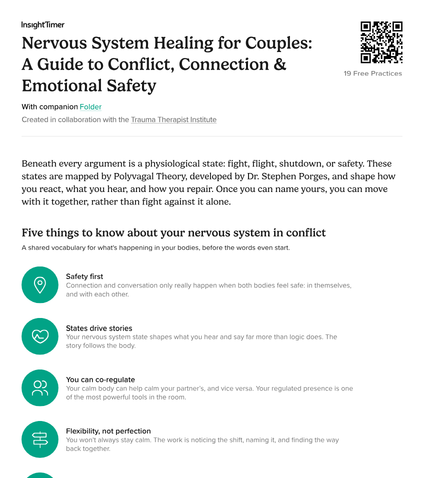
This clinical resource helps couples navigate conflict by tracking the physiological states beneath their arguments. Developed with the Trauma Therapist Institute, it uses Polyvagal Theory to reframe reactive behaviors as survival patterns, helping partners co-regulate and build emotional safety.

by Insight Timer in collaboration with Trauma Therapist Institute
How to Use This Worksheet
Introduce this tool during sessions or as a take-home practice. Partners identify their current state—safe, mobilized, or collapsed and use six micro-moves to focus on bodily sensations rather than hurtful arguments. Couples are encouraged to pause and anchor their nervous systems before attempting verbal repair.
Who This Worksheet Is For
This guide is for couples stuck in repetitive argument loops, defensive fighting, or emotional shutdown. It serves as a gentle workbook to build a shared somatic vocabulary, as well as an actionable framework for marriage and family therapists, couples counselors, and trauma-informed practitioners.
Expected Outcomes
- Early identification and prevention of physical fight, flight, or shutdown responses during relationship disagreements.
- Improved self-awareness and resilience when recognizing personal triggers, fast speech, or flat, heavy processing styles.
- Strengthened sense of mutual safety, curiosity, and non-judgmental communication within the partnership.
Related Topics
References
Porges, S. W. (2011). The Polyvagal Theory: Neurophysiological Foundations of Emotions, Attachment, Communication, and Self-regulation. W. W. Norton & Company. (Foundational clinical architecture establishing the somatic states of ventral vagal safety, sympathetic mobilization, and dorsal vagal collapse within human relationships ).
Dana, D. (2018). The Polyvagal Theory in Therapy: Engaging the Rhythm of Regulation. W. W. Norton & Company. (Applied to the relational mapping of physiological states, naming indicators, and utilizing deliberate co-regulation shifts to heal conflict patterns ).
Gottman, J. M. (1994). What Predicts Divorce? The Relationship Between Marital Processes and Marital Outcomes. Lawrence Erlbaum Associates. (Clinical context supporting the mitigation of defensive mobilization and stonewalling/shutdown behaviors through non-judgmental somatic containment ).
Frequently Asked Questions About Nervous System Healing for Couples: A Guide to Conflict, Connection & Emotional Safety Resources
© Copyright 2026 Insight Network Inc. All rights reserved.
If you are in a crisis or any other person may be in danger - don’t use this site. Use these resources