Worksheet
Helping Kids Name Big Feelings: A Polyvagal Guide for Parents
This clinical resource helps children identify physiological states using animal metaphors. Developed with the Trauma Therapist Institute, it translates autonomic nervous system responses into an accessible tool. By reframing emotional shifts as natural safety adaptations, it empowers parents to track behavioral changes without judgment.

by Insight Timer in collaboration with Trauma Therapist Institute
How to Use This Worksheet
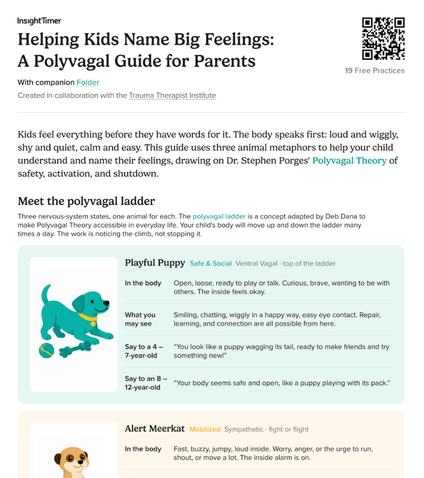
Introduce this framework during sessions or at home using the age-specific scripts. Walk children through the three animal markers: the Playful Puppy (safe), Alert Meerkat (fight/flight), and Turtle (shutdown). Guide families to practice five habits: noticing somatic clues, inviting curiosity, normalizing movement, customizing metaphors, and practicing playful repair.
Who This Worksheet Is For
This guide is for parents and families supporting children aged 4 to 12 navigating big emotions, restlessness, or withdrawal. It serves as a developmental manual to build emotional literacy at home. It is also an actionable tool for child psychologists, social workers, school counselors, and family therapists.
Expected Outcomes
- Improved ability to use age-appropriate scripts to identify underlying emotional triggers non-judgmentally
- Clearer understanding of protective withdrawal and high-energy distress to prevent misreading it as defiance
- Practical selection of customized somatic metaphors that fit a child's unique internal language
- Enhanced emotional containment through normalized systemic shifts and playful relational repair
Related Topics
References
Porges, S. W. (2011). The Polyvagal Theory: Neurophysiological Foundations of Emotions, Attachment, Communication, and Self-regulation. W. W. Norton & Company. (Foundational clinical architecture establishing mammalian safety, sympathetic mobilization/fight-or-flight, and dorsal vagal immobilization/shutdown states ).
Dana, D. (2018). The Polyvagal Theory in Therapy: Engaging the Rhythm of Regulation. W. W. Norton & Company. (Applied to the operational mapping of the "polyvagal ladder" concept to make internal tracking accessible for daily interpersonal applications ).
Siegel, D. J., & Bryson, T. P. (2011). The Whole-Brain Child: 12 Revolutionary Strategies to Nurture Your Child's Developing Mind. Delacorte Press. (Clinical support for utilizing non-judgmental naming strategies and collaborative relational repair to navigate childhood emotional surges ).

Frequently Asked Questions About Helping Kids Name Big Feelings: A Polyvagal Guide for Parents Resources
© Copyright 2026 Insight Network Inc. All rights reserved.
If you are in a crisis or any other person may be in danger - don’t use this site. Use these resources