Worksheet
Emotional Regulation for Attachment Styles: How to Soothe Yourself and Move Toward Security
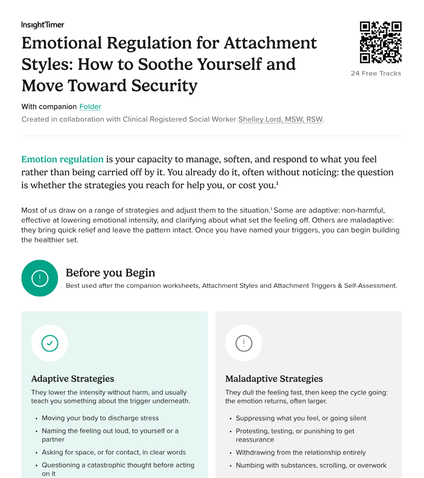
Every attachment style has its own version of getting flooded, and its own path back to calm. This worksheet, developed with Clinical Registered Social Worker Shelley Lord, MSW, RSW, gives anxious, avoidant, disorganized, and secure clients style-specific regulation strategies, plus scripted language for expressing needs under stress. It closes with a personalized regulation plan clients can actually use in the moment.

by Insight Timer in collaboration with Shelley Lord
How to Use This Worksheet
This resource is best introduced after clients have identified their attachment style. Direct clients to review the section corresponding to their style, while encouraging them to draw on strategies from other sections as relevant. Conclude by guiding clients through the development of a personal regulation plan they can reference when triggered.
Who This Worksheet Is For
This worksheet is designed for therapists, counselors, and social workers helping clients build emotion regulation skills within an attachment framework. It also suits individuals and couples who already understand their attachment style and want practical, style-specific tools for managing triggers, communicating needs, and moving toward earned security.
Expected Outcomes
- Improved ability to self-soothe during attachment activation
- Greater skill in expressing needs using clear, non-blaming language
- Reduction in reliance on withdrawal, protest, or numbing behaviors
- Greater confidence requesting space or reassurance without friction
- Stronger sense of progress toward earned secure attachment
Related Topics
References
Rolston, A., & Lloyd-Richardson, E. (n.d.). What Is Emotion Regulation and How Do We Do It? Cornell Research Program on Self-Injury and Recovery.
The Attachment Project. (2021). Attachment Styles and Emotional Regulation. attachmentproject.com
Bandura, A. (1977). Social Learning Theory. Prentice Hall.
Beck, J. S. (2020). Cognitive Behavior Therapy: Basics and Beyond (3rd ed.). Guilford Press.
Gross, J. J. (2015). Emotion regulation: Current status and future prospects. Psychological Inquiry, 26(1), 1–26.
Harvard University. Recognizing Negative Automatic Thoughts. Harvard University Wellbeing Resources.
Mikulincer, M., & Shaver, P. R. (2016). Attachment in Adulthood: Structure, Dynamics, and Change (2nd ed.). Guilford Press.
Porges, S. W. (2011). The Polyvagal Theory. W. W. Norton.

Frequently Asked Questions About Emotional Regulation for Attachment Styles: How to Soothe Yourself and Move Toward Security Resources
© Copyright 2026 Insight Network Inc. All rights reserved.
If you are in a crisis or any other person may be in danger - don’t use this site. Use these resources