Worksheet
Breathing Titration & Mindful Touch Exercise for Grief: Creating Internal Space for Healing
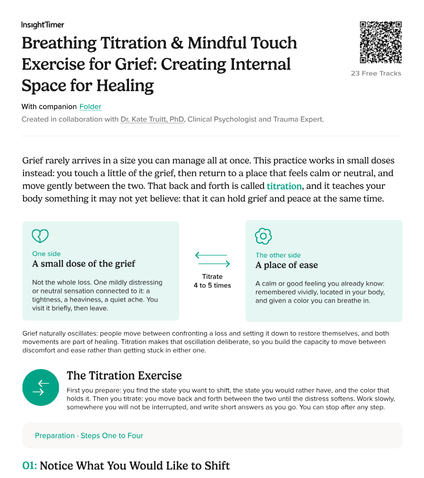
Grief doesn't have to be processed all at once. This somatic exercise, developed with Dr. Kate Truitt, PhD, Clinical Psychologist and Trauma Expert, teaches clients to titrate: moving in small doses between a mildly distressing grief sensation and a remembered place of ease. Breathwork and mindful touch help the body learn it can hold discomfort and calm together.

by Insight Timer in collaboration with Kate Truitt
How to Use This Worksheet
Introduce this exercise once a client has some grounding capacity. Guide them through the four prep steps to identify a target sensation, a preferred state, a memory, and a color. Lead the titration sequence in session first, pairing each round with the 4-count inhale and 6-count exhale. Teach CPR for the Amygdala® as a self-directed off-ramp for use between sessions.
Who This Worksheet Is For
This guide is for individuals and therapy clients experiencing overwhelming grief or somatic distress after loss. It's a gentle, self-paced tool for sitting with painful feelings without becoming dysregulated. It also serves clinical psychologists, trauma therapists, and somatic practitioners seeking evidence-based titration protocols.
Expected Outcomes
- Improved ability to self-regulate using breath and touch
- Greater access to a felt sense of calm during distress
- Reduction in overwhelm during grief processing
- Increased awareness of where grief lives in the body
- Improved use of self-soothing touch as a coping tool
Related Topics
References
Levine, P. A. (1997). Waking the Tiger: Healing Trauma. North Atlantic Books.
Stroebe, M., & Schut, H. (1999). The dual process model of coping with bereavement: Rationale and description. Death Studies, 23(3), 197-224.
Zaccaro, A., Piarulli, A., Laurino, M., et al. (2018). How breath-control can change your life: A systematic review on psycho-physiological correlates of
slow breathing. Frontiers in Human Neuroscience, 12, 353.
Dreisoerner, A., Junker, N. M., Schlotz, W., et al. (2021). Self-soothing touch and being hugged reduce cortisol responses to stress. Comprehensive Psychoneuroendocrinology, 8, 100091.
Truitt, K. (2022). Healing in Your Hands: Self-Havening Practices to Harness Neuroplasticity, Heal Traumatic Stress, and Build Resilience. PESI Publishing.

Frequently Asked Questions About Breathing Titration & Mindful Touch Exercise for Grief: Creating Internal Space for Healing Resources
© Copyright 2026 Insight Network Inc. All rights reserved.
If you are in a crisis or any other person may be in danger - don’t use this site. Use these resources