Worksheet
Attachment Triggers & Self-Assessment: What Activates Each Attachment Style
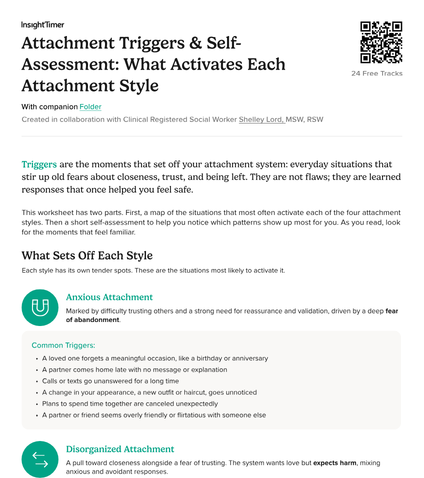
Triggers aren't flaws - they're learned responses that once kept us safe. This worksheet, developed with Clinical Registered Social Worker Shelley Lord, MSW, RSW, maps the specific situations that activate anxious, avoidant, disorganized, and secure attachment patterns. A scored self-assessment follows, helping clients move from vague distress to a clear picture of their own attachment tendencies.

by Insight Timer in collaboration with Shelley Lord
How to Use This Worksheet
Introduce this worksheet after clients have a basic grasp of attachment theory, ideally alongside the companion overview worksheet. Have clients read all four trigger maps first, then complete the scored statements independently. Bring the highest-scoring style into session as the anchor for a body-based or narrative exploration of a recent triggering event.
Who This Worksheet Is For
This guide is written for individuals, couples, and therapy clients who experience sudden emotional distress, conflict escalation, or withdrawal during relationship interactions. It serves as a clear personal workbook to help readers identify specific triggers without self-judgment. Additionally, it provides an actionable clinical assessment for licensed social workers, marriage and family therapists, professional counselors, and trauma-informed practitioners specializing in adult attachment.
Expected Outcomes
- Increased insight into personal attachment triggers
- Greater ability to identify a felt-sense trigger response in the body
- Reduction in shame around reactive behaviors
- Greater clarity on which attachment style patterns are most active
- Stronger foundation for trauma-informed, attachment-focused treatment planning
Related Topics
References
Bowlby, J. (1988). A Secure Base: Parent-Child Attachment and Healthy Human Development. Basic Books.
Ainsworth, M. D. S., Blehar, M. C., Waters, E., & Wall, S. (1978). Patterns of Attachment: A Psychological Study of the Strange Situation. Erlbaum.
Levine, A., & Heller, R. (2010). Attached: The New Science of Adult Attachment and How It Can Help You Find, and Keep, Love. TarcherPerigee.
Frequently Asked Questions About Attachment Triggers & Self-Assessment: What Activates Each Attachment Style Resources
© Copyright 2026 Insight Network Inc. All rights reserved.
If you are in a crisis or any other person may be in danger - don’t use this site. Use these resources