The world’s largest free audio library for everyday wellbeing
Somatic & Body Based
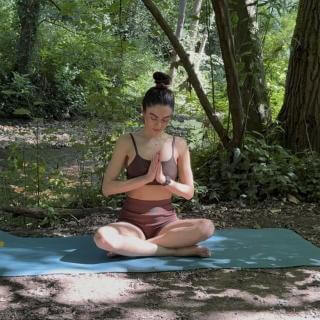
Spinal Scan is a somatic mindfulness practice that moves attention sequentially along the vertebral column, from the base of the spine to the skull or in reverse, noticing sensation, mobility, and tension at each level.
Last Updated
4 Jul 2026
We are still reviewing this page. Our research team checks every technique page for accuracy and evidence quality before final release. Details may change as that review completes. The evidence badge shows our current reading of the published research.
RECOMMENDED DOSE
No direct dose evidence; editorial synthesis. A short, gentle introduction lets newcomers build the habit of moving attention slowly along the spine without strain or discouragement.
No direct dose evidence; editorial synthesis. Once the basic scan feels familiar, a longer and more regular practice allows more thorough attention to each segment of the spine.
No direct dose evidence; editorial synthesis. A daily, longer session reflects a committed maintenance practice for experienced practitioners and should be scaled to personal comfort.
Session length
Session length: 5–10 minutes
5
MIN
How long each individual practice session should last from start to finish.
Frequency
Frequency: 3–4 days
3
DAYS
The number of days per week to fit a session into your routine.
Session length
Session length: 15–20 minutes
15
MIN
How long each individual practice session should last from start to finish.
Frequency
Frequency: 5 days
5
DAYS
The number of days per week to fit a session into your routine.
Session length
Session length: 30–45 minutes
30
MIN
How long each individual practice session should last from start to finish.
Frequency
Frequency: 7 days
7
DAYS
The number of days per week to fit a session into your routine.
About this card. No direct dose-response literature exists for this technique. These recommendations are based on general practice conventions for body-scan meditation and should be treated as starting points only. These recommendations are not a substitute for personalised guidance from a qualified practitioner.
Quick answers to what people most often ask. Each card links to the deeper section below.
evidence
No trial has tested Spinal Scan by name, so evidence is indirect. A randomized study and a large systematic review found relaxation and body-focused attention among the more effective ways to ease situational anxiety before medical procedures. EEG research links attention to internal body states with brain networks for body awareness.
good for
Adults who feel disconnected from their bodies, carry unnoticed tension along the back, or want to settle before a stressful event may find Spinal Scan useful. It builds a clearer, grounded sense of the spine. It is not a substitute for medical care for back pain or any diagnosed condition.
Read moresafety
Most healthy adults can practise Spinal Scan safely. Turning attention inward can make discomfort or anxious feelings louder for some, so people with trauma histories or high anxiety sensitivity may prefer shorter, guided sessions. Acute, unexplained, or worsening back pain warrants medical assessment rather than working through it with attention alone.
Read morehow it works
Spinal Scan appears to train interoception, the ability to sense internal signals like tension, pressure, and position, as attention moves deliberately along the spine. Segment-by-segment attention sharpens the systems that read touch and internal state near the spine, and can reveal where you habitually brace or collapse, letting posture reorganize with less muscular effort.
Read moreSpinal Scan is a body-scan practice applied to the spine, moving attention segment by segment along the vertebral column to notice sensation, mobility, and holding at each level.
Attention travels systematically along the spine, usually from the tailbone up to the base of the skull or in reverse, pausing at each vertebral region to register what is present: the quality of sensation, how freely the segment seems to move, and where tension or holding sits. The practitioner lies down or sits still and follows the sequence at a slow, deliberate pace, telling one level from the next rather than taking the body in as a single whole. The same scanning form appears as a component of yoga, Feldenkrais, and physiotherapy assessment.
Spinal Scan differs from a general Body Scan by focusing on the vertebral column rather than the whole body. It differs from Vertebral Awareness because it scans systematically through the entire spine rather than resting on a single segment, and from Spinal Alignment because it works sequentially level by level rather than sensing the spine as one holistic shape. It is an awareness practice, not a treatment for back conditions or a postural-correction technique.
Not to be confused with
Vertebral Awareness
Vertebral Awareness rests attention on a single spinal segment at a time; Spinal Scan systematically travels the whole vertebral column in sequence, comparing one region to the next.
Spinal Alignment
Spinal Alignment works holistically to organize the spine as a single integrated whole; Spinal Scan proceeds sequentially, noticing each segment in turn rather than the column all at once.
Spinal Scan appears to work by training interoception, the ability to sense and interpret internal body signals like tension, pressure, and position, as attention moves deliberately along the spine. Research on body-focused attention broadly, not Spinal Scan specifically, suggests that deliberately attending to mind-body states engages brain networks involved in body awareness, seen in EEG experiments with healthy adults where attention to internal states drew on parietal activity (Zhongjie & Paul, 2025). Scanning segment by segment can also reveal where you habitually brace or collapse, and attending to how those segments stack may let posture reorganize toward a more effortless sense of being balanced and supported by structure rather than held up by constant muscular effort (Harrison et al., 1999).
Slowly moving attention along the spine, noticing sensation, tension, and mobility at each level, can leave you feeling more settled in your body and quicker to catch what is happening inside. This trains interoception, the sense of your own internal body signals, and deliberately attending to body sensations engages brain networks involved in body awareness (Zhongjie & Paul, 2025).
That effort of working to hold yourself upright can ease as you scan the spine one segment at a time, noticing where you habitually brace or collapse. Attending to how those segments stack supports postural integration, the settling of the body's segments into more balanced, efficient relationships so structure carries more of the load than constant muscular effort (Harrison et al., 1999).
The clearest bodily shift is a sharpening of somatosensory and interoceptive processing, the systems that read touch, pressure, and the body's internal signals, drawn toward the spine wherever attention settles. This heightening is expected rather than directly measured in Spinal Scan; it is inferred from research showing that the spine's posture and mechanical load measurably change stresses on neural tissue and influence sensory, motor, and autonomic function, the body's automatic regulation of tension and arousal (Harrison et al., 1999). In the body it often feels like areas of the back that seemed blank or numb beginning to register warmth, contact, or small shifts in position, with strain becoming easier to catch before it builds.
Moving attention slowly along the spine can bring a clearer, more detailed sense of what your back is actually holding. That shift reflects interoceptive processing, the brain's reading of internal body signals like tension, pressure, and position. It hasn't been measured during Spinal Scan itself and is inferred from related posture and body-scan research (Harrison et al., 1999), so treat it as a plausible effect rather than a proven one.
Practitioners often describe a clearer, more detailed sense of the spine, noticing where the back holds tension and where it moves freely. Slow attention along the spine is thought to strengthen the working link between the insula, the brain region that maps internal body states, and the somatosensory cortex, which maps the body's position; this coupling hasn't been measured during Spinal Scan itself and is inferred from research on how spinal posture interacts with nervous-system signalling (Harrison et al., 1999).
Parts of the back that felt blank or numb can start to register warmth, contact, and small shifts in position when you bring steady attention to each level of the spine. That fuller sense reflects somatosensory processing, the system that reads touch, pressure, and body position, drawing more toward the back and torso, and research on spinal posture and neural loading suggests this signalling is heightened when attention rests on the body (Harrison et al., 1999).
As attention moves slowly down the spine, parts of the back that felt blurry or blank start to feel vivid and defined. That sharpening reflects the somatosensory cortex, the brain region that maps touch, pressure, and body position, drawing more activity toward wherever attention rests. This increase is expected from related body-attention practices rather than measured for Spinal Scan itself; what research does show is that the spine's position and posture interact with the nervous system (Harrison et al., 1999).

When body signals feel muffled or foggy, bringing steady attention to how the spine sits and moves can leave the body feeling clearer and more responsive. Spinal posture shapes sensory processing efficiency, meaning how cleanly sensation and movement signals travel, and research on spinal biomechanics indicates that better-aligned segments place less mechanical strain on the neural tissue running through the spine (Harrison et al., 1999). This has not been measured during Spinal Scan itself, so any change is expected from related mechanisms rather than shown directly.
Limited and indirect evidence supports Spinal Scan, most of it pointing to easing situational anxiety, the short-term, in-the-moment nervousness tied to a stressful event. A small randomized study of MRI patients found that adding a brief relaxation exercise to standard information lowered state anxiety during scanning more than information alone, and a moderate-tier systematic review of roughly 50,343 patients placed relaxation among the more successful nonpharmaceutical ways to reduce procedural anxiety, with about 71% of interventions reducing anxiety overall (Quirk et al., 1989), (Weisfeld et al., 2021). Both studies tested general relaxation rather than this specific practice, so the benefit is suggested, not confirmed. Not yet supported are any direct trial of Spinal Scan itself, effects on back pain or posture as measured outcomes, and any claim that it treats a diagnosed condition.
Lying still for a medical scan can leave the body braced and the mind racing ahead to what comes next. Bringing steady, guided attention to physical sensations, as Spinal Scan does, draws on relaxation methods that eased anxiety during imaging in early research, though that work tested general relaxation rather than this practice, so the effect is suggested rather than established (Quirk et al., 1989).
The tense, braced feeling that shows up before a scan or a dental appointment can soften with a structured relaxation practice. Because Spinal Scan moves attention slowly and deliberately along the body, it sits within the family of relaxation techniques that a large systematic review found among the more successful ways to ease situational anxiety before medical and dental procedures (Weisfeld et al., 2021).
No trial has tested Spinal Scan as a named practice, so what we can say draws on adjacent research across a few strands. Attending to internal body states engages brain networks tied to body awareness in EEG experiments with healthy adults (Zhongjie & Paul, 2025); brief relaxation and body-focused attention can ease situational anxiety before medical procedures (Quirk et al., 1989), (Weisfeld et al., 2021); and spinal posture measurably interacts with the nervous system (Harrison et al., 1999). The main limit is directness: these populations and outcomes are not the Spinal Scan itself, so the studies point to how it might work rather than proving what it delivers.

0
Meta-analyses
0
RCTs
1
Systematic reviews
0
Observational
4
Pilot
Studied populations
Outcomes measured
Alpha rhythm transcranial electrical stimulation to inferior parietal cortex increases alpha power and phase synchrony while attending to mind-body self-states.
2025
Finding: In a sham-controlled experiment with healthy adults, researchers had people deliberately attend to sensations in specific body regions, such as the shoulders, and found that gently stimulating a part of the brain linked to body awareness (the inferior parietal cortex) at an alpha frequency strengthened that brain's alpha-wave activity during this focus on bodily states. For someone practising the Spinal Scan, this hints at why steadily attending to physical sensations may engage the brain networks involved in interoception, our internal sense of the body. That said, this study tested brain stimulation and brain-wave activity, not the Spinal Scan practice itself, so it offers only indirect background rather than proof that the technique works.
See full citation in referencesEvaluation of three psychologic interventions to reduce anxiety during MR imaging.
n = 50
Finding: In a randomized trial of 50 adults preparing for an MRI, those who received a brief 12-minute relaxation exercise on top of standard information stayed calmer during the procedure than people who got information alone or information plus counseling. For someone drawn to a body-focused practice like the Spinal Scan, this hints that a short, guided period of relaxation can take the edge off situational anxiety in a stressful moment. That said, the study tested relaxation during a medical scan rather than the Spinal Scan technique itself, so treat it as related, indirect support rather than proof that this specific practice works.
reported narratively
Spinal Scan grows out of the body-scan methodology at the heart of mindfulness-based stress reduction, adapted to focus specifically on the vertebral column, and it appears as a component of yoga, Feldenkrais, and physiotherapy assessment. These roots help explain the practice's form, its slow, sequential, segment-by-segment placement of attention, rather than proving any clinical effect. Within a mindfulness and somatic-education worldview, sustained non-judgmental attention to the body is treated as a route to presence and self-understanding, which is what makes quiet, deliberate spinal attention feel worthwhile to the person practising it.
Spinal Scan is low-risk for most healthy adults, and it often leaves people feeling calmer and more settled in the body. Two situations call for care. First, interoceptive attention, the deliberate act of noticing sensations inside the body, can make discomfort or anxious feelings feel louder rather than easier for some people, a caution grounded in how the practice works and in practitioner experience, not in any study of harm in this technique. Second, the scan builds body awareness rather than treating structural problems, so acute, unexplained, or worsening back pain is worth checking with a clinician rather than working through with attention alone.
Two groups should ease in gently. People with trauma histories or high anxiety sensitivity, where turning attention inward tends to amplify distress rather than settle it, may want to begin with shorter, guided sessions or the support of a trained professional; this caution comes from how the practice works and from clinical experience, not from a risk measured for Spinal Scan specifically. Anyone with a recent spinal injury, a diagnosed spinal condition, or acute or progressive back pain should treat the practice as a complement to medical assessment, not a substitute for it.
Interoceptive attention, the deliberate act of noticing sensations inside the body, can amplify uncomfortable or anxious feelings for some people rather than easing them. This caution is grounded in how the practice works and in practitioner experience, not in a study of harm for Spinal Scan specifically. If turning attention to the body starts to feel unsettling, open your eyes, shift position, or stop, and consider shorter, guided sessions to begin with.
For people with trauma histories or high anxiety sensitivity, turning attention inward tends to amplify distress rather than settle it. Ease in gently: begin with shorter, guided sessions, keep the option to open your eyes or stop, and consider working with a suitably trained professional if inward focus feels difficult. This is a sensible, practice-informed precaution rather than a risk measured for Spinal Scan itself, and the practice does not replace professional care.
| Technique | Best for | Use with care | Evidence strength | Distinction |
|---|---|---|---|---|
| Body Scan (MBSR full-body scan) | Whole-body relaxation and general stress reduction, where the goal is to settle the entire body rather than map the spine in detail. | strong EVIDENCE | Body Scan sweeps attention through the entire body, usually head to toe, to settle the whole system; Spinal Scan applies that same segment-by-segment method specifically to the vertebral column, pausing at each level to notice sensation, mobility, and where the back braces or lets go. It is the narrower, spine-focused member of the same attentional family. | |
| Feldenkrais Method | Improving coordination and ease of movement through active, guided movement exploration. | EVIDENCE | Feldenkrais guides you through gentle, exploratory movement sequences to re-educate habitual movement patterns; Spinal Scan stays still and simply observes the spine level by level without trying to change how it moves. One works through active movement, the other through quiet attention. |
A Spinal Scan moves attention slowly along the vertebral column, from the base of the spine to the skull or in reverse, noticing sensation, mobility, and tension at each level. It differs from a regular body scan by staying on the spine, segment by segment, rather than sweeping the whole body.
+
A Spinal Scan applies the familiar body-scan method to just the spine. You move attention sequentially along the vertebral column, pausing at each level to notice sensation, mobility, and where you brace or let go. A regular body scan sweeps through the whole body, usually head to toe, to settle the entire system; a Spinal Scan is the narrower, spine-focused member of that same family. It also differs from single-vertebra attention by scanning the whole column in order, and it builds felt awareness of the spine rather than treating back pain or correcting posture.
There's no direct proof yet. No trial has tested Spinal Scan by name, so its specific effects aren't established. The support is indirect: body-focused attention engages body-awareness networks, and brief relaxation can ease situational anxiety (Zhongjie & Paul, 2025), (Weisfeld et al., 2021).
+
There's no direct proof yet, and it's honest to say so. No study has tested Spinal Scan as a named practice, so what we know is borrowed from adjacent research. Attending to internal body signals engages brain networks tied to body awareness in EEG work with healthy adults (Zhongjie & Paul, 2025), and brief relaxation has helped ease situational anxiety, the short-term nervousness around a stressful event, in a small MRI trial and a broad systematic review (Quirk et al., 1989), (Weisfeld et al., 2021). Read these as plausible grounding, not evidence of effects on back pain, posture, or any diagnosed condition (Zhongjie & Paul, 2025), (Quirk et al., 1989), (Weisfeld et al., 2021).
The ability to sense and interpret the body's internal signals, such as tension, breath movement, temperature, and the pull of a held posture. Building it tends to feel like noticing early signs of strain or unease before they escalate.
Perception and integration of visceral and somatic afferent signals, associated with insular and self-referential processing networks.
The sense of where your body is in space, drawn from receptors in muscles, joints, and tendons. It usually feels like a clearer, more precise awareness of position, balance, and movement.
Kinesthetic awareness derived from muscle, joint, and tendon receptors signalling limb and segment position and movement.
Bringing the body's segments, head, spine, pelvis, and limbs, into more balanced, efficient relationships so posture is supported by structure rather than constant muscular effort. It often feels like a more effortless way of being upright.
Coordination of postural muscles toward balanced structural alignment, reducing compensatory strain patterns.
The strip of brain that maps touch, pressure, and body position. More activity there is experienced as a body part becoming more vivid and detailed as attention rests on it.
Anxiety in the moment, tied to a specific situation such as waiting for a medical scan, rather than a lasting anxious trait. It tends to show up as a braced body and a mind racing ahead to what comes next.
Situational anxiety measured by instruments such as the State-Trait Anxiety Inventory, distinct from trait anxiety.
Bao Zhongjie, Frewen Paul (2025). Alpha rhythm transcranial electrical stimulation to inferior parietal cortex increases alpha power and phase synchrony while attending to mind-body self-states.. https://doi.org/10.1016/j.neuroscience.2025.01.013
Cited in: How it works, Research
Mark Quirk, A J Letendre, Robert A. Ciottone, James F. Lingley (1989). Evaluation of three psychologic interventions to reduce anxiety during MR imaging.. https://doi.org/10.1148/radiology.173.3.2682775
Explore guided sessions to deepen your Spinal Scan technique.
Parts of your back can feel vague or blurry until you bring attention there, when they sharpen into focus one segment at a time. This likely tracks with rising, region-by-region activity in the somatosensory cortex, the strip of brain that maps body sensation, though the pattern is inferred from body-scan and spinal neuroscience rather than measured during Spinal Scan itself (Harrison et al., 1999).
You start catching tension along the spine and small shifts in posture earlier than you used to, a clearer read on the body's quieter signals, and that is what Spinal Scan works to build. Research on spinal biomechanics shows the spine's posture and mechanical load measurably interact with the nervous system's sensory and autonomic pathways (Harrison et al., 1999); this sharper body-signal sensitivity is expected from attentive scanning rather than directly measured for the practice, and it often feels like noticing strain or ease sooner.
The research is useful for setting expectations, but study methods and participant groups vary. Treat the findings as general guidance rather than a promise about any single session, and not a replacement for clinical care.
Dealing with Anxious Patients: A Systematic Review of the Literature on Nonpharmaceutical Interventions to Reduce Anxiety in Patients Undergoing Medical or Dental Procedures
n = 50,343
Finding: This large systematic review gathered hundreds of trials involving more than 50,000 patients facing medical and dental procedures, and found that relaxation was among the drug-free approaches that eased anxiety in over 70% of the experiments. For someone drawn to the Spinal Scan, that offers broad, encouraging support for relaxation-based practices as a way to settle nerves before a stressful appointment. It is worth being clear about the limits, though: this review looked at relaxation in general, not the Spinal Scan itself, and the authors flag concerns like publication bias, small studies, and a lack of placebo comparisons, so the results point in a promising direction rather than proving this specific technique works.
reported narratively
A cognitive behavioural approach to preventing anxiety during magnetic resonance imaging
1997
Finding: In this controlled study, adults preparing for an MRI who practised relaxation before and during the scan felt less anxious in the moment than those who did not, so a calming technique can genuinely take the edge off a stressful experience while it is happening. But when researchers checked back more than seven months later, that single session had not stopped some people from developing lingering fears about the procedure, so easing anxiety on the day did not translate into lasting protection. It is also worth knowing that this research looked at relaxation during medical imaging, not the Spinal Scan practice itself, so it points to how body-focused calming may help in the moment rather than proving durable benefits from this specific technique.
See full citation in referencesA review of biomechanics of the central nervous system—part III: Spinal cord stresses from postural loads and their neurologic effects
1999
Finding: This is a biomechanics review of the central nervous system, not a study of any spinal awareness practice, so it speaks to background physiology rather than to the Spinal Scan itself. It reports that the position and loading of the spine create real stresses and strains in the nerve tissue running through it, and that these physical forces connect to how the sensory, motor, and automatic (self-regulating) parts of the nervous system function. In plain terms, how you hold and organise your spine genuinely interacts with your nervous system, which offers indirect reasoning for why paying attention to spinal position might matter. Keep in mind this is a review of biomechanics, so it cannot tell us that scanning or sensing the spine corrects posture or improves any health condition.
See full citation in referencesSpinal Scan builds a felt sense of the spine; it does not diagnose or treat structural problems. Back pain that is acute, unexplained, or worsening is worth checking with a clinician rather than working through with attention alone. If you continue, treat the scan as a complement to that care and keep it to gentle noticing rather than trying to correct posture.
Anyone with a recent spinal injury or a diagnosed spinal condition should treat Spinal Scan as a complement to medical assessment, not a substitute for it. Seek professional evaluation first and use the practice alongside that care.
Spinal Scan tends to land best when you settle into a supported position where you can stay still without strain, giving your attention an easy place to rest. If you are new to it, a shorter session works well as a starting point, and it helps to stay curious about how inward focus feels so you can gently ease off if the attention starts to amplify discomfort rather than settle it. Let the practice stay about noticing rather than fixing, and treat any acute or worsening back pain as a reason to check in with a clinician alongside this.
Choose a position, lying down or seated, where your spine feels supported and you can stay still without strain, so attention has an easy place to rest.
Bring attention gradually from the base of the spine to the skull, or the reverse, pausing at each level to notice sensation, mobility, and tension without forcing anything to change.
If turning attention to the body starts to feel unsettling or amplifies anxious feelings rather than easing them, open your eyes, shift position, or stop. Noticing distress early and stepping back is part of practising safely.
Let the scan be about noticing where you brace or collapse, not about fixing or straining the spine into a correct position. There is no posture to achieve.
For acute, unexplained, or progressive spinal pain, a recent injury, or a diagnosed spinal condition, seek medical assessment and use this practice alongside that care rather than in place of it. If a trauma history or high anxiety makes inward focus difficult, consider working with a suitably trained practitioner.
This information is educational and is not medical advice. This practice is not a substitute for professional care and should not replace prescribed medication or treatment for any medical or mental-health condition. If you are managing a health condition or taking medication, talk with a qualified health professional before changing your practice. If you are in distress or crisis, seek professional support.
| Physiotherapy spinal or postural assessment | Evaluating and treating structural spinal pain, injury, or a diagnosed condition under professional guidance. | Choose a professional assessment over self-guided scanning when spinal pain is acute, unexplained, or worsening. | EVIDENCE | A physiotherapy assessment is a clinician-led evaluation that measures spinal range, alignment, and dysfunction to guide treatment; Spinal Scan is a self-directed awareness practice that builds a felt sense of the spine, not a diagnosis. The scan can complement assessment but does not replace it. |
Possibly. As a body-focused relaxation practice, Spinal Scan may ease situational anxiety, the in-the-moment nervousness tied to a stressful event, though this is suggested rather than proven. A small randomized MRI study and a moderate systematic review support relaxation for procedural anxiety, but both tested general relaxation, not Spinal Scan (Quirk et al., 1989), (Weisfeld et al., 2021).
+
Possibly. Spinal Scan belongs to the family of slow, body-focused relaxation practices, and that broader approach has helped calm situational anxiety before medical procedures. A small randomized MRI study found a brief relaxation exercise lowered state anxiety more than information alone, and a moderate systematic review placed relaxation among the more effective nonpharmaceutical ways to reduce procedural anxiety (Quirk et al., 1989), (Weisfeld et al., 2021). Both studies tested general relaxation rather than this specific practice, so the benefit is plausible but not established, and it does not replace clinical care.
Attending to your spine appears to train interoception, your ability to sense internal signals like tension and position, engaging brain networks tied to body awareness (Zhongjie & Paul, 2025). Spinal posture also measurably interacts with the nervous system, though no study has tested Spinal Scan itself (Harrison et al., 1999).
+
Deliberately moving attention along the spine appears to sharpen interoception, your ability to sense and interpret internal signals like pressure, tension, and position. That draws on brain networks involved in body awareness, seen in EEG work with healthy adults (Zhongjie & Paul, 2025). Separately, biomechanical research shows the spine's posture and load measurably change stresses on neural tissue and influence sensory, motor, and autonomic function (Harrison et al., 1999). These findings come from adjacent populations, not from Spinal Scan itself, so they point to how it might work rather than what it delivers, and they imply no effect on back pain, posture correction, or any diagnosed condition (Zhongjie & Paul, 2025).
Use care. For most healthy adults a Spinal Scan is low-risk, but it builds body awareness rather than treating structural problems, so acute, unexplained, or worsening back pain, a recent spinal injury, or a diagnosed spinal condition should be checked by a clinician and the practice used only as a complement, not a substitute.
+
Use care. No study has tested the safety of Spinal Scan in people with back pain or diagnosed spinal conditions, so this is practical, practice-informed guidance rather than a measured safety finding (Harrison et al., 1999). The practice develops a felt sense of the spine; it does not diagnose or treat structural problems, so pain that is acute, unexplained, worsening, or tied to a recent injury or diagnosed condition warrants medical assessment. If you continue, treat the scan as a complement to that care, keep it to gentle noticing rather than trying to correct posture, and stop if attention makes discomfort feel louder.
Ease in gently. If you have a trauma history or high anxiety sensitivity, turning attention inward may make discomfort feel louder rather than easier. This is a practice-informed caution, not a measured risk for Spinal Scan; consider shorter guided sessions or a trained practitioner, and it is not a substitute for professional care.
+
Ease in gently. Interoceptive attention, the deliberate act of noticing internal body signals, can amplify distress for some people with trauma histories or high anxiety sensitivity rather than settling it. This caution comes from how the practice works and from clinical experience, not from any study measuring harm from Spinal Scan itself, so treat it as a sensible precaution rather than an established risk. A practical approach is to start with shorter, guided sessions, keep the option to open your eyes or stop, and work with a suitably trained practitioner if inward focus feels difficult. The practice does not replace professional care.
Settle somewhere your spine feels supported, then move attention slowly from the base of the spine to the skull (or reverse), pausing at each level to notice sensation, mobility, and tension without trying to fix anything. There is no fixed length; a few minutes is a fine start, and detail tends to deepen with repeated practice rather than a set duration.
+
Settle into a comfortable, supported position, lying down or seated, then bring attention gradually along the vertebral column, one segment at a time, noticing sensation and where you brace or collapse rather than forcing a "correct" posture. Keep it awareness, not correction, and if inward focus starts to feel unsettling, it is fine to open your eyes, shift, or stop. Length is flexible: let a few minutes be enough at first, since detail tends to deepen with repeated practice rather than a set duration. For acute, unexplained, or worsening back pain, or if a trauma history makes inward focus difficult, involve a suitable professional alongside the practice.
Expect something quiet and low-key. A first session often feels like little more than lying still and noticing, with your spine coming into focus one region at a time and blank or vague areas gradually registering warmth, contact, or small shifts. That is normal, not a sign it isn't working.
+
Expect something quiet and undramatic. A first Spinal Scan usually feels like lying still and paying attention, with the back coming into sharper focus one region at a time and areas that seemed blank or numb slowly registering warmth, contact, or small changes in position. The detail tends to deepen over repeated practice, so a low-key first session is not a failure. One caution: for some people, turning attention inward can make uncomfortable sensations feel louder rather than easier, and if that happens it is fine to open your eyes, shift position, or stop.
See a physiotherapist for a back problem. Spinal Scan is a self-directed awareness practice that builds a felt sense of the spine, not a diagnosis or treatment, so for acute, unexplained, or worsening pain, an injury, or a diagnosed condition, choose clinical assessment. The scan can sit alongside that care, not replace it.
+
See a physiotherapist for a back problem. A physiotherapy assessment is a clinician-led evaluation that measures spinal range, alignment, and dysfunction to guide treatment; Spinal Scan is a self-directed practice that develops body awareness rather than diagnosing or treating anything. Direct research on Spinal Scan is limited, and no trial has tested it as a named practice for back pain or posture, so treat it as a possible complement to assessment, not a substitute (Zhongjie & Paul, 2025), (Harrison et al., 1999). When pain is acute, unexplained, or worsening, professional assessment comes first.
Carol Cronin Weisfeld, Jill Turner, Kim Dunleavy, Arthur Ko, Jennifer I. Bowen, Brandi Roelk (2021). Dealing with Anxious Patients: A Systematic Review of the Literature on Nonpharmaceutical Interventions to Reduce Anxiety in Patients Undergoing Medical or Dental Procedures. https://doi.org/10.1089/acm.2020.0504
Robyn Lukins, Ian G.P. Davan, Peter D. Drummond (1997). A cognitive behavioural approach to preventing anxiety during magnetic resonance imaging. https://doi.org/10.1016/s0005-7916(97)00006-2
Cited in: Research
Deed E. Harrison, René Cailliet, Donald D. Harrison, Stephan J. Troyanovich, Sanghak O. Harrison (1999). A review of biomechanics of the central nervous system—part III: Spinal cord stresses from postural loads and their neurologic effects. https://doi.org/10.1016/s0161-4754(99)70086-2
Cited in: How it works, Research, What happens in the body
Editorially curated. Tracks are not themselves clinically studied; evidence on the page applies to Spinal Scan as a technique.
Beginner content for Spinal Scan

★ 4.8
·
Guided
·
10 min
Elisha Tichelle
How hard is Spinal Scan?
Spinal Scan belongs at effort 3 because the spine-specific scan is deliberate and sustained even though it remains gentle physically.
3
Mental Effort
3 / 4
▾Emotional Depth
1 / 4
▾Physical Intensity
1 / 4
▾Prior Knowledge
1 / 4
▾