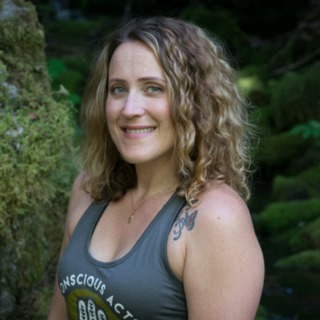
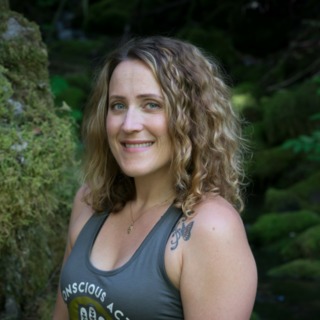
Hello.
If we haven't met yet,
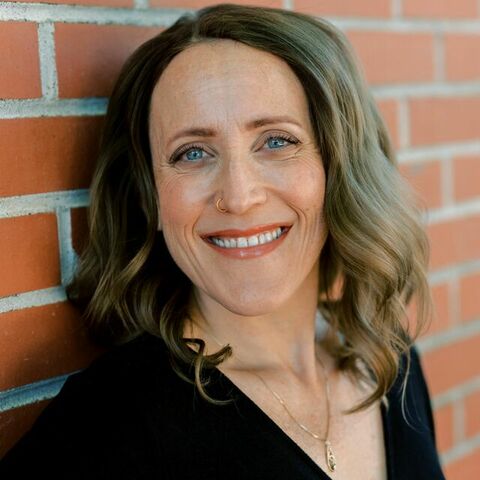
My name is Sadie Barr,
And I've been offering meditations,
Courses,
And live events since 2016.
I help folks stop self-abandoning and start trusting themselves.
So that they can feel steady and secure in their decisions and their relationships,
Especially the relationship with themselves.
I work with all types of people and my specialty is supporting people who are on the sober path.
Today's topic is how to keep promises to yourself.
So go ahead and get a pen and paper or use your notes app,
Whatever suits you.
As we'll be doing a little practice.
Down the way.
You can pause to grab that now if you need.
We're going to start with a short breath practice.
It's very simple.
It's an inhale through the nose,
Filling up,
Filling up.
Pause.
And then a little sip of another inhale.
And exhale like a sigh.
So it sounds like this.
If at any time you start to feel anxious about holding your breath,
Please exhale before my cue.
Let's begin.
Inhale.
Pause.
Little inhale.
Exhale out the mouth.
Again,
Breathe in,
Pause.
End.
And out.
Good.
Do three more like that.
Breathe in.
Bye!
In.
.
.
Out.
In And.
.
.
Out.
One more.
And.
.
.
And Out.
One of the biggest ways that we erode self-trust is by not keeping the promises that we make to ourselves.
Consider now.
What is a promise?
That you haven't followed through with.
So we set an intention at the beginning of the day.
We feel resolved for a while.
We tell ourselves today is the day.
And then we cave or we forget altogether.
And what usually follows.
We beat ourselves up for failing.
The self-criticism is relentless.
Why can't I stick with anything?
I have no discipline.
What's wrong with me?
We assume the problem is that we're lazy or unmotivated or lack discipline when in reality,
There's usually something much deeper going on.
When I got sober.
I first relied on a higher power to help me not use one day at a time.
And it worked.
That practice was incredibly powerful for helping me stay sober.
But when it came to the deeper stuff,
The people-pleasing,
The self-abandonment,
The overthinking,
The anxiety,
I needed a new strategy because I would pray my butt off.
To no avail.
That's when everything started to shift.
As I studied yoga philosophy and Buddhist practices,
I began looking inward at my thinking patterns.
Then I started learning how my nervous system worked in tandem with those thinking patterns,
How habits are formed,
How conditioning shapes our behavior.
And how so much of what we do is actually our brain trying to keep us safe.
That gave me an entirely different perspective.
With that information,
I could now have more leadership over my thoughts.
So I stopped asking,
What is wrong with me?
And started asking,
What's happening here?
That one question changed everything.
Instead of judging myself,
I became curious.
Instead of seeing myself as broken,
I became a student of my own mind.
Really cool.
I became my own scientist because that's really what we're doing.
We are both scientists and the experiments.
The goal is not to be perfect.
It's impossible.
The goal is to collect information.
Every day gives us another data point.
Every promise we keep teaches us something new.
And every promise we don't keep teaches us something,
Too.
There is no failure,
Only information,
Information,
Information,
Data.
That's why I teach what I call my Roadmap to Self-Trust.
We're going to do a little writing activity.
Step one,
Make one small promise.
This is the roadmap to self-trust.
Starting with make one small promise.
And choose a promise that is realistic enough that you actually have a good chance of keeping it.
Write it down.
Now when you do this practice on your own,
Get a sticky note,
Or get sticky notes,
Post-it notes,
And put them on your bathroom mirror,
Stick them on your computer,
Or the fridge,
Or in the car,
Or you could use the reminder app on your phone,
Whatever works best for your lifestyle.
The point is simple.
Don't rely on memory.
Put your promise somewhere your future self cannot miss it.
Step two.
Review your day without judgment,
Without judgment,
Curiosity.
At the end of the day,
Ask yourself,
Did I keep my promise?
If the answer is yes,
Amazing.
Celebrate it.
Let your brain register that success.
Then make one more promise for tomorrow.
If the answer is no,
Also amazing.
Not because you missed it,
But because now you have data.
No shame,
No punishment,
No story about how you're incapable,
Just information.
This is where grace for yourself is really,
Really vital.
Step 3.
Collect the data.
Ask yourself,
What stood in the way of following through today?
So did you forget?
Did anxiety show up?
Did you make the promise too big?
Did you get overwhelmed?
Did your nervous system shift into survival mode at some point?
Was it people-pleasing?
Were you looking out for other people's needs rather than your own?
Was it perfectionism?
Fatigue.
Curiosity is far more useful than criticism.
Then ask,
What is one small action I could take tomorrow?
That makes it just a little bit easier to keep this promise.
Maybe you need a different reminder.
Maybe you need more reminders.
Maybe you need to make the promise smaller or to do it earlier in the day or later in the day.
Maybe you need to remove a distraction or need someone to check in with for accountability.
Whatever it is.
Write it down.
So step four.
Repeat.
Write tomorrow's promise down.
Next to it.
Write the one adjustment that you're going to make based on today's data.
Now,
Tomorrow isn't just another attempt.
It's an experiment informed by yesterday.
Then repeat,
Day after day,
Little by little.
This is how self-trust is built.
After repeating this process for some time,
Here's what I eventually realized.
Self-trust isn't something I magically woke up with one day.
I wish.
It's something that my brain learned through repeated experience.
Every time you keep a promise to yourself.
Your brain stores that experience as evidence.
It says.
.
.
You'll do something.
And you do.
Every time you don't keep the promise,
Your brain stores that experience too,
Not as proof that you're bad or weak.
Not as proof that you're a failure or you can't do something or there's something wrong with you.
But it's information about a pattern.
The problem is that most people stop there.
So we miss a day and immediately pile on shame on top of it.
But shame teaches us nothing.
Curiosity.
Teaches us everything.
When you become your own scientist,
Every outcome has value.
Keeping the promise gives you evidence that you can count on yourself.
Not keeping it gives you information about what's getting in the way.
Move you forward.
Both move you forward.
It's great news.
Over time,
Your nervous system begins to experience something it may not have felt in years.
Consistency.
Safety.
And reliability.
You become someone who doesn't abandon yourself.
The moment things get hard.
And that's why this practice is about so much more than checking a box on a to-do list.
It's about rebuilding.
The relationship you have with yourself.
One promise at a time.
One experiment at a time.
One day at a time.
Thank you for joining.
If this talk supported you today.
And you'd like to follow me,
You can find me at Sadie Bar.
Have a wonderful day.