Today,
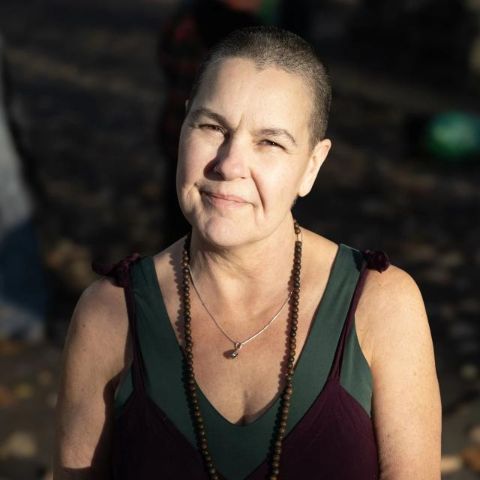
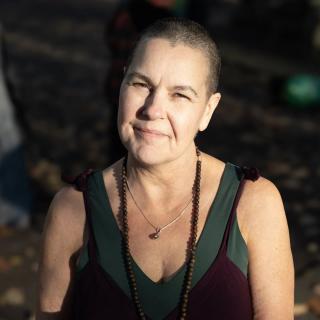
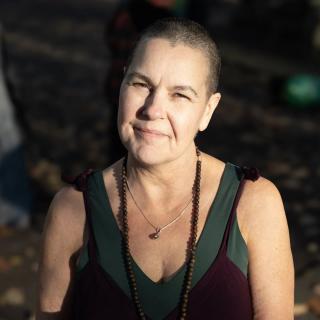
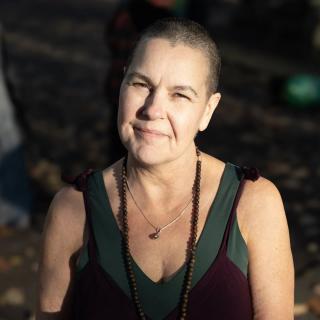
I am welcoming Jordan Amali.
Welcome,
Jordan.
Thank you.
And please just share with all of us,
You know,
Your story,
How you got into this and all the good stuff.
Thank you.
Thank you so much for the opportunity.
Yeah,
When I think about what got me into being a death doula,
It really goes back from the beginning for me.
And that's that.
I think I was always a child that felt incredibly deeply and always had a sense that the things that mattered most to me were the really big things.
And so I had a lot of I had a really shaky childhood.
My mom was a teenager when she had me,
And I'm a twin,
So there were two of us.
And throughout my childhood,
We moved all of the time.
My mom was a romantic.
She would fall in love and we would move in with that person who she loved.
And that would last,
You know,
Six months and we would move again.
And it was just like this constant change in my life and constant not knowing what was next.
And I think that that just like instilled in me this like really deep,
Deep feeling that like the things that are going on in our life like it's all kind of like noise and that like there's actually I don't know it just was like this like constant grounding that I did within myself as a child,
You know.
I don't know it just like really and and I had to rely so much on other people in my community of like meeting teachers and my friends,
Parents and other safe people.
And it really taught me also to like be really trusting with others.
And I think that instilled in me this love,
Absolute love of like volunteerism.
And I've always been a volunteer because my own core,
Like I had unconditional love and I had safety for the most part,
But I really had to outsource for my sense of self.
And that is,
I think,
A lot of what Dulight is.
Is being with people in a really intimate space and a really and being able to be there with them and like.
In that space,
You know,
Entering a world other than your own.
So yeah,
It comes from,
Yeah,
I think being that person as a child.
And also,
A lot of that change was grief,
You know,
Like I as a child was losing a lot of things.
And my mother comes from a childhood of grief and loss.
And so like her own root story,
My root story,
You know,
Comes from that and that there was just so much loss and pain and suffering.
And that also as a child,
You know,
I learned what that meant really young and I experienced that I felt that.
Anyway,
So yeah,
And then also my twin sister,
She's also a deaf doula.
And so we do this together.
We've always been together.
And.
.
.
I think that our relationship,
We learn a lot from each other and she went into nursing.
And I went into public health.
And so throughout my education,
I was learning about inequities,
Specifically in health systems,
That's where I focused.
And,
And so yeah,
I went into public health.
And I was,
You know,
Doing this whole big,
Important career in like,
Program management in health systems.
And I felt dead inside.
Because the purpose of all of those that work was cost saving,
Which is so important.
I totally get it.
And I'm so in awe of the people who devote their lives towards that type of work.
And to the practitioners who are in those systems,
You know,
Doing what they're doing.
It's an incredible field.
But I personally didn't resonate because I didn't care about money.
I didn't care about All I cared about when I was in those roles was like,
Did you know people are entering in the world and people are leaving the world?
And we have this really meaningful thing happening that no one knows what's happening.
And why aren't we all thinking and talking about that?
I think that the big meaningful things were still really preoccupying my inner world.
And so,
Yeah,
I started volunteering at Dougie Center.
That was my first experience in working in grief or end of life.
What is the Dougie Center?
Yeah,
The Dougie Center is a wonderful organization in Portland,
Oregon that supports,
It's a peer support model for children who have lost parents or siblings or people in their life.
And they also have grief groups.
But the real core of Dougie Center is peer children supporting children,
Like an environment where they can be kids and also process the losses that they're experiencing.
And so I was a classroom facilitator for that.
And yeah,
That really changed my life.
I started learning about the experience of grief and loss through a children's lens.
And then After that,
I became a mother and the work felt too heavy for me at the time.
And so I ended up moving into hospice volunteering.
And I was still working my job in health systems throughout this period.
And I learned about hospice care and showing up and I was doing some vigils.
I was doing companionship with people who were at the end of life.
And it really fed my soul.
It fed me.
It gave me this feeling that no matter what's happening in the world or what's,
You know,
Whatever,
We're all caught up in all the stories that we are all attached to of,
You know,
Real things like the stressors and the realities of being human.
Like,
Yeah,
All of that was happening.
And there are people who were at the end.
And that deep feeling of just being with someone that,
You know,
A human body that you know is not going to be an active,
Moving,
Human,
Alive body later,
It's profound.
Frowned.
There's no other word for it.
Absolutely.
Yeah.
And so That led me into eventually quitting my job,
Saying,
I don't want to feel dead inside anymore.
I want to spend my precious time doing something that means something to me.
And that's when I went and took my training with Going With Grace,
And where I became trained as a death doula.
Over the last few years,
That's where I've been focused and I've been I've also done a lot of organizing the community because there is also so many folks doing this type of work and supporting the end of life community.
And a lot of them are like really passionate about this because of their own personal experiences that have led them to become what they're doing.
And I also sense that there's kind of a siloed nature that everyone's just trying to figure it out.
And it's newer in the sense it's like newly being integrated into maybe like a kind of more common,
Know,
People are starting to know what deaf doulas are,
They're hearing like Nicole Kidman wants to do it,
Like all these famous people are like,
Oh,
I had this profound experience,
I want to do it too.
So I think anyway,
I think that the deaf doula community and the end of life community is just like,
Can really benefit from having more organizers who are able to bring people together to learn about each other,
See how we can work together.
So that's an area that I'm also really passionate about and that I'm finding a lot of joy in doing and it's using a lot of my program management and project management background that I've studied.
And so it allows me to use that side of my brain as well as being a death doula.
Yeah,
So that's kind of my story.
Trying to think of what else has really gotten me here.
Yeah,
I think that when I think back to also like some of my jobs when I was in grad school was working at as a hospital transporter.
That was my very first medical job.
And so I was walking 12 miles a day,
Bringing people to and from diagnostic imaging.
And these people are so sick.
I just remember I was like this fly on the wall and there were all these physicians and nurses and providers coming in and out and these humans.
And I just always felt like me and the human were being human together.
And we had such like,
I remember thinking,
I need to like write a book or,
You know,
I need to like honor all these people that I'm eating because the stories that they're telling me and the vulnerability that they have in these moments of crisis,
Because that's what it is when you're in a hospital.
Nobody wants to be there.
And they are subjected to,
You know,
All of these people,
Like,
They're just so vulnerable.
And I feel like healthcare providers have their mission and their goals.
And that is very focused.
And you know,
It's very important,
And they have to do it in order to be successful or whatnot.
But You know,
We all know that there's a lack of like this humanness in those facilities and in that environment.
And so I remember being like,
Oh,
My God,
Like I would come home and just like feel like it was so powerful to be able to speak to these people and to hear their stories.
And I would connect with them very deeply.
And I feel like that's when I kind of realized that was my superpower.
Because I felt like I was floating from it,
And I know that I got feedback from other people that it also felt really good in those moments.
That was another really,
I think,
Formative experience for me.
And I also,
A few times,
Witnessed death in a really,
What felt violent,
You know,
In the sense that people are dying and everyone there is fighting it,
And they're doing everything they can to keep this person alive.
And at the time,
I didn't have the framework of asking the questions of,
Like,
What led that person to this type of death and what maybe caused it.
Have been done to avoid this type of death.
And so,
But I always had this inkling like,
This doesn't feel right.
And like,
Is there another way?
I don't know.
You know,
Who knows?
But that also witnessing death in the hospital.
It felt really sad and really scary.
And it's definitely I think every provider there,
Every person that has ever witnessed that type of death,
They all are saying,
I don't want that to happen to me.
I don't want that to happen.
I would never want that to happen to me.
But we never really get further than that.
We know what we don't want,
But we don't talk about or know how to get that and how to get there.
And that's where I'm just like.
There's a lot of opportunity for education,
For advocacy,
And for.
Anyway,
So yeah,
That's kind of where I'm,
My background.
Yeah,
Well,
That's wonderful.
I mean,
The whole talking about death,
I mean,
Just quite honestly talking about aging,
People don't want to talk about aging,
Let alone death.
And so,
I mean,
Yeah,
That's wonderful to get that next step going.
So like,
What's next?
If we don't want death?
Yeah,
If we don't,
Yeah.
No,
I mean,
Clearly there is so much around death,
Right?
There's so much around death.
And that's what I love about being a death doula too,
Is just really helping everyone in the room.
Just get to be who they are in that moment.
And if you're scared,
That's okay.
Like,
Let's talk about that.
Of course you are.
This is weird.
We don't live a life.
Encouraging people to die when we're not ready for them to.
But,
You know,
Just allowing everyone to just be their full self,
However messy that might look.
And sure,
You can be mad at the person,
Maybe hold off on saying stuff.
I mean,
Just coaching the whole situation.
And I know people are so grateful for that in the end,
Even if they don't even know it's happening at the time later,
They're just like,
Wow.
We did corraling,
And you did,
Thank you.
We didn't even- Yeah,
Having that direction and having,
Yeah,
That person to be able to moderate,
Facilitate,
It is so critical.
And I always like to think of when people say we die the same way that we live,
And that's very true.
We all live messy,
Complicated,
Painful,
Joyful.
We will say the things that we didn't mean to say.
Life is hard,
And we're gonna show up,
To be hard and complicated.
Yeah.
Yeah.
We,
I have a family right now that it's,
Um,
You know,
That's just,
It's showing up a lot of that.
Just every single person will be in the room and seeing the same thing,
But having vastly different experiences,
Vastly different ideas about what does peace look like?
What does quality of life look like?
What,
You know,
What do they want to happen?
Like the words will be the same,
But the meaning behind it is just,
Yeah,
It's,
Yeah,
It's fascinating and it's tricky.
And I love being able to help pull that out and figure out how we can speak maybe not the same language,
But how we can just understand each other a little bit more.
Right.
Right.
You know,
And it definitely too offers something that kind of no,
No,
None of the other professions involved do like,
You know,
The hospice nurses,
They can do what they do and they leave,
You know,
The doctors,
It's like,
Death doulas are there too.
Answer every question in all those categories.
And I feel like sometimes people too feel like,
Oh,
I don't need a death doula.
We can handle it.
We're all doctors in the family.
We can handle it.
Or it's almost like if you ask for help in this setting,
You're like,
You're saying you do You know,
You're somehow weak or something.
But I don't think people understand what happens to your brain and your body and your family system.
Yes.
That's going on.
I mean,
You don't know it till you know it.
And your brain is scrambled.
And so.
Yeah,
Just being able to just,
Again,
The way I say it is just kind of being this,
Like carrying them in a nest or a basket or like,
OK,
You guys do what you're doing and I got you.
Whatever you're doing,
I'm going to.
I love that.
Yeah.
And it's I also I also think about like what we aren't like we can't problem solve for like the you know,
The the problems that have been in a family dynamic for the entire existence.
And we can't problem solve broken systems or the fact that we have lack of,
You know,
Caregivers and that we have facilities that are less than ideal.
Are not able to solve those.
But as my,
I have a mentor,
Maria Lucia Gonzalez,
And she recently said like,
Jordan,
We are trees.
We are providing the shade and for the,
We're the stability that people can sit under the scorching sun for that shade and for that leaning on the tree.
And I think about that all the time because I think symbolically and like emotionally,
That is what we're providing.
And that is so important.
And yeah,
Exactly.
Like physicians or,
You know,
Whoever has their background that might be,
You know,
Really expert in certain areas,
Fantastic.
But,
But,
You know,
Like,
That's their world view.
And they also have certain goals.
And,
I mean,
Especially when we talk about healthcare providers,
Like the very,
Of a healthcare provider is to save lives or to like keep people the opposite of what we're doing.
And so it's a completely different framework that is really hard for folks to fully grasp and having that person in the room that can and hold all of that at once.
I think of it as a magic,
You know,
It's a magic that we have to be that tree.
So yeah,
It's powerful.